

tīrtha तीर्थ – ford; sacred place; tīrtha
substantive masculine · substantive neuter · Word type unspecified
Dictionary sources
AYI dictionary substantive neuter
ford; sacred place; tīrtha
Cappeller 1891 substantive neuter
Original text · English · substantive neuter
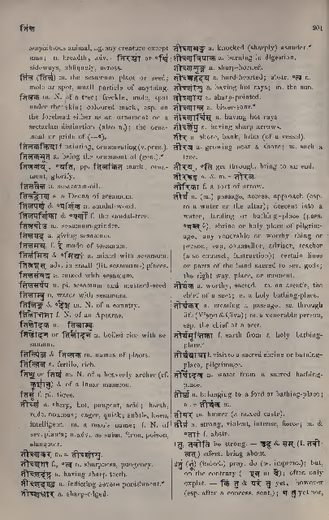
tīrthá ·n. (m.) passage, access, approach (esp. to a water or the altar); descent into a water, landing or bathing-place (poss. °vantÅ), shrine or holy place of pilgrimage, any venerable or worthy thing or person, esp. counsellor, adviser, teacher (also counsel, instruction); certain lines or parts of the hand sacred to sev. gods; the right way, place, or moment.
Monier-Williams 1872 substantive masculine · substantive neuter
Original text · English · substantive masculine · substantive neuter
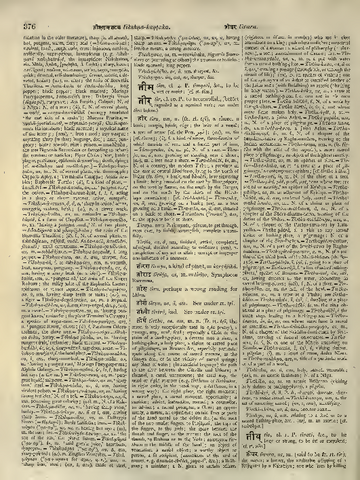
tīrtha tīrtha, as, am, m. n. (fr. rt. tṝ, the masc. is only exceptionally used in epic poetry), a passage, way, road, ford; especially a Ghāt or the stairs of a landing-place, a descent into a river, a bathing-place, a holy place, a shrine or sacred place of pilgrimage, as Benares &c., especially particular spots along the course of sacred streams, as the Ganges &c., or in the vicinity of sacred springs; any piece of water; (in sacrificial language) the path to the altar between the Cātvāla and Utkara; a channel, a canal, watercourse; the usual way, the usual or right manner (e. g. tīrthena or tīrthatas, in right order, in the usual way; a-tīrthena, in a wrong way); the right place, the right moment; a sacred place, a sacred moment, opportunity; a sacrifice; advice, instruction, counsel; a counsellor, an adviser; a sacred preceptor, a Guru; an oppor- tunity, a means, an expedient; certain lines or parts of the hand sacred to the deities &c. (as the root of the two smaller fingers, to Prajāpati; the tops of the fingers, to the gods; the space between the thumb and finger, to the manes; the root of the thumb, to Brahma or to the Veda; saumyan tīr- tham = the middle of the hand); an object of veneration, a sacred object; a worthy object or person, a fit recipient, (sometimes at the end of names, e. g. ānanda-tīrtha, jaya-t˚, &c.); a Brāh- man; a minister; a N. given to certain officers (eighteen or fifteen in number) who are in close attendance on a king; pudendum muliebre; menstrual courses of a woman; a school of philosophy (= dar- śana), a sect; ascertainment of disease; fire.
Petersburger 1855 substantive masculine · substantive neuter · Word type unspecified
Original text · German · substantive masculine · substantive neuter
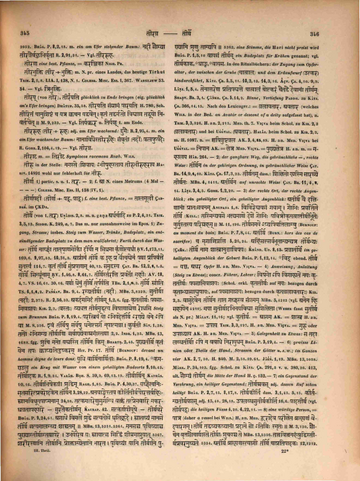
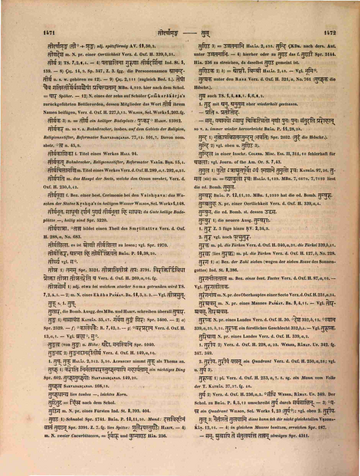
tīrthá (von 1. tar) UṆĀDIS. 2,8. m.n. gaṇa ardharcādi zu P. 2,4,31. TRIK. 3,5,13. SIDDH. K. 249,a,7. Das m. nur ausnahmsweise im Epos. 1〉 Zugang, Strasse; insbes. Steig zum Wasser, Tränke, Badeplatz, ein entsündigender Badeplatz zu dem man wallfahrtet; Furt durch das Wasser: tī̱rthe nācchā̀ tātṛṣā̱ṇamokò dī̱rdho na si̱dhramā kṛ̀ṇotyadhvā̀ ṚV. 1,173,11. ṚV. 1,169,6. ṚV. 9,97,53. ṚV. 10,31,3. āpnā̀naṃ tī̱rthaṃ ka i̱ha pra vòca̱dyenà pa̱thā pra̱pibànte su̱tasyà ṚV. 10,114,7. kṛ̱taṃ tī̱rthaṃ sùprapā̱ṇam ṚV. 10,40,13. samudrasya ŚAT. BR. 12,2,1,1. ŚAT. BR. 12,2,1,5. tī̱rthe sindhū̀nām ṚV. 1,46,8. ṚV. 8,61,7. tī̱rthaistàranti pra̱vatò ma̱hīḥ AV. 18,4,7. VS. 16,61. VS. 30,16. yathā̀ dhe̱nuṃ tī̱rthe ta̱rpayàti TBR. 2,1,8,3. tī̱rthe snā̀ti TS. 6,1,1,2. PAÑCAV. BR. 9,4. ramyatīrthā (nadī) MBH. 3,8329. sutīrthā (nadī) MBH. 2,375. R. 2,56,33. akardamamidaṃ tīrtham R. 1,2,6. fgg. kṛtatīrthaḥ payasāmivāśayaḥ KIR. 2,3. (vastaḥ) vyadhatta tīrthamuddhṛtya viṣāṇāgreṇa rodhasi Steig zum Brunnen BHĀG. P. 9,19,4. parastriyaṃ yo 'bhivadettīrthe 'raṇye vane 'pi vā M. 8,356. evaṃ tīrtheṣu sarveṣu dhanotsargaṃ nṛpātmajā . kurvatī SĀV. 1,38. tato 'bhigamya tīrthāṇi sarvāṇyevāśramāṃstathā SĀV. 2,2. INDR. 1,25. MBH. 13,1688. fgg. śuci mano yadyasti tīrthena kim BHARTṚ. 2,45. puṇyatīrthe kṛtaṃ yena tapaḥ kvāpyatiduṣkaram HIT. Pr. 17. tīrthe (BURNOUF: devant un homme digne de leurs dons) yudhi vārthinārthitāḥ BHĀG. P. 8,19,4. ˚kamaṇḍalu ein Krug mit Wasser von einem geheiligten Badeorte BHĀG. P. 9,10,43. tīrthodaka R. 1,9,34. VARĀH. BṚH. S. 59,9. VARĀH. BṚH. S. 69,13. VARĀH. BṚH. S. 69,19. tīrthārthin KATHĀS. 10,16. tīrthābhiṣekajāṃ śuddhim RAGH. 1,85. BHĀG. P. 4,30,37. yacchaucaniḥsṛtasaritpravarodakena tīrthena BHĀG. P. 3,28,22. anaghāṅghrestava kīrtitīrthayorantarbahiḥsnānavidhūtapāpmanām BHĀG. P. 24,58. tatkamalareṇusugandhi vaktraṃ tatpremavāri makaradhvajatāpahāri — surataikatīrtham CAURAP. 42. satkarṇapīyūṣe — tīrthavare BHĀG. P. 9,24,61. agādhe vimale śuddhe satyatoye dhṛtihrade . snātavyaṃ mānase tīrthe satyamālambya śāśvatam .. MBH. 13,5351. MBH. 13,5361. manasaśca pṛthivyāśca puṇyāstīrthāstathāpare . ubhayoreva yaḥ snāyātsa siddhiṃ śīghramāpnuyāt MBH. 13,5367. śarīrasthāni tīrthāni proktānyetāni bhārata . pṛthivyāṃ yāni tīrthāni puṇyāni śṛṇu tānyapi .. MBH. 13,5363. eine Stimme, die Hari nicht preist wird BHĀG. P. 1,5,10 vāyasaṃ tīrtham ein Badeplatz für Krähen genannt; vgl. tīrthakāka, ˚dhvāṅkṣa, ˚vāyasa. In den Ritualbüchern: der Zugang zum Opferaltar, der zwischen der Grube (cātvāla) und dem Erdaufwurf (utkara) hindurchführt, KĀTY. ŚR. 5,5,11. KĀTY. ŚR. 10,2,13. KĀTY. ŚR. 14,3,16. ĀŚV. ŚR. 4,10. ĀŚV. ŚR. 9,9. LĀṬY. 1,5,4. tenāntareṇa pratipadyante cātvālaṃ cotkaraṃ caitadvai devānāṃ tīrtham ṢAḌV. BR. 3,1. ŚĀṄKH. ŚR. 5,14,2. Rinne, Vertiefung PADDH._zu_KĀTY. ŚR. 366,14. KĀTY. ŚR. 366,15. Nach den Lexicogrr.: = jalāvatāra, avatāra (welches WILS. in der Bed. an Avatār or descent of a deity aufgefasst hat), n. TRIK. 3,3,326. H. an. 2,215. MED. th. 7. VIŚVA beim Schol. zu KIR. 2,3 (jalāvatāra) und bei UJJVAL. (avatāra). HALĀY. beim Schol. zu KIR. 2,3. m. H. 1087. n. = ṛṣijuṣṭajala AK. 3,4,15,89. H. an. MED. VIŚVA_bei_UJJVAL. = nipāna AK. = kṣetra MED. VIŚVA. = puṇyakṣetra H. an. m. = mahālaya HĀR. 264. — 2〉 der gangbare Weg, die gebräuchliche —, rechte Weise: tīrthena in der gehörigen Ordnung, in gebräuchlicher Weise ŚAT. BR. 14,9,1,10. KĀTY. ŚR. 17,3,23. tīrthatas dass.: śikṣito hyasmi sārathye tīrthataḥ MBH. 4,1411. atīrthena auf unrechte Weise ŚAT. BR. 11,4,2,14. LĀṬY. 3,4,5. GOBH. 1,2,20. — 3〉 der rechte Ort, der rechte Augenblick; ein geheiligter Ort, ein geheiligter Augenblick: atīrthaṃ vai dakṣiṇānāṃ prātaḥsavanam ANUPADA 1,8. vikiredyavasaṃ gavām . gobhiḥ pravartite tīrthe (KULL.: tasminyavase bhakṣyamāṇe deśe gobhiḥ pavitrīkṛtatvāttīrthībhūte) kuryustasya parigraham .. M. 11,196. tīrthasamaye 'pyapibattilāmbu (BURNOUF: au moment du bain) BHĀG. P. 7,8,44. atīrthe (BURN.: hors des cas de sacrifice) ca mṛgānnighnanti BHĀG. P. 5,26,24. ahiṃsantsarvabhūtānyanyatra tīrthebhyaḥ (ŚAṂK.: tīrthaṃ nāma śāstrānujñāviṣayaḥ) CHĀND. UP. 8,15. prajātīrthe im geheiligten Augenblick der Geburt BHĀG. P. 1,12,14. ˚vid ebend. tīrtha = yajña, adhvara Opfer H. an. MED. VIŚVA. — 4〉 Anweisung, Anleitung (Steig zu Etwas); concr. Führer, Lehrer: viṣamo 'pi vigāhyate nayaḥ kṛtatīrthaḥ payasāmivāśayaḥ (Schol. erkl. kṛtatīrthaḥ auf nayaḥ bezogen durch kṛtābhyāsādyupāyaḥ, auf payasāmāśayaḥ bezogen durch kṛtajalāvatāraḥ) KIR. 2,3. vāsudevena tīrthena tāta gacchasva saṃśamam MBH. 5,4212 (vgl. anena hi sahāyena MBH. 5,4210). mayā sutīrthādabhinayavidyā suśikṣitā (WEBER fasst sutīrtha als N. pr.) MĀLAV. 11,16; vgl. kutīrtha. = āgama AK. = śāstra H. an. MED. VIŚVA. = upāya TRIK. 3,3,197. H. an. MED. VIŚVA. = guru oder upādhyāya AK. H. an. MED. VIŚVA. — 5〉 Gelegenheit zu Etwas: sa tadā labdhatīrtho 'pi na babādhe nirāyudham BHĀG. P. 3,19,4. — 6〉 gewisse Linien oder Theile der Hand, Strassen der Götter u. s. w.; im Ganzen vier AK. 2,7,50. H. 840. M. 2,58. M. 2,59. M. 2,61. YĀJÑ. 1,19. MBH. 13,5058. MĀRK. P. 34,103. fgg. Schol. zu KĀTY. ŚR. 291,5 v. u. 380,20. KĀTY. ŚR. 291,413, ult. saumyaṃ tīrtham die Mitte der Hand H. ś. 152. — 7〉 ein Gegenstand der Verehrung, ein heiliger Gegenstand: tīrthaśravas adj. dessen Ruf schon heiligt BHĀG. P. 2,7,15. BHĀG. P. 8,17,8. tīrthakīrti dass. BHĀG. P. 3,1,45. BHĀG. P. 3,5,15. kīrtanyatīrthayaśas adj. BHĀG. P. 15,48. BHĀG. P. 28,18. upalabdhasutīrthakīrti BHĀG. P. 16,6. pādatīrtha (vgl. tīrthapad) die heiligen Füsse BHĀG. P. 4,20. BHĀG. P. 4,22,11. — 8〉 eine würdige Person, = pātra (daher a vessel bei WILS.) H. an. MED. dūrādeva parīkṣeta brāhmaṇaṃ vedapāragam . tīrthaṃ taddhavyakavyānāṃ pradāne so 'tithiḥ smṛtaḥ .. M. 3,130. śaucena vṛttaśaucārthāste tīrthāḥ śucayaśca te MBH. 13,5356. tattvavittvanahaṃbuddhistīrthapravaramucyate MBH. 13,5354. atīrthe brāhmaṇastyāgī tīrthe cāpratipādakaḥ MBH. 12,1212. ˚pratipādanam DAŚAK._in_BENF. Chr. 182,20. rakṣitaṃ vardhayetsamyagvṛddhaṃ tīrtheṣu (vgl. M. 7,99, wo dafür pātreṣu) nikṣipet HIT. II, 7. na tathā (sulabhāḥ) tīrtha āyāte śraddhayā ye dhanatyajaḥ BHĀG. P. 8,20,9. Hierher gehören wohl die Personennamen ānandatīrtha, kṛṣṇa˚, jaya˚. ein Brahman UṆĀDIVṚ._im_SAṂKṢIPTAS. ŚKDR. — 9〉 Bez. bestimmter Personen in der nächsten Umgebung eines Fürsten: kaccidaṣṭādaśānyeṣu svapakṣe daśa pañca ca . tribhistribhiravijñātairvetsi tīrthāni cārakaiḥ .. MBH. 2,171 = R. GORR. 2,109,45; vgl. PAÑCAT. p. 156, wo tīrtha durch yuktakarman (nicht n. eine brauchbare Sache, wie BENFEY übersetzt, sondern m. der ein bestimmtes Amt bekleidet) erklärt wird, und wo auch die 18 Personen auf des Feindes und die 15 auf der eigenen Seite aufgezählt werden; anders beim Schol. zu R._bei_GORR. Bd. VII, S. 341. ā tīrthādapratīghātaṃ sa tasyāḥ (rājanītyāḥ) phalamānaśe RAGH. 17,68. = mantrin MED. VIŚVA beim Schol. zu KIR. 2,3 und bei UJJVAL. = satrin (fehlerhaft für mantrin) H. an. = mantryādyaṣṭādaśa VIŚVA beim Schol. zu KIR. 2,3. a royal vessel (d. i. pātra und zwar hiern der Bed. Minister) WILSON nach SVĀMIN_zu_AK. — Die Lexicogrr. kennen noch folgende Bedd.: 10〉 vulva H. an. VIŚVA und HALĀY. beim Schol. zu KIR. 2,3. — 11〉 die monatliche Reinigung H. an. MED. VIŚVA_bei_UJJVAL. — 12〉 = darśana H. an. a school of philosophy, a sect WILS. — 13〉 = yoga TRIK. 3,3,197. — 14〉 = nidāna Diagnose. — 15〉 Feuer UṆĀDIVṚ._im_SAṂKṢIPTAS. ŚKDR. — Vgl. mṛga˚, su˚.
Original text · German · Word type unspecified
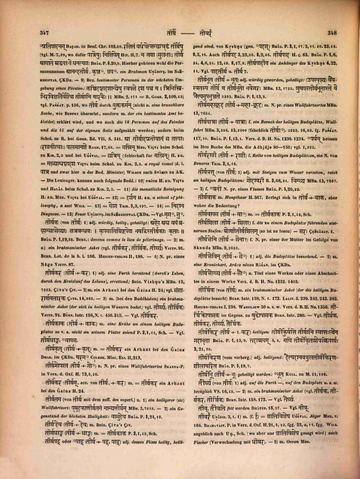
tīrtha 2〉 TS. 7,2,1,4. — 4〉 patañjalinā guruṇā tīrthadarśinā Ind. St. 5,159. — 8〉 ŚIŚ. 14,9. Sp. 347, Z. 3. fgg. die Personennamen ānandatīrtha u. s. w. gehören zu 12〉. — 9〉 ŚIŚ. 2,111 (zugleich Bed. ŚIŚ. 1.). teṣāṃ caiva gatistīrthairvāsaścaiṣāṃ pracintyatām MBH. 4,959. hier nach dem Schol. = cara Späher. — 12〉 N. eines der zehn auf Schüler Śaṃkarācāryaʼs zurückgeführten Betterorden, dessen Mitglieder das Wort tīrtha ihrem Namen beifügen, Verz. d. Oxf. H. 227,b,15. WILSON, Sel. Works 1,202. fg.
Böhtlingk 1879 substantive masculine · substantive neuter · Word type unspecified
Original text · German · substantive masculine · substantive neuter
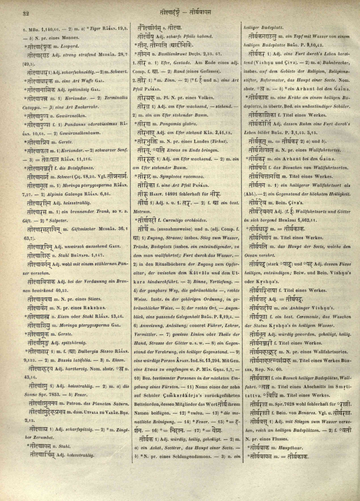
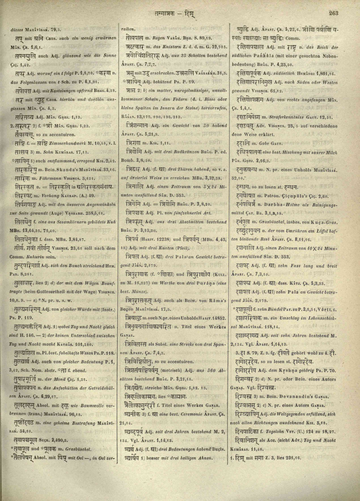
tīrthá m. (ausnahmsweise) und n. (adj. Comp. f. ā) — 1〉 Zugang, Strasse; insbes. Stieg zum Wasser, Tränke, Badeplatz (insbes. ein entsündigender, zu dem man wallfahrtet); Furt durch das Wasser. — 2〉 in den Ritualbüchern der Zugang zum Opferaltar, der zwischen dem Cātvāla und dem Utkara hindurchführt. — 3〉 Rinne, Vertiefung. — 4〉 der gangbare Weg, die gebräuchliche —, rechte Weise. Instr. in der gehörigen Ordnung, in gebräuchlicher Weise. — 5〉 der rechte Ort, — Augenblick, eine passende Gelegenheit BHĀG. P. 8,19,4. — 6〉 Anweisung, Anleitung; concret Führer, Lehrer, Vermittler. — 7〉 gewisser Linien oder Theile der Hand, Strasse der Götter u. s. w. — 8〉 ein Gegenstand der Verehrung, ein heiliger Gegenstand. — 9〉 eine würdige Person ĀPAST. Ind. St. 15,294. Mit Gen. eine Etwas zu empfangen würdige Person. MĀN. GṚHY. 1,7. — 10〉 Bez. bestimmter Personen in der nächsten Umgebung eines Fürsten. — 11〉 Name eines der zehn auf Schüler Śaṃkarācāryaʼs zurückgeführten Bettelorden, dessen Mitglieder das Wort tīrtha ihrem Namen beifügen. — 12〉 *vulva. — 13〉 *die monatliche Reinigung. — 14〉 *Feuer. — 15〉 *= darśana — 16〉 *= nidāna. — 17〉 *= yoga.
Original text · German · Word type unspecified
tīrtha , gavāṃ tīrtham VIṢṆUS. 23,61 soll nach dem Comm. Kuhurin sein. [Nachtrag, Band 3]
Original text · German · Word type unspecified
tīrtha 12〉 13〉 15〉 ZACH. Beitr. [Nachtrag, Band 5]

Original text · German · Word type unspecified
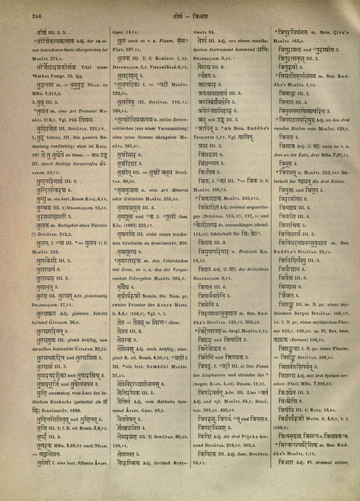
tīrtha III. 3. 5. [Nachtrag, Band 7]
Apte 1890 substantive masculine · substantive neuter
Original text · English · substantive masculine · substantive neuter
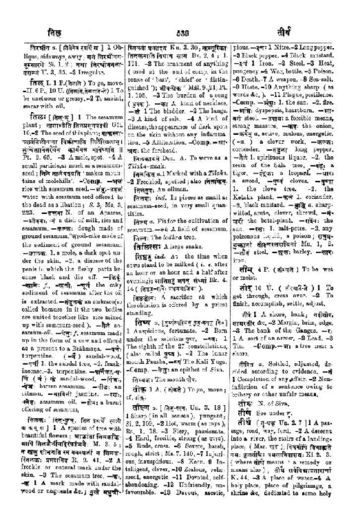
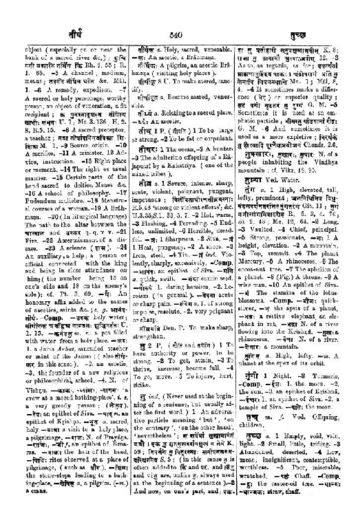
tīrthaṃ [tṝ-thak Uṇ. 2. 7] 1 A passage, road, way, ford. 2 A descent into a river, the stairs of a landingplace; (Mar. ghāṭa); viṣamopi vigāhyate nayaḥ kṛtatīrthaḥ payasāmivāśayaḥ Ki. 2. 3. (where tīrtha means ‘a remedy or means also); tīrthaṃ sarvavidyāvatārāṇāṃ K. 44. 3 A place of water. 4 A holy place, place of pilgrimage, a shrine &c, dedicated to some holy ([Page 0540-a]) object (especially on or near the bank of a sacred river &c.); śuci mano yadyasti tarthina kiṃ Bh. 2. 55; R. 1. 85. 5 A channel, medium, means; tadanena tīrthena ghaṭeta &c. Māl. 1. 6 A remedy, expedient. 7 A sacred or holy personage, worthy person, an object of veneration, a fit recipient; kva punastādṛśasya tīrthasya sādhoḥ saṃbhavaḥ U. 1; Ms. 3. 136; H. 2. 8, R. 5. 15. 8 A sacred preceptor, a teacher; mayā tīrthādabhinayavidyā śikṣitā M. 1. 9 Source, origin. 10 A sacrifice. 11 A minister. 12 Advice, instruction. 13 Right place or moment. 14 The right or usual manner. 15 Certain parts of the hand sacred to deities, Manes &c. 16 A school of philosophy. 17 Pudendum muliebre. 18 Menstrual courses of a woman. 19 A Brāhmaṇa. 20 (In liturgical language) The path to the altar between the cātvāla and utkara q.q. v.v. 21 Fire. 22 Ascertainment of a disease. 23 A science (śāstra). 24 An auxiliary, a help; a person or official connected with the king and being in close attendance on him; (the number being 15 on one's side and 18 on the enemy's side); cf. Pt. 3. 69. — rthaḥ An honorary affix added to the names of ascetics, saints &c.; e. g. ānaṃdatīrtha. Comp. — udakaṃ holy water; tīrthodakaṃ ca vahniśca nānyataḥ śuddhimarhataḥ U. 1. 13. — kamaṃḍalu m. n. a pot filled with water from a holy place. — karaḥ 1 a Jaina Arhat, sanctified teacher or saint of the Jainas; (also tīrthaṃkara in this sense). 2 an ascetic. 3 the founder of a new religious or philosophical school. 4 N. of Viṣṇu. — kākaḥ, -dhvāṃkṣaḥ, -vāyasaḥ ‘a crow at a sacred bathing-place’, i. e. a very greedy person; (lolupa). — devaḥ an epithet of Śiva. — pād m. an epithet of Kṛṣṇa. — bhūta a. sacred, holy. — yātrā a visit to a holy place, a pilgrimage. — rājaḥ N. of Prayāga. — rājiḥ, -jī f. an epithet of Benaras. — vākaḥ the hair of the head. — vidhiḥ rites observed at a place of pilgrimage, (such as kṣaura). — śilā the stone-steps leading to a bathing-place. — sevin a. a pilgrim. ( — m.) a crane.
Cappeller 1887 substantive masculine · substantive neuter · Word type unspecified
Original text · German · substantive masculine · substantive neuter
tīrthá n. (m.) Zugang (bes. zum Wasser o. zum Opferaltar), Furt, Ladeplatz, Wallfahrtsort; rechter Weg o. Ort, gewisse [Page154-2] Linien in der Hand, heiliger Gegenstand, würdige Person.

Original text · German · Word type unspecified
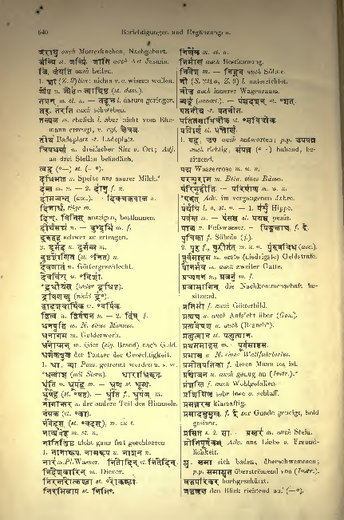
tīrtha Badeplatz st. Ladeplatz.
Burnouf 1866 substantive masculine · substantive neuter
Original text · French · substantive masculine · substantive neuter
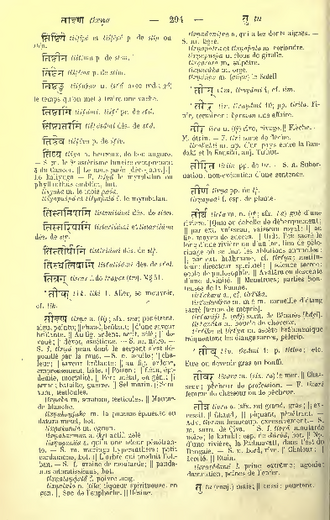
tīrtha tīrtha m. n. (tṝ; sfx. tha) gué d'une rivière. Quai ou échelle de débarquement; par ext. vaisseau, vaisseau royal; Ordt. lieu sacré le long d'une rivière ou d'un lac, lieu de pèlerinage où se font les ablutions annuelles; par ext. brâhmane, cf. tīrthya; instituteur; directeur spirituel; science sacrée; école de philosophie. Avatāra ou descente d'une divinité. Menstrues; parties honteuses de la femme. tīrthakara a., cf. tīrthika. tīrthadhvāṅkṣa m. m à m. corneille d'étang sacré [terme de mépris]. tīrtharājī f. (rāj) surn. de Bénarès [kāśī]. tīrthavāka m. boucle de cheveux. tīrthika et tīrthya m. ascète brâhmanique fréquentant les étangs sacrés, pèlerin.
Occurrences in source texts (13)
HP 7 occurrences
HTK 2 occurrences
SiSa 4 occurrences
Continue with AYI Free
Image source: AYI archive.