

vana वन – forest
particle · substantive masculine · substantive neuter · Word type unspecified
Dictionary sources
AYI dictionary substantive neuter
forest
Cappeller 1891 substantive neuter
Original text · English · substantive neuter
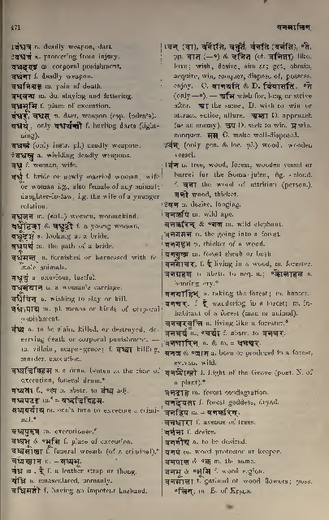
vána1 ·n. tree, wood, forest, wooden vessel or barrel for the Soma-juice, fig. = cloud. f. vánā the wood of attrition (person.), vanī wood, thicket.
Original text · English · substantive neuter
vana2 ·n. desire, longing.
Monier-Williams 1872 particle · substantive neuter
Original text · English · particle
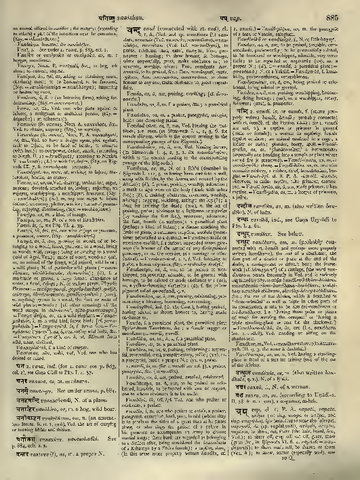
vana 2 . vana, ind. (for 1. vana see p. 883, col. 2), see Gaṇa Cādi to Pāṇ. I. 4, 57.
Original text · English · substantive neuter
1. vana, am, n. (for 2. vana see p. 885, col. 1), a wood, forest, grove, thicket, a quantity of lotuses or other plants growing in a thick bed or cluster (e. g. kumuda-v˚, a bed or cluster of water-lilies); wood, timber; a wooden vessel or barrel (for the Soma juice); ‘the vessel in the sky,’ i. e. a cloud (Ved.); water (Ved.); a fountain, spring; a place of abode, residence; dwelling in a forest, residence abroad; (according to Naigh. I. 4) = raśmi, a ray of light; (according to Sāy. on Ṛg-veda I. 24, 7) light (= tejas); the body of a carriage (so suggested by modern scholars as an interpretation in Ṛg-veda VIII. 34, 18); worshipping; (perhaps) longing, earnest desire; Cyperus Rotundus; (ā), f. = araṇi, wood used to produce fire by attrition; (in Ṛg-veda III. 1, 13) Wood for so kindling fire personified; (ī), f. a wood, forest; (as), m., N. of a son of Uśīnara; of one of the ten orders of mendicants founded by a pupil of Śaṅkarācārya, the members of which order affix vana to their names; [cf. rāmendra- vana.]
Petersburger 1855 particle · substantive masculine · substantive neuter
Original text · German · particle
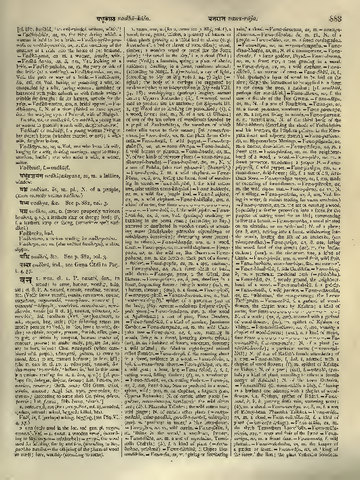
3. vana indecl. gaṇa cādi zu P. 1,4,57.
Original text · German · substantive masculine · substantive neuter
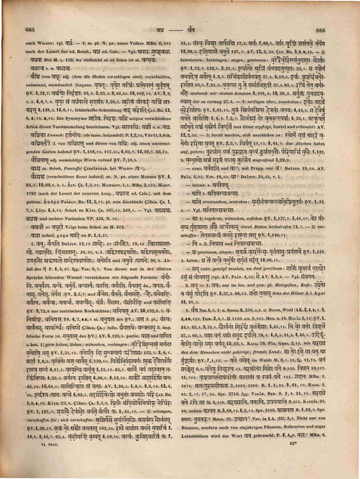
1. vána NIR. 8,3. 1〉 n. SIDDH. K. 249,a,8. a〉 Baum, Wald ? (AK. 2,4,1,1. AK. 3,4,18,129. TRIK. 2,4,1. H. 1110. H. an. 2,283. MED. n. 19. HALĀY. 2,55) ṚV. 1,54,1. ṚV. 1,65,8. ṚV. 3,51,5. dyaurvanā̀ gi̱rayò vṛ̱kṣakèśāḥ ṚV. 5,41,11. ni vo̱ vanā̀ jihate ṚV. 57,3. ṚV. 60,2. yathā̱ vana̱ṃ yathā̀ samu̱dra ejā̀ti ṚV. 78,8. ṚV. 6,6,3. ṚV. 31,2. ṚV. 8,40,1. udiddhū̀noti̱ vāto̱ yathā̱ vanàm ṚV. 10,23,4. KAUŚ. 76. PĀR. GṚHY. 2,15. wie araṇya das dem Menschen nicht gehörige, fremde Land: mā no̱ dame̱ mā vana̱ ā jùhūrthāḥ ṚV. 7,1,19. — vane vaset im Walde M. 6,1. fg. M. 6,28. fg. M. 11,72. vanaṃ gacchet M. 6,3. vaneṣu vihṛtya 33. carantīnāṃ mitho vane M. 8,236. vijana. M. 10,107. M. 11,105. kṛṣṭajānāmoṣadhīnāṃ jātānāṃ ca svayaṃ vane M. 144. gahana MBH. 1,5878. antaḥpurasamīpastha MBH. 3,2089. MBH. 3,2236. R. 1,1,24. R. 9,61,10. RAGH. 1,82. RAGH. 2,17. RAGH. 17,66. Spr. 2716. fgg. VARĀH. BṚH. S. 2,8. VARĀH. BṚH. S. 24,15. araṇye vane 'pi vā M. 8,356. araṇyāni, vanāni, upavanāni M. 9,265. KATHĀS. 93,86. neben kānana R. 3,68,12. R. 6,2,15. Spr. 3105. āmravaṇa R. 1,63,9. Spr. 3887. bhujataru˚ MEGH. 37. udyāna˚ VET. in LA. (III) 5,1. Nicht nur von Bäumen, sondern auch von einjährigen Pflanzen, Rohrarten und sogar Lotusblüthen wird das Wort vana gebraucht. P. 8,4,6. nala˚ MBH. 6,4898. kīcakaveṇūnām KATHĀS. 46,98. padma˚ MBH. 7,1245. RAGH. 16,16. Spr. 4173. KATHĀS. 46,169. BRAHMA-P. in LA. (III) 51,13. paṅkaja˚ R. GORR. 2,57,5. utpala˚ R. GORR. 4,44,89. R. GORR. 4,44,91. kumuda˚ RAGH. 6,86. nīraja˚ Spr. 1629. indīvara˚ Spr. 2840. aravinda˚ Spr. 3655. BHĀG. P. 1,16,33. kamala˚ Spr. 4323. VARĀH. BṚH. S. 43,5. Menge überh.: latāgṛhavanopetā (nadī) R. 5,16,28. lūnabāhuvana adj. KATHĀS. 27,143. Am Ende eines adj. comp. f. ā MBH. 1,1293. MBH. 3,16215. R. 1,41,14. R. 2,57,5. R. 4,2,12. Wann im comp. das na zu ṇa wird P. 8,4,4. fgg. Accent eines auf vana ausgehenden und mit einer Präp. anlautenden comp. P. 6,2,178. fg. vana als m. R. 5,50,21. — b〉 Holz: tvaṃ vanèbhya̱stva̱moṣàdhībhyo jāyase ṚV. 2,1,1. ṚV. 3,9,2. jūryàtsva̱gnira̱jaro̱ vanèṣu ṚV. 3,23,1. pu̱rū yo dagdhāsi̱ vanā̀ ṚV. 5,9,4. śuṣka ṚV. 6,8,10. ṚV. 6,33,3. ṚV. 6,60,10. pa̱ra̱śuryathā̱ vana̱ṃ pātrèva bhi̱ndan ṚV. 7,104,21. ṚV. 8,43,3. śeṣe̱ vanèṣu mā̱troḥ ṚV. 49,15. ṚV. 9,96,6. kiṃ svi̱dvana̱ṃ ka u̱ sa vṛ̱kṣa ā̀sa̱ yato̱ dyāvā̀pṛthi̱vī nìṣṭatakṣuḥ ṚV. 10,31,7. vanā̀ vṛ̱ścantàḥ ṚV. 10,28,8. — c〉 (die aus Holz gemachte) Kufe des Soma ṚV. 1,55,4. vane̱ nipū̀ta̱ṃ vana̱ unnàyadhvam ṚV. 2,14,9. ṚV. 8,35,7. ṚV. 9,6,5. ṚV. 9,7,3. sīda̱nyonā̱ vane̱ṣvā ṚV. 62,8. ṚV. 78,2. ṚV. 88,5. ṚV. 90,2. sīdànmṛ̱go na màhi̱ṣo vanèṣu (zugleich Bed. 1) ṚV. 9,92,6. sīda̱nvanàsya ja̱ṭharè ṚV. 9,95,1. — d〉 Wolke (die himmlische Kufe): vanèṣu vya1̱̀ntarìkṣaṃ tatāna ṚV. 5,85,2. a̱bu̱dhne rājā̱ varùṇo̱ vanàsyo̱rdhvaṃ stūpàṃ dadate hält oben den Zipfel der Wolke ṚV. 1,24,7. vī̱ḻu ci̱dyasya̱ samṛ̀tau̱ śruva̱dvanèva̱ yatsthi̱ram das Feste löst sich auf wie eine Wolke ṚV. 1,127,3. ū̱rdhvā nàḥ santu ko̱myā vanā̀ni ṚV. 1,171,3. Hierher und zu 3〉 dürfte auch ṚV. 3,6,7. ṚV. 3,34,3. ṚV. 7,7,2 zu ziehen sein. Unsicher ist der Text yasye̱damā rajo̱ yujàstu̱je janā̱ vana̱ṃ svàḥ AV. 6,33,1; vgl. die Varr. SV. NAIGH. 1,3. ŚĀṄKH. ŚR. 18,3,2. ganz entstellt ist sarasvatyā adhi vanāya cakṛṣuḥ PĀR. GṚHY. 3,1 vgl. mit AV. 6,30,1. TBR. 2,4,8,7. — e〉 vielleicht Kufe des Wagens: tiṣṭha̱ṃ vanàsya̱ madhya̱ ā ṚV. 8,34,18. — f〉 Wasser NAIGH. 1,12. AK. 1,2,3,3. AK. 3,4,18,129. H. 1069. H. an. MED. HALĀY. 3,26. ˚muc (indra) RAGH. 9,18. — g〉 Aufenthaltsort H. an. (geha) und MED. (nivāsa, ālaya). bahumāṃsādana˚ NALOD. 3,22. — h〉 Aufenthalt in der Fremde (im Walde?), Abwesenheit vom Hause (pravāsa) H. an. — i〉 Quelle (prasravaṇa) H. an. — k〉 Cyperus rotundus (v. l. ghana und nava) VARĀH. BṚH. S. 77,29. — l〉 = raśmi NAIGH. 1,4. — 2〉 m. a〉 N. pr. eines Sohnes des Uśīnara BHĀG. P. 9,23,2. — b〉 N. eines der zehn auf Schüler Śaṃkarākāryaʼs zurückgeführten Bettelorden, dessen Mitglieder ihren Namen das Wort vana anfügen (vgl. rāmendra˚) Verz. d. Oxf. H. 277,b,15. WILSON, Sel. Works I, 202. — 3〉 f. ā das Reibholz (personificirt): vanā̀ jajāna su̱bhagā̱ virū̀pam (d. i. agnim) ṚV. 3,1,13. — 4〉 f. ī Wald BHAR._zu_AK. nach ŚKDR. candana˚ SĀH. D. 79,14. — Vgl. asipatra˚, upa˚, citra˚, tapo˚, naḍa˚, nṛsiṃha˚, paraśu˚, pitṛ˚, puṣpa˚, pramada˚, pramadā˚, preta˚, phalakā˚, phalakī˚, bilva˚, buddha˚, bhānu˚, bhārga˚, madhu˚, mahā˚, mitra˚, maitreya˚, velā˚, agrevaṇa, antarvaṇa, koṭarā˚, khadira˚, nirvaṇa, puragā˚, pra˚, miśrakā˚, śara˚, sārikā˚, sidhrakā˚, prativanam, kelīvanī, dyu˚.
Original text · German · substantive neuter
2. vana (von 1. van) n. etwa Verlangen, Sehnsucht in der Stelle: taddha tadvanaṃ nāma tadvanamityupāsitavyam KENOP. 31. ŚAṂK.: tadbrahma ha kila tadvanaṃ nāma tasya vanaṃ tadvanaṃ tasya prāṇijātasya pratyagātmabhūtatvādvananīyaṃ saṃbhajanīyam.
Böhtlingk 1879 particle · substantive masculine · substantive neuter · Word type unspecified
Original text · German · particle
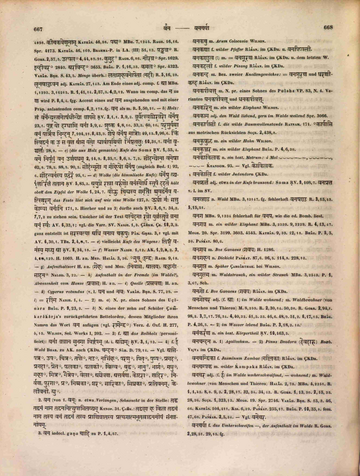
3. *vana Indecl.
Original text · German · substantive masculine · substantive neuter
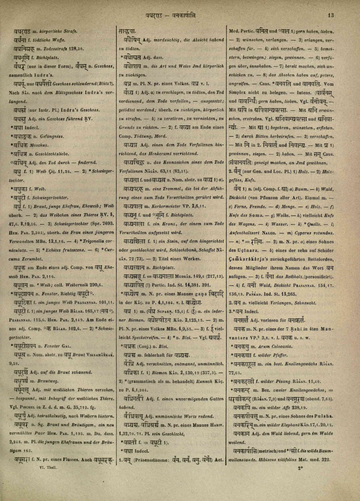
1. vána — 1〉 n. (adj. Comp. f. ā) — a〉 Baum. — b〉 Wald, Dickicht (von Pflanzen aller Art). Einmal m. — c〉 Ferne, Fremde. — d〉 Menge. — e〉 Holz. — f〉 Kufe des Soma. — g〉 Wolke. — h〉 vielleicht Kufe des Wagens. — i〉 Wasser. — k〉 *Quelle. — l〉 Aufenthaltsort NALOD. — m〉 Cyperus rotundus. — n〉 *= raśmi. — 2〉 m. N. pr. — a〉 eines Sohnes des Uśīnara. — b〉 eines der zehn auf Schüler Śaṃkarācāryaʼs zurückgeführten Bettelorden, dessen Mitglieder ihrem Namen das Wort vana anfügen. — 3〉 f. vánā das Reibholz (personificirt). — 4〉 f. vanī Wald, Dickicht PRASANNAR. 154,17. 156,18. PAÑCAD. Ind. St. 15,265.
Original text · German · substantive neuter
2. vana n. vielleicht Verlangen, Sehnsucht.
Original text · German · Word type unspecified
vána VI. Vgl. GELDNER, Vedische Studien 114. [Nachtrag, Band 7]
Apte 1890 substantive neuter
Original text · English · substantive neuter
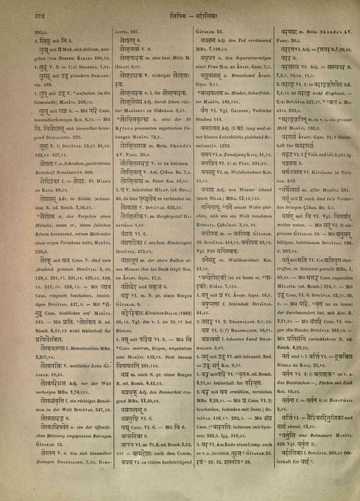
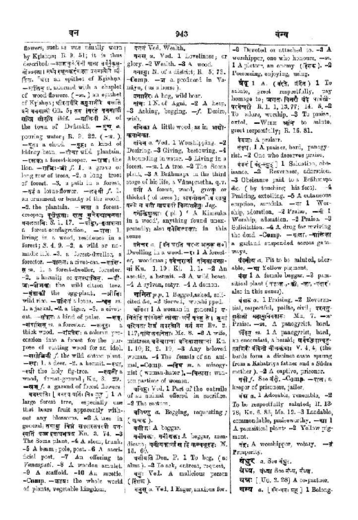
vanaṃ [van-ac] 1 A forest, wood thicket of trees; eko vāsaḥ pattane vā, vane vā Bh. 3. 120; vane'pi doṣāḥ prabhavaṃti rāgiṇām. 2 A cluster, group, a quantity of lotuses or other plants growing in a thick bed; citradvipāḥ padmavanāvatīrṇāḥ R. 16. 16, R. 6. 86. 3 A place of abode, residence, house. 4 A fountain, spring (of water). 5 Water in general; Śi. 6. 73. 6 A wooden vessel. 7 Wood, timber. 8 Dwelling in a forest, living abroad. 9 Ved. A cloud. 10 Light; a ray of light. 11 Worshipping. (As the first member of comp. vana may be translated by ‘wild’, ‘forest’; vanavarāhaḥ, vanakadalī, vanapuṣpaṃ &c.). Comp. — agniḥ a forest-conflagration. — ajaḥ the wild goat. — aṃtaḥ 1 the skirts or borders of a forest; R. 2. 58. 2 the forest region itself, wood; U. 225. — aṃtaraṃ 1 another wood. 2 the interior of a forest; V. 4. 26. — abjinī a lotus-plant growing in water. — ariṣṭā wild turmeric. — arcakaḥ a florist, maker of garlands. — alaktaṃ red earth or ruddle. — alikā a sun-flower. — ākhuḥ a hare. — ākhukaḥ a kind of bean. — āpagā ‘wood-river’, a forest-stream. — ārdrakaṃ the root of wild ginger. — (kā) wild ginger. — āśramaḥ abode in the woods, the third stage in the religious life of a Brāhmaṇa. — āśramin m. an anchorite, a hermit. — āśrayaḥ 1 an inhabitant of the wood. 2 a sort of crow or raven. — utsāhaḥ a rhinoceros. — udbhavā the wild cotton plant. — upaplavaḥ a forest-conflagration. — okas m. 1 an inhabitant of a wood, ([Page 0942-c]) a forester. 2 an anchorite, a hermit. 3 a wild animal such as a monkey, boar &c. — kaṇā wild pepper. — kadalī wild plantain. — karin m., — kuṃjaraḥ, -gajaḥ a wild elephant. — kārpāsī (siḥ f.) the wild cotton tree. — kukkuṭaḥ a wild fowl. — koliḥ f. the wild jujube tree. — khaṃḍaṃ a forest. — gavaḥ the wild ox. — gahanaṃ a thicket, the thick part of a forest. — guptaḥ a spy. — gulmaḥ a wild or forest shrub. — gocara a. 1 frequenting woods. 2 living in water. — (raḥ) 1 a hunter. 2 a forester. — (raṃ) a forest. — grahaṇaṃ surrounding a forest and stopping all egress; Ś. 2. — caṃdanaṃ 1 the Devadāru tree. 2 aloe-wood. — caṃdrikā, -jyotsnā a kind of jasmine. — caṃpakaḥ the wild Campaka tree. — cara a. living in a forest, haunting woods, sylvan. — (raḥ) 1 a forester, forest-dweller, woodman; upatasthurāsthitaviṣādadhiyaḥ śatayajvano vanacarā vasatiṃ Ki. 6. 29; Me. 12. 2 a wild animal. 3 the fabulous eightlegged animal called Śarabha. — caryā roaming about or residence in a forest. — chāgaḥ 1 a wild goat. 2 a boar. — chid m. a wood-cutter. — jaḥ 1 an elephant. 2 a kind of fragrant grass. 3 the wild citron tree. — (jaṃ) a blue lotus-flower. — jā 1 wild ginger. 2 the wild cotton tree. — jīvin a forester, woodman. — tiktaḥ the yellow myrobalan tree. — daḥ a cloud. — dāhaḥ a forest-conflagration. — dīpaḥ = ˚caṃpakaḥ. — devatā a sylvan deity, a dryad; R. 2. 12, R. 9. 52; Ś. 4. 4; Ku. 3. 52, Ku. 6. 39. — drumaḥ a tree growing wild in a forest. — dhārā an avenue of trees. — dhitiḥ f. Ved. a hatchet. — dhenu f. the female of the wild ox or Bos gavœus. — paḥ a woodman. — pallavaḥ the śobhāṃjana tree. — pāṃsulaḥ a hunter. — pārśvaṃ the neighbourhood of a wood, the forest region itself. — puṣpaṃ a forest-flower. — pūrakaḥ the wild citron tree. — praveśaḥ commencing a hermit's life. — prastha a. retiring into a wood, leading the life of a hermit. — (sthaḥ) a wood situated on a table-land. — priyaḥ the cuckoo. — (yaṃ) the cinnamon tree. — barhiṇaḥ, -varhiṇaḥ a wild peacock. — bhū f. forest-ground. — makṣikā a gad-fly. — mallī wild-jasmine. — mālā a garland of ([Page 0943-a]) woodflowers, such as was usually worn by Kṛṣṇa; R. 9. 51; it is thus described: — ājānulaṃbinī mālā sarvartukusumojjvalā . madhye sthūlakadaṃbāḍhyā vanamāloti kītiṃtā. ˚dharaḥ an epithet of Kṛṣṇa. — mālin a. adorned with a chaplet of wood-flowers. ( — m.) an epithet of Kṛṣṇa; dhīrasamīre yamunātīre vasati vane vanamālī Gīt. 5; tava virahe vanamālī sakhi sīdati ibid. — mālinī N. of the town of Dvārakā. — muc a. pouring water; R. 9. 22. ( — m.), — mūtaḥ a cloud. — mudgaḥ a kind of kidney-bean. — mocā wild plantain. — rakṣakaḥ a forest-keeper. — rājaḥ the lion. — rājiḥ -jī f. 1 a grove or long row of trees. 2 a long tract of forest. 3 a path in a forest. — ruhaṃ a lotus-flower. — lakṣmī f. 1 an ornament or beauty of the wood. 2 the plantain. — latā a forestcreeper; dūrīkṛtāḥ khalu guṇairudyānalatā vanalatābhiḥ Ś. 1. 17. — vahniḥ, -hutāśanaḥ a forest-conflagration. — vāsaḥ 1 living in a wood, residence in a forest; Ś. 4. 9. 2 a wild or nomadic life. 3 a forest-dweller, a forester. — vāsanaḥ a civet-cat. — vāsin m. 1 a forest-dweller, forester. 2 a hermit; so vanasthāyin. — vījaḥ -vījakaḥ the wild citron tree. — vṛṃtākī the egg-plant. — vrīhiḥ wild rice. — śobhanaṃ a lotus. — śvan m. 1 a jackal. 2 a tiger. 3 a civetcat. — saṃkaṭaḥ a kind of pulse. — sad, — saṃvāsin m. a forester. — samūhaḥ a thick wood. — saṃpraveśaḥ a solemn procession into a forest for the purpose of cutting wood for an idol. — sarojinī f. the wild cotton plant. — sthaḥ 1 a deer. 2 a hermit. — sthā, — sthī the holy fig-tree. — sthalī a wood, forest-ground; Ku. 3. 29. — sraj f. a garland of forest flowers.
Burnouf 1866 substantive neuter
Original text · French · substantive neuter
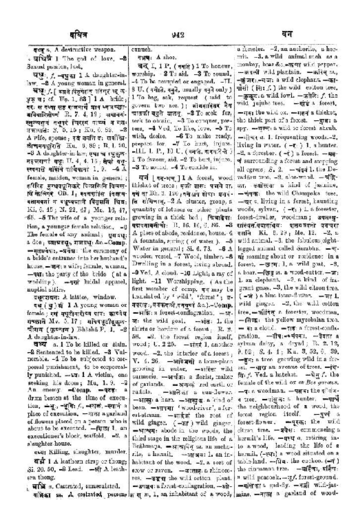
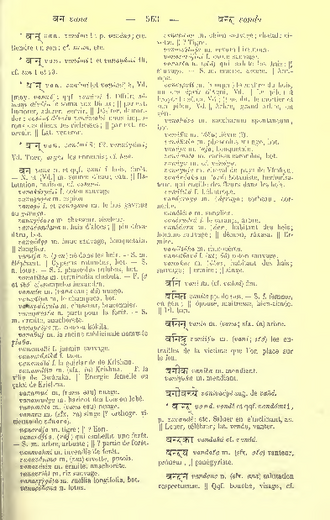
vana vana n. et qqf. vanī f. bois, forêt. — N. et [Vd.] m. source d'eau; eau. Habitation, maison, cf. vasana. vanakārpāsī f. coton sauvage. vanagupta m. espion. vanago f. et vanagava m. le bos gavæus ou gavaya. vanagocara m. chasseur, oiseleur. vanacandana n. bois d'aloës; pin devadāru, bot. vanachāga m. bouc sauvage, bouquetain. Sanglier. vanaja a. (jan) né dans les bois. — S. m. éléphant. Cyperus rotundus, bot. — S. n. lotus. — S. f. phaseolus trilobus, bot. vanatikta m. terminalia chebula. — F. [ā et ikā] cissampelos hexandra. vanada m. (vana eau; dā) nuage. vanadīpa m. le champaca, bot. vanapāṃśula m. chasseur, braconnier. vanaprastha a. parti pour la forêt. — S. m. ermite, anachorète. vanapriya m. coucou kokila. vanabhuj m. la racine médicinale nommée ṛṣabha. vanamallī f. jasmin sauvage. vanamākṣikā f. taon. vanamālā f. la guirlande de Kṛṣṇa. vanamālin m. (sfx. in) Kṛṣṇa. — F. la ville de Dwâraka. Energie femelle ou śakti de Kṛṣṇa. vanamuc m. (vana eau) nuage. vanamudga m. haricot des bois ou lobé. vanamūta m. (vana eau) nuage. vanara m. (sfx. ra) singe [? orthogr. vicieuse de vānara]. vanarāja m. tigre; ? lion. vanarāji a. (rāj) qui embellit une forêt. — S. m. arbre, arbuste; ? partie de forêt. vanavahni m. incendie de forêt. vanavāsana m. (vas) civette, putois. vanavāsin m. ermite, anachorète. vanavrīhi m. riz sauvage. vanaśṛṅgāṭa m. ruellia longifolia, bot. vanaśobhana n. lotus. [Page563-2] vanaśvan m. chien sauvage; chacal; civette. ? Tigre. vanasaṅkaṭa m. ervum hirsutum. vanasarojinī f. coton sauvage. vanastha a. (sthā) qui habite les bois; sauvage. — S. m. ermite, ascète. Antilope. vanaspati m. (s euph.) le maître du bois, un des āpris d'Agni, Vd. Le pilon à broyer le soma, Vd.; au du. le mortier et son pilon, Vd. Arbre, grand arbre, en gén. vanahāsa m. saccharum spontaneum, bot. vanākhu m. (ākhu) lièvre (?). vanākhuka m. phaseolus mungo, bot. vanāja m. (aja) bouquetain. vanāmala m. carissa carondas, bot. vanāyu m. cf. vānāyu. vanāyuja m. cheval du pays de Vānāyu. vanārcaka m. (arc) botaniste, herborisateur, qui cueille des fleurs dans les bois. vanālikā f. héliotrope. vanāśraya m. (āśraya) corbeau, corneille. vanāhira m. sanglier. vanekṣudrā f. le caranja, arbre. vanecara m. (car) habitant des bois; homme sauvage; démon, rākṣasa. Ermite. vanotsāha m. rhinocéros. vanodbhavā f. (ut; bhū) coton sauvage. vanaukas m. (okas) habitant des bois; sauvage; ermite; singe.
Occurrences in source texts (2)
DYS 1 occurrence
HP 1 occurrence
Continue with AYI Free
Image source: AYI archive.