Long vowels

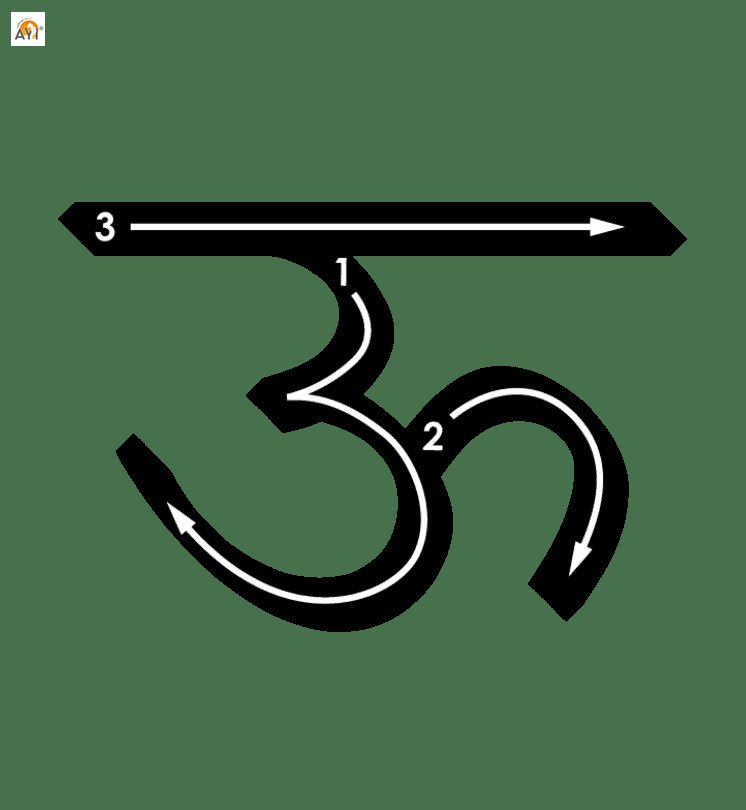
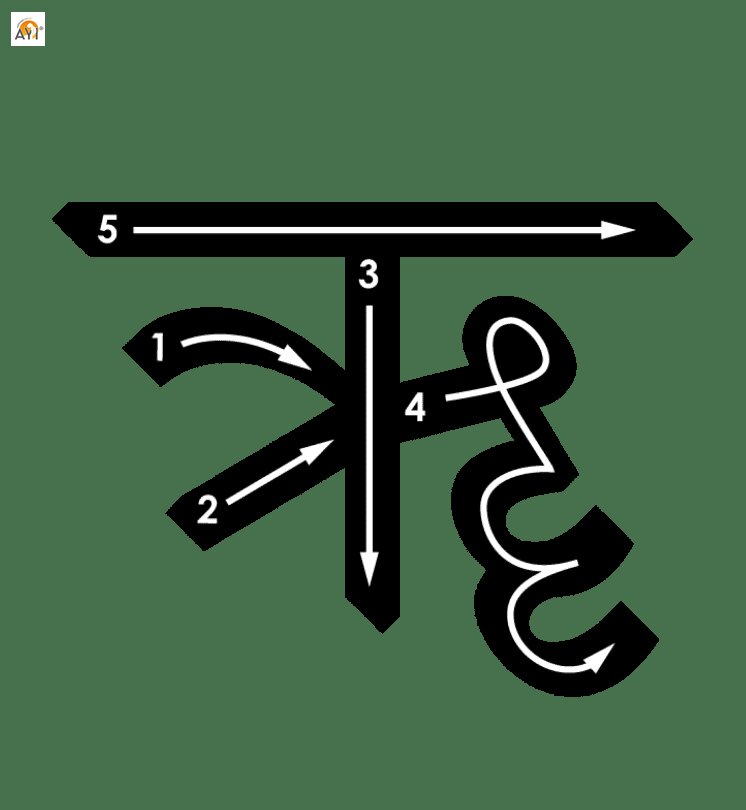
The letters shown above stand for short vowels. For long vowels, the respective letters are extended.
ā

Writing

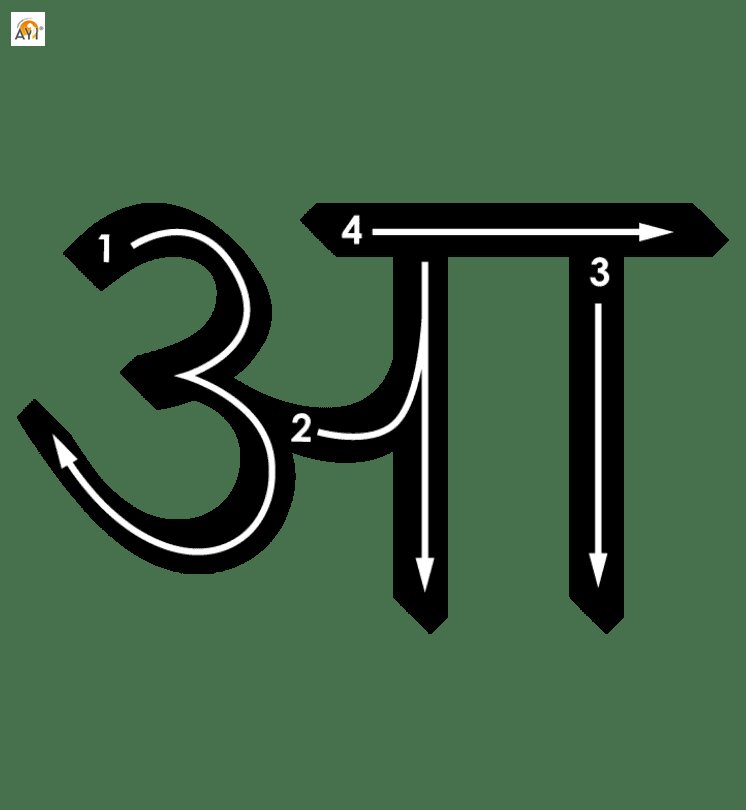
  1. Start at the top left and draw two sweeping downward curves in the shape of a “3”.
  2. Start between the curves, draw a curve towards the top right and, without lifting the pen, continue with a vertical line downwards.
  3. Draw another vertical line from top to bottom immediately to the right.
  4. Draw the horizontal line above the letter from left to right. Make sure it extends only across the two vertical lines.

Pronunciation

  • A long, guttural ā, as in the German words Kahn and Vater.
  • Guttural place of articulation: at the throat.

आ / ā

ī

Writing

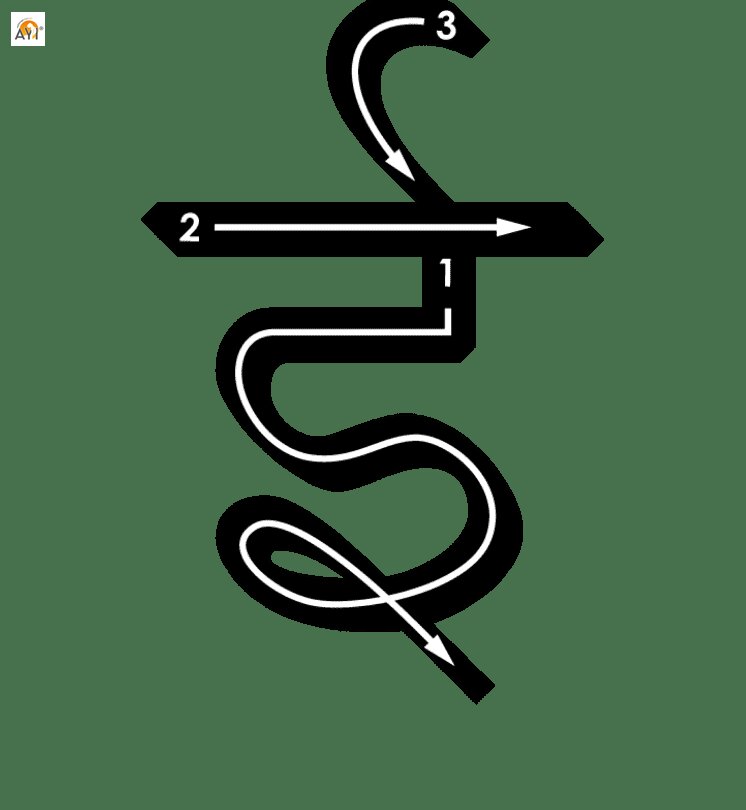
  1. Draw the curved line from top to bottom in a single stroke.
  2. Draw the horizontal line above the letter from left to right.
  3. Starting at the top, draw a small curve to the right that ends above the starting point of the first line.

Pronunciation

  • A long ī, as in the German words Igel, Flieder and Kies.
  • Palatal place of articulation: at the palate.

ई / ī

ū

Writing

  1. Without lifting the pen, draw two curves resembling a “3”.
  2. Start at the lower curve and draw a curve towards the bottom right.
  3. Draw the horizontal line above the letter from left to right.

Pronunciation

  • A long ū, as in the German words Mut and Kuhle.
  • Labial place of articulation: at the lips.

ऊ / ū

r̥̄

Writing

  1. Starting on the left, draw a small curve.
  2. Draw a line beneath it from left to right, so that the two lines meet on the right.
  3. At the point where they meet, draw a vertical line from top to bottom.
  4. From the same point, draw a curved line with two small curves to the right.
  5. Draw the horizontal line above the letter from left to right.

Pronunciation

  • A long sonant r̥̄, as in the Saṃskṛt word pitr̥̄n; this is a very rare sound.
  • Retroflex place of articulation: behind the front teeth.

ॠ / r̥̄
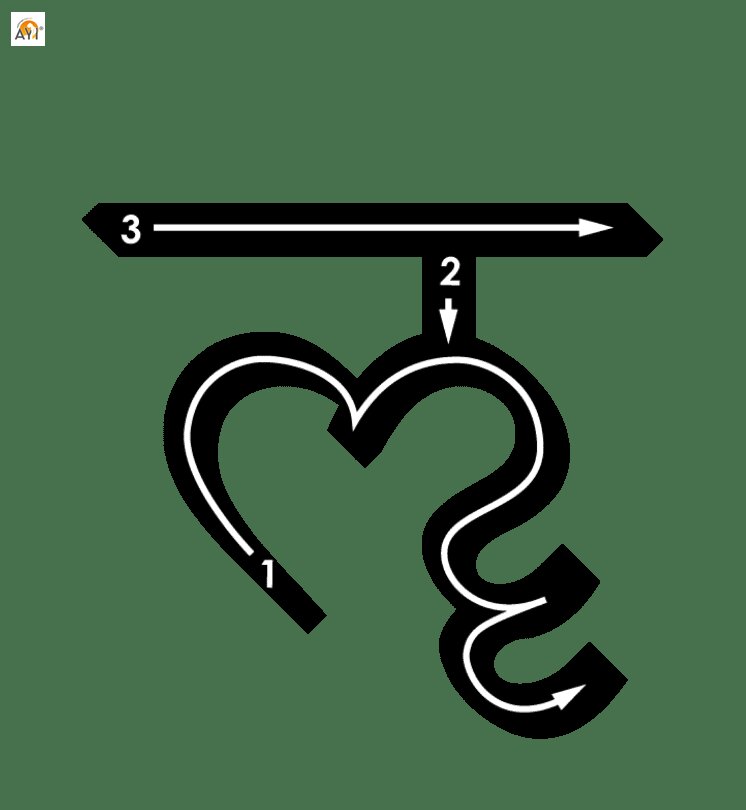
l̥̄

Writing

  1. Starting at the bottom, draw a clockwise, heart-shaped curve ending in two curves to the right at the bottom.
  2. Place a short vertical line on the right-hand curve.
  3. Draw the horizontal line above the letter from left to right.

Pronunciation

  • A long sonant l̥̄; this sound is virtually unused.
  • Dental place of articulation: between the teeth.

ॡ / ḹ

Attached vowel signs

The characters shown above are used only at the beginning of a word. Within a word, the vowel sign is attached directly to the preceding consonant. Here are examples using क / ka:

  • का / kā: compare the short inherent vowel in क / ka.
  • की / kī: note the similarity to the short कि / ki.
  • कू / kū: note the similarity to the short कु / ku.
  • कॄ / kr̥̄: note the similarity to the short कृ / kr̥.
  • कॣ / kl̥̄: note the similarity to the short कॣ / kl̥̄.

Continue with AYI Free

Messages (0)

Please log in to write a message. Go to login

No messages yet.