
Umlauts and vowel modifications
Diphtongs (umlauts or vowel mutations) are combinations of the basic vowels a, i and u. In this case, an a or ā is put in front of an i or u.
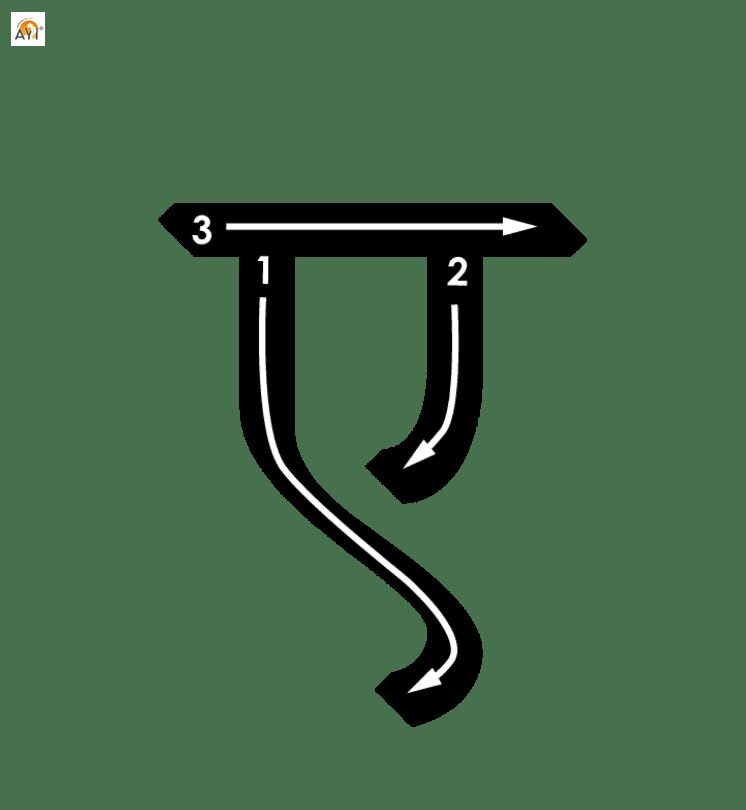
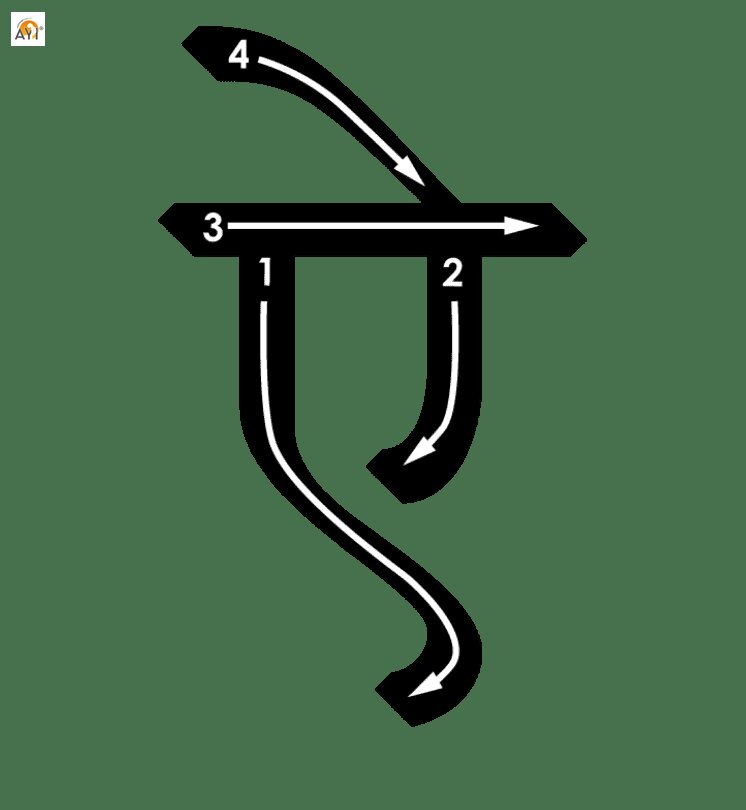
ओ / o
Writing
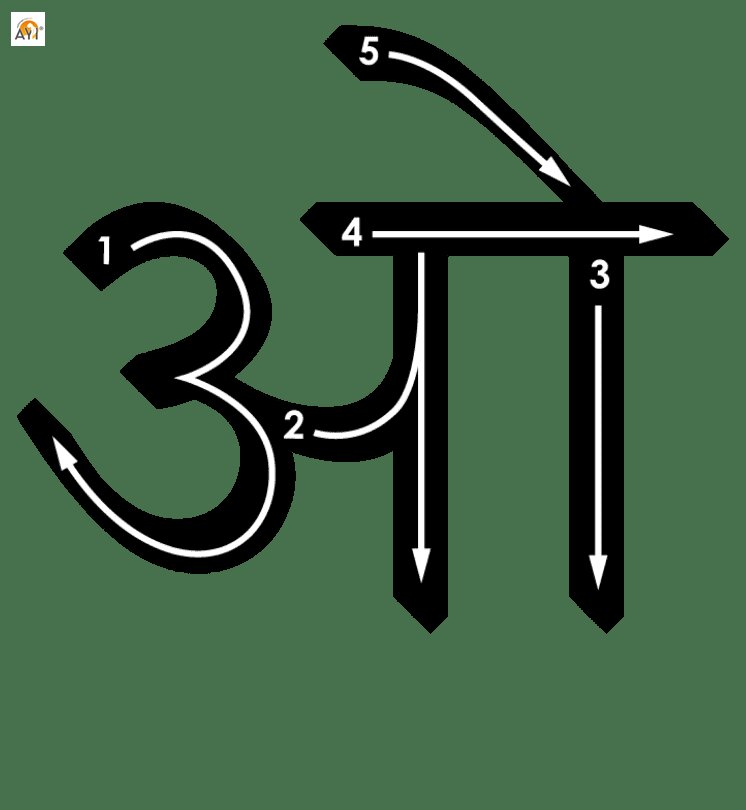
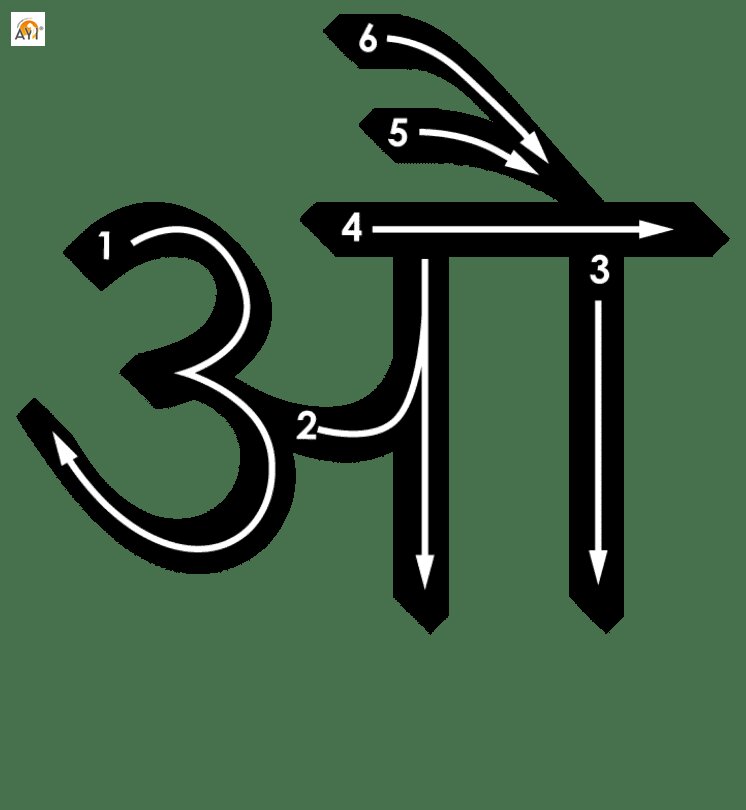
- Start on the top left with two sweeping downward arcs shaped like the figure "3".
- Start again where the two arcs meet and draw another arc to the top right, followed immediately by a vertical line down.
- Place another vertical line from top to bottom next to it on the right.
- Draw the horizontal line from left to right over the letter. Make sure that this line covers only the two vertical lines.
- Now draw a short line above it, from centre top to the starting point of the right vertical line (3).
- Draw yet another short line above it. This line also ends at the starting point of the vertical line on right (3).
Pronunciation
- a long au as in the German words Kraut, blau
- place of articulation: from the throat (guttural) to the lips (labial) (vibrating)
औ / au
Vowel signs attached to consonants
The characters shown above are used only at the beginning of a word. Within a word, the vowel sign is attached directly to the preceding consonant. Here is the example of क / ka:
- के / ke: for the "e", a diagonal line is placed on top of the क / ka
- कै / kai: compare the similarity to के / ke
- को / ko: compare the similarity to के / ke
- कौ / kau: compare the similarity to को / ko
Vowel modifications
- Anusvāra: saṁśaya - संशय (doubt) -> a dot above the sa / स
- Visarga: vṛttayaḥ - वृत्तयः (blur, clouding) -> two dots after the ya / य
- Virāma: vairāgyam - वैराग्यम् (serenity) -> small diagonal line under the ma / म
Please log in to write a message. Go to login
No messages yet.