

nakṣatra नक्षत्र – pr. eines Ekādaśāṅgin
Substantiv Maskulin · Substantiv Neutrum · Worttyp nicht bestimmt
Wörterbuchquellen
Cappeller 1891 Substantiv Neutrum
Originaltext · Englisch · Substantiv Neutrum
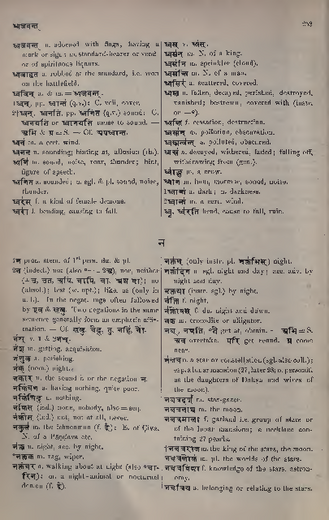
nákṣatra ·n. a star or constellation (sgl. also coll.); esp. a lunar mansion (27, later 28; o. personif. as the daughters of Dakṣa and wives of the moon).
Monier-Williams 1872 Substantiv Neutrum · Worttyp nicht bestimmt
Originaltext · Englisch · Substantiv Neutrum
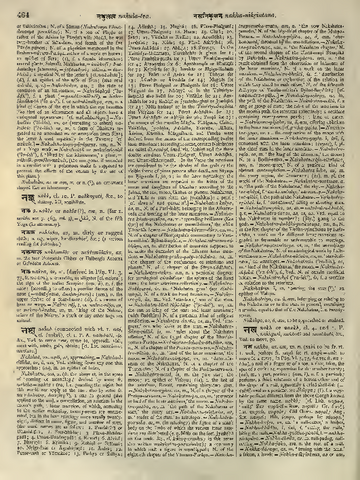
Nakṣatra, am, n. (fr. the above rt. in the sense of ‘coming or ascending;’ derived by some fr. nakṣa = nakta + tra, i. e. guarding the night, but this would not apply to the sun; also by some fr. na + kṣatra, decaying ?), a star in general (also applied to the sun), a constellation, an asterism in the moon's path, a lunar mansion, of which, according to the earlier reckoning, twenty-seven are enume- rated, but in the later astrology more usually twenty- eight, distinct in name, figure, and number of stars, (the usual names are as follow: 1. Śraviṣṭhā or Dhaniṣṭhā; 2. Śata-bhiṣaj; 3. Pūrva-Bhādra- padā; 4. Uttara-Bhādrapadā; 5. Revatī; 6. Aśvinī; 7. Bharaṇī; 8. Kṛttikā; 9. Rohiṇī or Brāhmī; 10. Mṛga-śiras or Āgrahāyaṇī; 11. Ārdrā; 12. Punar-vasū or Yāmakau; 13. Puṣya or Sidhya; 14. Āśleṣā; 15. Maghā; 16. Pūrva-Phalgunī; 17. Uttara-Phalgunī; 18. Hasta; 19. Citrā; 20. Svātī; 21. Viśākhā or Rādhā; 22. Anurādhā; 23. Jyeṣṭhā; 24. Mūla; 25. Pūrvā Aṣāḍhā; 26. Uttarā Aṣāḍhā; 27. Abhijit; 28. Śravaṇa. In the Taittirīya-Brāhmaṇa, Śraviṣṭhās is given for 1; Pūrve Proṣṭha-padās for 3; Uttare Proṣṭha-padās for 4; Aśva-yujau for 6; Apabharaṇīs or Bharaṇīs for 7; Kṛttikās for 8; Invakās or Mṛga-śīrṣam for 10; Bāhū and Ārdrā for 11; Tiṣyas for 13; Āśleṣās or Āśreṣās for 14; Maghās for 15; Pūrve Phalgunī or Phalgunīs for 16; Uttare Phalgunī for 17; Niṣṭyā or in the Taittirīya- Saṃhitā also Svātī for 20; Viśākhe for 21; Anu- rādhās for 22; Rohiṇī or Jyeṣṭha-ghnī or Jyeṣṭhā for 23; Mūla-barhaṇī or in the Taittirīya-Saṃhitā also Vicṛtau for 24; Pūrvā Aṣāḍhās for 25; Uttarā Aṣāḍhās or Abhijit for 26; Śroṇā for 27: the names of the months Māgha, Phālguna, Caitra, Vaiśākha, Jyeṣṭha, Āṣāḍha, Śrāvaṇa, Bhādra, Āśvina, Kārttika, Mārgaśīrṣa, and Pauṣa were derived from the names of the corresponding twelve lunar mansions; according to some, certain Nakṣatras are called dhruvāṇi, fixed, viz. Rohiṇī and the three double asterisms Uttara-Phalgunī, Uttarā Aṣāḍhā, and Uttara-Bhādrapadā. In the Vedas the asterisms are considered to be the abodes of the gods or the visible forms of pious persons after death, see Sāyaṇa on Ṛg-veda I. 50, 2; in the later mythology the lunar mansions are regarded as the wives of the moon and daughters of Dakṣa; according to the Jainas, the sun, moon, Grahas or planets, Nakṣatras, and Tārās or stars form the Jyotiṣkas); a pearl; [cf. deva-n˚ and yama-n˚.]
Originaltext · Englisch · Worttyp nicht bestimmt
Nakṣatra; the order of the Nakṣatras is differently given, but the following is the most usual: 1. Aśvinī; 2. Bharaṇī; 3. Kṛttikā; 4. Ro- hiṇī; 5. Mṛga-śiras; 6. Ārdrā; 7. Punar-vasū; 8. Puṣya; 9. Āśleṣā; 10. Maghā; 11. Pūrva- Phalgunī; 12. Uttara-Phalgunī; 13. Hasta; 14. Citrā; 15. Svātī; 16. Viśākhā; 17. Anurādhā; 18. Jyeṣṭhā; 19. Mūla; 20. Pūrvāṣāḍhā; 21. Uttarāṣāḍhā; 22. Abhijit; 23. Śravaṇa; 24. Śra- viṣṭhā or Dhaniṣṭhā; 25. Śata-bhiṣaj; 26. Pūrva- Bhādrapadā; 27. Uttara-Bhādrapadā; 28. Revatī: sometimes the twenty-second, Abhijit, is omitted, a sidereal revolution of the moon being accomplished in little more than twenty-seven days.
Petersburger 1855 Substantiv Neutrum
Originaltext · Deutsch · Substantiv Neutrum
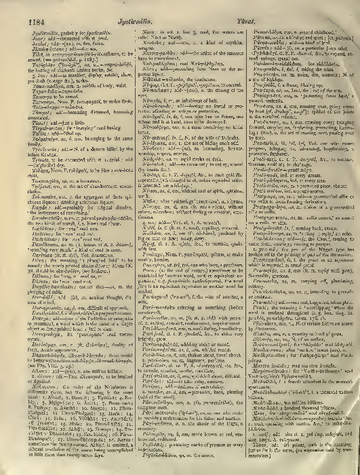
nákṣatra UṆĀDIS. 3,105. n. 1〉 Gestirn überh. (auch von der Sonne gebraucht) AK. 1,1,2,22. H. 107. dvi̱tā nakṣàtraṃ (coll.) pa̱prathàcca̱ bhūmà ṚV. 7,86,1. udu̱sriyā̀ḥ sṛjeta̱ sūrya̱ḥ sacā̀m̐ u̱dyannakṣàtramarci̱vat ṚV. 7,81,2. nakṣàtraṃ pra̱tnamamìnaccari̱ṣṇu ṚV. 10,88,13. ṚV. 10,111,7. ṚV. 10,156,4. Sterne ṚV. 1,50,2. ṚV. 3,54,19. a̱bhi nakṣàtrebhiḥ pi̱taro̱ dyāmàpiṃśan ṚV. 10,68,11. nakṣàtrāṇāme̱ṣāmu̱pasthe̱ soma̱ āhìtaḥ ṚV. 10,85,2. AV. 6,128,1. AV. 6,128,3. AV. 7,13,1. AV. 9,7,15. AV. 15,6,2. AIT. BR. 4,25. VS. 14,19. VS. 18,18. VS. 22,28. ĀŚV. GṚHY. 4,4. LĀṬY. 3,8,10. nakṣatrāṇi grahāstathā M. 1,24. vijñāya niśi panthānaṃ nakṣatragaṇasūcitam HIḌ. 1,3. N. 5,6. candrādityau grahanakṣatratārāḥ MBH. 13,7386. MBH. 1,7677. Diese fünf bilden bei den Jaina die Gruppe der Jyotiṣka H. 92. puṇye tithau muhūrte vā nakṣatre vā guṇānvite M. 2,30. nakṣatrairyaśca jīvati M. 3,162. SUŚR. 1,17,8. SUŚR. 1,114,4. SUŚR. 1,103,2. dyauḥ sacandrārkanakṣatrā MBH. 13,7070. MBH. 3,12549. MBH. 3,16038. ˚śirasi HARIV. 12239. Ein Mal masc.: dṛ̱ḻho nakṣàtra u̱ta vi̱śvadèvo̱ bhūmi̱mātā̱ndyāṃ dhā̱sinā̱yoḥ ṚV. 6,67,6. eka˚ aus einem Stern bestehend ŚAT. BR. 13,8,1,3. KĀTY. ŚR. 21,3,3. ĀŚV. GṚHY. 4,5. — 2〉 im Bes. die Mondstationen; in der älteren Zeit (aber auch noch im HARIV.) 27, später 28 an der Zahl. Dieselben werden in der Folge auch als Gemahlinnen des Mondes, als Töchter Dakṣaʼs, augfefasst. AV. 19,8,1. VS. 18,40. TS. 2,3,5,1. TS. 3,4,7,1. TBR. 1,5,1,1. TBR. 1,5,2,5. TBR. 2,7,18,13. ŚAT. BR. 6,5,4,8. ŚAT. BR. 9,4,1,9. ŚAT. BR. 10,5,4,17, P. 1,2,60. MBH. 13,3256. fgg. MBH. 13,4255. fgg. śiṣṭāḥ (kanyāḥ) somāya rājñe 'tha nakṣatrākhyā dadau prabhuḥ (dakṣaḥ) HARIV. 104. HARIV. 1332. HARIV. 11522. HARIV. 11524. kṛttikādīni nakṣatrāṇīndoḥ patnyastu BHĀG. P. 6,6,23. Die Namen derselben s. Ind. St. 1,89. fgg. Vgl. WARREN, KĀLAS. 372. WEBER, Die vedischen Nachrichten von den Nakshatra. — 3〉 Perle RĀJAN._im_ŚKDR. — Was die Etymologie betrifft, so lässt sich gegen die von AUFRECHT_in_Z. f. vgl. Spr. 8,71 vorgebrachte (nakṣa + tra) einwenden, dass Wächter der Nacht nicht auf die Sonne passt, welche in den ältesten Texten vorzugsweise nakṣatra genannt wird. Die Gleichsetzung von nakṣa mit nakta erregt gleichfalls Bedenken. Eher liesse sich noch an eine Zurückführung auf nakṣ (vgl. NIR. 3,20. TBR. 1,5,2,5.) denken, dann wären die Gestirne die am Himmel Heraufkommenden. Die spielende Zerlegung in na + kṣatra findet sich NIR. 3,20. ŚAT. BR. 2,1,2,18. ŚAT. BR. 2,1,2,19. P. 6,3,75. — Vgl. deva˚, yama˚.
Böhtlingk 1879 Substantiv Maskulin · Substantiv Neutrum · Worttyp nicht bestimmt
Originaltext · Deutsch · Substantiv Maskulin
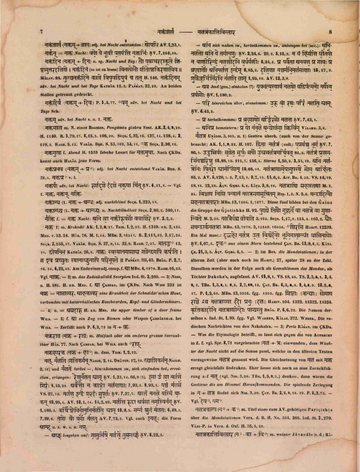
nakṣatra m. N. pr. eines Ekādaśāṅgin VARDHAMĀNAC. 1,48. [Nachtrag, Band 5]
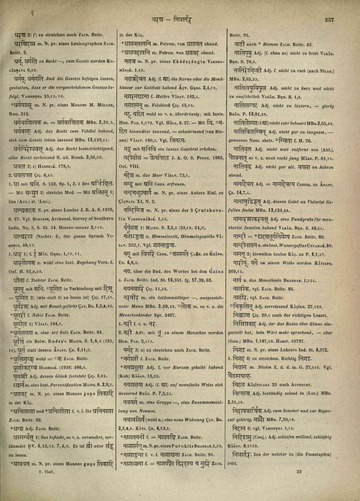
Originaltext · Deutsch · Substantiv Neutrum
nákṣatra n. — 1〉 Gestirn, Stern; Sg. die Sonne und die Sterne (coll.) Einmal m. als Personification. Am Ende eines adj. Comp. f. ā — 2〉 Mondhaus, deren in der älteren Zeit 27, später 28 angenommen werden. Personificirt als Töchter Dakṣaʼs und Gattinnen des Mondes. — 3〉 *Perle RĀJAN. 13,154. Vgl. nakṣatramālā 3〉.
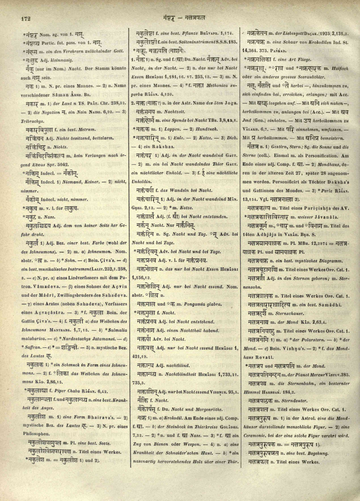
Originaltext · Deutsch · Worttyp nicht bestimmt
nákṣatra III. 5. [Nachtrag, Band 7]
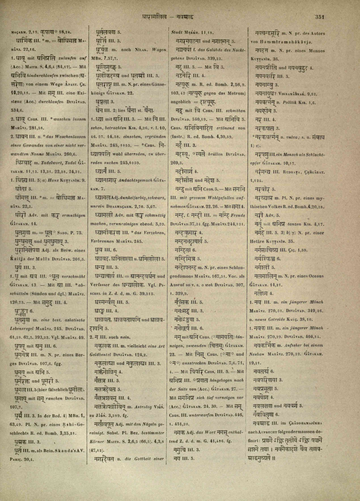
Apte 1890 Substantiv Neutrum
Originaltext · Englisch · Substantiv Neutrum
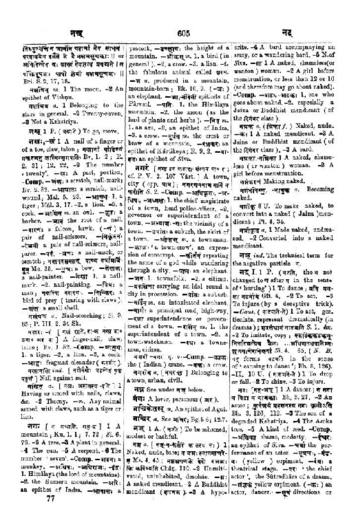
nakṣatraṃ [na kṣarati; cf. Uṇ. 3. 105 also] 1 A star in general. 2 A constellation, an asterism in the moon's path, lunar mansion; nakṣatratārāgrahasaṃkulāpi R. 6. 22; (they are twenty-seven). 3 A pearl. 4 A necklace of 27 pearls. Comp. — īśaḥ, īśvaraḥ, -nāthaḥ, -paḥ, -patiḥ, -rājaḥ the moon; R. 6. 66. — kāṃtivistāraḥ the white Yāvanāla flower. — cakraṃ 1 the sphere of the fixed stars. 2 the lunar asterisms taken collectively. — darśaḥ an astronomer or astrologer. — nemiḥ 1 the moon. 2 the pole-star. 3 an epithet of Viṣṇu. ( — miḥ f.) Revatī, the last asterism. — pathaḥ the starry sky. — pāṭhakaḥ an astrologer. — puruṣaḥ 1 (in astr.) the figure of a man's body on the limbs of which are shown the various asterisms. — mālā 1 a group of stars. 2 a necklace of twentyseven pearls. 3 the table of the asterisms in the moon's path. 4 a kind of neck-ornament of elephants; anaṃgavāraṇaśironakṣatramālāyamānena mekhalādāmnā K. 11. — yogaḥ the conjunction of the moon with the lunar mansions. — lokaḥ the starry region, the firmament. — vartman n. the sky. — vidyā astronomy or astrology. — vṛṣṭiḥ f. shooting or falling stars. — sūcakaḥ a bad astrologer; ([Page 0605-a]) tithyutpattiṃ na jānaṃti grahāṇāṃ naiva sādhanaṃ . paravākyena vartaṃte te vai nakṣatrasūcakāḥ .. or aviditvaiva yaḥ śāstraṃ daivajñatvaṃ prapadyate . sa paṃktidūṣakaḥ pāpo jñeyo nakṣatrasūcakaḥ .. Bṛ. S. 2. 17, Bṛ. S. 2. 18.
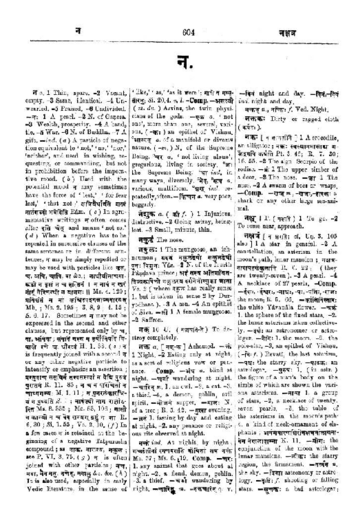
Cappeller 1887 Substantiv Neutrum
Originaltext · Deutsch · Substantiv Neutrum
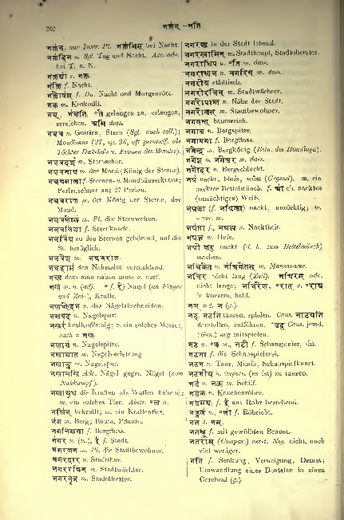
nákṣatra n. Gestirn, Stern (Sgl. auch coll.); Mondhaus (27. sp. 26, oft personif. als Töchter Daksha's u. Frauen des Mondes).
Burnouf 1866 Substantiv Neutrum
Originaltext · Französisch · Substantiv Neutrum
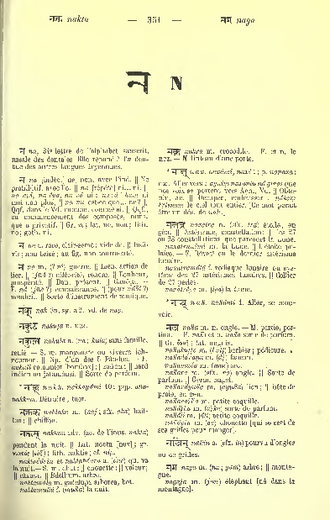
nakṣatra nakṣatra n. (sfx. tra) étoile, en gén. Astérisme, constellation; les 27 ou 28 constellations que parcourt la Lune. nakṣatranemi m. la Lune. L'étoile polaire. — F. Revatī ou le dernier astérisme lunaire. nakṣatramālā f. zodiaque lunaire ou systême des 27 astérismes lunaires. Collier de 27 perles. nakṣatreśa m. (īśa) la Lune.
Quelltextfundstellen (1)
SiSa 1 Fundstelle
Mit AYI Free weitermachen
Bildquelle: AYI Archiv.