

pūṣan पूषन् – pr. eines vedischen Gottes.
Substantiv Maskulin · Worttyp nicht bestimmt
Wörterbuchquellen
Cappeller 1891 Substantiv Maskulin
Originaltext · Englisch · Substantiv Maskulin
pūṣán ·m. N. of a Vedic divinity, often identif. with the Sun.
Monier-Williams 1872 Substantiv Maskulin
Originaltext · Englisch · Substantiv Maskulin
Pūṣan, ā, m. (the a of an is not lengthened in the nom. du. pl. and acc. sing. du., e. g. nom. du. pūṣaṇau, nom. pl. pūṣaṇas, acc. sing. pūṣa- ṇam, acc. pl. pūṣṇas, or according to some also pūṣas, inst. sing. pūṣṇā or pūṣā, loc. sing. pūṣṇi or pūṣaṇi or pūṣi, see Gram. 157), N. of a Vedic deity (regarded as the guardian of flocks and herds and of property in general, cf. puṣṭim- bhara; in the character of a herdsman he is repre- sented as carrying an ox-goad and riding in a car drawn by goats, cf. ajāśva; in that of a presiding deity of the sun he is all-seeing, the companion of travellers, guide of the soul on its way to the next world, and the lover of his sister Sūryā; he causes the alternation of day and night, and is associated with Soma or the Moon as protector of the universe; he is invoked together with various gods, but most frequently with Indra and Bhaga; his most remark- able epithets are ā-ghṛṇi, kapardin, dasra, da- sma, dasma-varcas; in the Brāhmaṇas Pūṣan is represented as having lost his teeth and feeding on a kind of gruel, whence he is called karambhād; in later times he is enumerated among the twelve Ādityas, and regent of the Nakṣatra Revatī or Pauṣṇa); N. of the sun.
Petersburger 1855 Substantiv Maskulin · Worttyp nicht bestimmt
Originaltext · Deutsch · Substantiv Maskulin
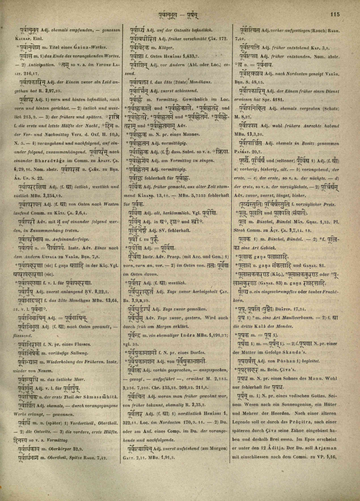
pūṣán (von 1. puṣ) UṆĀDIS. 1,158. m. P. 6,2,142. SIDDH. K. 241,a,14. parox. UJJVAL. in den starken Casus (mit Ausnahme des nom. sg.) wird der Vocal nicht verlängert (aber pūṣāṇam MĀRK. P. 109,64), wohl aber im nom. acc. pl. neutr. eines adj. comp. P. 6,4,12. VOP. 3,111. VOP. 3,113. Name eines vedischen Gottes, welcher ein Hüter und Mehrer der Heerden (paśupā) und des menschlichen Besitzes überhaupt ist (puṣṭiṃbhara) ṚV. 6,48,15. als Hirt den Ochsenstachel trägt (ṚV. 53,8. ṚV. 6,9) und mit Ziegen (ajāśva) fährt. Seinem Wesen nach ein Sonnengenius, überschaut er Alles, ist ein Geleitsmann auf Wegen und Reisen (ṚV. 1,42,1. ṚV. 10,17,6. ṚV. 10,59,7. ṚV. 10,85,26. AV. 6,73,3) und zur anderen Welt (pathaspati. prapathya) ṚV. 10,17,3. ṚV. 10,17,20. AV. 16,9,2. AV. 18,2,53. heisst Buhle seiner Schwester, der Sūryā, ṚV. 6,55,4. ṚV. 6,55,5. ṚV. 6,58,4. wirkt beim Umschwung von Tag und Nacht ṚV. 1,23,13—15. theilt sich mit Soma, als Mond, in die Hut der Geschöpfe (somāpūṣaṇau) ṚV. 2,40,1. fgg. Er wird neben den verschiedensten Göttern angerufen, besonders häufig neben Indra (indrāpūṣaṇau ṚV. 1,162,2. ṚV. 7,35,1.) und Bhaga (ṚV. 4,30,24. ṚV. 5,41,4. ṚV. 5,46,2. ṚV. 10,125,2; vgl. ŚAT. BR. 11,4,3,3. KĀTY. ŚR. 5,13,1). Seine bemerkenswerthesten Epitheta sind ausser den oben angeführten: āghaṇi, kapardin, karambhād, dasra dasma dasmavarcas, narāśaṃsa ?(ṚV. 1,106,4. ṚV. 10,64,3, wonach u. d. W. zu ergänzen ist), vimuco napāt vimocana. Vgl. besonders die Lieder ṚV. 6,53 — ṚV. 6,58. ṚV. 10,26. Die Brāhmana haben die Legende, dass P. seine Zähne eingebüsst habe und deshalb Brei esse (karambhād, prapiṣṭabhāga, piṣṭāda TS. 2,6,8,5. ŚAT. BR. 1,7,4,7. NIR. 6,31. BHĀG. P. 6,6,41). NAIGH. 5,6. NIR. 12,16. pū̱ṣā yo viśvā̱bhi vi̱paśyàti̱ bhuvànā̱ saṃ ca̱ paśyàti ṚV. 3,62,9. (savituḥ) pū̱ṣā pràsa̱ve yā̀ti vi̱dvānsa̱ṃ paśya̱nviśvā̱ bhuvànāni go̱pāḥ ṚV. 10,139,1. AV. 1,11,1. AV. 5,28,3. AV. 6,112,3. VS. 6,18. VS. 10,9. VS. 10,30. VS. 11,15. pū̱ṣā pàśū̱nāṃ pràjanayi̱tā TBR. 1,7,2,4. ŚAT. BR. 5,2,5,8. ŚAT. BR. 11,4,3,6. ŚAT. BR. 13,3,8,2. TS. 1,2,3,2. TS. 1,5,1,2. pū̱ṣā vā ìndri̱yasyà vī̱ryàsya pradā̱tā TS. 2,2,1,4. TS. 6,1,2,2. ŚAT. BR. 2,5,4,7. ŚAT. BR. 3,2,4,19. ŚAT. BR. 13,4,1,14. iyaṃ vai pūṣeyaṃ hīdaṃ sarvaṃ puṣyati yadidaṃ kiṃ ca ŚAT. BR. 14,4,2,25 (daher angeblich auch so v. a. Erde NAIGH. 1,1). ŚĀṄKH. ŚR. 16,3,29. ŚĀṄKH. ŚR. 16,3,30. GṚHY. 1,9. KAUŚ. 78. ĀŚV. GṚHY. 1,7. Unter den 12 Āditya MBH. 1,2523. HARIV. 175. HARIV. 594. HARIV. 11549. HARIV. 12456. HARIV. 12912. HARIV. 13143. HARIV. 13179. HARIV. 14167. VP. 122. BHĀG. P. 6,6,37. pūṣṇo dantabhide (śivāya) MBH. 14,193. svasti dhātā vidhātā ca svasti pūṣā bhago 'ryamā R. 2,25,8 (R. 2,25,21 GORR.). saṃdhyā pūṣṇo varāṅganā R. 5,25,27. KATHĀS. 48,96. BHĀG. P. 4,5,17. pūṣānapatyaḥ piṣṭādo bhagnadanto 'bhavatpurā . yo 'sau dakṣāya kupitaṃ jahāsa vivṛtadvijaḥ .. BHĀG. P. 6,6,41 Regent des Nakṣatra Revatī oder Pauṣṇa WEBER, Nax. 2,300. WEBER, Nax. 2,376. VARĀH. BṚH. S. 98,1. VARĀH. BṚH. S. 98,8. ein N. der Sonne AK. 1,1,2,31. AK. 1,1,3,9 H. 95. HALĀY. 1,35. Spr. 461. Spr. 2642. MĀRK. P. 109,64. — Vgl. pauṣṇa.
Originaltext · Deutsch · Worttyp nicht bestimmt
pūṣan am Ende, Sonne auch Spr. 4323.
Böhtlingk 1879 Substantiv Maskulin
Originaltext · Deutsch · Substantiv Maskulin
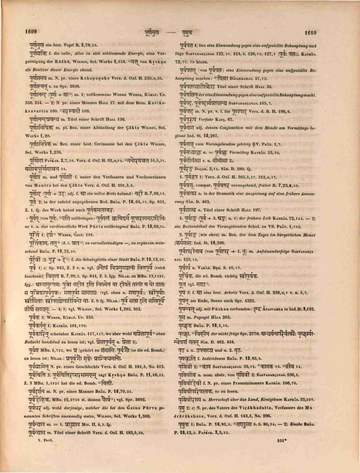
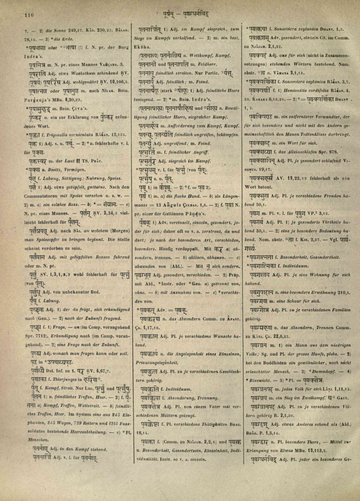
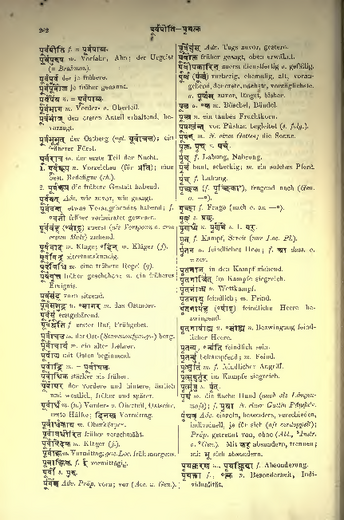
pūṣán m. — 1〉 N. pr. eines vedischen Gottes. Seinem Wesen nach ein Sonnengenius, ein Hüter und Mehrer der Heerden. Nach einer älteren Legende soll er durch das Prāśitra, nach einer späteren durch Śiva seine Zähne eingebüsst haben und deshalb Brei essen. Im Epos erscheint er unter den 12 Āditya. Der Du. soll Aryaman mit einschliessen nach dem Comm. zu VP. 5,16,7. [Page4-116-a] — 2〉 die Sonne Chr. 249,27. KĀD. 230,23. BĀLAR. 78,16. — 3〉 *die Erde.
Apte 1890 Substantiv Maskulin
Originaltext · Englisch · Substantiv Maskulin
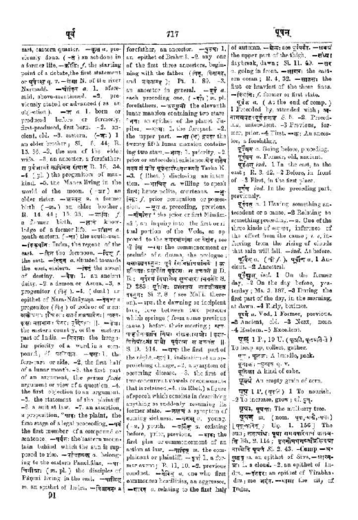
pūṣan m. (nom. pūṣā, -ṣaṇau, -ṣaṇaḥ) [pūṣ-kanin; Uṇ. 1. 156] The sun; sadāpāṃthaḥ pūṣā gaganaparimāṇaṃ kalayati Bh. 2. 114; iṃdhanaughadhagapyagnistviṣā nātyeti pūṣaṇaṃ Śi. 2. 43. Comp. — asuhṛd m. an epithet of Śiva. — ātmajaḥ 1 a cloud. 2 an epithet of Indra. — daṃtaharaḥ an epithet of Vīrabhadra; see adaṃta. — bhāsā the city of Indra.
Cappeller 1887 Substantiv Maskulin
Originaltext · Deutsch · Substantiv Maskulin
pūṣán m. N. eines Gottes; die Sonne.
Burnouf 1866 Substantiv Maskulin
Originaltext · Französisch · Substantiv Maskulin
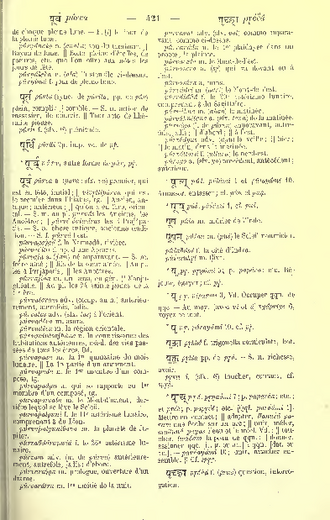
pūṣan pūṣan m. (puṣ) le Soleil nourricier. pūṣabhāsā f. la cité d'Indra. pūṣasuhṛt m. Śiva.
Quelltextfundstellen (3)
IVU 2 Fundstellen
MAN 1 Fundstelle
Mit AYI Free weitermachen
Bildquelle: AYI Archiv.