

vasiṣṭha वसिष्ठ – Vasiṣṭha
Adjektiv · Substantiv Maskulin · Substantiv Neutrum · Worttyp nicht bestimmt
Wörterbuchquellen
AYI Wörterbuch Substantiv Maskulin
Vasiṣṭha
Cappeller 1891 Worttyp nicht bestimmt
Originaltext · Englisch · Worttyp nicht bestimmt
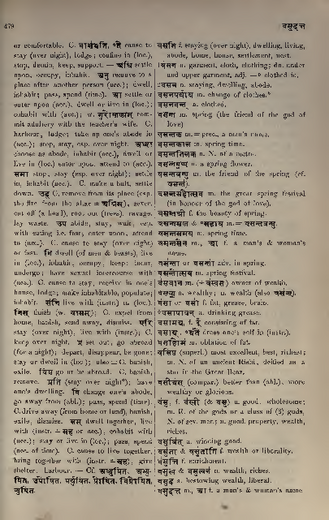
vásiṣṭha ·(superl.) most excellent, best, richest; m. N. of an ancient Rishi, deified as a star in the Great Bear.
Monier-Williams 1872 Substantiv Maskulin · Worttyp nicht bestimmt
Originaltext · Englisch · Substantiv Maskulin
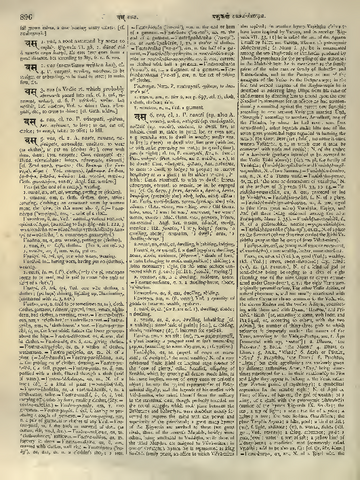
Vasiṣṭha, as, m. (superl. of vasu or vasu- mat; cf. vasīyas), ‘the most wealthy,’ N. of a very celebrated Vedic Ṛṣi or inspired sage (owner of the ‘cow of plenty,’ called Nandinī, offspring of Surabhi, which by granting all desires made him, as his name implies, master of every vasu or desirable object; he was the typical representative of Brāh- manical dignity, and the legends of his conflict with Viśvā-mitra, who raised himself from the military to the sacerdotal class, though probably founded on the actual struggles which took place between the Brāhmans and Kṣatriyas, were doubtless mostly in- vented to impress the mind with the power and superiority of the priesthood; a great many hymns of the Ṛg-veda are ascribed to these two great rivals, those of the seventh Maṇḍala, besides some others, being attributed to Vasiṣṭha, while those of the third Maṇḍala are assigned to Viśvā-mitra; in one of Vasiṣṭha's hymns he is represented as king Su-dās's family priest, an office to which Viśvā-mitra also aspired; in another hymn Vasiṣṭha claims to have been inspired by Varuṇa, and in another [Ṛg- veda VII. 33, 11] he is called the son of the Apsaras Urvaśī by Mitra and Varuṇa, whence his patronymic Maitrāvaruṇi; in Manu I. 35. he is enumerated among the ten Prajā-patis or Patriarchs produced by Manu Svāyambhuva for the peopling of the universe; in the Mahā-bhārata he is mentioned as the family priest of the solar race or family of Ikṣvāku and Rāma-candra, and in the Purāṇas as one of the arrangers of the Vedas in the Dvāpara age; in the first and second chapters of the Raghu-vaṃśa he is described as releasing king Dilīpa from his curse of childlessness by directing him to attend upon the cow Nandinī in atonement for an offence he had uninten- tionally committed against the parent cow Surabhi; according to one account Vasiṣṭha married Ūrjā, ‘Strength;’ according to another, Arundhatī, one of the Pleiades, by whom he had seven sons [see arundhatī]; other legends make him one of the seven great patriarchal sages regarded as forming the stars of the Great Bear [see ṛṣi]; his name is often written Vaśiṣṭha, q. v., in which case it must be connected with vaśa and vaśin); N. of the author of a law-book (perhaps intended to be ascribed to the Vedic Ṛṣi above); (ās), m. pl. the family of Vasiṣṭha; (Vasiṣṭhasyāṅkuśa and Vasiṣṭhasyā- nupadam, N. of two Sāmans.)
Originaltext · Englisch · Worttyp nicht bestimmt
vasiṣṭha vasiṣṭha. See p. 896, col. 2.
Petersburger 1855 Adjektiv · Substantiv Maskulin · Worttyp nicht bestimmt
Originaltext · Deutsch · Adjektiv · Substantiv Maskulin
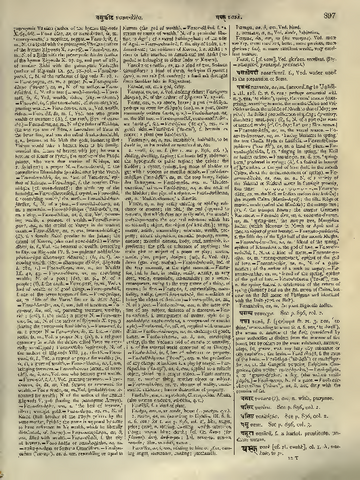
vásiṣṭha (superl. von vasu; vgl. vasīyaṃm) P. 6,4,163, Schol. 1〉 adj. der treffliche, beste, angesehenste, reichste: śreṣṭhàmasi bheṣa̱jānā̱ṃ vasìṣṭha̱ṃ vīrùdhānām AV. 6,21,2. Agni ṚV. 2,9,1. ṚV. 7,1,8. purohita ṚV. 10,150,5. Indra ṚV. 2,36,1. ṚV. 10,15,8. ṚV. 10,95,17. yūya̱ṃ teṣā̱ṃ vasìṣṭhā bhūyāsta TBR. 1,3,10,9. TBR. 2,3,1,3. TS. 2,2,11,6. ā̱tmā hyupàhūtānā̱ṃ vasìṣṭhaḥ TS. 6,7,3. prajāpatirvai vasiṣṭhaḥ ŚAT. BR. 2,4,4,2. ŚAT. BR. 14,9,2,2. ŚAT. BR. 14,9,2,7. ŚAT. BR. 14,9,3,4. TBR. 3,1,2,7. CHĀND. UP. 5,1,2. vasiṣṭho 'smi variṣṭho 'smi vase vāsagṛheṣvapi . vasiṣṭhatvācca vāsācca vasiṣṭha iti viddhi mām .. MBH. 13,4484. — 2〉 m. N. pr. eines der hervorragendsten Ṛṣi des Veda, Priesters des Königs Sudās, Hauptverfassers des 7ten Maṇḍala des ṚV. Nach der Legende ein Sohn Mitra-Varuṇaʼs und der Urvaśī, oder aus dem zu Boden gefallenen Samen jener Götter entsprungen. SĀY._zu_ṚV. 7,33,11. Nachmals einer der sieben Ṛṣi PARIŚ._zu_ĀŚV. ŚR. — ṚV. 1,112,9. fgg. ṚV. 7,9,6. ṚV. 7,13,4. fgg. ṚV. 7,9,21. ṚV. 7,22,3. fgg. ṚV. 7,23,1. ṚV. 7,26,5. fgg. ṚV. 7,33,11. ṚV. 7,59,3. fgg. ṚV. 7,70,6. ṚV. 7,86,5. fgg. ṚV. 7,88,4. fgg. ṚV. 10,65,15. TS. 3,1,7,3. TS. 3,5,2,1. TS. 7,4,7,1. ĀŚV. GṚHY. 3,4,2. PAÑCAV. BR. 4,7,3. PAÑCAV. BR. 15,5,24. ŚAT. BR. 5,4,11,3. ŚAT. BR. 12,6,1,38. pāśā asyāṃ vyapāśyanta vasiṣṭhasya mumūrṣataḥ Bruchstück in NIR. 9,26. ein Prajāpati und Sohn Brahmanʼs M. 1,35. MBH. 1,6638. HARIV. 41. HARIV. 14072. HARIV. 14148. R. 1,52,6. R. 1,65,22. RAGH. 1,64. VP. 49. BHĀG. P. 3,12,23. MĀRK. P. 50,5. ein Sohn Varuṇaʼs HARIV. 1885. Brahmarṣi TRIK. 2,7,16. TRIK. 2,7,20. R. 1,65,25. Vater Aurvaʼs HARIV. 417. HARIV. 14150. Vater von 7 Söhnen HARIV. 422. HARIV. 14151. VP. 83. BHĀG. P. 4,1,40. BHĀG. P. 8,1,24. Vater der Väter Sukālin M. 3,198. Gatte der Akṣamālā oder Arundhatī MBH. 1,6638. der Ūrjā VP. 83. BHĀG. P. 4,1,40. ikṣvākūṇāṃ hi sarveṣāṃ purodhāḥ R. 1,57,21. ikṣvākukuladaivatam R. 1,70,16. sein Zwist mit Viśvāmitra MBH. 1,6710. fgg. MBH. 9,2365. fgg. R. 1,51. fgg. vasiṣṭhavatte niyataśca kopaḥ MBH. 1,2110. als Vyāsa VP. 272. Verz. d. Oxf. H. 52,b,2. einer der sieben Weisen (welche das Gestirn des grossen Bären bilden) H. 124, Schol. HARIV. 413. HARIV. 439. VARĀH. BṚH. S. 13,5. VARĀH. BṚH. S. 13,6. VARĀH. BṚH. S. 13,9. VARĀH. BṚH. S. 23,4. VARĀH. BṚH. S. 58,8. MĀRK. P. 75,74. Gesetzgeber M. 8,140. YĀJÑ. 1,5. Verz. d. Oxf. H. 113,b,42. Verz. d. Oxf. H. 264,b,30. Verz. d. Oxf. H. 266,a,42. Verz. d. Oxf. H. 270,b,37. Verz. d. Oxf. H. 279,a,42. Verz. d. Oxf. H. 341,a,40. Verz. d. Oxf. H. 356,a,25. ˚yajña ŚAT. BR. 2,4,4,2. ŚĀṄKH. BR. 4,8. ŚR. 3,8,2. ŚR. 3,11,1. ˚gotrāḥ VARĀH. BṚH. S. 5,72. pl. das Geschlecht Vasiṣṭhaʼs P. 2,4,65. VOP. 7,14. ṚV. 7,7,7. fgg. ṚV. 7,12,3. ṚV. 7,23,6. fgg. ṚV. 7,33,1. ṚV. 7,39,7. fgg. ṚV. 7,80,1. ṚV. 7,90,7. fgg. ṚV. 10,122,8. ŚAT. BR. 12,6,1,41. ĀŚV. ŚR. 12,15,1. KĀTY. ŚR. 19,6,8. PRAVARĀDHY._in_Verz. d. B. H. 57,32. fg. Verz. d. B. H. 61,1. Verz. d. Oxf. H. 268,b,19. Namen von Sāman sind: vasiṣṭhasyāṅkuśaḥ, vasiṣṭhasyānupadam, vamiṣṭhasyāpānaḥ, vasiṣṭhajamadagnyorarkaḥ, vasiṣṭhasyāsitam, vasiṣṭhasya krośam Ind. St. 3,233,a. vasiṣṭhasya janitram ebend. PAÑCAV. BR. 8,2,3. PAÑCAV. BR. 19,3,8. vasiṣṭhasya niveṣṭaḥ, nihavaḥ (vgl. vasiṣṭhanihava), pajram, padam, padāsam, pippali, prāṇaḥ Ind. St. 3,233. vasiṣṭhasya priyam ebend. PAÑCAV. BR. 12,12,9. fg. vasiṣṭhasya preṅkhaḥ, plavaḥ, vīṅkam, vairājam, vairūpam, vratam, vratopahaḥ, śakulaḥ, śuddhāśuddhīyam, saṃkramam, samantam, sūktam Ind. St. 3,233. vasiṣṭho 'nuvākaḥ so v. a. vasiṣṭhasyānuvākaḥ PAT._zu_P. 4,3,133. Das Wort wird häufig fälschlich vaśiṣṭha geschrieben und auf vaśin zurückgeführt; vgl. Comm. zu BHAṬṬ. 1,15 und Verz. d. Oxf. H. 194,b, No. 449. — Vgl. bṛhadvasiṣṭha, vṛddha˚ und vāsiṣṭha.
Originaltext · Deutsch · Worttyp nicht bestimmt
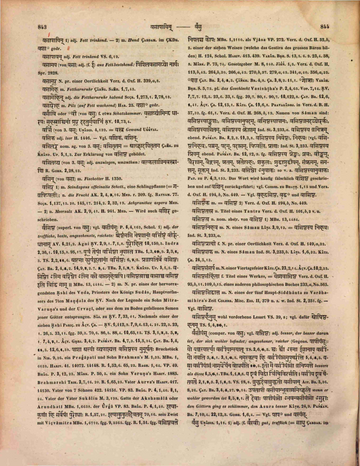
vasiṣṭha [vgl. [6:843]] 1〉 Z. 4. Indra {2,36,1} zu streichen. (revision)

Originaltext · Deutsch · Worttyp nicht bestimmt
vasiṣṭha 1〉 Z. 3. 4 zu streichen Indra 2,36,1. — 2〉 Z. 12 nach Varuṇaʼs einzuschalten MBH. 1,3924.
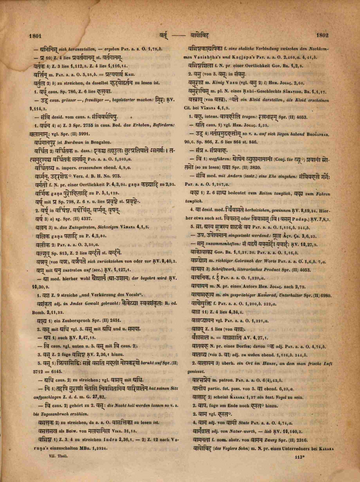
Böhtlingk 1879 Adjektiv · Substantiv Maskulin · Substantiv Neutrum
Originaltext · Deutsch · Adjektiv · Substantiv Maskulin · Substantiv Neutrum
vásiṣṭha — 1〉 Adj. der trefflichste, beste, angesehenste, reichste. — 2〉 m. — a〉 N. pr. eines der hervorragendsten Ṛṣi des Veda, Verfassers des 7ten Maṇḍala des ṚV. Nachmals einer der 7 Weisen, der auch als Gesetzgeber genannt wird. vasiṣṭhasyāṅkuśaḥ u. s. w. Namen von Sāman. Am Himmel der Stern ζ im grossen Bären. Pl. das Geschlecht des Vasiṣṭha. — b〉 *Bez. eines Anuvāka PAT. zu P. 4,3,131, Vārtt. 2. — 3〉 *n. Fleisch GAL.
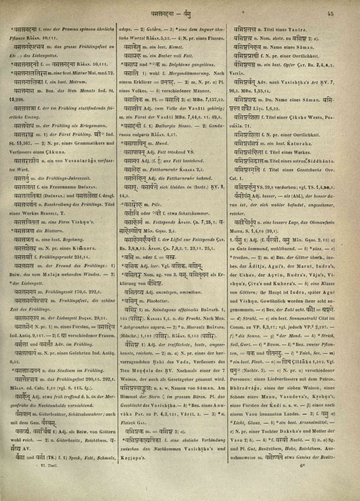
Apte 1890 Substantiv Maskulin
Originaltext · Englisch · Substantiv Maskulin
vasiṣṭhaḥ (also written vaśiṣṭha) 1 N. of a celebrated sage, the familypriest of the solar race of kings, and author of several Vedic hymns, particularly of the seventh Maṇḍala of the Ṛgveda. He was the typical representative of true Brāhmanic dignity and power, and the efforts of Viśvāmitra to rise to his level form the subject of many legends; cf. viśvāmitra. 2 N. of the author of a Smṛti (sometimes ascribed to the sage himself).
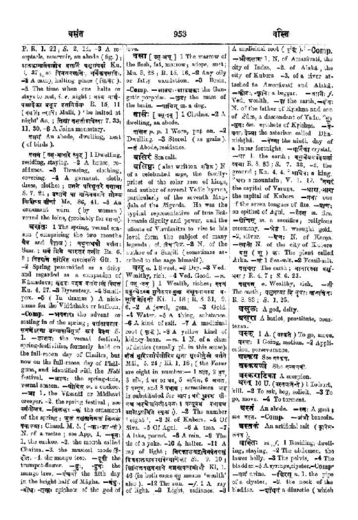
Cappeller 1887 Worttyp nicht bestimmt
Originaltext · Deutsch · Worttyp nicht bestimmt
vásiṣṭha (Superl.) der trefflichste, beste, reichste; N. eines alten Rishi u. Gesetz- gebers (auch Sternbildes).
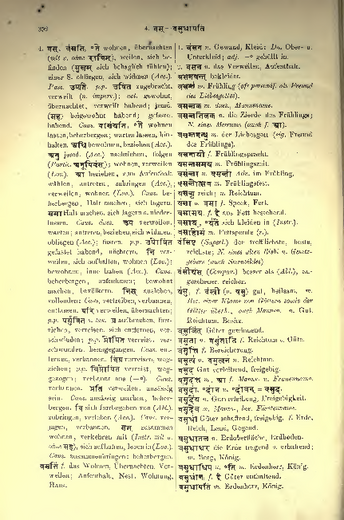
Burnouf 1866 Substantiv Maskulin
Originaltext · Französisch · Substantiv Maskulin
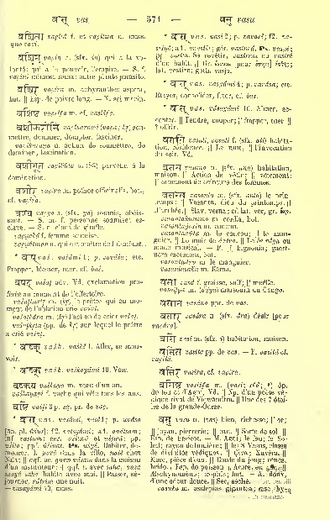
vasiṣṭha vasiṣṭha m. (vasi; sthā; ?) ép. du feu et d'Agni, Vd. Np. d'un poète védique rival de Viśvāmitra. Une des 7 étoiles de la grande-Ourse.
Quelltextfundstellen (1)
HP 1 Fundstelle
Mit AYI Free weitermachen
Bildquelle: AYI Archiv.