

āma आम – raw, uncooked (the opposite to pakva, q. v.; in the Veda often an epithet of the cow considered as the raw material…
adjective · adverb · substantive masculine · substantive neuter · Word type unspecified · verb
Dictionary sources
Cappeller 1891 adjective
Original text · English · adjective
āmá ·a. raw.
Monier-Williams 1872 adjective · substantive masculine
Original text · English · adjective
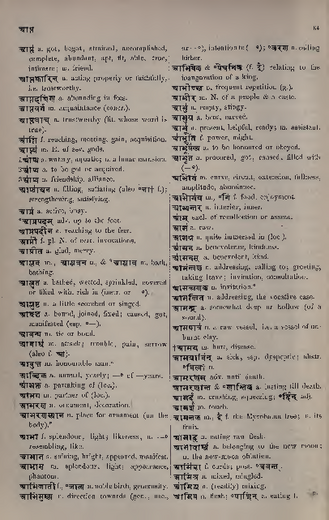
āma 1 . āma, as, ā, am (fr. rt. 2. am?), raw, uncooked (the opposite to pakva, q. v.; in the Veda often an epithet of the cow considered as the raw material which produces the milk); unbaked, unan- nealed; undressed; unripe, immature; undigested; (am), n. condition of being raw; constipation, pass- ing hard and unhealthy excretions; grain freed from chaff; [cf. Gr. ὠμό-ς Hib. amh, ‘raw, unsodden, crude, unripe.’]
Original text · English · substantive masculine
āma 2 . āma, as, m. or āmana, am, n. (fr. rt. 2. am), sickness, disease.
Petersburger 1855 adjective · substantive masculine · substantive neuter
Original text · German · adjective · substantive neuter
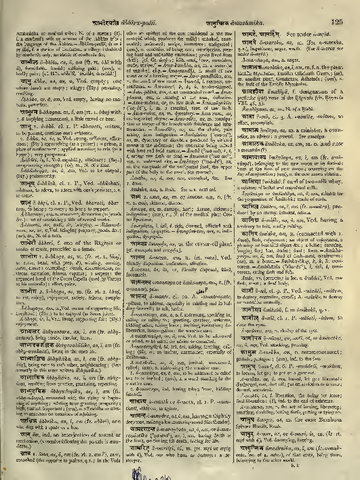
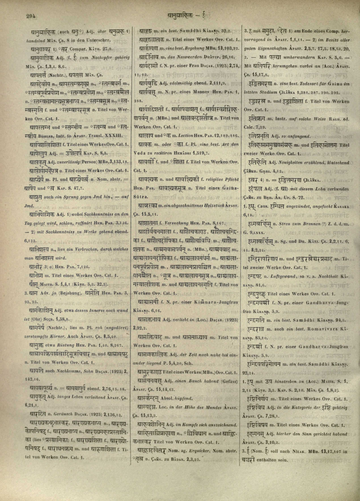
1. āmá 1〉 adj. f. ā ὠμός, Gegens. pakva H. an. 2,315. MED. m. 2. — a〉 roh, ungekocht: ya ā̱masyà kra̱viṣò ga̱ndho astì ṚV. 1,162,10. mā̱ṃse AV. 4,17,4. AV. 5,29,6. AV. 8,6,23. annam M. 4,223. matsyān YĀJÑ. 1,286. R. 4,40,31. striyāḥ stanyamāmam SUŚR. 1,176,16. āmabhṛṣṭa halbgeröstet KĀTY. ŚR. 5,3,2. Im Veda besonders von der Kuh, welche im Gegensatz zu der gleichsam gekochten Milch, die sie erzeugt, selbst als roh bezeichnet wird: mahi̱ jyoti̱rnihìtaṃ va̱kṣaṇā̀svā̱mā pa̱kvaṃ càrati̱ bibhràtī̱ gauḥ ṚV. 3,30,14. ṚV. 1,62,9. ṚV. 1,180,3. ṚV. 2,40,2. ṚV. 4,3,9. ṚV. 6,72,4. ṚV. 8,78,7. tasmā̀dā̱mā pa̱kvaṃ dùhe TS. 6,5,6,4. ŚAT. BR. 2,2,4,15. ŚAT. BR. 14,9,3,10. — b〉 ungebrannt, von einem Gefäss AV. 5,31,1. MBH. 3,1215. PAÑCAT. III, 13. HIT. IV, 63. āmeṣṭakānām MṚCCH. 47,9. Vgl. āmapātra. — c〉 unreif, von Früchten AK. 2,4,1,15. H. 1130. SUŚR. 1,215,20. von Geschwüren und dgl.: āmaṃ vipacyamānaṃ ca samyakpakvaṃ ca yo bhiṣak . jānīyāt SUŚR. 1,62,11. SUŚR. 1,63,3. SUŚR. 2,105,18. SUŚR. 2,224,7. — d〉 unverdaut, von krankhafter Ausleerung SUŚR. 2,429,4. SUŚR. 2,429,7. — 2〉 n. a〉 der Zustand des Rohseins SUŚR. 1,186,9. — b〉 Verdauungslosigkeit, cruditas SUŚR. 2,488,6. SUŚR. 2,489,2. SUŚR. 2,490,9. Bezeichnung einer acuten Form von Dysenterie WISE 335. SUŚR. 2,430,20. vollständiger āmātisāra SUŚR. 2,430,21. der damit Behaftete āmātisārin SUŚR. 2,430,10. Aus den obigen Stellen lässt sich das Geschlecht nicht bestimmen; nach Anführungen im ŚKDR. ist das Wort n.; H. an. 2,315 und MED. m. 2 wird āma m. als besondere Krankheit aufgeführt; nach dem RĀJAN._im_ŚKDR. bedeutet āma m. auch Verstopfung (malavaiṣamyaroga). Vgl. 2. āma.
Original text · German · substantive masculine
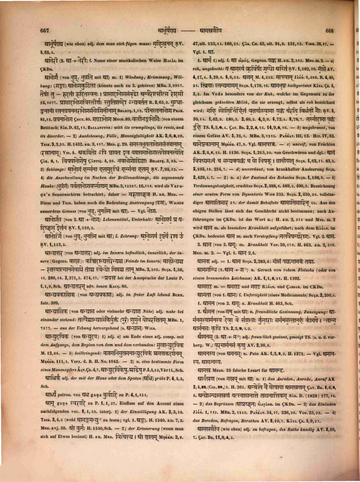
2. āma (von 2. am) m. Krankheit VOP. 26,170. H. 463. H. an. 2,315. MED. m. 2. — Vgl. 1. āma 2,b.
Original text · German · substantive masculine
1. āma 1〉b〉 mṛtpātra VARĀH. BṚH. S. 53,94. — e〉 zart, fein (= komala Schol.): ˚tvac adj. BHĀG. P. 3,31,27. — 2〉b〉 āmajvara Spr. 890. — 3〉 m. N. pr. eines Sohnes des Kṛṣṇa BHĀG. P. 10,61,13.
Böhtlingk 1879 adjective · adverb · substantive masculine · substantive neuter · Word type unspecified
Original text · German · adjective · substantive masculine · substantive neuter
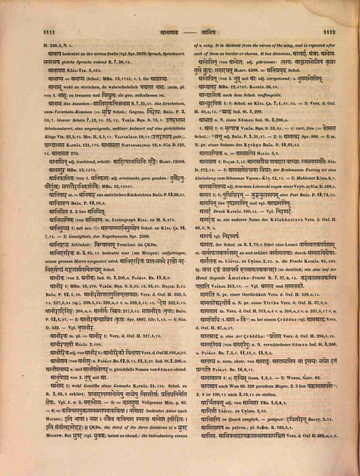
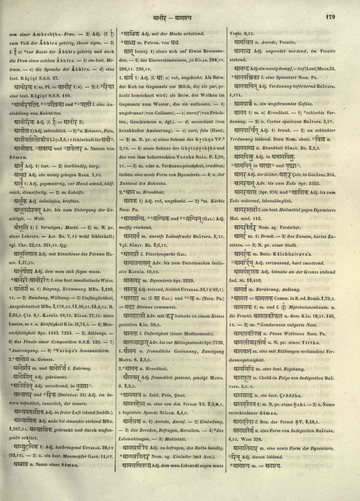
1. āmá — 1〉 Adj. (f. ā) — a〉 roh, ungekocht. Als Beiw. der Kuh im Gegensatz zur Milch, die als gar, gekocht bezeichnet wird; als Beiw. der Wolken im Gegensatz zum Wasser, das sie entlassen. — b〉 ungebrannt (von Gefässen). — c〉 unreif (von Früchten, Geschwüren u. dgl.). — d〉 unverdaut (von krankhafter Ausleerung). — e〉 zart, fein (Haut). — 2〉 m. N. pr. — a〉 eines Sohnes des Kṛṣṇa VP.² 5,79. — b〉 eines Sohnes des Ghṛtapṛṣṭha und des von ihm beherrschten Varṣa BHĀG. P. 5,20,21 — 3〉 m. oder n. Verdauungslosigkeit, cruditas; insbes. eine akute Form von Dysenterie. — 4〉 n. der Zustand des Rohseins.
Original text · German · adverb
3. āma Adv. ja (Bejahung). āmeti HEM. PAR. 3,93. HEM. PAR. 3,95. [Nachtrag, Band 2]
Original text · German · substantive masculine
2. *āma m. Krankheit.
Original text · German · Word type unspecified
3. āma und āmakośin 2. [Nachtrag, Band 7]
Apte 1890 adjective · substantive masculine · substantive neuter
Original text · English · adjective · substantive masculine · substantive neuter
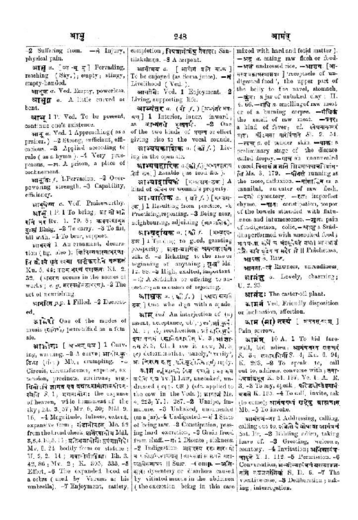
āma a. [āmyate īṣat pacyate; ā-ama karmaṇi ghañ Tv.] 1 Raw, uncooked, undressed (opp. pakva) (oft. applied to the cow in the Veda); āmānnaṃ Ms. 4. 223; Y. 1. 287. 2 Unripe, immature. 3 Unbaked, unannealed (as a jar). 4 Undigested. — maṃ 1 State of being raw. 2 Constipation, passing hard excretion. 3 Grain freed from chaff. — maḥ 1 Disease; sickness. 2 Indigestion; āhārasya rasaḥ sāraḥ yo na pakvo'gnilādhavāt . āmasajñāṃ sa labhate mahāvyādhisamāśrayaḥ .. Suśr. Comp. — atisāraḥ dysentery or diarrhœa caused by vitiated mucus in the abdomen (the excretion being in this case ([Page 0248-c]) mixed with hard and fetid matter). — ad a. eating raw flesh or food. — annaṃ undressed rice. — āśayaḥ [ āmasyāpakvānnasyāśayaḥ] ‘receptacle of undigested food’, the upper part of the belly to the navel, stomach. — kuṃbhaḥ a jar of unbaked clay; H. 4. 66. — gaṃdhi n. smelling of raw meat or of a burning corpse. — gaṃdhikaṃ the smell of raw meat. — jvaraḥ a kind of fever; cf. ravedyamānajvaraṃ prājñaḥ koṃ'bhasā pariṣiṃcati Śi. 2. 54. — tvac a. of tender skin. — pākaḥ a preliminary stage of the disease called dropsy. — pātraṃ an unannealed vessel; vināśaṃvrajati kṣipramāmapātramivāṃbhasi Ms. 3. 179. — pīnasaṃ running at the nose, defluxion. — māṃsāśin m. a cannibal, an eater of raw flesh. — raktaṃ dysentery. — rasaḥ imperfect chyme. — vātaḥ constipation, torpor of the bowels attended with flatulence and intumescence. — śūlaḥ pain of indigestion, colic. — śrāddhaṃ a Śrāddhaperformed with uncooked food; āpadyanagnau tīrthe ca caṃdrasūryagrahe tathā . āmaśrāddhaṃ dvijaiḥ kāryaṃ śūdreṇa ca sadaiva hi .. Prācetasa.
Cappeller 1887 Word type unspecified
Original text · German · Word type unspecified
āmá roh, eingekocht.
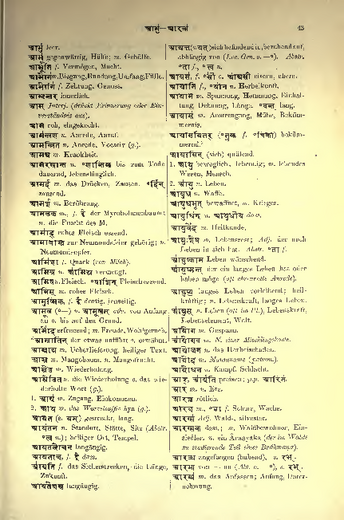
Original text · German · Word type unspecified
āmá ungekocht st. eingekocht.
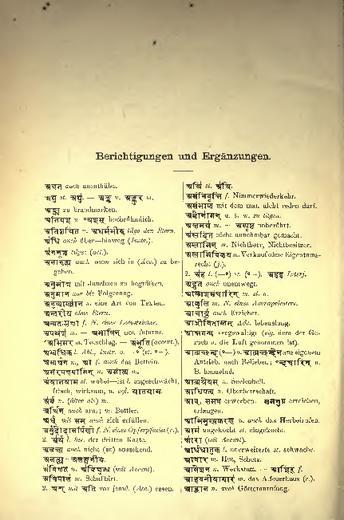
Burnouf 1866 adjective · substantive masculine · verb
Original text · French · adjective
āma āma a. cru, non cuit, non préparé. Gr. ὠμός.
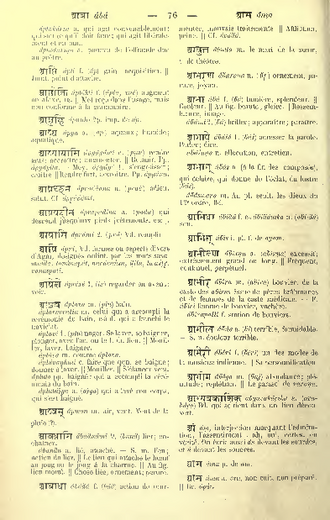
Original text · French · substantive masculine
āma āma m. (am) maladie; surtout affection intestinale. Souci, inquiétude.
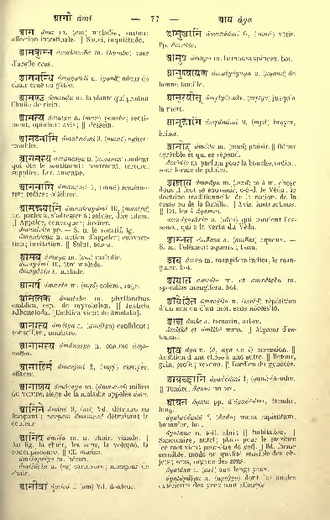
Original text · French · verb
āma āma p. de am.
Occurrences in source texts (1)
HTK 1 occurrence
HTK 10.11*2–14*1: Bhastrikā: Breath like a bellows 1 occurrence
Direct occurrences
-
HTK 10.14*1 Segment 9
Continue with AYI Free
Image source: AYI archive.