

āpad आपद् – misfortune, calamity
verbal root · substantive feminine · Word type unspecified · verb
Dictionary sources
Cappeller 1891 substantive feminine
Original text · English · substantive feminine
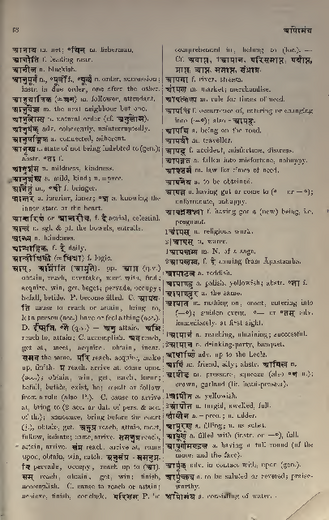
āpad ·f. accident, misfortune, distress.
Monier-Williams 1872 substantive feminine · verb
Original text · English · substantive feminine
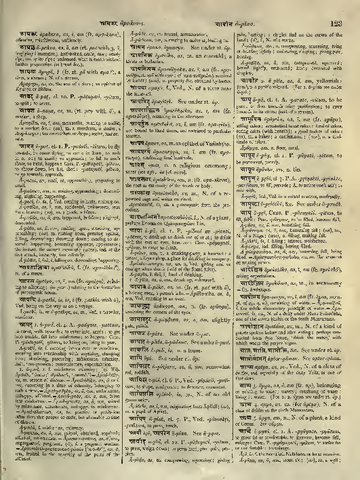
2. ā-pad, t, f. misfortune, calamity; [cf. Hib. âpadh, ‘death;’ âpthach, ‘mortal.’]
Original text · English · verb
āpad 1 . ā-pad, cl. 4. A. -padyate, -pattum, to come, walk towards; to enter into, attain; to get into trouble, fall into misfortune; to happen: Caus. P. -pādayati, -yitum, to bring on, bring to pass.
Petersburger 1855 substantive feminine · Word type unspecified
Original text · German · substantive feminine
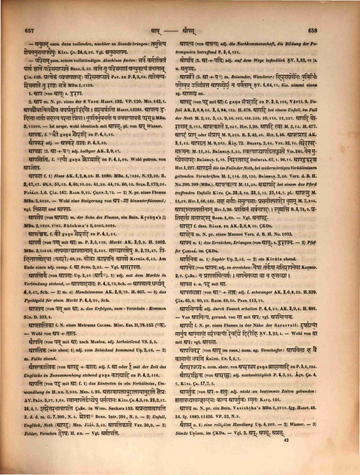
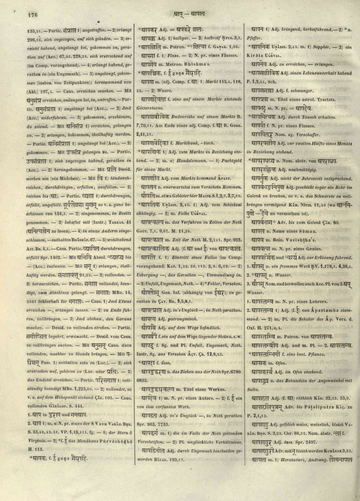
āpad (von pad mit ā) f. gaṇa saṃpadādi zu P. 3,3,108, Vārtt. 9. Unfall AK. 2,8,2,50. AK. 3,4,24,152. H. 478. āpadi bei einem Unfall, im Fall der Noth M. 2,40. M. 5,43. M. 9,56. M. 9,103. M. 9,168. M. 9,336. M. 10,118. M. 11,227. āpadi ghorāyām M. 2,113. āpatkāle M. 2,241. HIT. I, 20. āpadi sthā M. 3,14. H. 477. āpadaṃ prāp oder saṃprāp M. 9,313. R. 3,42,46. HIT. I, 46. āpatprāpta AK. 3,1,42. āpadgata M. 9,283. CĀṆ. 72. BHARTṚ. 2,64. VET. 32,14. taredāpadamātmanaḥ M. 11,34. BRĀHMAṆ. 1,34. svalpāpyāpadvilaṅghyate VID. 241. yena mucyeyamāpadaḥ BRĀHMAṆ. 1,19. nirastāpad DHŪRTAS. 67,1. DHŪRTAS. 96,11. āpaduddharaṇa HIT. I, 181. āpaddharma die im Falle der Noth, bei widerwärtigen Verhältnissen geltenden Vorschriften M. 1,116. M. 10,130. BRĀHMAṆ. 2,26. Verz. d. B. H. No. 390. Verz. d. B. H. No. 399 (MBH.). āpatkalpa M. 11,28. aśvāpadi bei einem das Pferd treffenden Unfalle KĀTY. ŚR. 20,3,12. KĀTY. ŚR. 23,4,13. KĀTY. ŚR. 25,14,7. pl.: āpatsu M. 11,29. HIT. I, 66. HIT. I,161. saha sarvāḥ samutpannāḥ prasamīkṣyāpado bhṛśam M. 7,214. āpadāmāpatantīnām HIT. I, 26. prāṇinaṃ sarvamāpadaḥ . spṛśanti R. 3,71,5. pratihartā tvamāpadām RAGH. 1,60.⫽print_change — Vgl. anāpad.
Original text · German · Word type unspecified
āpad , āpaddharma BRĀHMAṆ. 2,26 (MBH. 1,6168) scheint einfach unglückliche Verhältnisse zu bedeuten. — Vgl. nirāpad.
Böhtlingk 1879 substantive feminine
Original text · German · substantive feminine
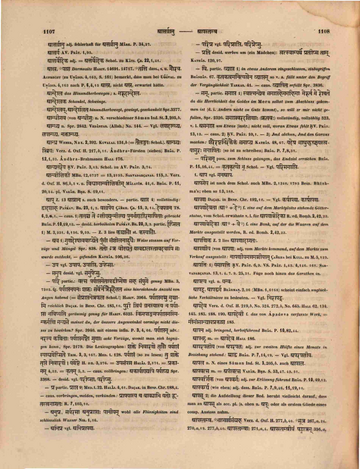
āpad f. Sg. und Pl. Unfall, Ungemach, Noth Instr. Sg. aus Versehen ĀŚV. ŚR. 12,8,23.
Apte 1890 verbal root · substantive feminine
Original text · English · verbal root
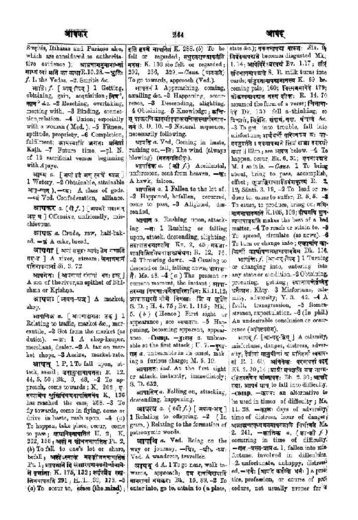
āpad 4 A. 1 To go near, walk towards, approach; eṣa rāvaṇirāpādi vānarāṇāṃ bhayaṃkaraḥ Bk. 15. 89. 2 To enter into, go to, attain to (a place, ([Page 0244-c]) state &c.); vaktamāpadya mārutaḥ Śik. 9; nirvedanāpadyate becomes disgusted Mk. 1. 14; āpedireṃ'barapathaṃ Bv. 1. 17; kṣīraṃ dadhibhāvamāpadyate Ś. B. milk turns into curds; pāṃḍuratāmāpadyamānasya K. 69 becoming pale; K. 160; vismayamāpede K. 179; ślokatvamāpadyata yasya śokaḥ R. 14. 70 assumed the form of a verse; ciṃtāmāpede Dk. 130 fell a-thinking; so viśvāsaṃ, nirvṛtiṃ, saṃśayaṃ, vaśaṃ, paṃcatvaṃ &c. 3 To get into trouble, fall into misfortune; arthadhartau parityajya yaḥ kāmamanuvartate . evamāpadyate kṣipraṃ rājā daśaratho yathā .. Rām.; see āpanna below. 4 To happen, occur; Bk. 6. 31; evamāpadyate M. 1 so it is. — Caus. 1 To bring about, bring to pass, accomplish, effect; kūjadbhirāpāditavaṃśakṛtyaṃ R. 2. 12; Śānti. 3. 19. 2 To lead or reduce to, cause to suffer; R. 5. 5. 3 To cause, to produce, bring on; laghimānamāpādayati K. 105, K. 109; doṣamapi guṇatvamāpādayati makes the best of a bad matter. 4 To reach or attain to. 5 To spread, circulate (as news). 6 To turn or change into; ekāmapi kākiṇīṃ kārṣāpaṇalakṣamāpādayema Dk. 156.
Original text · English · substantive feminine
āpad f. [ā-pad kvip] A calamity, misfortune, danger, distress, adversity; daivīnāṃ mānuṣīṇāṃ ca pratihartā tvamāpadāṃ R. 1. 60; avivekaḥ paramāpadāṃ padam Ki. 2. 30, Ki. 2. 14; prāyo gacchati yatra bhāgyarahitastatraiva yāṃtyāpadaḥ Bh. 2. 90; āpadi sthā, āpadaṃ prāp to fall into difficulty. Comp. — kalpaḥ an alternative to be used in times of difficulty; Ms. 11. 28. — kālaḥ days of adversity, time of distress, hour of danger; abrāhmaṇādadhyayanamāpatkāle vidhīyate Ms. 2. 241. — kālika a. (kā-kī f.) occurring in time of difficulty. — gata, -grasta-prāpta a. 1 fallen into misfortune, involved in difficulties. 2 unfortunate, unhappy, distressed. — dharmaḥ [āpadi kartavyo dharmaḥ] a practice, profession, or course of procedure, not usually proper for a ([Page 0245-a]) caste, but allowable in times of extreme distress or calamity; Ms. 1. 116, Ms. 10. 130. — (rmaṃ) N. of a parva in Bhārata.
Cappeller 1887 substantive feminine
Original text · German · substantive feminine
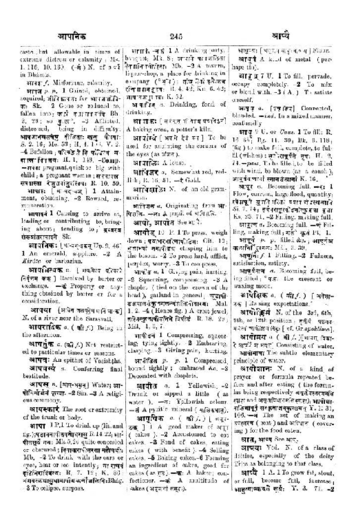
āpad f. Unfall, Not.
Burnouf 1866 substantive feminine
Original text · French · substantive feminine
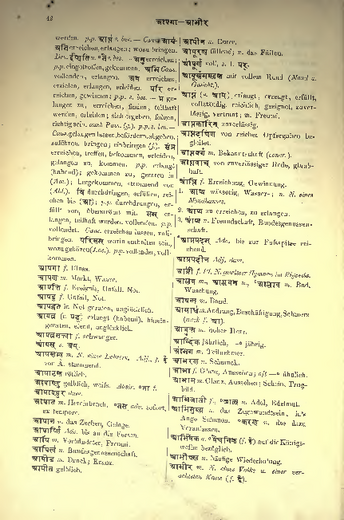
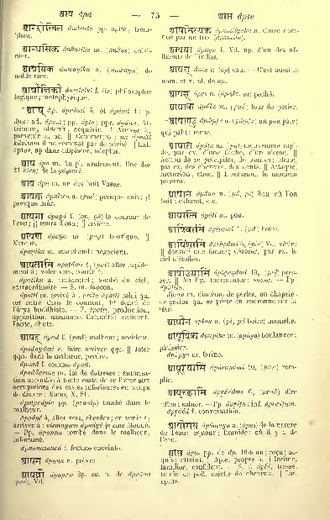
āpad āpad f. (pad) malheur; accident. āpadayāmi c. faire arriver qqc. Jeter qqn. dans le malheur, perdre. āpadā f. comme āpad. āpaddharma m. loi de détresse: autorisation accordée à toute caste de se livrer aux occupations des castes inférieures en temps de disette; Manu, X, 81. āpatprāpta pp. (pra-āp) tombé dans le malheur. āpadye 4, aller vers, aborder; en venir à; arriver à: vismayam āpadye je suis étonné. — Pp. āpanna tombé dans le malheur, infortuné. āpannasatvā f. femme enceinte.
Occurrences in source texts (1)
SiSa 1 occurrence
Continue with AYI Free
Image source: AYI archive.