

amara अमर – immortal; god
adjective · substantive feminine · substantive masculine · substantive neuter · Word type unspecified
Dictionary sources
AYI dictionary substantive neuter
immortal; god
Cappeller 1891 Word type unspecified
Original text · English · Word type unspecified
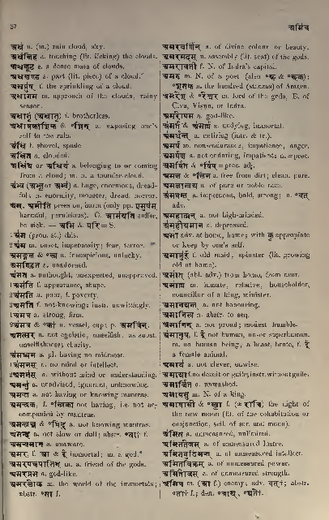
amára ·f. ā & ī immortal; m. a god.*
Monier-Williams 1872 adjective
Original text · English · adjective
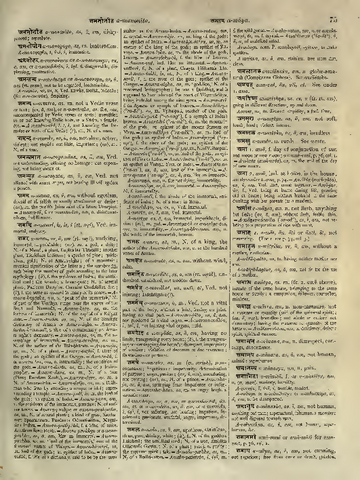
amara a-mara, as, ā, am (rt. mṛ), undying, immortal, imperishable; (as), m. a god, a deity; N. of a Marut; a plant, Euphorbia Tirucalli; another plant, Tiaridium Indicum; a species of pine; quick- silver, gold; N. of Amara-siṃha; of a mountain; mystical signification of the letter u; the number 33, such being the number of gods according to the later mythology; (ā), f. the residence of Indra; the umbi- lical cord; the womb; a house-post; N. of several plants, Panicum Dactylon, Cocculus Cordifolius, &c.; (ī), f. the same as amarā in many of its senses.
Petersburger 1855 adjective · substantive masculine · Word type unspecified
Original text · German · adjective · substantive masculine
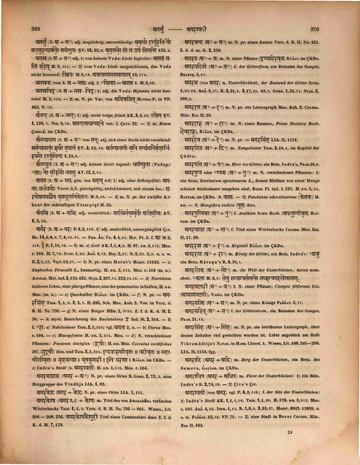
amára (3. a + mara) P. 6,2,116. 1〉 adj. unsterblich, unvergänglich ŚAT. BR. 14,6,8,8. ŚAT. BR. 14,7,2,30. ŚAT. BR. 14,6,8,31. = BṚH. ĀR. UP. 4,4,25. HIT. Pr. 3. f. ā M. 2,148. ī R. 1,34,16. — 2〉 m. a〉 Gott AK. 1,1,1,2. H. 87. H. an. 3,513. MED. r. 104. M. 7,72. SUND. 1,22. ARJ. 4,12. HIḌ. 2,27. N. 2,23. N. 3,3. u. s. w. R. 2,1,35. VIŚV. 10,31. — b〉 N. pr. eines Marutʼs HARIV. 11545. — c〉 Euphorbia Tirucalli L., baumartig, H. an. 3,513. MED. r. 104 (m.n.). AINSLIE, Mat. ind. 2,133. Mat. ind. 2,425. SUŚR. 2,207,15. SUŚR. 2,223,15. SUŚR. 2,207,18. — d〉 Tiaridium indicum Lehm., eine jährige Pflanze, eine der gemeinsten in Indien, H. an. MED. (m.n.). — e〉 Quecksilber RĀJAN._im_ŚKDR. — f〉 N. pr. = amarasiṃha TRIK. 1,1,2. TRIK. 3,3,1. H. 685, Sch. MED. Anh. 2. VOP._in_Verz. d. B. H. No. 790. — g〉 N. eines Berges MBH. 2,1193. Z. f. d. K. d. M. 2,30. — h〉 myst. Bezeichnung des Buchstabens u Ind. St. 2,316. — 3〉 f. ˚rā. a〉 Nabelschnur TRIK. 3,3,325; vgl. amala 2,a. — b〉 Uterus MED. r. 104. — c〉 Hauspfosten H. an. 3,514. MED. — d〉 N. verschiedener Pflanzen: Panicum dactylon (dūrvā) H. an. MED. Cocculus cordifolius DC. (guḍūcī) dies. und TRIK. 3,3,325. indravāruṇīvṛkṣaḥ .. vaṭīvṛkṣaḥ .. mahānīlīvṛkṣaḥ .. gṛhakanyā . ghṛtakumārī . iti dharaṇā . RĀJAN._im_ŚKDR. — e〉 Indraʼs Stadt (s. amarāvatī) H. an. 3,513. MED. r. 104.
Original text · German · Word type unspecified
amara 3〉 vgl. folgende Stelle aus dem RUDRAYĀMALOTTARAKH. 56_im_ŚKDR. u. pañcāmarāḥ. ekā tu amarā dūrvā tasyā granthiṃ samānayet . anyā tu vijayā devī siddhirūpā sarasvatī .. anyā tu villapatrasthā (sic) śivasaṃtoṣakāriṇī . anyā tu yogasiddhyarthe nirguṇḍī cāmarā latā .. anyā tu kālatulasī śrīviṣṇoḥ priyatoṣaṇī . etāḥ pañcāmarā jñeyā yogasādhanakarmāṇe ..
Böhtlingk 1879 adjective · substantive feminine · substantive masculine · Word type unspecified
Original text · German · adjective · substantive masculine
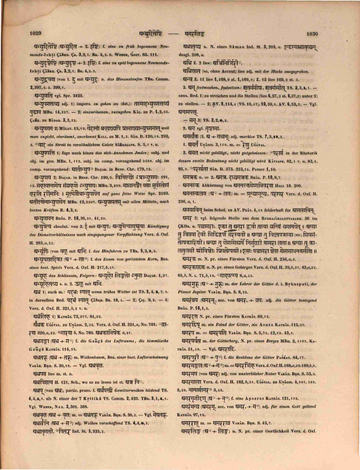
amára — 1〉 Adj. (f. ā und ī) unsterblich, unvergänglich. ˚vat Adv. Chr. 162,5. — 2〉 m. — a〉 ein Gott. — b〉 Bez. der Zahl 33 GAṆIT. 2,2. — c〉 *Quecksilber. — d〉 Euphorbia tirucalli L. und *Tiaridium indicum Lehm. — e〉 mystische Bez. des Lautes u — f〉 N. pr. — α〉 eines Marut. — β〉 = amarasiṃha. — 3〉 f. ā — a〉 *Nachgeburt. — b〉 *Nabelschnur. — c〉 *Hauspfosten. — d〉 *Panicum dactylon, *Cocculus cordifolius DC., *Coloquinten-Gurke, *Aloe perfoliata L. und Aloe indica Royle u. s. w. Nach dem RUDRAYĀMALA: Dūrvā-Gras, Vitex negundo L., schwarzes Basilienkraut. — e〉 *Indraʼs Stadt. — 4〉 *f. ī Sansevieria roxburghiana RĀJAN. 3,7.
Original text · German · substantive feminine
amara , f. ī Göttin HEM. PAR. 2,413. [Nachtrag, Band 5]
Original text · German · Word type unspecified
amara I. 5. [Nachtrag, Band 7]
Apte 1890 adjective · substantive masculine
Original text · English · adjective · substantive masculine
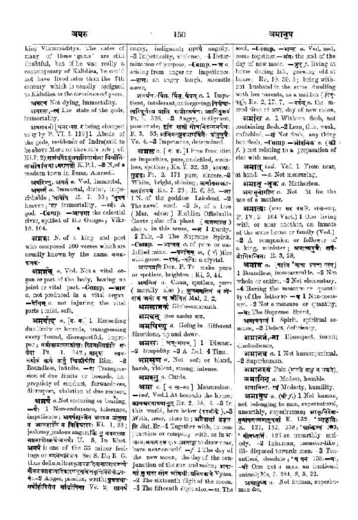
amara a. [mṛ-pacādyac na. ta.] Undying, immortal, imperishable; ajarāmaravat prājño vidyāmarthaṃ ca sādhayet H. Pr. 3, Ms. 2. 148. — raḥ 1 A god, deity. 2 N. of a Marut. 3 N. of a plant (snuhīvṛkṣa). 4 Quicksilver. 5 Gold. 6 A species of pine. 7 The number 33 (that being the number of Gods). ([Page 0149-c]) 8 N. of Amarasiṃha, see below; of of a mountain. 9 Mystical signification of the syllable u. 10 A heap of bones. — rā 1 The residence of Indra (cf. amarāvatī). 2 The naval string; umbilical cord. 3 The womb. 4 A house-post (sthūṇā). 5 N. of several plants; iṃdravāruṇī, vaṭī, mahānīlī, ghṛtakumārī, snuhī, guḍūcī, dūrvā. — rī The same as amarā. Comp. — aṃganā, -strī a celestial nymph, heavenly damsel; muṣāṇa ratnāni harāmarāṃganāḥ Śi. 1. 51. — adriḥ ‘mountain of the gods’, N. of the mountain Sumeru. — adhipaḥ, — iṃdraḥ, īśaḥ, īśvaraḥ, patiḥ, bhartā, rājaḥ &c. ‘the lord of the gods’, epithets of Indra; sometimes of Śiva and Viṣṇu also. — ācāryaḥ, -guruḥ, -ijyaḥ ‘preceptor of the gods’, epithets of Bṛhaspati. — āpagā, -taṭinī, -sarit f. the heavenly river, an epithet of the Ganges; ˚taṭinīrodhasi vasan Bh. 3. 123. — ālayaḥ the abode of the gods, heaven. — uttama a. the best of the gods. — upama a. God-like. — kaṃṭakaṃ N. of that part of the Vindhya range which is near the source of the river Narmadā. — koṭaḥ ‘the fortress of the immortals’, N. of the capital of a (modern) Rajaput state. — kośaḥ, -ṣaḥ N. of the most popular Sanskrit lexicon called after the author amarasiṃha. — jaḥ N. of a tree, a kind of khadira. — taruḥ, -dāruḥ 1 a celestial tree, a tree in the paradise of Indra; amarutarukusumasaurabhasevanasaṃpūrṇasakalakāmasya Bv. 1. 28. 2 devadāru. 3 the wishyielding tree. — dvijaḥ a Brāhmaṇa who lives by attending a temple or idol; or one who superintends a temple. — puraṃ 1 the residence of the gods, celestial paradise. 2 N. of various other towns. — puṣpaḥ, -ṣpakaḥ 1 N. of several plants (ketaka, cūta). 2 N. of a kind of grass. 3 the wish-yielding tree (kalpavṛkṣa). — puṣpikā N. of a plant (adhaḥpuṣpīvṛkṣa); a kind of anise. — prakhya, -prabha a. like an immortal. — prabhuḥ one of the 1000 names of Viṣṇu. — mālā N. of a lexicon. — ratnaṃ a crystal. — lokaḥ the world of the gods, heaven; ˚tā heavenly bliss; teṣu samyagvartamāno gacchatyamaralokatāṃ Ms. 2. 5. — vallarī N. of a plant ( ākāśavallī). — siṃhaḥ N. of the author of Amarakoṣa; he was a Jaina and is said to have been one of the 9 gems that adorned the court of ([Page 0150-a]) king Vikramāditya. The dates of many of these ‘gems’ are still doubtful, but if he was really a contemporary of Kālidāsa, he could not have lived later than the 7th century which is usually assigned to Kālidāsa as the terminus ad quem.
Cappeller 1887 Word type unspecified
Original text · German · Word type unspecified
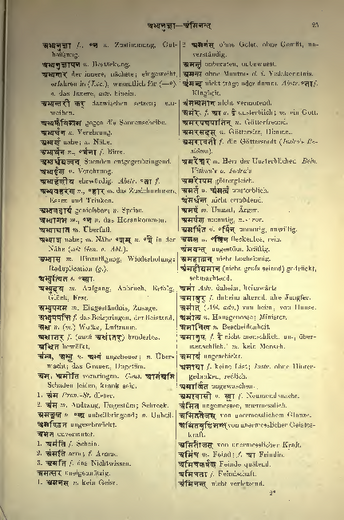
amára f. ā u. ī unsterblich; m. ein Gott.
Burnouf 1866 adjective
Original text · French · adjective
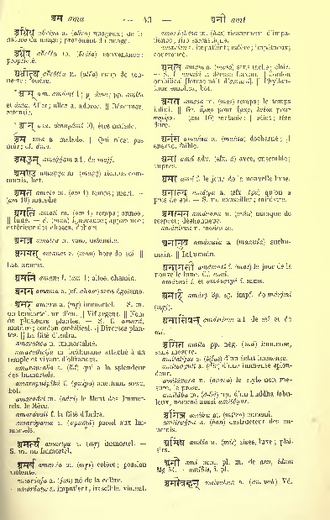
amara amara a. (mṛ) immortel. — S. m. un lmmortel, un dieu. Vif argent. Nom de plusieurs plantes. — S. f. amarā, matrice; cordon ombilical. Diverses plantes. La Cité d'Indra. amaratva n. immortalité. amaradvija m. brâhmane attaché à un temple et vivant d'offrandes. amaraprabha a. (bhā) qui a la splendeur des Immortels. amarapuṣpikā f. (puṣpa) anethum sowa, bot. amarādri m. (adri) le Mont des Immortels, le Meru. amarāvatī f. la Cité d'Indra. amaropama a. (upamā) pareil aux Immortels.
Occurrences in source texts (2)
Continue with AYI Free
Image source: AYI archive.