

bhojya भोज्य – food; edible thing
adjective · substantive masculine · substantive neuter · Word type unspecified
Dictionary sources
AYI dictionary substantive neuter
food; edible thing
Cappeller 1891 adjective
Original text · English · adjective
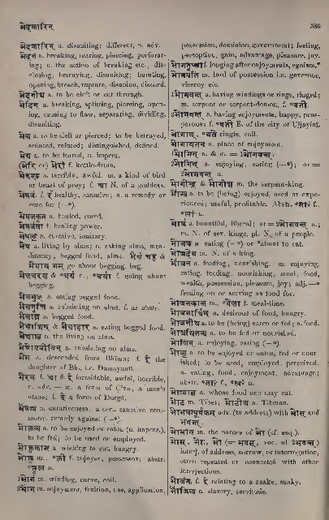
bhojyá ·a. to be enjoyed or eaten, fed or nourished; to be used, employed, perceived. n. eating, food, enjoyment, advantage; abstr. °tāÅ f., °tvaÅ m.
Monier-Williams 1872 adjective
Original text · English · adjective
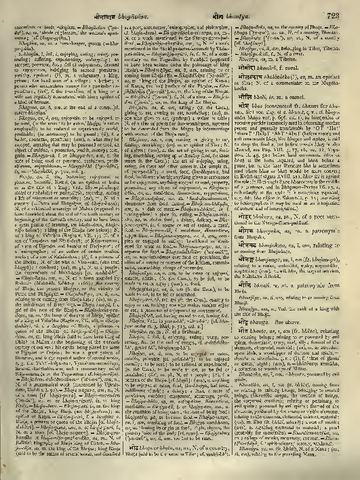
Bhojya, as, ā, am, to be enjoyed or eaten, eatable, palatable [cf. prīti-bh˚]; to be enjoyed carnally; to be used; to be suffered or experienced; (fr. the Caus.), to be made to eat, to be fed or nourished; (ās), m. pl., N. of a people; (ā), f. a princess of the Bhojas [cf. bhojā]; (am), n. anything to be enjoyed or eaten, food, (ku-bhojya, bad food, indifferent viands); a dainty; a feast, a store of provisions, eatables; enjoyment, advantage, profit.
Petersburger 1855 adjective · substantive masculine · substantive neuter
Original text · German · adjective · substantive neuter
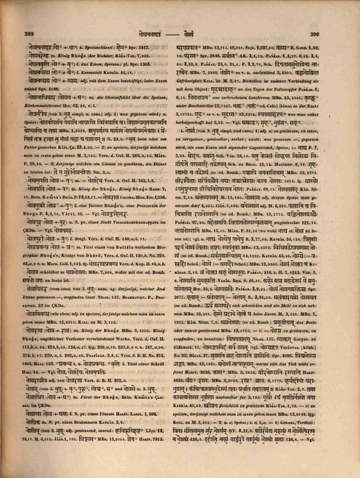
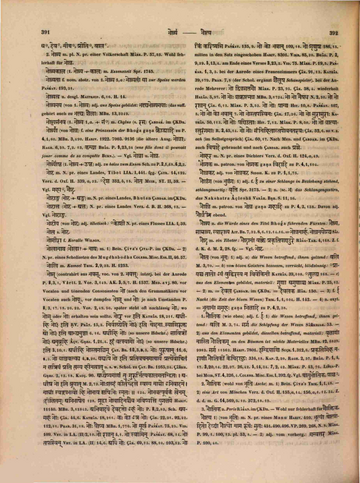
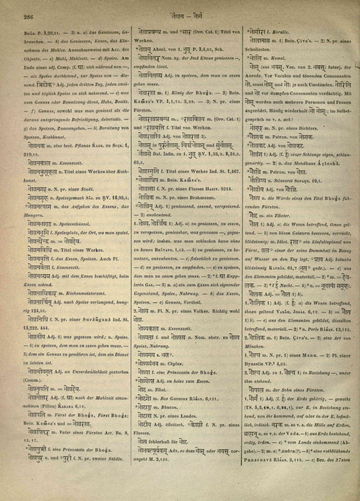
1. bhojyà (von 3. bhuj simpl. und caus.) 1〉 adj. a〉 zu geniessen, zu essen, zu verspeisen, geniessbar, essbar; neutr. was genossen —, gegessen wird, ein zum Essen sich eignender Gegenstand, Speise; = bhakṣya P. 7,3,69. odana, yavāgū Sch. VOP. 26,10. yattu kevalaṃ jihvayā viloḍya nigīryate pāyasādi tadbhojyam Sch. zu BHAG. 15,14. MAITRYUP. 6,10. gṛhasthānāṃ ca yadbhojyaṃ (so ed. Bomb.) yaccāpi vanavāsinām MBH. 13,2773. kṣīrusyaitāḥ sarpiṣaścaiva nadyaḥ śaśvatsrotāḥ kasya bhojyāḥ MBH. 13,3512. fg. grāmyo 'yamuṣṭranāmā jīviviśeṣastava bhojyaḥ PAÑCAT. 68,15. bhojyamannam KĀM. NĪTIS. 7,15. abhojyamannam M. 11,160. bhojyānna adj. dessen Speise man geniessen darf M. 4,253. YĀJÑ. 1,166. abhojyānna adj. M. 4,221. phalāni ca vicitrāṇi rājabhojyāni (so ed. Bomb.) MBH. 13,2772. vahnibhojyadravyaiḥ PAÑCAT. 97,25. yadetānapi tilānabhojyānkṛtavān ungeniessbar PAÑCAT. 121,16. bhakṣyabhojyāni MBH. 15,10. MĀRK. P. 61,56 (wo wohl bhakṣya st. bhokṣa zu lesen ist); vgl. u. bhakṣya. bhojyeṣu pāneṣu R. 2,77,15. KATHĀS. 34,128. pitṝṇāṃ paramaṃ bhojyaṃ tilāḥ sṛṣṭāḥ svayaṃbhuvā MBH. 13,3315. vidhivadbhojayāmāsa bhojyaṃ (so ed. Bomb.) sarvaguṇānvitam MBH. 14,1852. KATHĀS. 43,56. bhogye (= vastrādau Schol.) bhojye (= annādau Schol.) MBH. 12,9500. bhojyaṃ bhoktā ca KUMĀRAS. 2,15. tvaṃ bhoktā ahaṃ bhojyabhūtaḥ PAÑCAT. 110,2. H. 7. H. 1213. VOP. 5,6. bhojyāni sumahānti VARĀH. BṚH. S. 46,81. aho adya mahadbhojyaṃ me samupasthitam HIT. 35,5. bhojyajātaiḥ PAÑCAT. 3,9,21. bhojyaṃ bhojanaśaktiśca Spr. 2077. hayān — abhojayan — bhojyam R. 2,91,53. alaṃkāramatho bhojyamata (so ed. Bomb.) ūrdhvaṃ samācareḥ sich schmücken und ein Mahl zu sich nehmen MBH. 15,201. home pradāne bhojye ca beim Essen M. 3,240. MBH. 7,1993. KĀM. NĪTIS. 7,9. agrabhojyāḥ (so ed. Bomb.) prasūtīnām das Beste oder zuerst geniessend MBH. 13,2150. — b〉 = bhogya zu geniessen, zu empfinden, zu benutzen: viṣayajātam NĪLAK. 157. vyaktam GAUḌAP._zu_SĀṂKHYAK. 11. bhojyarūpamidaṃ sarvaṃ jagat (vgl. bhogyarūpa VEDĀNTAS. [Allah.] No. 93) BĀLAB. 37. sukhāni saha bhojyāni jñātibhiḥ Spr. 4086. viśvabhojyā (gaṅgā) MBH. 13,1853. abhojyaṃ tatpaśūnām woran sich das Vieh nicht erfreut HARIV. 3636. kāma˚ MBH. 5,3838. vīrabhojyāni rājyāni HARIV. 4830. vaṃśa˚ (rājya) MBH. 3,3038. rāja˚ (grāma) MBH. 8,1770. harṣādīnāṃ dharābhujām . kaṃcitkālamabhūdbhojyaṃ tataḥ prabhṛti maṇḍalam .. RĀJA-TAR. 2,7. tathā kāyasthabhojyā bhūrjātā ausbeutbar für RĀJA-TAR. 5,180. mūrkho 'yaṃ nṛpatirbhojyo mayā KATHĀS. 40,49. strījana fleischlich zu geniessen RĀJA-TAR. 1,73. — c〉 zu speisen, derjenige welchem man zu essen geben muss MBH. 13,6199. fgg. KULL._zu_M. 3,222. — 2〉 n. a〉 Speise; s. u. 1,a. — b〉 Genuss, Vortheil: vi̱dma sàkhi̱tvamu̱ta śū̀ra bho̱jyàm ṚV. 8,21,8. a̱gneravèṇa ma̱rutā̱ṃ na bho̱jyèṣi̱rāya̱ na bho̱jyā̀ ṚV. 8,128,5. dadā̀ti̱ mahya̱ṃ yādùrī̱ yāśū̀nāṃ bho̱jyā̀ śa̱tā ṚV. 8,126,6. — Vgl. a˚, deva˚, nīca˚, prīti˚, bāla˚.
Original text · German · substantive masculine
2. bhojya m. pl. N. pr. einer Völkerschaft MĀRK. P. 57,53. Wohl fehlerhaft für bhoja.
Böhtlingk 1879 adjective · substantive masculine · substantive neuter · Word type unspecified
Original text · German · adjective · substantive neuter
1. bhojya, bhojía — 1〉 Adj. — a〉 zu geniessen, zu essen, zu verspeisen, geniessbar, was genossen —, gegessen wird; insbes. was man schlucken kann ohne zu kauen BHĀVAPR. 1,43. — b〉 zu geniessen, zu benutzen, auszubeuten. — c〉 fleischlich zu geniessen. — d〉 zu geniessen, zu empfinden. — e〉 zu speisen, dem man zu essen geben muss. — 2〉 *f. ā Kupplerin GAL. — 3〉 n. — a〉 ein zum Essen sich eignender Gegenstand, Speise, Nahrung. — b〉 das Essen, Speisen. — c〉 Genuss, Vortheil.
Original text · German · substantive masculine
2. bhojya m. Pl. N. pr. eines Volkes. Richtig wohl bhoja.
Original text · German · Word type unspecified
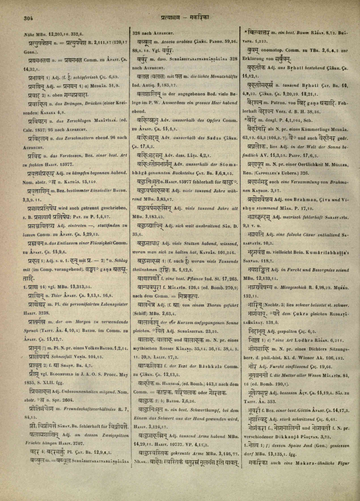
1. bhojya 1〉f〉 dessen Speise Jmd (Gen.) geniessen darf MBH. 13,135,1. fgg. [Nachtrag, Band 6]
Original text · German · Word type unspecified
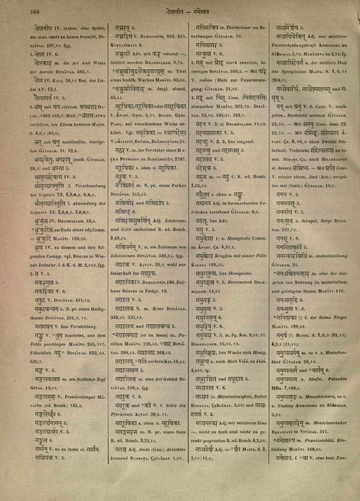
1. bhojya IV. 6. [Nachtrag, Band 7]
Apte 1890 adjective · substantive neuter
Original text · English · adjective · substantive neuter
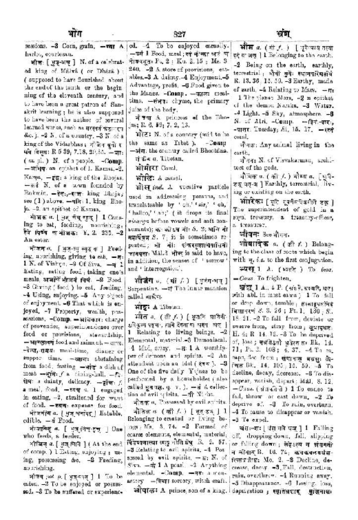
bhojya pot. p.. [bhuj-ṇyat] 1 To be eaten. 2 To be enjoyed or possessed. 3 To be suffered or ([Page 0827-b]) experienced. 4 To be enjoyed carnally. — jyaṃ 1 Food, meal; tvaṃ bhoktā ahaṃ ca bhojyabhūtaḥ Pt. 2; Ku. 2. 15; Ms. 3. 240. 2 A store of provisions, eatables. 3 A dainty. 4 Enjoyment. 5 Advantage, profit. 6 Food given to the Manes. Comp. — kālaḥ mealtime. — saṃbhavaḥ chyme, the primary juice of the body.
Cappeller 1887 Word type unspecified
Original text · German · Word type unspecified
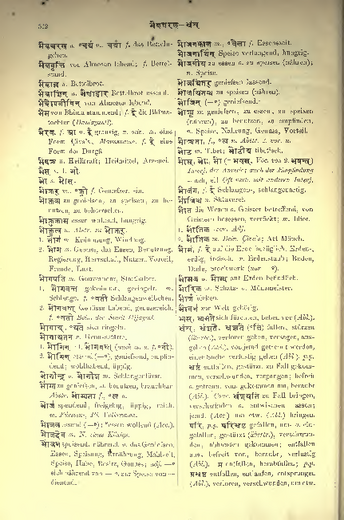
bhojyà zu genießen, zu essen, zu speisen (nähren), zu benutzen, zu empfinden. n. Speise, Nahrung, Genuss, Vorteil.
Burnouf 1866 adjective
Original text · French · adjective
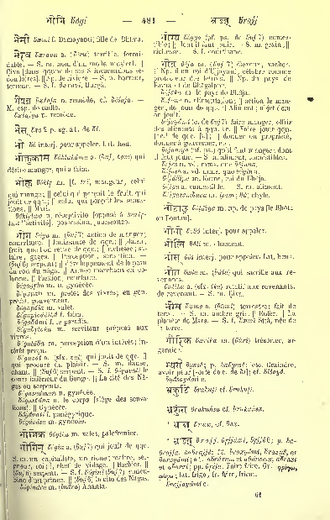
bhojya a. comestible. — S. m. aliment.
Occurrences in source texts (3)
HP 2 occurrences
SiSa 1 occurrence
Continue with AYI Free
Image source: AYI archive.