
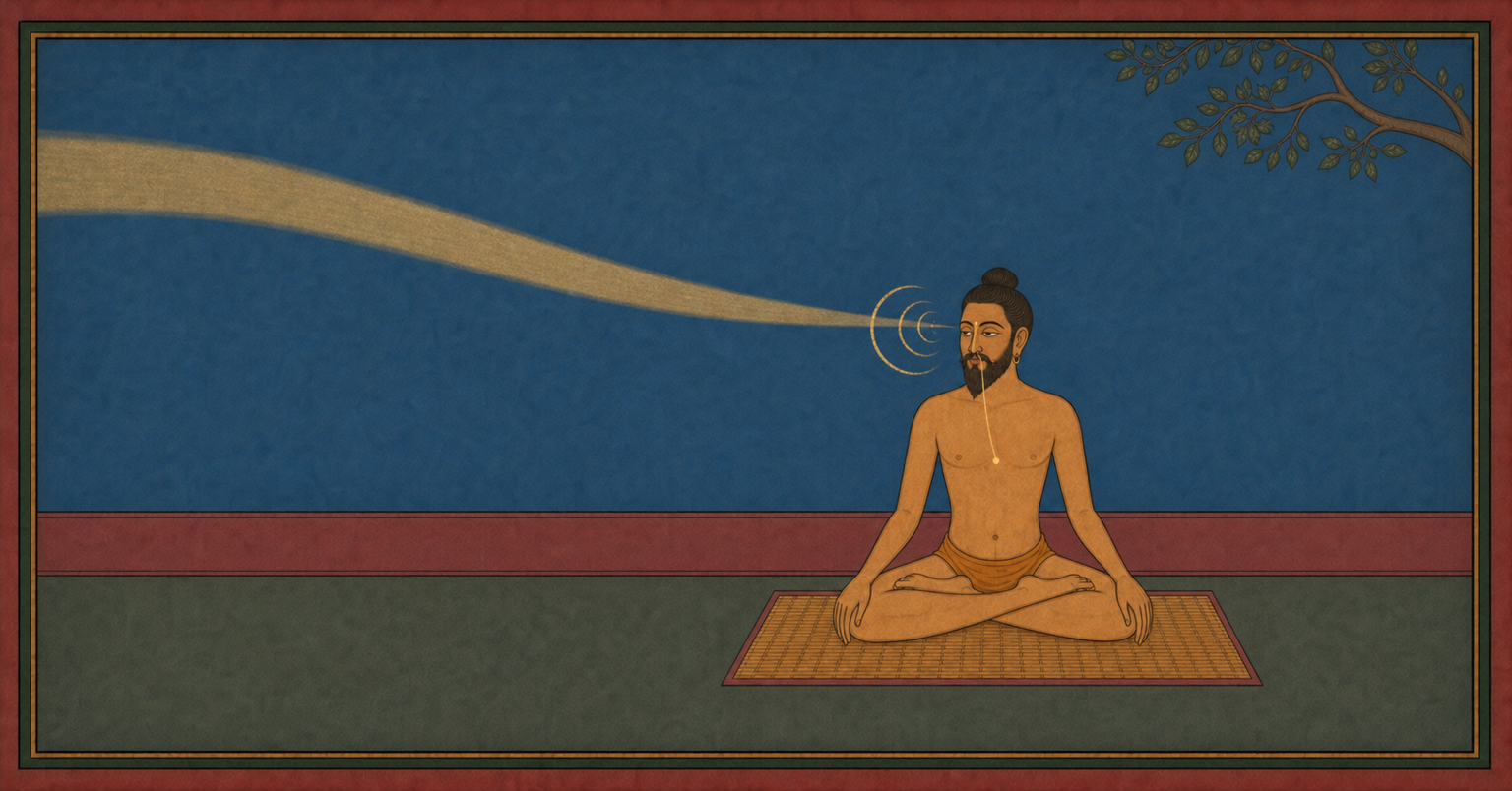

Brahmānanda equates Muktāsana here with Siddhāsana and combines it with Śāmbhavīmudrā. The inner tone is preferably perceived in the right ear, but arises from Suṣumṇā. From another source, he names the humming of bees, flute, bell, ocean roar, and thunder as typical sound images; the list organizes subjective auditory impressions into a traditional sequence of practice.
Just as a fire goes out when its fuel is exhausted, the mind directed toward Nāda is said to lose its activity. Brahmānanda refines the comparison: the movements determined by Rajas and Tamas end first, while a clear, sattvic form of knowledge and its subtle impression may initially remain. “Dissolution” is therefore conceived as a gradual process.
śīte kāle, caupaṭī vā kuṭī vā pathyāhāre, go-payo vā payo vā | Analysis ▾ Analysis ▴
bhojye bhikṣā,-vṛndam āraṇya-kandaṃ pāṇī droṇī, kāpi vā bhojya-pātre ||17|| Analysis ▾ Analysis ▴
Brahmānanda divides Nāda practice into four stages: Ārambha (beginning), Ghaṭa (integration), Paricaya (deepening or familiarity), and Niṣpatti (consummation). The following verses describe Prāṇa's ascent through knots and inner spaces.
Continue with AYI Free
Illustrations: AI-generated.

Please log in to write a message. Go to login
No messages yet.