

dṛṣṭa दृष्ट – seen; perceived
adjective · substantive neuter · Word type unspecified
Dictionary sources
AYI dictionary adjective
Cappeller 1891 adjective
Original text · English · adjective
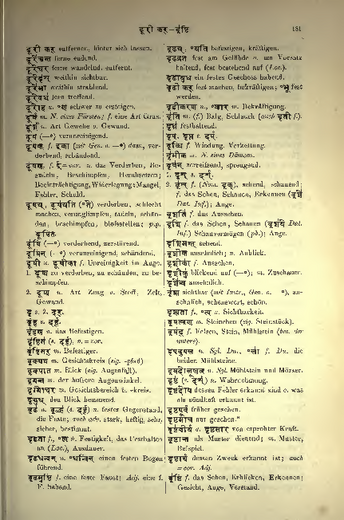
dṛṣṭá ·a. seen, visible, apparent, known, foreseen, destined; decided, knowledged, valid; n. perception, observation, sight, view, glance.
Monier-Williams 1872 adjective · Word type unspecified
Original text · English · adjective
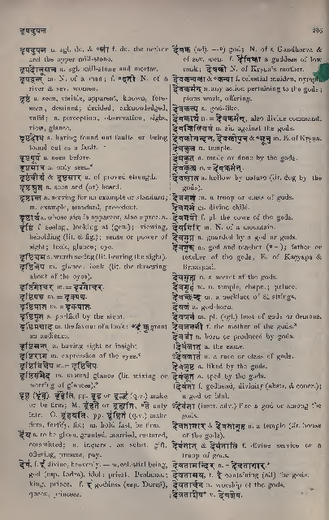
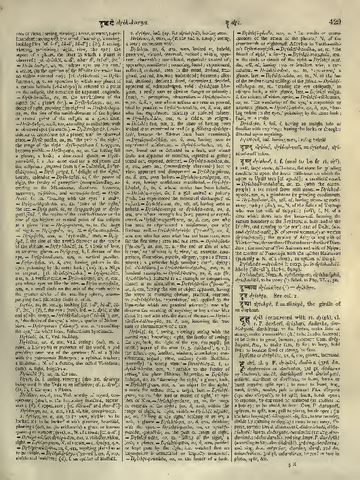
Dṛṣṭa, as, ā, am, seen, looked at, beheld, perceived, viewed, observed, noticed; visible, appa- rent, observable; considered, regarded; treated of; appearing, manifested; occurring, found; experienced, suffered, endured; seen in the mind, devised, ima- gined, learned, known; understood; foreseen; allot- ted, destined; declared, fixed, determined, decided, approved of, acknowledged, valid; dṛṣṭam bha- yam, a really seen or obvious danger or calamity; (am), n. perception, observation.
Original text · English · Word type unspecified
dṛṣṭa dṛṣṭa. See col. 2.
Petersburger 1855 Word type unspecified
Original text · German · Word type unspecified
dṛṣṭa s. u. darś.
Böhtlingk 1879 adjective · substantive neuter
Original text · German · adjective · substantive neuter
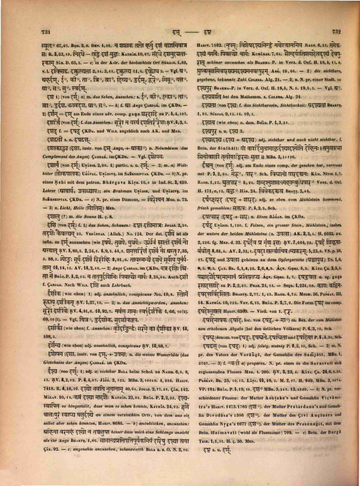
dṛṣṭa — 1〉 Adj. s. u. darś. — 2〉 n. — a〉 Wahrnehmung. — b〉 *eine begründete Gefahr.
Apte 1890 adjective · substantive neuter
Original text · English · adjective · substantive neuter
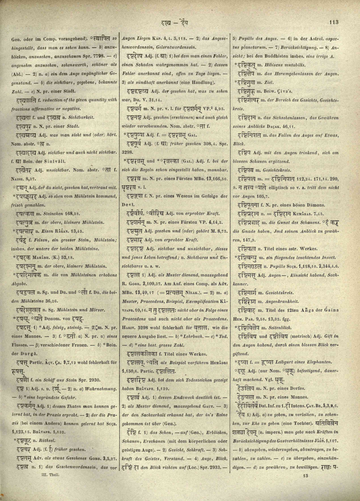
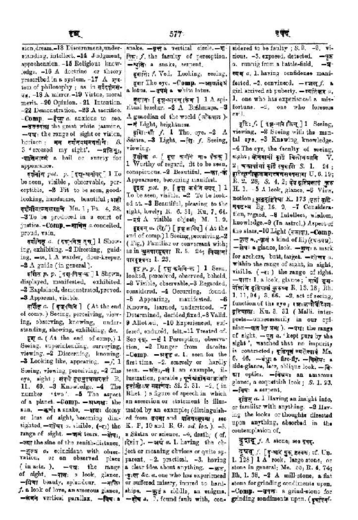
dṛṣṭa p. p. [dṛś-karbhaṇi-kta] 1 Seen, looked, perceived, observed, beheld. 2 Visible, observable. 3 Regarded, considered. 4 Occurring, found. 5 Appearing, manifested. 6 Known, learned, understood. 7 Determined, decided, fixed. 8 Valid. 9 Allotted. 10 Experienced, suffered, endured, felt. 11 Treated of. See dṛś. — ṣṭaṃ 1 Perception, observation. 2 Danger from dacoits. Comp. — adṛṣṭa a. 1 seen for the first time. 2 scarcely or hardly seen. — aṃtaḥ, -taṃ 1 an example, illustration, parable; pūrṇaścaṃdrodayākāṃkṣī dṛṣṭāṃto'tra mahārṇavaḥ Śi. 2. 31. 2 (in Rhet.) a figure of speech in which an assertion or statement is illustrated by an example; (distinguished from upamā and prativastūpamā; see K. P. 10 and R. G. ad loc.). 3 a Śāstra or science. 4 death; (cf. diṣṭāṃta). — artha a. 1 having the object or meaning obvious or quite apparent. 2 practical. 3 having a clear idea about anything. — kaṣṭa, — duḥkha &c. a. one who has experienced or suffered misery, inured to hardships. — kūṭaṃ a riddle, an enigma. — doṣa a. 1 found fault with, ([Page 0577-c]) considered to be faulty; Ś. 2. 2 vicious. 3 exposed, detected. — pṛṣṭha a. running from a battle-field. — pratyaya a. 1 having confidence manifested. 2 convinced. — rajas f. a girl arrived at puberty. — vyatikara a. 1 one who has experienced a misfortune. 2 one who foresees evil.
Cappeller 1887 Word type unspecified
Original text · German · Word type unspecified
dṛṣṭá (s. darś) n. Wahrnehmung.
Burnouf 1866 adjective
Original text · French · adjective
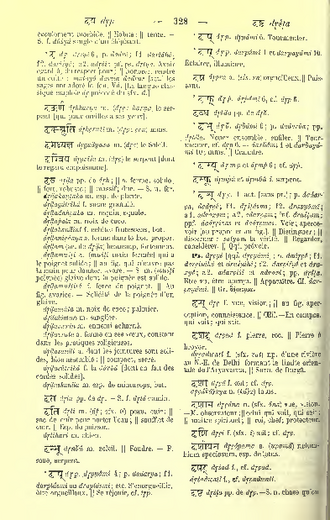
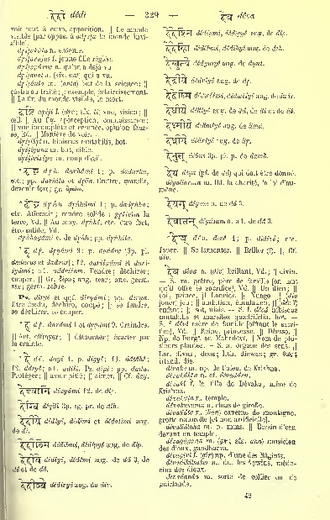
dṛṣṭa dṛṣṭa pp. de dṛś. — S. n. chose qu'on [Page329-1] voit tout à coup, apparition. Le monde visible [par oppos. à adṛṣṭa le monde invisible]. dṛṣṭakūṭa n. énigme. dṛṣṭarajas f. jeune fille réglée. dṛṣṭapūrva a. qu'on a déjà vu. dṛṣṭavat a. (sfx. vat) qui a vu. dṛṣṭānta m. (anta) but de la science; śāstra ou traité; exemple, éclaircissement. La fin du monde visible, la mort.
Derived words
Occurrences in source texts (2)
MandUp 1 occurrence
MandUp 3-7: Four modes of awareness 1 occurrence
Occurrences through derived words
-
MandUp 7 Segment 18
SiSa 1 occurrence
Continue with AYI Free
Image source: AYI archive.