

dāha दाह – burning, combustion, conflagration
substantive masculine · Word type unspecified
Dictionary sources
Cappeller 1891 substantive masculine
Original text · English · substantive masculine
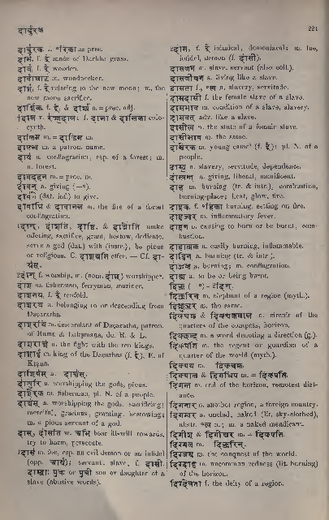
dāha ·m. burning (tr. & intr.), combustion, burning-place; heat, glow, fire.
Monier-Williams 1872 substantive masculine
Original text · English · substantive masculine
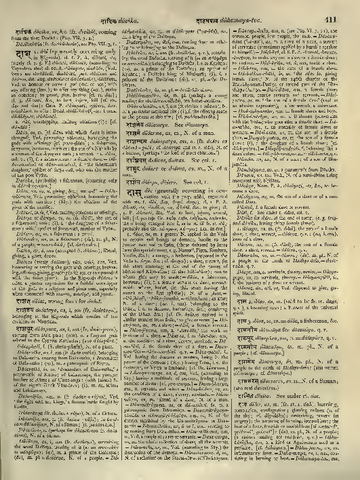
dāha dāha, as, m. (fr. rt. 1. dah), burning, combustion, conflagration; glowing redness (as of the sky; cf. dig-dāha); cauterizing, cautery (in surgery); the sensation of burning, internal heat; the heat of a fever, feverish or morbid heat [cf. antar-d˚, gṛha-d˚, geha-d˚]; (ās), m. pl., N. of a people; (a various reading for vaideha, q. v.)
Petersburger 1855 substantive masculine
Original text · German · substantive masculine
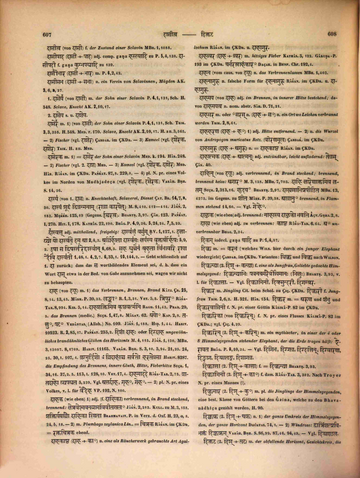
dāha (von dah) m. 1〉 das Verbrennen, Brennen, Brand KĀTY. ŚR. 25,8,14. KĀTY. ŚR. 25,13,45. MĀRK. P. 30,23. laṅkā˚ R. 1,3,31. VET. 5,3., tripura˚ RĀJA-TAR. 8,994. KIR. 5,14. dāhaśaktimiva kṛṣṇavartmani RAGH. 11,42. PRAB. 29,5. das Brennen (medic.) SUŚR. 1,47,8. MĀLAV. 62. ayo˚ KAP. 2,8. tantu˚, paṭa˚ VEDĀNTAS. (Allah.) No. 109. YĀJÑ. 1,188. HIḌ. 1,44. HARIV. 10523. R. 2,85,17. PAÑCAT. 255,2. diśāṃ dāhaḥ oder digdāha ungewöhnliches brandähnliches Glühen des Horizonts M. 4,115. YĀJÑ. 1,150. MBH. 3,13087. MBH. 8,1708. HARIV. 11165. VARĀH. BṚH. S. 3,10. VARĀH. BṚH. S. 5,94. VARĀH. BṚH. S. 21,25. VARĀH. BṚH. S. 24,25. VARĀH. BṚH. S. 30,1. VARĀH. BṚH. S. 107,4. jagmurdiśo 'gnidāhāṃśca sarvato haratejasā HARIV. 8287. die Empfindung des Brennens, innere Gluth, Hitze, Fieberhitze SUŚR. 1,34,16. SUŚR. 1,37,2. SUŚR. 1,34,5. SUŚR. 1,113,1. SUŚR. 1,128,10. VET. 17,4. dāhamādade RĀJA-TAR. 2,75. jātadāho vyapadyata RĀJA-TAR. 5,239. Vgl. antardāha, gṛha˚, geha˚. — 2〉 pl. N. pr. eines Volkes, v. l. für vedaiha VP. 192, N. 100.
Böhtlingk 1879 substantive masculine · Word type unspecified
Original text · German · substantive masculine
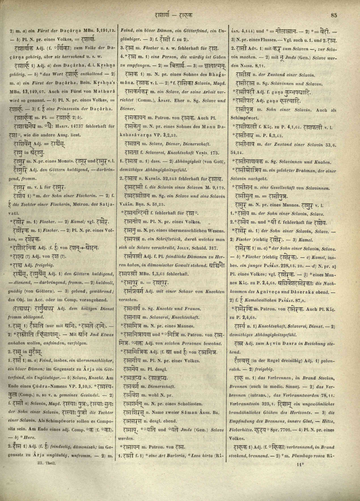
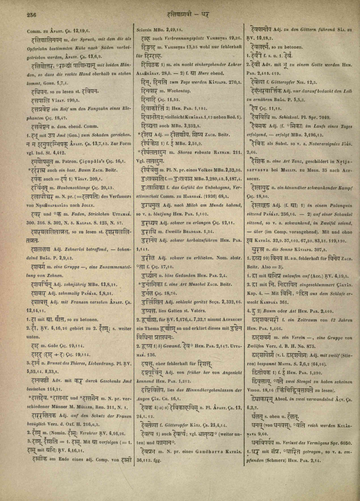
dāha m. — 1〉 das Verbrennen, in Brand Stecken, Brennen (auch in medic. Sinne.) — 2〉 das Verbrennen (intrans.), das Verbranntwerden Chr. 78,11. Verbranntsein Chr. 325,1. diśām ein ungewöhnliches brandähnliches Glühen des Horizonts. — 3〉 die Empfindung des Brennens, innere Glut, — Hitze, Fieberhitze. hṛdaya˚ Spr. 7701. — 4〉 Pl. N. pr. eines Volkes.
Original text · German · Word type unspecified
dāha auch Verbrennungsplatz VASIṢṬHA 19,26. [Nachtrag, Band 5]
Original text · German · Word type unspecified
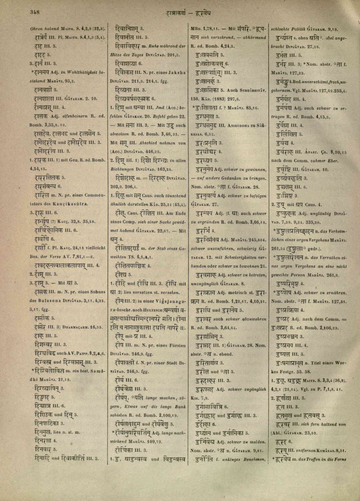
dāha III. 5. [Nachtrag, Band 7]
Apte 1890 substantive masculine · Word type unspecified
Original text · English · substantive masculine
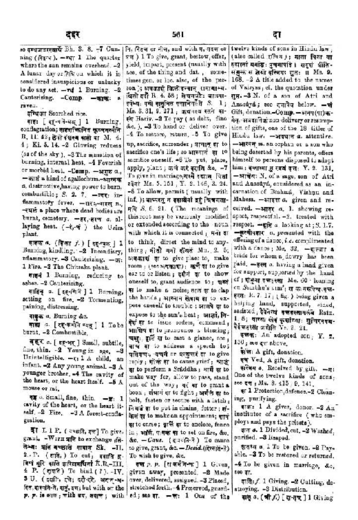
dāhaḥ [dah-bhāve-ghañ] 1 Burning, conflagration; dāhaśaktimiva kṛṣṇavartmani R. 11. 42; chedo daṃśasya dāho vā M. 4. 4; Ki. 5. 14. 2 Glowing redness (as of the sky). 3 The sensation of burning, internal heat. 4 Feverish or morbid heat. Comp. — aguru n., — kāṣṭhaṃ a kind of agallochum. — ātmaka a. destructive, having power to burn, combustible; Ś. 2. 7. — jvaraḥ inflammatory fever. — saraḥ, -saras n., — sthalaṃ a place where dead bodies are burnt, cemetery. — hara, -haraṇa a. allaying heat. — (raṃ, -ṇaṃ) the Uśīra plant.
Original text · English · Word type unspecified
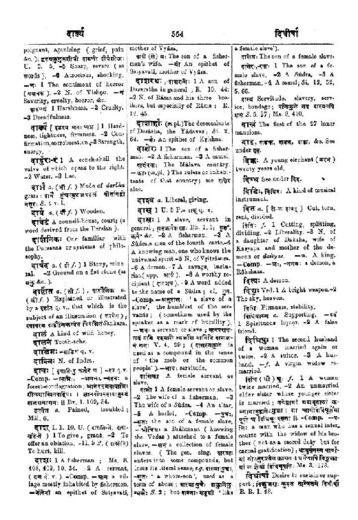
dāha, dāhaka, dāhana, dāhya, &c. See under dah.
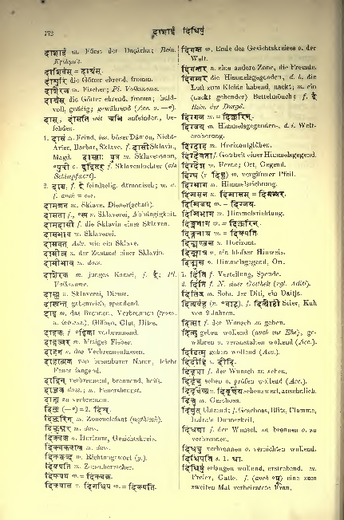
Cappeller 1887 substantive masculine
Original text · German · substantive masculine
dāha m. das Brennen, Verbrennen (trans. u. intrans.), Glühen, Glut, Hitze.
Burnouf 1866 substantive masculine
Original text · French · substantive masculine
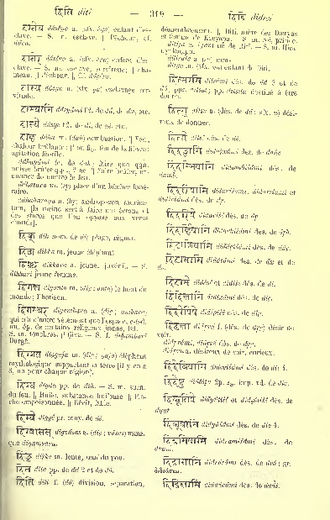
dāha dāha m. (dah) combustion. Feu; chaleur brûlante; au fig. feu de la fièvre; agitation fébrile. dāhyāmi (c. de dah) faire que qqn. puisse brûler qqc., 2 ac. Faire brûler, ordonner de mettre le feu. dāhasara m. (sṛ) place d'un bûcher funéraire. dāhaharaṇa n. (hṛ) andropogon muricatum, [la racine sert à faire des écrans et des stores que l'on oppose aux vents chauds].
Occurrences in source texts (3)
HTK 2 occurrences
SiSa 1 occurrence
Continue with AYI Free
Image source: AYI archive.