

giri गिरि – mountain
adjective · substantive feminine · substantive masculine · Word type unspecified
Dictionary sources
AYI dictionary substantive masculine
mountain
Cappeller 1891 substantive masculine
Original text · English · substantive masculine
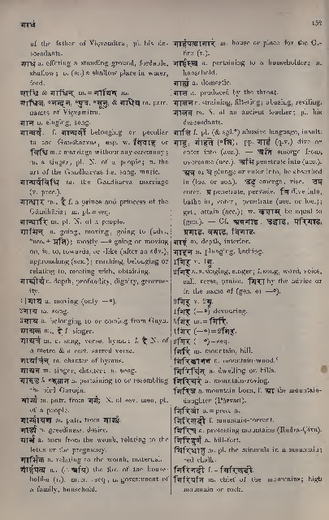
girí ·m. mountain, hill.
Monier-Williams 1872 substantive masculine
Original text · English · substantive masculine
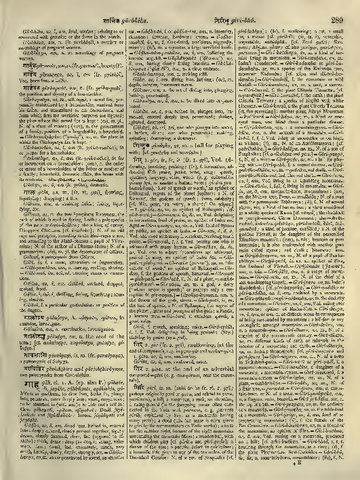
giri giri, is, m. (said to be fr. rt. 2. gṝ; perhaps originally gari or garu, and related to guru, gariman), a hill, a mountain, a rock, an elevation, a rising-ground (in the foregoing senses often con- nected in the Veda with parvata, e. g. parvato giriḥ, explained by Sāy. as a mountain having many parts); a cloud (this last sense is often given to giri by the commentators on Vedic works); a term for the number eight, because of the eight mountains surrounding the mountain Meru; a wooden ball, with which children play [cf. girika and giri-guḍa]; a disease of the eyes; a peculiar defect in quicksilver; a honorific title given to one of the ten orders of the Das-nāmī Gosains; N. of a son of Śvaphalka [cf. giri-kṣipa]; (is), f. swallowing; a rat, a small rat, a mouse [cf. girikā]; (is, is, i), venerable, respectable, worshipful; [cf. Zend gairi; Slav. gora; Afghan. ghur; cf. also garīyas, gariṣṭha, gariman.]
Petersburger 1855 adjective · substantive feminine · substantive masculine · Word type unspecified
Original text · German · adjective · substantive feminine · substantive masculine
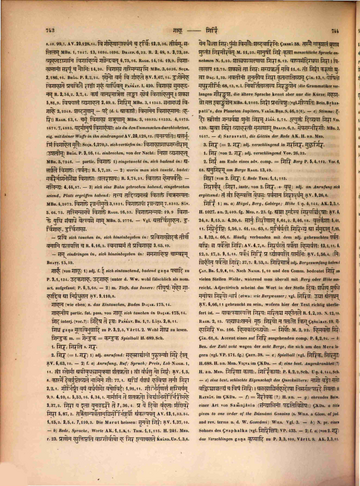
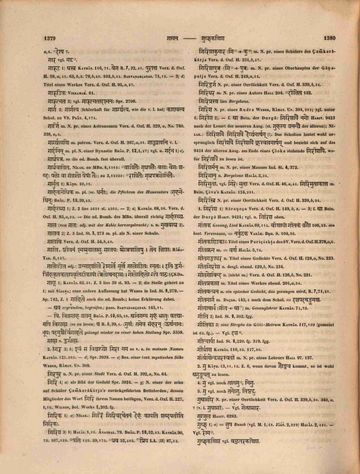
girí 1〉 m. a〉 Hügel, Berg, Gebirge; Höhe Uṇ. 4,144. AK. 2,3,1. H. 1027. H. an. 2,409. fg. MED. r. 23. fg. ajrā̱ indràsya gi̱rayaścìdṛ̱ṣvāḥ ṚV. 6,24,8. ṚV. 8,15,2. ṚV. 4,20,6. sānù girī̱ṇām ṚV. 6,61,2. ṚV. 8,46,18. vṛ̱kṣakèśāḥ ṚV. 5,41,11. gi̱rerbhṛ̱ṣṭiḥ ṚV. 1,56,3. ṚV. 1,61,14. ṚV. 1,63,1. śucìrya̱tī gi̱ribhya̱ ā sàmu̱drāt ṚV. 7,95,2. ṚV. 8,32,4. ṚV. 8,66,6. Häufig verbunden mit dem adj. gebrauchten parvataḥ vadhri̱ḥ sa parvàto gi̱riḥ AV. 4,7,8. gi̱rayàste̱ parvàtā hi̱mavàntaḥ AV. 12,1,11. AV. 6,12,3. AV. 6,17,3. AV. 9,1,18. parvàtaṃ gi̱riṃ pra cyā̀vayanti̱ yāmàbhiḥ ṚV. 1,56,4. (ni) jihī̀ta̱ parvàto gi̱riḥ ṚV. 37,7. ṚV. 8,53,5. girimātrá adj. Bergesumfang habend ŚAT. BR. 1,9,1,10. Nach NAIGH. 1,10 und den Comm. bedeutet giri an vielen Stellen Wolke, wanrend man überall mit Berg oder Höhe ausreicht. Adjectivisch scheint das Wort in der Stelle di̱vaḥ śardhā̀ya̱ śucàyo manī̱ṣā gi̱rayo̱ nāpà (etwa: wie Bergwasser; vgl. girija) u̱grā àspṛdhran ṚV. 6,66,11 gebraucht zu sein, wofern hier der Text richtig überliefert ist. — yāvatsthāsyanti girayaḥ saritaśca mahītale R. 1,2,39. N. 12,18. RAGH. 2,13. paśyādhaḥkhanane mūḍha girayo na patanti kim ŚṚṄGĀRAT. 19. mahāgiri VID. 166. himavadvindhyayoḥ — giryoḥ M. 2,22. himavato gireḥ ŚĀK. 61,6. Accent eines auf giri ausgehenden comp. P. 6,2,94. — b〉 Bez. der Zahl acht wegen der acht Berge, die sich um den Meru lagern (vgl. VP. 171. fg.) ŚRUT. 38. — c〉 Spielball (vgl. girika, giriguḍa) H. 688. H. an. MED. VIŚVA_im_ŚKDR. — d〉 eine best. Augenkrankheit(?) H. an. MED. giriṇā kāṇaḥ, giríkāṇaḥ P. 6,2,2, Sch. Uṇ. 4,144, Sch. — e〉 eine best. schlechte Eigenschaft des Quecksilbers: nāgo vaṅgo malo vahniścāñcalyaṃ ca viṣaṃ giriḥ . asahyāgnirmahādoṣā nisargātpārade sthitāḥ .. RATNĀV._im_ŚKDR. — f〉 = gairīyaka(?) H. an. — g〉 ehrendes Beiw. einer Art von Saṃnyāsin (saṃnyāsināṃ paddhativiśeṣaḥ) ŚKDR. a title given to one order of the Dāsnāmi Gosains (s. WILS. A Gloss. of jud. and rev. terms u. d. W. Gosvāmi) WILS. Vgl. 3. — h〉 N. pr. eines Sohnes des Śvaphalka (vgl. girikṣipa) VP. 435. — 2〉 f. a〉 (von 2. gar) das Verschlingen gaṇa kṛṣyādi zu P. 3,3,108, Vārtt. 8. AK. 3,3,11. H. an. MED. — b〉 Maus (vgl. girikā) RAMĀN._zu_AK._im_ŚKDR. — 3〉 adj. ehrwürdig H. an. MED. Sch. zu R. 4,37,2. — Oefters ist von dem grossen Gewichte der Berge die Rede, so dass man geneigt sein möchte giri (vgl. gairi im Zend und гора) auch etym. mit guru (vgl. garīyaṃs, gariṣṭha, gariman) zusammenzustellen.
Original text · German · Word type unspecified
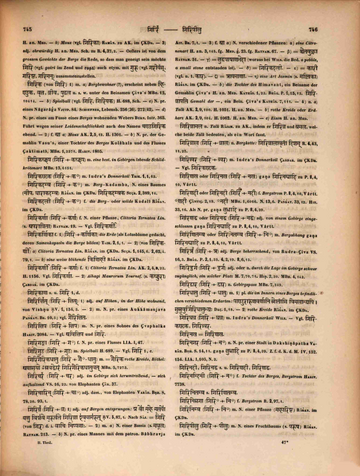
giri 1〉a〉 als Bild der Geduld Spr. 3924. — g〉 N. einer der zehn auf Schüler Śaṃkarācāryaʼs zurückgeführten Bettelorden, dessen Mitglieder das Wort giri ihrem Namen beifügen, Verz. d. Oxf. H. 227,b,16. WILSON, Sel. Works 1,202. fg.
Böhtlingk 1879 adjective · substantive feminine · substantive masculine
Original text · German · adjective · substantive feminine · substantive masculine
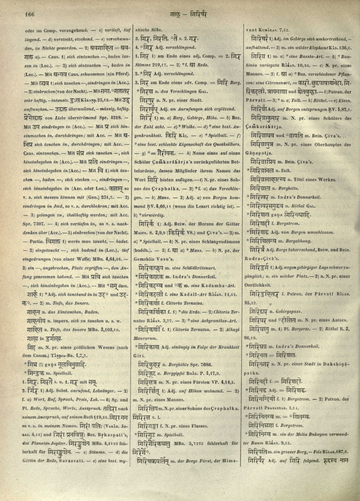
girí — 1〉 m. — a〉 Berg, Gebirge, Höhe. — b〉 Bez. der Zahl acht. — c〉 *Wolke. — d〉 *eine best. Augenkrankheit. kiri KĀŚ. 4. — e〉 *Spielball. — f〉 *eine best. schlechte Eigenschaft des Quecksilbers. — g〉 *= gairīyaka. — h〉 Name eines auf einen Schüler Śaṃkarācāryaʼs zurückgeführten Bettelordens, dessen Mitglieder ihrem Namen das Wort giri hinten anfügen. — i〉 N. pr. eines Sohnes des Śvaphalka. — 2〉 *f. — a〉 das Verschlingen. — b〉 Maus. — 3〉 Adj. — a〉 von Bergen kommend ṚV. 6,66,11 (wenn die Lesart richtig ist). — b〉 *ehrwürdig.
Apte 1890 adjective · substantive masculine
Original text · English · adjective · substantive masculine
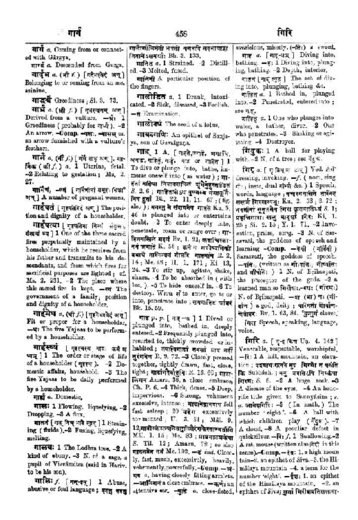
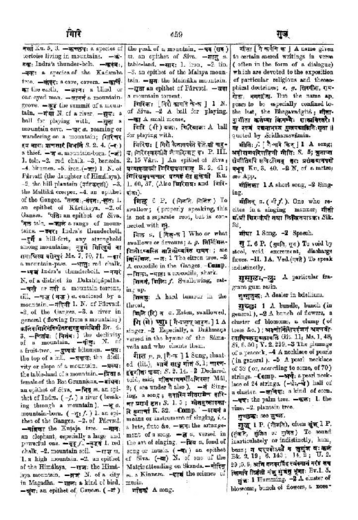
giri a. [gṝ-i kicca Uṇ. 4. 142] Venerable, respectable, worshipful. — riḥ 1 A hill, mountain, an elevation; paśyādhaḥkhanane mūḍha gigyo na pataṃti kiṃ Subhāṣ.; nanu pravāte'pi niṣkaṃpā girayaḥ Ś. 6. 2 A huge rock. 3 A disease of the eyes. 4 An honorific title given to Saṃnyāsins; e. g. ānaṃdagiriḥ 5 (In math.) The number ‘eight’. 6 A ball with which children play (geṃduka). 7 A cloud. 8 A peculiar defect in quicksilver. — riḥ f. 1 Swallowing. 2 A rat; mouse (written also girī in this sense). Comp. — iṃdraḥ 1 a high mountain 2 an epithet of Śiva. 3 the Himālaya mountain. 4 a term for the number ‘eight’. — īśaḥ 1 an epithet of the Himālaya mountain. 2 an epithet of Śiva; sutāṃ ([Page 0459-a]) girīśapratisaktamānasāṃ Ku. 5. 3. — kacchapaḥ a species of tortoise living in mountains. — kaṃṭakaḥ Indra's thunder-bolt. — kadaṃbaḥ, — bakaḥ a species of the Kadamba tree. — kaṃdaraḥ a cave, cavern. — karṇikā the earth. — kāṇaḥ a blind or one-eyed man. — kānanaṃ a mountaingrove. — kūṭaṃ the summit of a mountain. — gaṃgā N. of a river. — guḍaḥ a ball for playing with. — guhā a mountain cave. — cara a. roaming or wandering on a mountain; giricara iva nāgaḥ prāṇasāraṃ bibharti Ś. 2. 4. — (raḥ) a thief. — ja a. mountain-born. — (jaṃ) 1 talc. 2 red chalk. 3 benzoin. 4 bitumen. 5 iron. — (jā) 1 N. of Pārvatī (the daughter of Himālaya). 2 the hill-plantain (parvatakadalī) 3 the Mallikā creeper. 4 an epithet of the Ganges. ˚tanayaḥ, -naṃdanaḥ, -sutaḥ 1 an epithet of Kārtikeya. 2 of Gaṇeśa. ˚patiḥ an epithet of Śiva. ˚malaṃ talc. — jālaṃ a range of mountains. — jvaraḥ Indra's thunderbolt. — durgaṃ a hill-fort, any stronghold among mountains; nṛdurgaṃ giridurgaṃ vā samāśritya vasetpuraṃ Ms. 7. 70, Ms. 7. 71. — dvāraṃ a mountain-pass. — dhātuḥ red chalk. — dhvajaṃ Indra's thunderbolt. — nagaraṃ N. of a district in Dakṣiṇāpatha. — ṇadī or nadī a mountain-torrent, rill. — ṇaddha (naddha) a. enclosed by a mountain. — naṃdinī 1 N. of Pārvatī. 2 of the Ganges. 3 a river in general (flowing from a mountain;) kaṃliṃdagirinaṃdinītaṭasuradrumālaṃbinī Bv. 4. 3. — ṇitaṃbaḥ (nitaṃbaḥ) the declivity of a mountain. — pīluḥ N. of a fruit-tree. — puṣpakaṃ bitumen. — pṛṣṭhaḥ the top of a hill. — prapātaḥ the declivity or slope of a mountain. — prasthaḥ the table-land of a mountain. — priyā a female of the Bos Grunniens. — bāṃdhavaḥ an epithet of Śiva. — bhid m. an epithet of Indra. ( — f.) a river (breaking through a mountain). — bhū a. mountain-born. ( — bhūḥ f.) 1 an epithet of the Ganges. 2 of Pārvatī. — mallikā the Kuṭaja tree. — mānaḥ an elephant, especially a large and powerful one. — mṛd f., — mṛdbhavaṃ 1 red chalk. 2 mountain soil. — rāj m. 1 a high mountain. 2 an epithet of the Himālaya. — rājaḥ the Himālaya mountain. — vrajaṃ N. of a city in Magadha. — śālaḥ a kind of bird. — śṛṃgaḥ an epithet of Gaṇeśa. — (gaṃ) ([Page 0459-b]) the peak of a mountain. — ṣada(sada) m. an epithet of Śiva. — sānu n. table-land. — sāraḥ 1 iron. 2 tin. 3 an epithet of the Malaya mountain. — sutaḥ the Maināka mountain. — sutā an epithet of Pārvatī. — sravā a mountain torrent.
Cappeller 1887 substantive masculine
Original text · German · substantive masculine
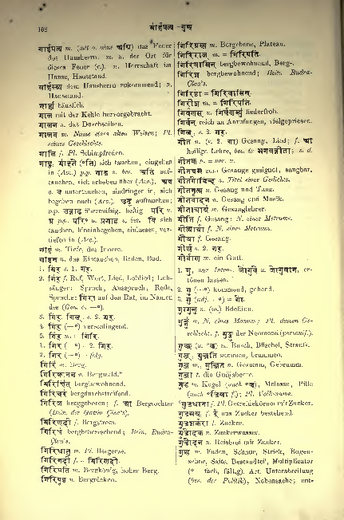
girí m. Berg.
Burnouf 1866 adjective · substantive feminine · substantive masculine
Original text · French · adjective
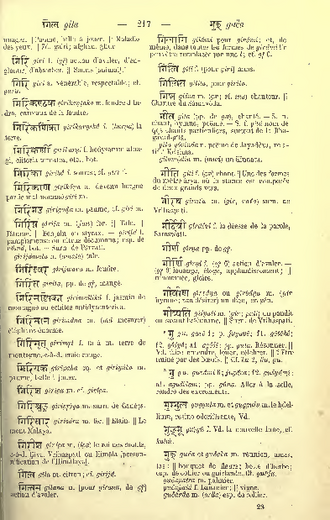
giri giri a. vénérable, respectable; cf. guru.
Original text · French · substantive feminine
giri giri f. (gṝ) action d'avaler, d'engloutir, d'absorber. Souris [animal].
Original text · French · substantive masculine
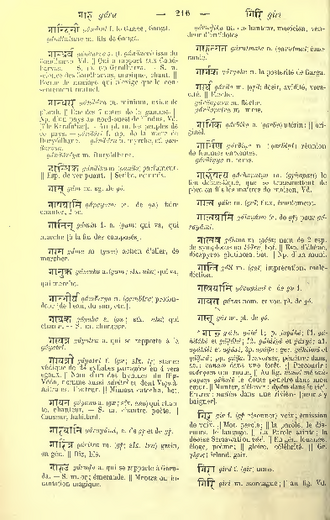
giri giri m. montagne; au fig. Vd. [Page217-1] nuages. Paume, balle à jouer. Maladie des yeux. Zd. gairi; afghan. ghur.
Occurrences in source texts (6)
DYS 2 occurrences
SVU 3 occurrences
VBT 1 occurrence
Continue with AYI Free
Image source: AYI archive.