SVU 3.5-3.6: Rudra's Auspicious Form

SVU 3.5-3.6: A Prayer for Rudra's Most Auspicious Form and the Protection of the Living World

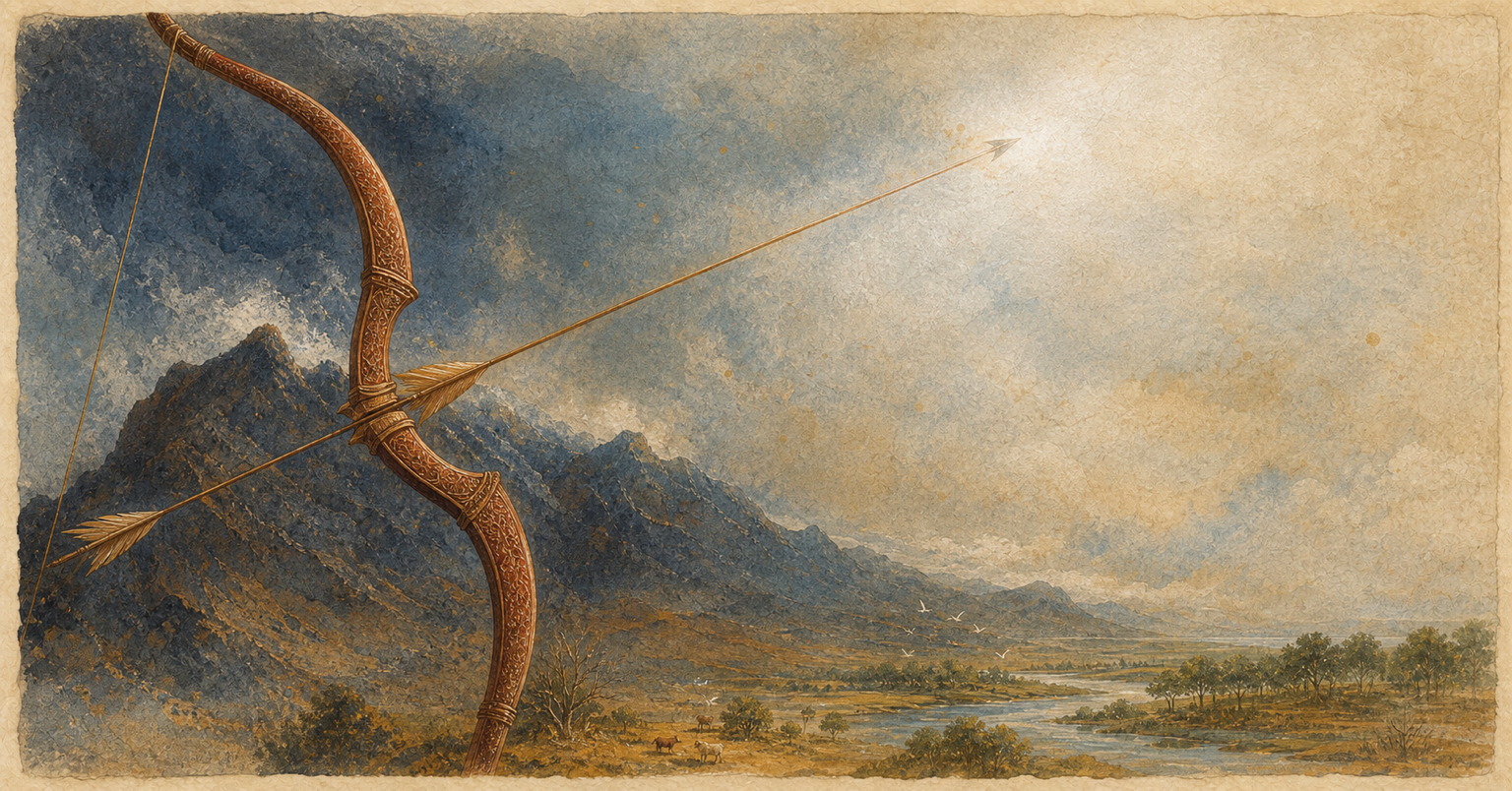
The prayers ask Rudra to show his gentle, most auspicious form: may his arrow become auspicious and injure neither human beings nor the living world.

Dr. Ronald Steiner Dr. Ronald Steiner Nils Jacob Liersch Nils Jacob Liersch
Śvetāśvatara Upaniṣad 3.5
या ते रुद्र शिवा तनूरघोरापापकाशिनी |
yā te rudra śivā tanūr; aghorāpāpa-kāśinī | Analysis ▾ Analysis ▴
yā
nominative singular feminine
pronoun rel
which
te
genitive singular
pronoun pers 2p
your
rudra
vokative singular
substantive masculine
O Rudra
śivā
nominative singular feminine
adjective
auspicious
tanūḥ
nominative singular
substantive feminine
body, manifestation
aghorā
nominative singular feminine
adjective
not terrible, gentle
apāpa
upapada-compound
adjective
free from evil
kāśinī
nominative singular feminine
adjective
shining, revealing
तया नस्तनुवा शंतमया गिरिशन्ताभिचाकशीहि ||5||
tayā nas tanuvā śaṃtamayā; giri-śantābhicākaśīhi ||5|| Analysis ▾ Analysis ▴
tayā
instrumental case singular feminine
pronoun dem
through this
naḥ
accusative plural
pronoun pers 1p
us
tanuvā
instrumental case singular
substantive feminine
with your body, form
śantamayā
instrumental case singular feminine superlative
adjective
most auspicious, most salutary
giri
upapada-compound
substantive masculine
mountain
śanta
vokative singular masculine
adjective
O mountain-dweller
abhicākaśīhi
2nd person singular aktive imperative intensive
previx
verbal root
look graciously upon
Metre: Pāda 1: Anuṣṭubh; Pāda 2: Anuṣṭubh; Pāda 3: Anuṣṭubh — 10 rather than 8 syllables; Pāda 4: Anuṣṭubh — 9 rather than 8 syllables
That (yā | nom sg f) form of yours (te | gen sg), O Rudra (rudra | voc sg), which [is] the auspicious body (śivā tanūḥ | nom sg), the gentle one (aghorā | nom sg f), revealing no evil (apāpa-kāśinī | nom sg f): with that (tayā | ins sg f) [look upon] us (naḥ | acc pl), with your body (tanuvā | ins sg), the most auspicious one (śaṃtamayā | ins sg f sup); O mountain-dweller (giri-śanta | voc sg m), look graciously upon [us] (abhicākaśīhi | 2p sg act imp inte).
Dr. Ronald Steiner - 2026 - historically literal
Rudra, look upon us in your auspicious form: it is gentle, free from evil and supremely auspicious. Dweller in the mountains, turn this most gracious manifestation towards us.
Dr. Ronald Steiner - 2026 - modern transfer

The Bhāṣya attributed to Śaṅkara distinguishes a terrible form of Rudra from an auspicious form. The latter is pure being-consciousness-joy, untouched by Avidyā; it removes sin and reveals merit. Rudra is to look upon human beings with this blissful form.

Śaṅkara's Bhāṣya on the Śvetāśvatara Upaniṣad

Śaṅkarānanda reads the gentle form as pure, not terrible and not productive of sin. For him, giriśanta denotes the one who spreads happiness from the mountain. The final imperative asks for an all-embracing, auspicious revelation.

Śaṅkarānanda's Śvetāśvataropaniṣaddīpikā

Nārāyaṇa understands Rudra's peaceful bodily form as destroying sin and supremely blissful. He strikingly interprets abhicākaśīhi as “shine forth”: the deity is not merely to turn its auspicious form towards the worshipper, but to make it visibly radiant.

Nārāyaṇa's Śvetāśvataropaniṣaddīpikā

Vijñānabhagavat identifies Rudra's undivided form with pure Brahman-joy that stills suffering. apāpakāśinī can mean that it does not reveal sin, burns sin, or appears as the fruit of all merit. The seeker asks for its inner revelation.

Vijñānabhagavat's Śvetāśvataropaniṣadvivaraṇa
In deiner gnäd’gen Form, Rudra, Die nicht schrecklich, nicht unheilvoll, In dieser, deiner Form, der heilbringendesten, Laß uns, Bergwohner, dich erblicken.<1>
<1: Vers 5–6 = Vāj. Saṃh. 16,2–3 (Nīlarudra-Up. 8. 5).>
Paul Deussen - 1921
The form of thine, O Rudra, which is kindly (śiva), Unterrifying, revealing no evil—With that most benign form to us Appear, O dweller among the mountains!
Robert Hume - 1921
O Rudra, O Spreader of happiness, from Thy joy-giving nature, look at us (or shine on us) with that happiest personality of Thine,—that personality which is benevolent, righteousness-revealing, and not terrible.
Siddhesvar Varma Shastri - 1916
In deiner gnäd’gen Form, Rudra, Die nicht schrecklich, nicht unheilvoll, In dieser, deiner Form, der heilbringendesten, Laß uns, Bergwohner, dich erblicken.<1>
<1: Vers 5–6 = Vāj. Saṃh. 16,2–3 (Nīlarudra-Up. 8. 5).>
Paul Deussen - 1897
O Rudra, thou dweller in the mountains, look upon us with that most blessed form of thine which is auspicious, not terrible, and reveals no evil!<1>
<1: See Vāg. Saṃh. XVI, 2; Taitt. Saṃh. IV, 5, 1, 1.>
F. Max Müller - 1884
With thy form,<1> O Rudra, which is auspicious, which is not dreadful (or which is exceedingly dreadful), and which manifests what is holy, with that all-blessed form, O dispenser of happiness from the mountain, look upon us.
<1: Verses 5–6 are taken from the Vāj. S. 16. 2–3.>
Edward Röer - 1853
Śvetāśvatara Upaniṣad 3.6
यामिषुं गिरिशन्त हस्ते बिभर्ष्यस्तवे |
yām iṣuṃ giri-śanta; haste bibharṣy astave | Analysis ▾ Analysis ▴
yām
accusative singular feminine
pronoun rel
which
iṣum
accusative singular
substantive feminine
the arrow
giri
upapada-compound
substantive masculine
mountain
śanta
vokative singular masculine
adjective
O mountain-dweller
haste
lokative singular
substantive masculine
in the hand
bibharṣi
2nd person singular aktive present
verbal root
you hold
astave
infinitive
verbal root
to shoot
शिवां गिरित्र तां कुरु मा हिंसीः पुरुषं जगत् ||6||
śivāṃ giri-tra tāṃ kuru; mā hiṃsīḥ puruṣaṃ jagat ||6|| Analysis ▾ Analysis ▴
śivām
accusative singular feminine
adjective
auspicious
giri
upapada-compound
substantive masculine
mountain
tra
vokative singular masculine
suffix
O protector of the mountains
tām
accusative singular feminine
pronoun dem
this
kuru
2nd person singular aktive imperative
verbal root
make
mā
particle
do not
hiṃsīḥ
2nd person singular aktive injunktive aorist
verbal root
injure
puruṣam
accusative singular
substantive masculine
the human being, Puruṣa
jagat
accusative singular
substantive neuter
the living world
Metre: Pāda 1: Anuṣṭubh — 7 rather than 8 syllables; Pāda 2: Anuṣṭubh — 7 rather than 8 syllables; Pāda 3: Anuṣṭubh; Pāda 4: Anuṣṭubh
The arrow (yām iṣum | acc sg) which, O mountain-dweller (giri-śanta | voc sg m), you hold (bibharṣi | 2p sg act pres) in your hand (haste | loc sg) to cast [it] (astave | inf), make (kuru | 2p sg act imp) that (tām | acc sg f) auspicious (śivām | acc sg f), O protector of the mountains (giri-tra | voc sg m). Do not (mā) injure (hiṃsīḥ | 2p sg act inj aor) the human being (puruṣam | acc sg) [or] the living world (jagat | acc sg).
Dr. Ronald Steiner - 2026 - historically literal
Dweller in and protector of the mountains, make the arrow you hold in your hand to cast auspicious. Injure neither the human being nor the living world.
Dr. Ronald Steiner - 2026 - modern transfer

The Bhāṣya attributed to Śaṅkara asks Rudra to make his arrow auspicious and to spare both human beings and the world. The commentary connects this with the wish that the Lord instead reveal to the worshipper his visible Brahman-form endowed with shape.

Śaṅkara's Bhāṣya on the Śvetāśvatara Upaniṣad

Śaṅkarānanda directs Rudra's arrow against evil rather than against the living world. giritra becomes the protector of the mountain, of knowers, or of his own devotees. The dangerous weapon is thus reinterpreted as a means of protection.

Śaṅkarānanda's Śvetāśvataropaniṣaddīpikā

Nārāyaṇa explicitly broadens the plea for non-injury: Rudra is to strike neither the person addressed, nor that person's family, nor the living world as a whole. The prayer for protection thus embraces family and cosmos.

Nārāyaṇa's Śvetāśvataropaniṣaddīpikā

Vijñānabhagavat reads Rudra's terrible qualified form in the service of knowledge. The destructive arrow is to spare body, organs, Vedānta teachers and other prerequisites until the direct vision of the qualityless Self is complete.

Vijñānabhagavat's Śvetāśvataropaniṣadvivaraṇa
yām iṣuṃ LV1958 ] yābhiṣuṃ ASS1927
Critical Apparatus
Der Pfeil, den du, Bergfroher, Zum Schleudern trägst in deiner Hand, Den mach’ uns gnädig, Berghüter; Nicht schädige er Mensch und Tier.<1>
<1: Vers 5–6 = Vāj. Saṃh. 16,2–3 (Nīlarudra-Up. 8. 5).>
Paul Deussen - 1921
O dweller among the mountains, the arrow Which thou holdest in thy hand to throw Make kindly (śiva), O mountain-protector! Injure not man or beast!
Robert Hume - 1921
O Spreader of happiness, from Thy joy-giving nature, O Protector, abiding in Thy joy-giving nature, make that arrow peaceful (i.e., withdraw) which thou holdest in hand in order to throw it (on the world). Do not destroy the world, which is a form of the Supreme Being (or which is a combination of all the means of true knowledge.)
Siddhesvar Varma Shastri - 1916
Der Pfeil, den du, Bergfroher, Zum Schleudern trägst in deiner Hand, Den mach’ uns gnädig, Berghüter; Nicht schädige er Mensch und Tier.<1>
<1: Vers 5–6 = Vāj. Saṃh. 16,2–3 (Nīlarudra-Up. 8. 5).>
Paul Deussen - 1897
O lord of the mountains, make lucky that arrow which thou, a dweller in the mountains, holdest in thy hand to shoot. Do not hurt man or beast!<1>
<1: See Vāg. Saṃh. XVI, 3; Taitt. Saṃh. IV, 5, 1, 1; Nīlarudropan. p. 274.>
F. Max Müller - 1884
O dispenser of happiness from the mountain,<1> make propitious the arrow, which thou holdest in thy hand to throw upon the creatures; O guardian of the mountain, do not injure man, or the world.
<1: Mahīdhara, the commentator of the Vāj. S., gives the meaning of Giriśanta in accordance with Śankara.>
Edward Röer - 1853

Continue with AYI Free

Illustrations: AI-generated.

Editor

Dr. Ronald Steiner

From Ulm

The "Yoga Doc" - Dr. Ronald Steiner is the founder of the AYI method. This method links traditional Ashtanga Yoga with innovative Yogatherapy and living Philosophy. This forms a practice that is personal for each and... more ›

Nils Jacob Liersch

Meine Begeisterung für Yoga, indische Philosophie und Sanskrit führte mich zum Studium der Indologie und Religionswissenschaft an der Universität Heidelberg. Seit 2004 befinde ich mich auf meinem persönlichen Yogaweg... more ›

Messages and ratings
2 messages

Please log in to write a message. Go to login

U
Kapitel 3, Verse 5 und 6:

https://youtu.be/2DubHA0zYKY

Rudra, der auf dem Berge wohnt, möge sein gnädiges Antlitz zeigen. Und der Pfeil, den er zum Schleudern bereit in der Hand hält, möge Mensch und Tier verschonen.

Ist es der Stachel des Todes, den alles Geborene treffen wird, der uns antreibt, nach dem Ewigen zu schauen?
Super inspirierend finde ich auch den Gedanken, den Du in der Ausbildungswoche eingebracht hast:
Die Schädeldecke als Symbol für den Berg. Rudra als Bergbewohner steht damit, auf den Körper projeziert, als Sahasrara Chakra, für das Absolute, das Göttliche.