

hetutva हेतुत्व – causality; being a cause
substantive neuter
Dictionary sources
AYI dictionary substantive neuter
causality; being a cause
Derived from
Petersburger 1855 substantive neuter
Original text · German · substantive neuter
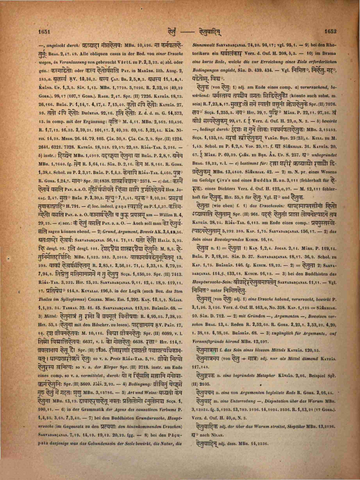
hetutva n. 1〉 = hetutā 1〉 KAṆ. 1,2,4. YOGAS. 2,14. MĀRK. P. 119,14. BHĀG. P. 3,18,36. SĀH. D. 37. SARVADARŚANAS. 18,17. SARVADARŚANAS. 36,9. Schol. zu KAP. 1,75. BHĀṢĀP. 146. fg. KUSUM. 18,22. — 2〉 = hetutā 2〉 SARVADARŚANAS. 114,6. SARVADARŚANAS. 133,18. KUSUM. 16,12. — 3〉 bei den Buddhisten das Hauptursache-Sein: bījāderahetutvamāpatet SARVADARŚANAS. 11,11. — Vgl. nimitta˚ unter nimittahetu.
Böhtlingk 1879 substantive neuter
Original text · German · substantive neuter
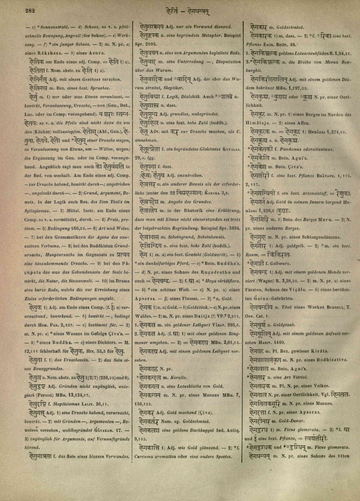
hetutva n. Nom. abstr. zu hetu 1〉 2〉 7〉 (Chr. 226,22) und 8〉.
Apte 1890 substantive neuter
Original text · English · substantive neuter
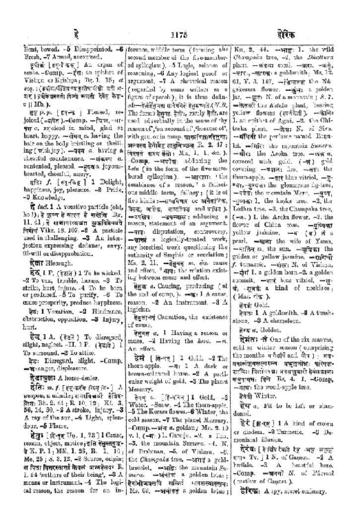
hetutā -tvaṃ Causation, the existence of cause.
Cappeller 1887 substantive neuter
Original text · German · substantive neuter
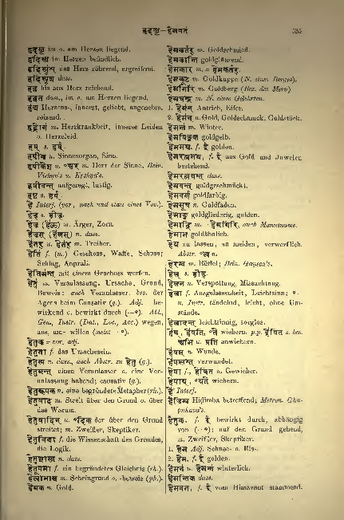
hetutva n. dass., auch Abstr.zu hetu (g.).
Occurrences in source texts (1)
PYS 1 occurrence
Continue with AYI Free
Image source: AYI archive.