

tva त्व – suffix -tva forming abstract neuter nouns: -ness; -ity; being
adjective · substantive feminine · substantive masculine · substantive neuter · suffix · Word type unspecified
Dictionary sources
AYI dictionary suffix
suffix -tva forming abstract neuter nouns: -ness; -ity; being
Cappeller 1891 adjective · Word type unspecified
Original text · English · Word type unspecified
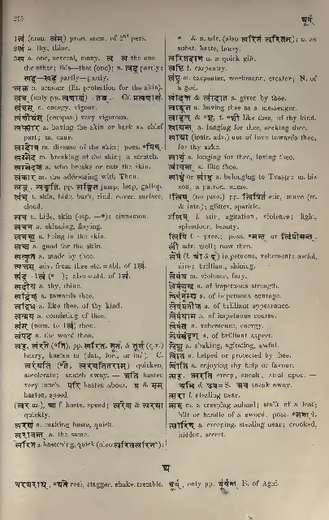
tvá1 ·(nom. tvám) pron. stem. of 2^nd pers.
Original text · English · Word type unspecified
1tvá ·(°--); also = abl. of tvá1.
Original text · English · adjective
tvá2 ·a. thy, thine.
Original text · English · adjective
tva3 ·a. one, several, many. tva--tva the one--the other; this--that (one); n. tvad partly; tvad--tvad partly--partly.
Monier-Williams 1872 substantive feminine · substantive masculine · Word type unspecified
Original text · English · substantive feminine · substantive masculine
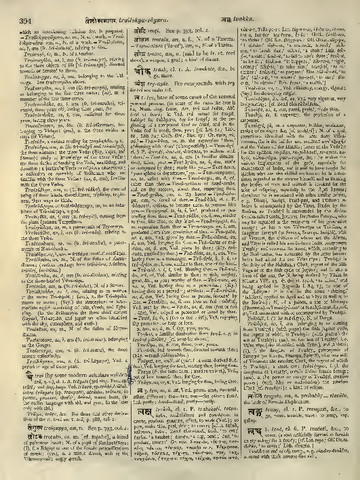
2. tva, as, ā, m. f. thy, your, yours.
Original text · English · Word type unspecified
tva 1 . tva, base of some cases of the second personal pronoun (in some of the cases the base is tu, Nom. sing. tvam, Acc. tvā and tvām, Abl. tvat or tvad; in Ved. tvā occurs for tvayā, tubhya for tubhyam, tve for tvayi; at the be- ginning of a compound tvat or tvad, and in the Vedas tvā is used), thou, you; [cf. Lat. tu; Lith. tù; Hib. tu; Goth. thu; Slav. ty; Gr. τούν, τύ, σύ.]
Original text · English · Word type unspecified
tva 3 . tva, as, ā, at, Ved. pron. one, several, other, different; tva — tva, one — the other; tvad, ind. partly; tvad — tvad, partly — partly.
Petersburger 1855 adjective · Word type unspecified
Original text · German · adjective
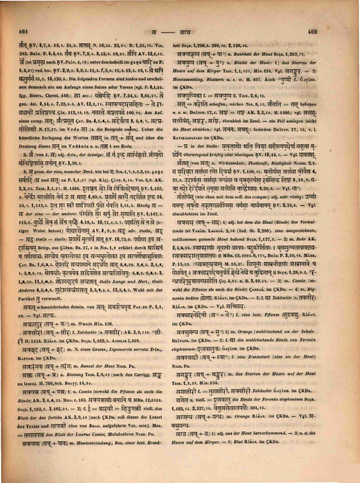
2. tvá (von 1. tva) adj. dein, der deinige: tvaṃ nà indra̱ tvābhìrū̱tī tvā̀ya̱to àbhiṣṭi̱pāsi̱ janā̀n ṚV. 2,20,2.
Original text · German · Word type unspecified
1. tva und tu Stamm der 2ten Person sg. tvám ṚV. 2,1,1. fgg. tvā́m ṚV. 1,5,8. ṚV. 1,63,6. ṚV. 1,102,9. tváyā ṚV. 102,4. ṚV. 2,4,9. ṚV. 23,10. tvā́ = tváyāḥ tvā yu̱jā (= tvayā̀ yu̱jā ṚV. 1,102,4) ṚV. 4,28,1. ṚV. 4,28,2. ṚV. 8,81,31. túbhyam ṚV. 7,14,13. ṚV. 7,19,10. ṚV. 7,29,1. mit Abfall des ma vor Vocalen (vgl. asmākam)ḥ tubhyedi̱mā savànā ṚV. 22,7. ṚV. 1,135,2. ṚV. 8,71,5. ṚV. 9,62,27. auffallend mama tubhya ca savanam PĀR. GṚHY. 1,6. tvát ṚV. 6,7,3. ṚV. 6,13,1. ṚV. 6,31,2. tvattas N. 16,34. N. 22,21. R. 1,51,15. VID. 245. BHĀG. P. 6,4,53. táva ṚV. 7,5,4. ṚV. 8,15,8. ṚV. 8,19,31. tváyi AV. 12,1,15. tvé (ist pragṛhya nach ṚV. PRĀT. 1,19; unter den indecll. im gaṇa cādi zu P. 1,4,57) ved. loc. ṚV. 2,9,3. ṚV. 6,5,2. ṚV. 6,11,3. ṚV. 7,5,6. ṚV. 7,11,3. ṚV. 7,12,3. ṚV. 7,18,1. tve api̱ kratu̱rmamà ṚV. 31,5. ṚV. 10,120,3. Die folgenden Formen sind tonlos und erscheinen demnach nie am Anfange eines Satzes oder Verses (vgl. P. 8,1,22. fgg. BÖHTL. Chrest. 446): tvā acc.: yattvemàhe ṚV. 7,54,2. ṚV. 9,61,27. te gen. dat. ṚV. 8,14,4. ṚV. 7,22,5. ṚV. 7,22,6. AV. 12,1,11. svāpatyadārasahitaḥ — te rājadhānīṃ pratiṣṭhasva ŚĀK. 112,18. ŚĀK. 112,19. namaste kaṣṭatapase ŚĀK. 100,14. Am Anf. eines comp. tvatḥ tvátprasūta ŚAT. BR. 4,1,4,4. tvaddevátya ŚAT. BR. 8,4,1,7. tvatpratīkṣiṇī N. 17,37. im Veda tvā (s. die Beispiele unsen). Ueber die künstliche Zerlegung des Wortes tattvam in tat + tvam und über die Deutung dieses tvam im Vedānta s. u. tattva 1 am Ende.
Original text · German · Word type unspecified
3. tva̱ pron. der eine, mancher (Decl. wie bei ya) NIR. 1,7. NIR. 1,8. NIR. 1,9. NIR. 3,20. gaṇa sarvādi (tva und tvat) zu P. 1,1,27 (vgl. KĀŚ.). ŚĀNT. 4,10. VOP. 3,9. AK. 3,2,32. TRIK. 3,1,27. H. 1468. e̱tacca̱na tvo̱ vi cìketadeṣām ṚV. 1,152,2. nendrò a̱stīti nemà u tva āha ṚV. 8,89,3. pra̱jāyaì tvasyai̱ yadaśìkṣa indra ṚV. 10,54,1. ṚV. 1,113,5. u̱ta tvā̱ strī śaśī̀yasī pu̱ṃso bhàvati ṚV. 5,61,6. Häufig tva — tva der eine — der andere: pīyàti tvo̱ anù tvo gṛṇāti ṚV. 1,147,2. ṚV. 1,113,6. yudhyaì tvena̱ saṃ tvèna pṛcchai ṚV. 4,18,2. ṚV. 10,71,4. ṚV. 10,71,5. ṚV. 10,71,7. paśyànti̱ tve na tve (irriger Weise betont) pàśyantyenām AV. 8,9,9. tvad adv. theils, tvad — tvad theils — theils: pra̱jāyaì mṛ̱tyavè tvat ṚV. 10,72,9. paryāyā iva tvadāśvinam Beisp. aus ŚĀṄKH. BR. 17,4_in_NIR. 1,9 erklärt durch āśvinaṃ ca paryāyāśca. santyeva ghṛtastokā iva tvanmadhustokā iva tvatparṇeṣvāścutitāḥ ŚAT. BR. 1,6,3,5. hotari tvadyajamāne tvadadhvaryau tvat ŚAT. BR. 8,1,39. ŚAT. BR. 9,1,3. ŚAT. BR. 2,1,1,1. ŚAT. BR. 2,3,2,9. ŚAT. BR. 2,1,1,10. oṣadhīḥ kṛtyayeva tvadviṣeṇeva tvatpralilipuḥ ŚAT. BR. 4,3,2. ŚAT. BR. 6,3,8. ŚAT. BR. 3,1,3,28. ŚAT. BR. 11,1,6,9. klomahṛdayaṃ tvadyattvat theils Lunge und Herz, theils Anderes ŚAT. BR. 4,5,4,6. śūdrāṃstvadyāṃstvat ŚAT. BR. 5,3,2,2. ŚAT. BR. 5,3,2,4. ŚAT. BR. 13,8,1,5. Wohl mit der Partikel tu verwandt.
Böhtlingk 1879 adjective · Word type unspecified
Original text · German · adjective
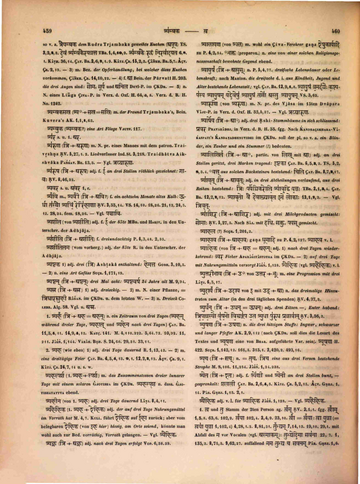
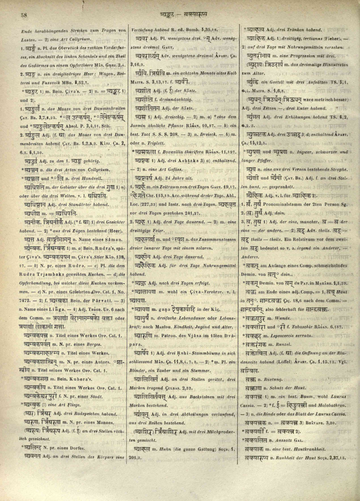
2. (tva) tuá Adj. dein.
Original text · German · adjective
3. tva̱, tu̱a̱ — 1〉 Adj. der eine, mancher. tva — tva der eine — der andere. — 2〉 tvad Adv. theils. tvad — tvad theils — theils. Ein Relativum vor dem zweiten tvad bedeutet so v. a. irgend ein Anderer, — Anderes.
Original text · German · Word type unspecified
1. tvá, tuá Pronominalstamm der 2ten Person Sg.
Apte 1890 substantive neuter
Original text · English · substantive neuter
utkṛṣṭatā, tvaṃ Excellence, eminence; greatness.
Cappeller 1887 Word type unspecified
Original text · German · Word type unspecified
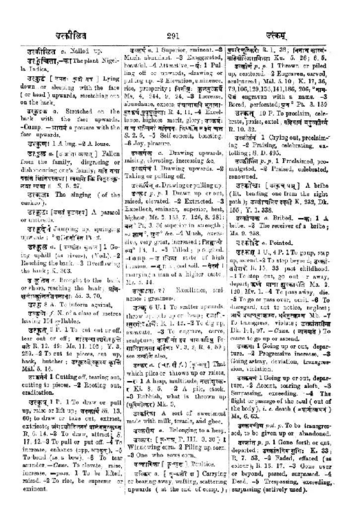
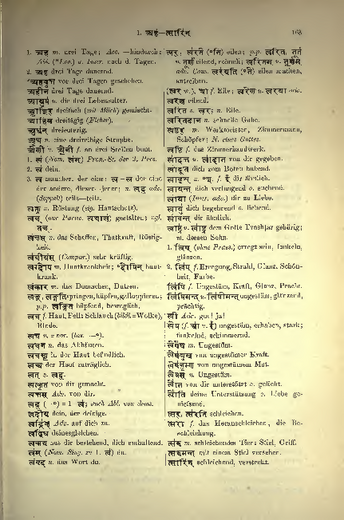
1. tvá (Nom. tvám) Pron. St. der 2. Pers.
Original text · German · Word type unspecified
2. tvá dein.
Original text · German · Word type unspecified
2. tva mancher, der eine; tva—tva der eine der andere, dieser—jener; n. tvad adv. (doppelt) teils—teils.
Derived words
More direct derivatives (15)
-
sattva सत्त्व substantive neuter psychic principle; clarity; clarity of Citta; sattva; being; existence; reality; essence; inner being
Further derivatives (1)
Occurrences in source texts (118)
DYS 9 occurrences
DYS 154–167: Vajrolī for the Male Yogi 1 occurrence
Occurrences through derived words
-
DYS 167 Segment 7
GoS 3 occurrences
HP 14 occurrences
HP 1.15-1.16*2: Factors of Practice 1 occurrence
Occurrences through derived words
-
HP 1.16 Segment 4
HP 4.9-4.11*4: Gaze and Lunar Nectar 2 occurrences
Occurrences through derived words
5 more source pages
HP 4.11*15-4.11*28: Space and Laya 1 occurrence
Occurrences through derived words
-
HP 4.11*24 Segment 12
HP 4.11*29-4.11*31: Transition to Nāda 1 occurrence
Occurrences through derived words
-
HP 4.11*31 Segment 2
HP 4.27*1-4.35: Rājayoga and Haṭha 3 occurrences
Occurrences through derived words
-
HP 4.31 Segment 1
-
HP 4.32–33 Segment 18
-
HP 4.34 Segment 9
HTK 1 occurrence
HTK 10.47*2: Kumbhaka: Names, forms and effects 1 occurrence
Occurrences through derived words
-
HTK 10.47*2 Segment 5
IVU 1 occurrence
MAN 2 occurrences
MandUp 2 occurrences
PJH 2 occurrences
PYS 29 occurrences
PYS 1.31–32: Distraction and Its Remedy 1 occurrence
Occurrences through derived words
-
PYS 1.32 Segment 5
15 more source pages
PYS 2.40–45: Perfected Niyamas 2 occurrences
Occurrences through derived words
PYS 3.15–16: Sequence of Transformation 2 occurrences
Occurrences through derived words
PYS 3.17–20: Extraordinary Knowledge 1 occurrence
Occurrences through derived words
-
PYS 3.20 Segment 7
PYS 3.35–37: Knowledge of Puruṣa and Siddhis 1 occurrence
Occurrences through derived words
-
PYS 3.35 Segment 1
PYS 3.44–46: Mastery over the Elements 1 occurrence
Occurrences through derived words
-
PYS 3.44 Segment 5
PYS 3.47–48: Mastery over the Senses 1 occurrence
Occurrences through derived words
-
PYS 3.47 Segment 5
PYS 3.49–51: Omniscience or Kaivalya 2 occurrences
Occurrences through derived words
PYS 4.9–11: Continuity of Saṃskāras 4 occurrences
Direct occurrences
Occurrences through derived words
PYS 4.12–14: Real Objects in Transformation 2 occurrences
Occurrences through derived words
PYS 4.18–21: Puruṣa Knows Citta 2 occurrences
Direct occurrences
SiSa 16 occurrences
SiSa 1.10-1.16: Lehrmeinungen 2 occurrences
Occurrences through derived words
SiSa 1.82-1.90: Guṇas und Gegenstände 3 occurrences
Occurrences through derived words
SiSa 2.49-2.54: Befreiungswissen 2 occurrences
Occurrences through derived words
SiSa 3.41-3.48: Atemkraft und Hindernisse 1 occurrence
Occurrences through derived words
-
SiSa 3.44 Segment 4
4 more source pages
SiSa 4.9-4.20: Yonimudrā-Geheimnis 2 occurrences
Occurrences through derived words
SiSa 5.77-5.81: Kanda und Hauptnāḍīs 1 occurrence
Occurrences through derived words
-
SiSa 5.81 Segment 9
SiSa 5.132-5.143: Innere Vārāṇasī 2 occurrences
Occurrences through derived words
-
SiSa 5.133 Segment 5
-
SiSa 5.133 Segment 12
SiSa 5.234-5.252: Tripurā-Mantra 1 occurrence
Occurrences through derived words
-
SiSa 5.250 Segment 14
SS 7 occurrences
SS 1.19–1.21: Śakti and Creation 2 occurrences
Direct occurrences
SVU 9 occurrences
SVU 2.1-2.3: Savitṛ Gathers Mind and Senses 1 occurrence
Occurrences through derived words
-
SVU 2.1 Segment 4
SVU 2.14-2.16: Self-Luminous and Unbound 4 occurrences
Occurrences through derived words
VBT 23 occurrences
VBT 49–56: Heart and Dissolution 2 occurrences
Occurrences through derived words
VBT 57–64: Intervals and Equality 2 occurrences
Occurrences through derived words
VBT 65–74: Joy and Enjoyment 3 occurrences
Direct occurrences
-
VBT 73 Segment 12
Occurrences through derived words
7 more source pages
VBT 93–100: Pain and Desire 2 occurrences
Occurrences through derived words
VBT 101–109: Śiva-Identity 3 occurrences
Occurrences through derived words
VBT 130–138: Name and Fourfoldness 3 occurrences
Direct occurrences
-
VBT 137 Segment 10
Occurrences through derived words
Continue with AYI Free
Image source: AYI archive.