

mātṛ मातृ – mother
adjective · substantive feminine · substantive masculine · Word type unspecified
Dictionary sources
AYI dictionary substantive feminine
mother
Cappeller 1891 substantive feminine · substantive masculine
Original text · English · substantive feminine
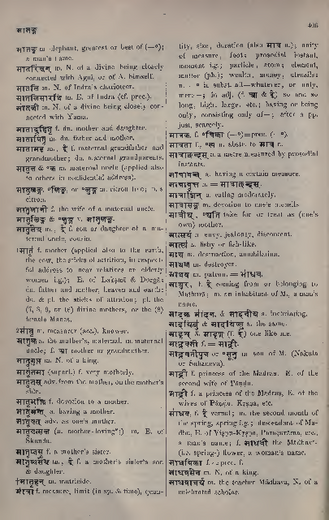
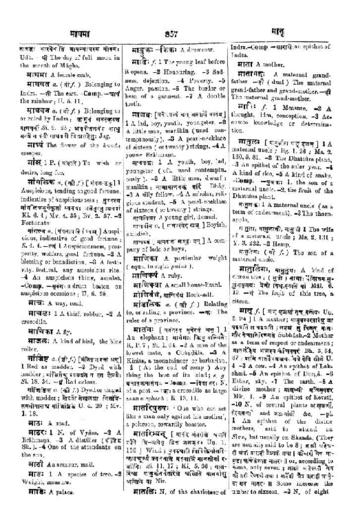
mātṛ́1 ·f. mother (applied also to the earth, the cow, the sticks of attrition, in respectful address to near relatives or elderly women i.g.); E. of Lakṣmī & Durgā; du. father and mother, heaven and earth; du. & pl. the sticks of attrition; pl. the (7, 8, 9, or 16) divine mothers, or the (8) female Manes.
Original text · English · substantive masculine
mā́tṛ2 ·m. measurer (acc.), knower.
Monier-Williams 1872 adjective · Word type unspecified
Original text · English · adjective
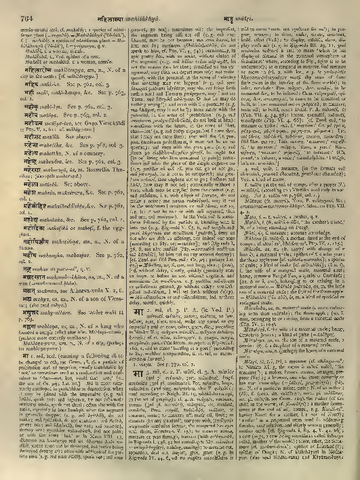
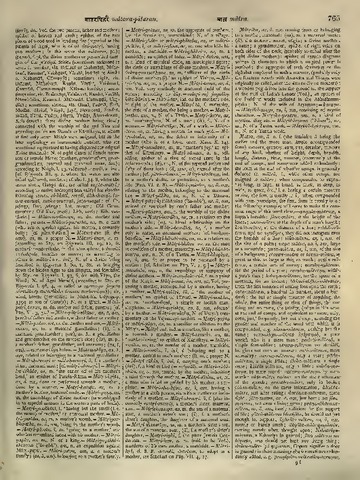
Mātṛ, tā, trī, tṛ, a measurer (cf. dhānya-m˚; in Nirukta XI. 5, the moon is called mātā, ‘the measurer’); a maker, former, creator, arranger, pre- parer (Ved.); a knower, one who infers correctly or has true knowledge (= jñātṛ, pra-mātṛ); (tā), m., N. of a particular mixed caste; N. of an author; (tā), f. (nom. du. mātărau, nom. pl. mātăras, acc. pl. mātṝs, see Gram. 129), the maker (of the child in the womb, cf. jā-mātṛ); a mother (some- times at the end of adj. comps., e. g. Kuntī-m˚, having Kuntī for a mother, i. e. son of Kuntī); ‘mother’ as a respectful term used in addressing females, near relatives, and elderly women generally; mother earth [cf. Ṛg-veda 1. 89, 4, V. 42, 16]; a cow (= go, a cow being sometimes called lokasya mātā, mother of the world); space, ether, the firma- ment [cf. mātari-śvan]; epithet of Lakṣmī (?); epithet of Durgā; N. of Dākṣāyaṇī in Siddha- pura (also read Siddha-vana) and Kāyāvarohaṇa; (tarā), du., Ved. the two parents, father and mother; epithet of heaven and earth; epithet of the two pieces of wood used in kindling fire (regarded as the parents of Agni, who is called dvi-mātṛ, having two mothers; in this sense also mātaras, pl.); (taras), f. pl. the divine mothers or personified ener- gies of the principal deities (sometimes reckoned as seven in number, viz. Brāhmī or Brahmāṇī, Māhe- śvarī, Kaumārī, Vaiṣṇavaī, Vārāhī, Indrāṇī or Aindrī or Māhendrī, Cāmuṇḍā; sometimes eight, viz. Brāhmī, Māheśvarī, Raudrī, Vārāhī, Vaiṣṇavī, Kaumārī, Carma-muṇḍā, Kāla-saṅkarṣiṇī; some- times nine, viz. Brahmāṇī, Vaiṣṇavī, Raudrī, Vārāhī, Nārasiṃhikā, Kaumārī, Māhendrī, Cāmuṇḍā, Caṇ- ḍikā; sometimes sixteen, viz. Gaurī, Padmā, Śacī, Medhā, Sāvitrī, Vijayā, Jayā, Deva-senā, Svadhā, Svāhā, Śānti, Puṣṭi, Dhṛti, Tuṣṭi, Ātma-devatā, Kula-devatā; these divine mothers being closely connected with the worship of the god Śiva and attending on his son Skanda or Kārttikeya, to whom at first only seven Mātṛs were assigned, but in the later mythology an innumerable number, who are sometimes represented as having displaced the original divine mothers); N. of eight classes of female ances- tors or female Manes (mothers, grandmothers, great- grandmothers, paternal and maternal aunts, &c.); according to Naigh. 1. 13, mātaraḥ = nadī, a river, [cf. Ṛg-veda III. 9, 2, where the waters are also called mātaraḥ, mothers; cf. also 1. 34, 8, where the seven rivers, Gaṅgā &c., are called sapta-mātṛ; according to native lexicographers mātṛ has also the following senses, vi-bhūti, revatī, ākhukarṇī, in- dra-vāruṇī, mahā-śrāvaṇī, jaṭā-māṃsī: cf. Gr. μήτηρ, Dor. μάτηρ; Lat. mater; Old Germ. muotar; Old Slav. mati; Lith. mote; Hib. ma- thair.]
Original text · English · Word type unspecified
mātṛ mātṛ. See p. 764, col. 3.
Apte 1890 substantive feminine · substantive masculine
Original text · English · substantive feminine · substantive masculine
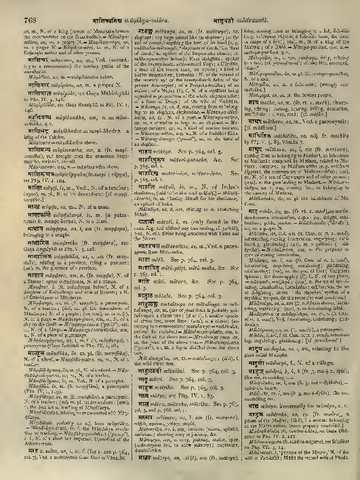
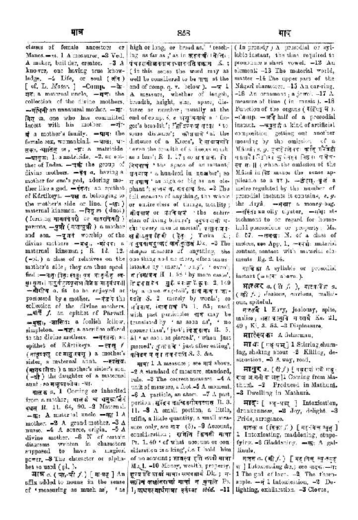
mātṛ f. [mān pūjāyāṃ tṛc nalopaḥ Uṇ. 2. 94] 1 A mother; mātṛvatparadāreṣu yā paśyati sa paśyati; sahasraṃ tu pitṝn mātaḥ gaura veṇātiricyate Subhāṣ. 2 Mother as a term of respect or endearment; mātarlakṣmi bhajasva kaṃcidaparaṃ Bh. 3. 64, Bh. 3. 87; ayi mātardevayajanasaṃbhave devi sīte U. 4 3 A cow. 4 An epithet of Lakṣmī. 5 An epithet of Durgā. 6 Ether, sky. 7 The earth. 8 A divine mother; mātṛbhyo balimupahara Mk. 1. 9 An epithet of Revatī. 10 N. of several plants ākhukarṇī, iṃdravāruṇī and jaṭāmāṃsī &c. -pl. 1 An epithet of the divine mothers, said to attend on Śiva, but usually on Skanda. They are usually said to be 8; bra hmī māheśvarī caṃḍī vārāhī vaiṣṇavī tathā . kaumārī caiva cāmuṃḍācarciṃketyaṣṭa mātaraḥ .. or, according to some, only seven; brāhmī māheśvarī caiva kaumārī vaiṣṇavī tathā . māheṃdrī caiva vārāhī cāmuṃḍā-sapta mātaraḥ .. Some increase the umber to sixteen. 2 N. of eight ([Page 0858-a]) classes of female ancestors or Manes. — m. 1 A measurer. 2 Ved. A maker, builder, creator. 3 A knower, one having true knowledge. 4 Life, or soul (jīva) [cf. L. Mater.] Comp. — keśaṭaḥ a maternal uncle. — gaṇaḥ the collection of the divine mothers. — gaṃdhinī an unnatural mother. — gomin m. one who has committed incest with his mother. — gotraṃ a mother's family. — grāmaḥ the female sex, womankind. — ghātaḥ, — ghātakaḥ, -ghātin m. — ghnaḥ a matricide — ghātukaḥ 1 a matricide. 2 an epithet of Indra. — cakraṃ the group of divine mothers. — deva a. having a mother for one's god, adoring mother like a god. — naṃdanaḥ an epithet of Kārtikeya. — pakṣa a. belonging to the mother's side or line. — (kṣaḥ) maternal kinsmen. — pitṛ m. (dual) (forming mātāpitarau or mātarapitarau) parents. — putrau (mātāputrau) a mother and son. — pūjanaṃ worship of the divine mothers — baṃdhuḥ, -bāṃdhavaḥ a maternal kinsman; R. 12. 12. (-pl.) a class of relatives on the mother's side; they are thus specified: -mātuḥ pituḥ svasuḥ putrā māturmātuḥ svasuḥ sutāḥ . māturmātulaputrāśca vijñeyā mātṛbaṃdhavaḥ .. — bhogīṇa a. fit to be enjoyed or possessed by a mother. — maṃḍalaṃ the collection of the divine mothers. — mātṛ f. an epithet of Pārvatī. — mukhaḥ, -śāsitaḥ a foolish fellow. simpleton. — yajñaḥ a sacrifice offered to the divine mothers. — vatsalaḥ an epithet of Kārtikeya. — svasṛ f. (mātṛṣvasṛ or mātuḥsvasṛ) a mother's sister, a maternal aunt. — svaseyaḥ (mātṛṣvaseyaḥ) a mother's sister's son. — (yī) the daughter of a maternal aunt so mātṛṣvasrīyaḥ -yā.
Burnouf 1866 substantive masculine
Original text · French · substantive masculine
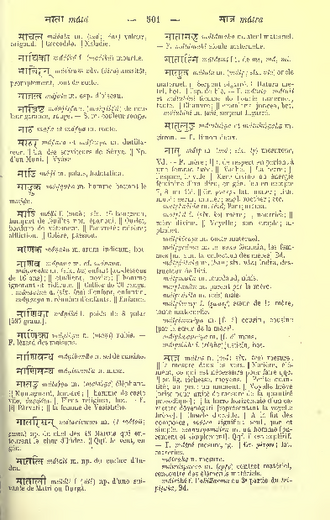
mātṛ mātṛ m. (mā; sfx. tṛ) mesureur, Vd. — F. mère; t. de respect en parlant à une femme âgée. Vache. La terre; l'espace, le vide. Mère divine ou énergie féminine d'un dieu, en gén. [on en compte 7, 8 ou 16]. Gr. μητήρ; lat. mater; lith. motc; germ. mutter; angl. mother; etc. matṛkachida m. (chid) Paraśurāma. mātṛkā f. (sfx. ka) mère; nourrice; mère divine. Voyelle; son simple; alphabet. mātṛkeśaṭa m. oncle maternel. mātṛgrāma m. le sexe féminin, les femmes [m. àm. la collection des mères] Bd. mātṛghātuka m. (han; sfx. uka) Indra, destructeur de Diti. mātṛmukha m. lourdaud, niais. mātṛbandhu m. parent par la mère. mātṛcāsita m. (śās) niais. mātṛṣvasṛ f. (svasṛ) sœur de la mère, tante maternelle. mātṛṣvaseya m. [f. ī] cousin, cousine [par la sœur de la mère]. mātṛṣvastrīya m. [f. ā] mms. mātṛsiṃhī f. (siṃha) justicia, bot.
Occurrences in source texts (3)
SiSa 1 occurrence
SS 1 occurrence
VBT 1 occurrence
Continue with AYI Free
Image source: AYI archive.