

pātāla पाताल – underworld; pātāla
substantive masculine · substantive neuter · Word type unspecified
Dictionary sources
AYI dictionary substantive neuter
underworld; pātāla
Cappeller 1891 substantive neuter
Original text · English · substantive neuter
pātāla ·n. lower world, abode of serpents or demons, also a cert. hell.
Monier-Williams 1872 substantive neuter
Original text · English · substantive neuter
Pātāla, am, n. (probably connected with 2. pāta, the termination is compared with āla = ālaya in antar-āla; the names of the other hells point to some connection with tala), one of the seven regions under the earth and the abode of the Nāgas or serpents and demons (seven such regions are enumerated, viz. A-tala, Vi-tala, Su-tala, Rasā-tala, Talātala, Mahā-tala, and Pātāla; but Pātāla is some- times used as a general name for all: according to the Mahā-bhārata, Pātāla is also a town in the world of the serpent-race); an excavation, hole, chasm; submarine fire; (in astrology) the fourth sign from that in which the sun is present, the fourth house; (as), m. a sort of apparatus for distillation or for calcining and subliming metals (formed of two earthen pots, the upper one inverted over the lower, and the two joined together by their necks with cement and placed in a hole containing fire); an epithet of Jupiter's year of 361 days; N. of the attendant of the fourteenth Arhat of the present Ava-sarpiṇī.
Petersburger 1855 substantive masculine · substantive neuter · Word type unspecified
Original text · German · substantive masculine · substantive neuter
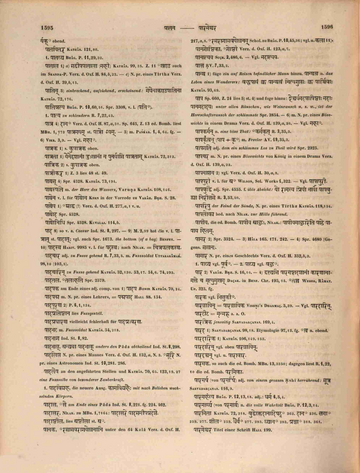
pā́tāla UṆĀDIS. 1,116. 1〉 n. a〉 Unterwelt, eine unter der Erde gedachte Höhlung, in der Schlangen und Dämonen hausen; häufig wird sieben solcher Höhlen gedacht; nach dem MBH. ist pātāla eine Stadt der Schlangenwelt. AK. 1,2,1,1. TRIK. 1,2,1. H. 1362. H. an. 3,663. fg. MED. l. 110. HALĀY. 3,1. ĀRUṆ. UP._in_Ind. St. 2,178. MBH. 3,3547. fgg. MBH. 3,3552 (Etym.) MBH. 13,2230. SUND. 4,20. HARIV. 11454. R. 1,44,8. R. 1,45,28. R. 6,16,29. RAGH. 1,80. RAGH. 15,84. Spr. 1756. VARĀH. BṚH. S. 53,5. SŪRYAS. 12,2. SŪRYAS. 12,33. KATHĀS. 19,91. KATHĀS. 27,11 (˚nagarī). KATHĀS. 44,34. KATHĀS. 44,37. KATHĀS. 45,115. KATHĀS. 45,134. KATHĀS. 45,151. KATHĀS. 45,161. KATHĀS. 45,192. KATHĀS. 45,223. KATHĀS. 45,329. KATHĀS. 45,332. KATHĀS. 50,109. RĀJA-TAR. 3,470. RĀJA-TAR. 3,519. VP. 204. BHĀG. P. 5,24,7. MĀRK. P. 19,16. MĀRK. P. 61,2. PAÑCAT. 159,22. VET. in LA. 33,20. VEDĀNTAS. (Allah.) No. 70. ˚khaṇḍa im PADMA-P. Verz. d. B. H. No. 453. Am Ende eines adj. comp. f. āḥ (vasuṃdharā) saśailā sārṇavadvīpā sapatālā MBH. 7,3887. hatāmitraḥ prayacchorvīṃ rājñe sadvīpapattanām . sākāśajalapātālāṃ saparvatamahāvanām .. MBH. 8,3689. An den beiden letzten Stellen könnte das Wort auch einfach in der Bed. Vertiefung, Höhlung in der Erde (= vivara MED.) gefasst werden. Nach AK. 3,4,26,204. H. an. und MED. bedeutet pātāla auch das unterseeische Feuer; doch ist zu bemerken, dass die Wörter für diesen Begriff wiederum die Unterwelt bezeichnen. — b〉 in der Astrol. Bez. des 4ten Hauses VARĀH. LAGHUJ. 1,16. BṚH. 11,15. — 2〉 m. a〉 ein best. Destillationsapparat (auṣadhapākārthayantraviśeṣa) ŚABDAC._im_ŚKDR. ūrdhvamāpastale vahnirmadhye tu rasasaṃgrahaḥ . pātālayantrametaddhi śodhayetsutakādikam .. ŚKDR. nach dem VAIDYAKA. — b〉 Bez. des Jupiterjahrs zu 361 Tagen WEBER, Nakṣatra II, 281. — c〉 N. pr. des Dieners des 14ten Arhantʼs der gegenwärtigen Avasarpiṇi H. 42. — Das Wort steht wohl mit pāta Sturz, Fall in Verbindung; zur Endung vgl. antarāla.
Original text · German · Word type unspecified
pātāla 1〉a〉 sadvīpapātālā (mahī) KATHĀS. 99,35. Z. 11 ˚khaṇḍa auch im SKANDA-P. Verz. d. Oxf. H. 84,b,22. — c〉 N. pr. eines Tīrtha Verz. d. Oxf. H. 39,b,15.
Böhtlingk 1879 substantive masculine · substantive neuter
Original text · German · substantive masculine · substantive neuter
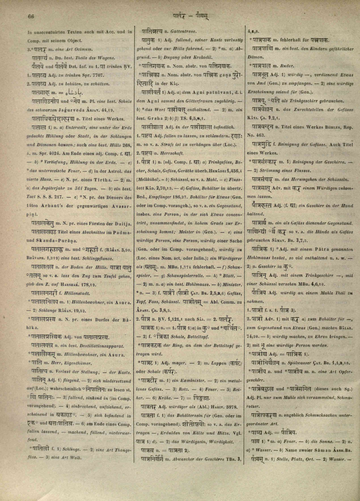
pātāla — 1〉 n. — a〉 Unterwelt, eine unter der Erde gedachte Höhlung oder Stadt, in der Schlangen und Dämonen hausen; auch eine best. Hölle Chr. 268,4 m. Spr. 4024. Am Ende eines adj. Comp. f. ā. — b〉 *Vertiefung, Höhlung in der Erde. — c〉 *des unterseeische Feuer. — d〉 in der Astrol. das vierte Haus. — e〉 N. pr. eines Tīrtha. — 2〉 m. — a〉 das Jupiterjahr zu 361 Tagen. — b〉 ein best. Tact. S. S. S. 217. — c〉 *N. pr. des Dieners des 14ten Arhantʼs der gegenwärtigen Avasarpiṇī.
Apte 1890 substantive masculine · substantive neuter
Original text · English · substantive masculine · substantive neuter
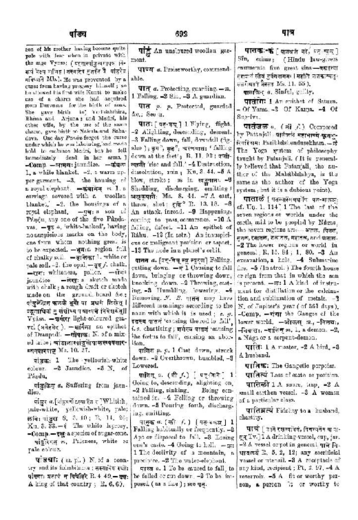
pātālaṃ [patatyasminnadharmeṇa pat-ālañ; cf. Uṇ. 1. 114] 1 The last of the seven regions or worlds under the earth, said to be peopled by Nāgas; the seven regions are: — atala. vitala, sutala, rasātala, talātala, mahātala, and pātāla. 2 The lower regions or world in general; R. 15. 84; R. 1. 80. 3 An excavation, a hole. 4 Submarine fire. 5 (In astrol.) The fourth house or sign from that in which the sun is present. — laḥ 1 A kind of instrument for distillation or the calcination and sublimation of metals. 2 N. of Jupiter's year (of 361 days). Comp. — gaṃgā the Ganges of the lower world. — okas m., — nilayaḥ, — nivāsaḥ, -vāsni m. 1 a demon. 2 a Nāga or a serpent-demon.
Cappeller 1887 substantive neuter
Original text · German · substantive neuter
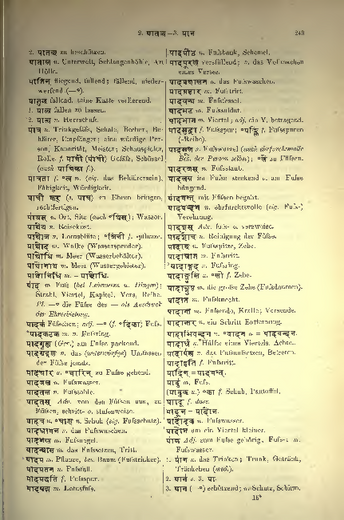
pātāla n. Unterwelt, Schlangenhöhle, Art Hölle.
Burnouf 1866 substantive neuter
Original text · French · substantive neuter
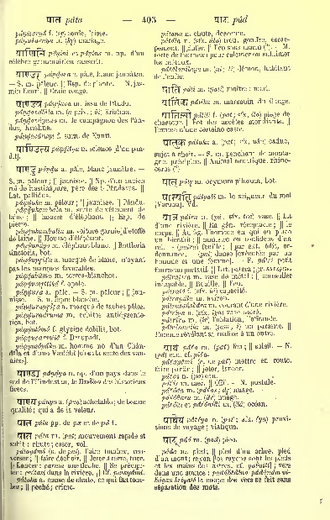
pātāla n. (sfx. āla) trou, gouffre, escarpement. Enfer. Feu sous-marin (?) — M. sorte de fourneau pour calciner ou sublimer les métaux.
Occurrences in source texts (3)
HP 2 occurrences
SiSa 1 occurrence
Continue with AYI Free
Image source: AYI archive.