

pavitra पवित्र – purifier
adjective · substantive masculine · substantive neuter
Dictionary sources
AYI dictionary substantive neuter
purifier
Cappeller 1891 substantive neuter
Original text · English · substantive neuter
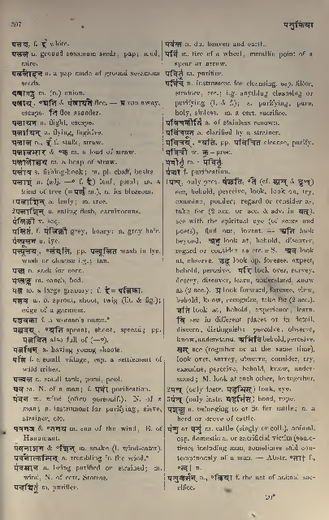
pavítra ·n. instrument for cleansing, esp. filter, strainer, etc.; i.g. anything cleansing or purifying (l. & f.); a. purifying, pure, holy, sinless. m. a cert. sacrifice.
Monier-Williams 1872 substantive neuter
Original text · English · substantive neuter
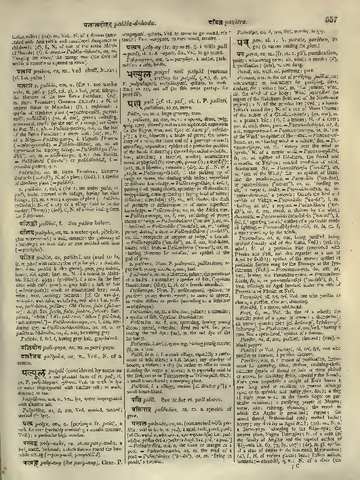
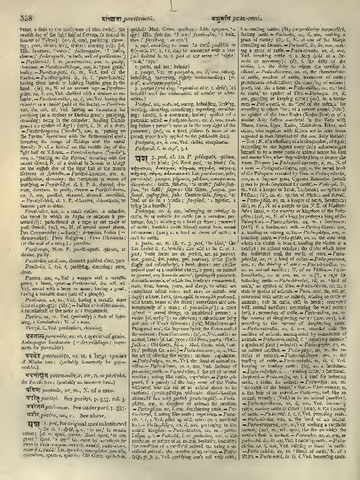
Pavitra, am, n. a means of purification, instru- ment for cleansing, filter, strainer, straining-cloth, colander (made of thread or hair or straw plaited or woven, for clarifying fluids, especially the Soma); Kuśa grass (especially a couple of Kuśa leaves a span long used at sacrifices to present offerings upon or to sprinkle and purify ghee, &c.); a ring of Kuśa grass worn on the fourth finger on par- ticular occasions; a purifying prayer or Mantra; water, rain; rubbing, cleansing; the vessel in which the Argha is presented; copper; the sacred thread, Brāhmanical cord; melted butter; honey; any divinity as Agni &c.?; (as), m., N. of a Soma-yāga belonging to the Rāja-sūya; the sesame plant, Nageia Putranjiva; N. of a man (of the family of Aṅgiras and the reputed author of Ṛg-veda IX. 67, 73, 83, 107); (ās), m. pl. epithet of a class of deities in the fourteenth Manv-antara; (ā), f., N. of various plants; basil; Indian saffron, turmeric; = aśvatthī, q. v.; N. of a river (the Pabar, a little to the north-west of Hari-dwār); the twelfth day of the light half of Śrāvaṇa (a festival in honour of Viṣṇu); (as, ā, am), purifying, cleans- ing; pure, clean; holy, sinless; averting evil; [cf. Hib. beathra, ‘water;’ fothragaim, ‘I bathe, cleanse;’ fothragadh, ‘a bath, well of purification.’]
Petersburger 1855 adjective · substantive masculine · substantive neuter
Original text · German · adjective · substantive masculine · substantive neuter
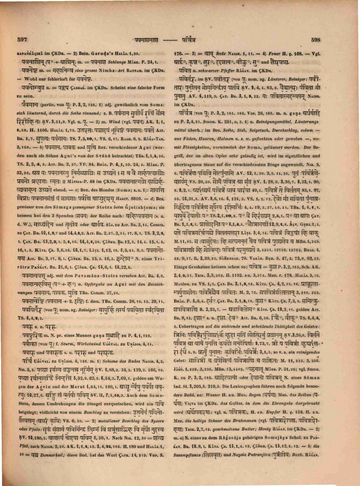
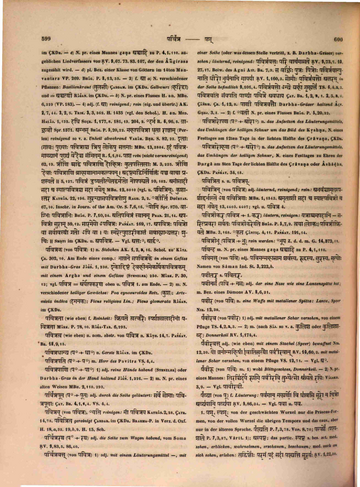
pavítra (von pū) P. 3,2,185. P. 3,2,186. VOP. 26,169. m.n. gaṇa ardharcādi zu P. 2,4,31. SIDDH. K. 251,a,3. 1〉 n. Reinigungsmittel, Läuterungsmittel überh.; im Bes. Seihe, Sieb, Seigetuch, Durchschlag, colum (aus Fäden, Haaren, Halmen u. s. w. geflochten oder gewoben), womit Flüssigkeiten, vornämlich der Soma, geläutert werden. Der Begriff, der im alten Opfer sehr geläufig ist, wird im eigentlichen und übertragenen Sinne auf die verschiedensten Dinge angewandt. NIR. 5,6. pa̱vitrèṇa pṛthivi̱ motpùnāmi AV. 12,1,30. AV. 12,3,3. AV. 12,1,14. AV. 12,1,25. pū̱taṃ pa̱vitrèṇe̱vājyàm VS. 20,20. somàṃ pa̱vitra̱ ā sṛ̀ja ṚV. 1,28,9. ṚV. 3,36,7. ṚV. 8,33,1. ṚV. 8,90,9. ṚV. 9,2,1. vya1̱̀vyayaṃ pa̱vitràṃ dhāva̱ dhāràyā ṚV. 9,49,4. pa̱vitràṃ te̱ vitàtam ṚV. 83,1. ṚV. 97,55. ṚV. 10,31,8. AV. 9,6,16. AV. 6,124,3. VS. 1,2. VS. 1,12. de̱vo mā̀ savi̱tā pùnā̱tvacchìdreṇa pa̱vitrèṇa̱ sūryàsya ra̱śmibhìḥ VS. 4,4. VS. 19,3. VS. 19,37. VS. 19,40. VS. 19,41. TBR. 1,4,1,1. vā̱yurvai de̱vānā̀ṃ pa˚ TS. 2,1,10,2. pa˚ vai hiràṇyam TS. 2,5,1. pa˚ vā āpaḥ ŚAT. BR. 1,1,1,1. prāṇodānau pa˚ ŚAT. BR. 8,1,4,4. ˚sautrāmaṇī ŚAT. BR. 12,8,1,8. ĀŚV. GṚHY. 1,4. yatte pavitramarciṣyagne vitatamantarā LĀṬY. 5,4,14. pavitraṃ viduṣāṃ hi vāk M. 11,85. sa (vāsudevaḥ) hi satyamanṛtaṃ caiva pavitraṃ puṇyameva ca MBH. 1,249. pavitrāṇāṃ hi govindaḥ pavitraṃ paramucyate MBH. 3,8351. MBH. 3,13759. MBH. 3,13762. BHAG. 4,38. BHAG. 9,17. R. 2,39,24. SĀṂKHYAK. 70. VARĀH. BṚH. S. 47,3. VARĀH. BṚH. S. 73,9. VARĀH. BṚH. S. 82,23. Einige Grashalme heissen schon so; pavitra = kuśa P. 3,2,185, Sch. AK. 2,4,5,31. TRIK. 3,3,362. H. 1192. H. an. 3,574. MED. r. 178. HALĀY. 5,16. MAHĪDH._zu_VS. 1,2. ŚAT. BR. 3,1,3,18. KĀTY. ŚR. 4,2,15. KĀTY. ŚR. 4,2,16. prākkūlānparyupāsīnaḥ pavitraiścaiva pāvitaḥ M. 2,75. sapavitrāṃstilān M. 3,210. M. 3,223. BHĀG. P. 6,8,4. darbha˚ ŚAT. BR. 3,1,3,18. kuśa˚ KĀTY. ŚR. 7,3,1. samitkuśapavitrāṇi R. 2,25,7. — ajāviloma˚ KĀTY. ŚR. 19,2,11. golden AIT. BR. 8,13. daśā˚ s. u. daśā. deva˚ AIT. BR. 6,36. kíṃ˚, vā́k˚ TS. 6,4,5,3. Uebertragen auf die sichtende und scheidende Thätigkeit des Geistes: tri̱bhiḥ pa̱vitrai̱rapùpo̱ddhya1̱̀rkaṃ hṛ̱dā ma̱tiṃ jyoti̱ranù prajā̱nan ṚV. 3,26,8. vitàte pa̱vitra̱ ā vācàṃ punanti ka̱vayò manī̱ṣiṇàḥ ṚV. 9,73,7. trī ṣa pa̱vitrā̀ hṛ̱dya1̱̀ntarā dàdhe ṚV. 9,73,8. ṚV. 9,73,9. kratùṃ punā̱naḥ ka̱vibhìḥ pa̱vitraìḥ ṚV. 3,1,5. so v. a. ein reinigendes Gebet: sāvitrīṃ ca japennityaṃ pavitrāṇi ca śaktitaḥ M. 11,225. M. 3,256. YĀJÑ. 1,239. YĀJÑ. 3,326. MBH. 13,4402. ˚paṭhanāt MĀRK. P. 51,26; vgl. SIDDH. K._zu_P. 3,2,186. ādityānāṃ oder devānāṃ pavitram N. eines Sāman Ind. St. 3,205,b. 219,b. Die Lexicographen führen noch folgende besondere Bedd. an: Wasser H. an. MED. Regen (varṣaṇa) MED. das Reiben (gharṣaṇa) VIŚVA_im_ŚKDR. das Gefäss, in dem die Ehrengabe dargebracht wird (arghopakaraṇa; vgl. u. pavitraka), H. an. Kupfer H. ś. 158. H. an. MED. die heilige Schnur des Brahmanen (vgl. pavitrāropaṇa, pavitrārohaṇa) TRIK. 2,7,12. geschmolzene Butter; Honig RĀJAN._im_ŚKDR. — 2〉 m. a〉 N. eines zu dem Rājasūya gehörigen Somayāga Schol. zu PAÑCAV. BR. 18,8,1. KĀTY. ŚR. 15,1,4. KĀTY. ŚR. 15,1,19. ŚĀṄKH. ŚR. 15,12,8. ŚĀṄKH. ŚR. 15,12,12. — b〉 die Sesampflanze (tilavṛkṣa) und Nageia Putranjiva (putraṃjīva) Roxb. RĀJAN._im_ŚKDR. — c〉 N. pr. eines Mannes gaṇa aśvādi zu P. 4,1,110. angeblichen Liedverfassers von ṚV. 9,67. ṚV. 9,73. ṚV. 9,83. ṚV. 9,107, der den Āṅgirasa zugezählt wird. — d〉 pl. Bez. einer Klasse von Göttern im 14ten Manvantara VP. 269. BHĀG. P. 8,13,35. — 3〉 f. ā a〉 N. verschiedener Pflanzen Basilienkraut (tulasī) ŚABDAM._im_ŚKDR. Gelbwurz (haridrā) und = aśvatthī RĀJAN._im_ŚKDR. — b〉 N. pr. eines Flusses H. an. MBH. 6,329 (VP. 183). — 4〉 adj. (f. ā) reinigend; rein (eig. und übertr.) AK. 2,7,44. AK. 3,2,5. TRIK. 3,3,362. H. 1435 (vgl. den Schol.) H. an. MED. HALĀY. 1,132. dadhi SUŚR. 1,177,8. SUŚR. 1,181,19. SUŚR. 1,204,2. ˚darbha R. 6,96,5. jāhnavī Spr. 1571. ambhas BHĀG. P. 5,20,22. mahāpavitrā dhṛtā rājñām (Perlen) reinigend so v. a. Unheil abwehrend VARĀH. BṚH. S. 82,22. etāḥ (gāvaḥ) puṇyāḥ pavitrāśca triṣu lokeṣu sattamāḥ MBH. 13,3804. idaṃ pavitramākhyānaṃ puṇyaṃ vedaiśca saṃmitam R. 1,1,94. pāśa rein (nicht verunreinigend) R. 1,62,19. trīṇi śrāddhe pavitrāṇi dauhitraḥ kutapastilāḥ M. 3,235. trīṇi devāḥ pavitrāṇi brāhmaṇānāmakalpayan . adṛṣṭamadbhirnirṇiktaṃ yacca vācā praśasyate .. M. 5,127. pavitraṃ duṣyatītyetaddharmato nopapadyate M. 10,102. amāṃsādī sadā ca syātpavitraśca sadā bhavet MBH. 12,8010 (vgl. u. pavitrin). kuśāstara KATHĀS. 22,196. khuranyāsapavitrapāṃśu RAGH. 2,2. ˚kīrti DHŪRTAS. 67,10. Inschr. in Journ. of the Am. Or. S. 7,6,16. ˚yoni Spr. 870. vāgbhiḥ pavitrābhiḥ BHĀG. P. 7,10,24. atipavitraṃ sthānam PRAB. 21,14. apavitrāṃ surām PRAB. 59,12. sārameyo 'pavitraḥ PAÑCAT. 169,17. apavitraḥ pavitro vā sarvāvasthāṃ gato 'pi vā . yaḥ smaretpuṇḍarīkākṣaṃ sabāhyābhyantaraḥ śuciḥ .. SMṚTI_im_ŚKDR. u. apavitra. — Vgl. antaḥ˚, ārdra˚.
Original text · German · substantive neuter
pavitra 4〉 pavitra und mahāpavitra unter den Beiww. Viṣṇuʼs MBH. 12,12864. — 5〉 n. ein best. Metrum Ind. St. 8,377; vgl. pāvitra.
Böhtlingk 1879 adjective · substantive masculine · substantive neuter
Original text · German · adjective · substantive masculine · substantive neuter
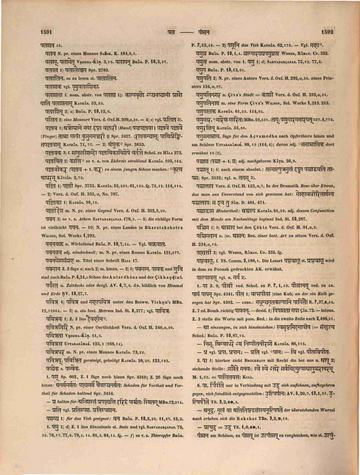
pavítra — 1〉 n. — a〉 Reinigungsmittel, Läuterungsmittel überh.; Seihe, Sieb, Seihetuch, Durchschlag, colum zur Läuterung von Flüssigkeiten. insbes. des Soma. Schon zwei Kuśa-Halme bewirken symbolisch Läuterung. Das Wort wird in eigentlichem und übertragenem Sinne auf die verschiedensten [Page4-056-c] Dinge angewandt. Nach den Lexicographen geschmolzene Butter (RĀJAN. 15,2), Honig (RĀJAN. 14,110), Wasser, Kupfer, Regen oder das Reiben (varṣaṇa, gharṣaṇa; vgl. Varsma oder Varsama = pavitra bei den Maga VP. 25,384). — b〉 das Gefäss, in dem die Ehrengabe dargebracht wird. — c〉 *die heilige Schnur des Brahmanen. — d〉 die sichtende und scheidende Thätigkeit des Geistes. — e〉 ein reinigendes Gebet. — f〉 ādityānāṃ und devānāṃ pavitram Namen von Sāman ĀRṢ. BR. — g〉 ein best. Metrum. — 2〉 Adj. (f. ā) reinigend, Segen bringend; rein (eigentlich und übertragen). — 3〉 m. — a〉 ein best. zu dem Rājasūya gehöriges Soma-Opfer. — b〉 *Sesamum indicum RĀJAN. 16,70. — c〉 *Nageia putranjiva RĀJAN. 9,145. — d〉 N. pr. — α〉 Pl. einer Klasse von Göttern im 14ten Manvantara. — β〉 eines Mannes. — 4〉 f. pavitrā — a〉 *Basilienkraut. — b〉 *Gelbwurz RĀJAN. 6,198. — c〉 *der kleine Pippala-Baum RĀJAN. 11,123. — d〉 N. pr. zweier Flüsse VP. 2,4,43.
Apte 1890 adjective · substantive neuter
Original text · English · adjective · substantive neuter
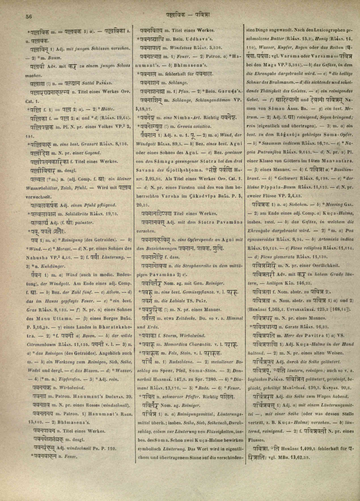
pavitra a. [pū karaṇe itra] 1 Sacred, holy, sinless, sanctified (persons or things); trīṇi śrāddhe pavitrāṇi dauhitraḥ kutapastilāḥ Ms. 3. 235; pavitro naraḥ, pavitraṃ sthānaṃ &c. 2 Purified by the performance of ceremonial acts (such as sacrifices &c.). 3 Purifying, removing sin. — traṃ 1 An instrument for cleansing or purifying, such as a sieve or strainer &c. 2 Two blades of Kuśa grass used at sacrifices in purifying and sprinkling ghee. 3 A ring of Kuśa grass worn on the fourth finger on certain religious occasions. 4 The sacred thread worn by members of the first three castes of the Hindus. 5 Copper. 6 Rain. 7 Water. 8 Rubbing, cleansing. 9 A vessel in which the arghya is presented. 10 Clarified butter. 11 Honey. — trā 1 The holy basil. 2 Turmeric. (pavitrīkṛ ‘to purify, sanctify’; ([Page 0688-b]) pavitrībhū ‘to become pure or holy’). Comp. — āropaṇaṃ, ārohaṇaṃ investiture with the sacred thread. — dhānyaṃ barley. — pāṇi a. holding darbha grass in the hand.
Cappeller 1887 substantive neuter
Original text · German · substantive neuter
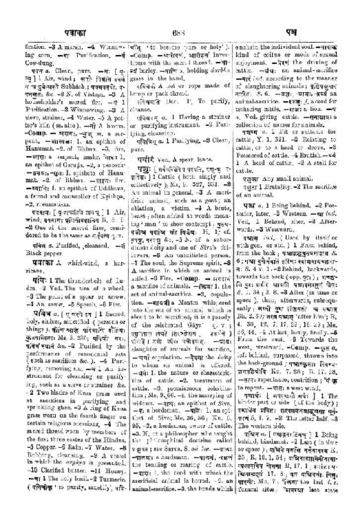
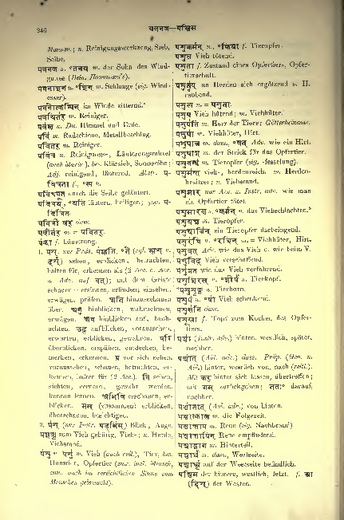
pavítra n. Reinigungs-, Läuterungsmittel (auch übertr.), bes. Klärsieb, Somaseihe; Adj. reinigend, läuternd. Abstr. pavitratā f., ˚tva n.
Burnouf 1866 adjective
Original text · French · adjective
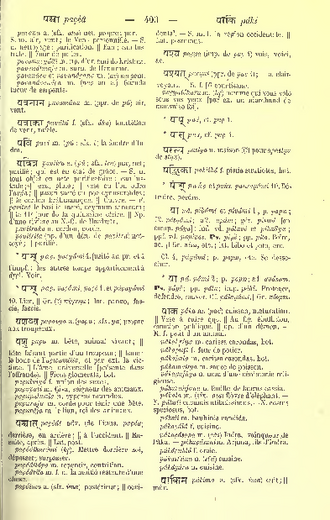
pavitra pavitra a. (pū; sfx. tra) pur, net; purifié; qui est en état de grâce. — S. n. tout objet ou acte purificatoire: eau lustrale. eau, pluie; vase où l'on offre l'argha; gazon sacré ou poa cynosuroïdes; le cordon brâhmanique. Cuivre. — F. pavitrā le basilic sacré, ocymum sanctum; le 11ᵉ jour de la quinzaine claire. Np. d'une rivière au N.-O. de Hardwâr. pavitraka n. cordon, corde. pavitrita (pp. d'un dén. de pavitra) nettoyé; purifié.
Occurrences in source texts (5)
GoS 2 occurrences
SiSa 2 occurrences
SVU 1 occurrence
Continue with AYI Free
Image source: AYI archive.