

tāraka तारक – leading over; saving
adjective · substantive masculine · substantive neuter · Word type unspecified
Dictionary sources
AYI dictionary adjective · substantive neuter
substantive neuter
starlight
Cappeller 1891 Word type unspecified
Original text · English · Word type unspecified
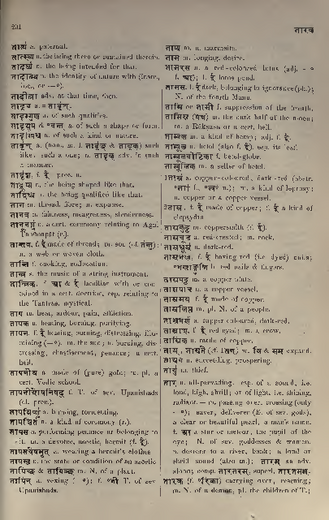
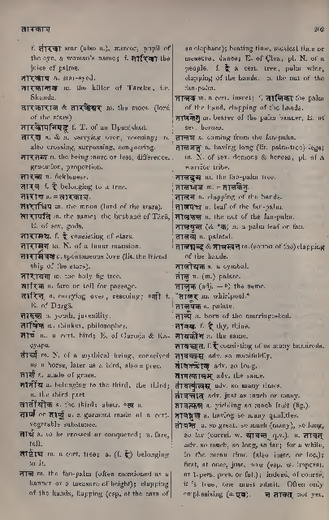
tāraka ·(f. °rikā) carrying over, rescuing; m. N. of a demon, pl. the children of T.; f. tā́rakā star (also n.), meteor, pupil of the eye, a woman's name; f. tārikā the juice of palms.
Monier-Williams 1872 Word type unspecified
Original text · English · Word type unspecified
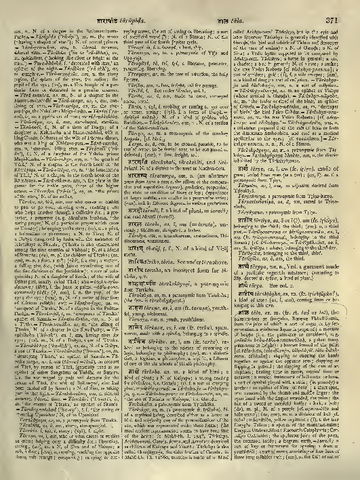
Tāraka, as, ikā, am, one who causes or enables to pass or go over, carrying over; rescuing; one who helps another through a difficulty &c.; a pro- tector, a preserver (e. g. tārakam brahma, ‘the saving prayer,’ N. of a particular prayer which saves or liberates); belonging to the stars; (as), m. a pilot, a helmsman or steersman; a N. of Śiva; N. of a Daitya conquered by Indra with the assistance of Kārttikeya or Skanda; (Tāraka is also enumerated among the nine enemies of Viṣṇu); N. of a friend of Sīmanta; (ās), m. pl. the children of Tāraka; (as, am), m. n. a float, a raft; (akā), f. a star; a meteor, a falling star. &c., (with Jainas constituting one of the five divisions of the Jyotiṣkas); a sort of colo- quintida; N. of a daughter of Sunda; of the wife of Bṛhas-pati, usually called Tārā; also = laghu-vṛn- dāvana; (ikā), f. the juice of palms, = tāla-rasa, commonly tāḍī; (ā, am), f. n. the pupil of the eye; the eye; (am), n., N. of a metre of four lines of thirteen syllables each.
Petersburger 1855 adjective · substantive masculine · substantive neuter
Original text · German · adjective · substantive masculine · substantive neuter
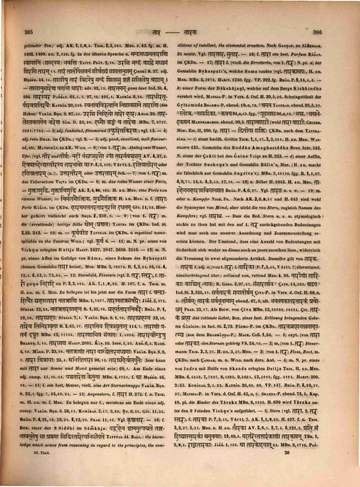
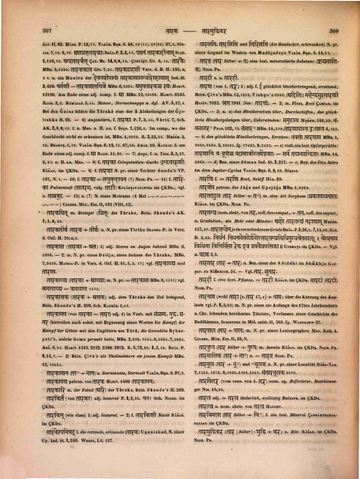
tāraka 1〉 adj. a〉 (von 1. tar) f. tārikā (P. 7,3,45, Vārtt. 7) übersetzend, hinüberbringend über; erlösend von, rettend MED. k. 98. nārīṇāṃ tārikāḥ kāścit (nāvaḥ) R. GORR. 2,97,23. saṃsārārṇava˚ ŚATR. 14,265. advaya˚ Ind. St. 3,325,21. sarvatārakaṃ gayātīrtham ŚIVA-P._in_Verz. d. Oxf. H. 68,a,2. (tīrtham) tārakaṃ sarvabhūtānām ebend. 67,b, ult. bhavabhayakātaratārakaṃ prabodham PRAB. 25,17. Als Beiw. von Śiva MBH. 12,10380. MBH. 12,10424. ŚIV. tārakaṃ brahma das rettende Gebet, Bez. eines best. Erlösung bringenden Gebetes JĀBĀLOP._in_Ind. St. 2,75. PĀDMA-P._im_ŚKDR. tārakabrahmamantramāhātmya (aus dem BRAHMĀṆḌA-P.) MACK. Coll. 1,54. — b〉 oxyt. (von tārā oder tārakā) den Sternen gehörig VS. 24,10. — 2〉 m. (von 1. tar) Steuermann TRIK. 3,3,27. H. an. 3,47. MED. — 3〉 (von 1. tar) Floss, Boot, m. ŚKDR. nach ŚABDAR. m.n. WILS. nach ders. Aut. — 4〉 m. N. pr. eines von Indra mit Hülfe von Skanda erlegten Daitya TRIK. H. an. MED. MBH. 6,4249. fgg. MBH. 7,7837. MBH. 8,1395. fgg. MBH. 9,2691. MBH. 13,4011. fgg. MBH. 13,4181. HARIV. 200. HARIV. 2. HARIV. 53. KUMĀRAS. 2,1. KUMĀRAS. 2,32. KATHĀS. 20,60. KATHĀS. 20,69. VP. 147. BHĀG. P. 8,10,21. BHĀG. P. 8,10,27. MATSYA-P._in_Verz. d. Oxf. H. 42,a,2. SKANDA-P. ebend. 75,b, Kap. 18. pl. die Kinder des Tāraka MBH. 8,1553. H. 699 wird Tāraka unter den 9 Feinden Viṣṇuʼs aufgeführt. — 5〉 Stern (vgl. tārā, 2. tar star), f. tārakā P. 7,3,45, Vārtt. 7. AK. 1,1,2,22. H. 107. f.n. TRIK. 3,3,27. TRIK. 3,5,21. MED. n. H. an. tā́rakā AV. 2,8,1. AV. 3,7,4. AV. 6,121,3. prati̱ tvaṃ di̱vyāstā̱rakā̀ amukthāḥ AV. 19,49,8. yadatàra̱ṃstattāràkāṇāṃ tāraka̱tvam TBR. 1,5,2,5. rāhutārakāḥ YĀJÑ. 1,135. ā tārakodayāt YĀJÑ. 24. MBH. 5,1710. PAÑCAT. II, 62. MĀRK. P. 15,71. VARĀH. BṚH. S. 46,10 (11). 21 (22). 97,3. SŪRYAS. 7,18. SŪRYAS. 8,19. ṛkṣagrahatārakāḥ BHĀG. P. 2,5,11. patanaṃ tārakādīnām SUŚR. 1,110,13. candratārakám ŚAT. BR. 14,6,7,13. ŚVETĀŚV. UP. 6,14. tārakaiḥ MBH. 5,5390. tārakapaṭala GĪT. 7,24. tārakadvādaśī Verz. d. B. H. 135,a,3 v. u. ein Mantra der devapathīyānāṃ tārakāṇāmanvārohāṇām Ind. St. 3,459. carmaṇī — tārakāśatacitre MBH. 6,5394. ayutatārakaśca rathaḥ HARIV. 13100. Am Ende eines adj. comp. f. ā MBH. 12,13498. HARIV. 6545. RAGH. 3,2. KUMĀRAS. 5,44. Meteor, Sternschnuppe u. dgl. AV. 5,17,4. Bei den Jaina bilden die Tārakā eine der 5 Abtheilungen der Jyotiṣka H. 92. — 6〉 Augenstern, f. tārakā P. 7,3,45, Vārtt. 7, Sch. AK. 2,6,2,43. f.n. MED. n. H. an. f. SUŚR. 1,126,8. Im comp., wo das Geschlecht nicht zu erkennen ist, MBH. 1,2932. R. 3,52,34. MṚCCH. 2,12. BHARTṚ. 1,10. VARĀH. BṚH. S. 12,12. VARĀH. BṚH. S. 67,66. AMAR. 10. CAURAP. 5. am Ende eines adj. comp. f. ā RAGH. 11,69. — 7〉 Auge, f. n. TRIK. 3,3,27. TRIK. 3,5,21. n. H. an. MED. — 8〉 f. tārakā Coloquinthen-Gurke (indravāruṇī) RĀJAN._im_ŚKDR. — 9〉 f. tārakā N. pr. einer Tochter Sundaʼs VP. 147, N. 1. — 10〉 f. tārakā = laghuvṛndāvana (?) NIGH. PR. — 11〉 f. tārikā Palmensaft (tālarasa, vulg. tāḍī) KULĀRṆAVATANTRA_im_ŚKDR.; vgl. u. tāmrakūṭa. — 12〉 n. (?) N. eines Metrums (4 Mal ⏑ ⏑ – ⏑ ⏑ – ⏑ ⏑ – ⏑ ⏑ – –) COLEBR. Misc. Ess. II, 161 (COLEBR. Misc. Ess. VIII, 12).
Böhtlingk 1879 adjective · substantive masculine · substantive neuter · Word type unspecified
Original text · German · adjective · substantive masculine · substantive neuter
tāraka — 1〉 Adj. (f. tārikā) — a〉 übersetzend, hinüberbringend über, erlösend aus, rettend Ind. St. 14,380. 390. Auch als Beiw. Śivaʼs. brahman n. ein best. Erlösung bringendes Gebet. — b〉 oxyt. den Sternen gehörig. — 2〉 m. — a〉 *Steuermann. — b〉 N. pr. eines von Indra mit Hülfe Skandaʼs besiegten Āditya (auch *eines Feindes des Viṣṇu). [Page3-023-c] Pl. die Kinder des Tāraka. — 3〉 *m. n. Floss, Boot. — 4〉 f. tā́rakā und n. — a〉 Stern. Am Ende eines adj. Comp. f. ā. — b〉 Augenstern. Am Ende eines adj. Comp. f. ā. — c〉 *Auge. — 5〉 f. tā́rakā — a〉 Meteor, Sternschnuppe. — b〉 *Koloquinthengurke RĀJAN. 3,57. — c〉 *= laghuvṛndāvana (?). — d〉 N. pr. — α〉 der Gattin Bṛhaspatiʼs VP. 4,6,9. — β〉 einer Tochter Sundaʼs. — 6〉 f. tārikā Palmensaft. — 7〉 n. ein best. Metrum.
Original text · German · Word type unspecified
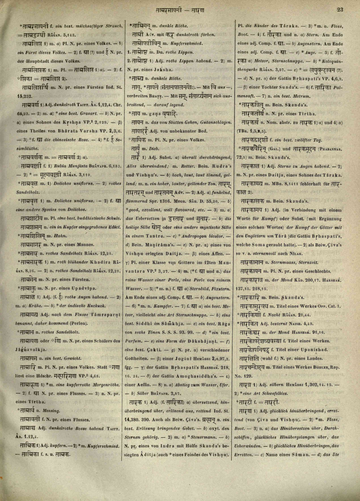
tāraka III. 1〉a〉 jñāna n. YOGAS. 3,54. BHOJA zu YOGAS. 3,33. [Nachtrag, Band 7]
Apte 1890 adjective · substantive masculine · substantive neuter
Original text · English · adjective · substantive masculine · substantive neuter
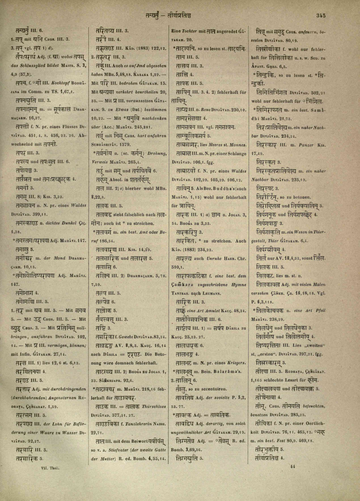
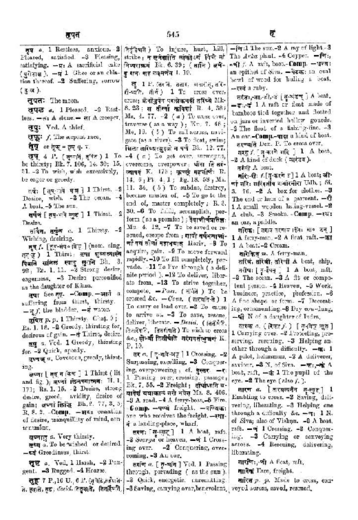
tāraka a. (rikā f.) [tṝ-ṇic ṇvula] 1 Carrying over. 2 Protecting, preserving, rescuing. 3 Helping another through a difficulty. — kaḥ 1 A pilot, helmsman. 2 A deliverer, saviour. 3 N. of Śiva. — kaḥ, -kaṃ A boat, raft. — kaṃ 1 The pupil of the eye. 2 The eye (also f.).
Original text · English · substantive masculine
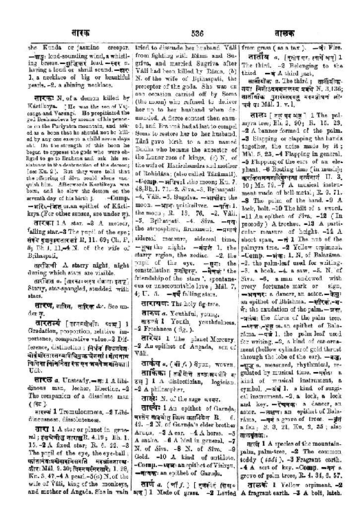
tārakaḥ N. of a demon killed by Kārtikeya. [He was the son of Vajrānga and Varāṅgī. He propitiated the god Brahmadeva by means of his penance on the Pāriyātra mountain, and asked as a boon that he should not be killed by any one except a child seven days old. On the strength of this boon he began to oppress the gods who were obliged to go to Brahmā and ask his assistance in the destruction of the demon; (see Ku. 2). But they were told that the offspring of Śiva could alone vanquish him. Afterwards Kārtikeya was born, and he slew the demon on the seventh day of his birth]. Comp. — ariḥ, -jit m. an epithet of Kārtikeya. (For other senses, see under tṝ).
Cappeller 1887 Word type unspecified
Original text · German · Word type unspecified
tāraka (f. ˚rikā) hinüberbringend, rettend; m. N. eines Dämons, Pl. seiner Kinder. f. tā́rakā Stern, Aügenstern (auch n.), weibl. Name.

Burnouf 1866 adjective
Original text · French · adjective
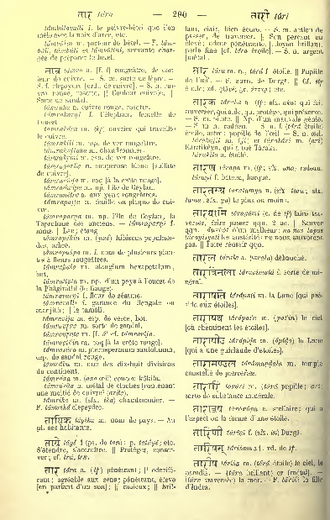
tāraka tāraka a. (tṝ; sfx. aka) qui fait traverser, qui aide, qui protège, qui préserve. — S. m. pilote. Np. d'un mauvais génie. — S. m. n. radeau. — S. n. f. (tārā étoile) étoile, astre; pupille de l'œil. — S. n. œil. tārakajit m. (ji) et tārakāri m. (ari) Kārttikeya, qui a tué Tāraka. tārakita a. étoilé.
Occurrences in source texts (3)
HP 1 occurrence
PYS 1 occurrence
SVU 1 occurrence
Continue with AYI Free
Image source: AYI archive.