

taruṇa तरुण – young
adjective · substantive masculine · substantive neuter · Word type unspecified
Dictionary sources
AYI dictionary adjective
young
Cappeller 1891 Word type unspecified
Original text · English · Word type unspecified
táruṇa ·f. ī young, tender, new, fresh; just begun (heat), just risen (sun, moon, etc.). m. young man, N. of sev. plants, also a man's name; f. taruṇī young woman, girl; n. cartilage; sprout, stalk.

Monier-Williams 1872 adjective
Original text · English · adjective
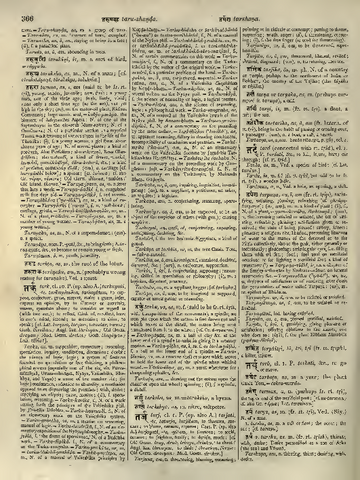
taruṇa taruṇa, as, ī, am (said to be fr. rt. tṝ), young, tender, juvenile; new, fresh; a young man, one of the virile age; fresh, lively, vivid; risen only a short time ago (as the sun), not yet high in the sky; (as), m. the castor-oil plant, Ricinus Communis; large cumin seed, = kubja-puṣpa, the blossom of Achyranthes Aspera; N. of one of the Saptarṣayas in the eleventh Manv-antara; N. of a Gandharva; N. of a particular section in a mystical Tantra work treating of various stages in the life of the Tāntrika; (ī), f. a young woman, a girl from about sixteen years of age; N. of several plants; a kind of pot-herb, Aloe Perfoliata; also = taraṇī, Rosa Glan- dulifera; also = dantī, a kind of flower, = sahā, kumārī, gandhāḍhyā, cāru-keśarā, &c.; a kind of perfume, commonly cīḍā; (am), n. cartilage [cf. taruṇāsthi below]; a sprout; [cf. taluna; cf. also Gr. τέρην, τέρεινα; Old Germ. diorna, ‘maiden;’ Old Island. therna.]
Petersburger 1855 adjective · substantive masculine · substantive neuter · Word type unspecified
Original text · German · adjective · substantive masculine · substantive neuter
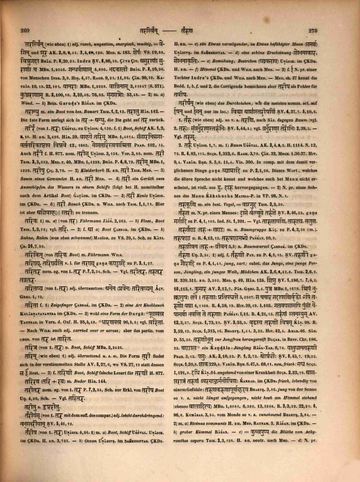
táruṇa Uṇ. 3,54. 1〉 adj. f. táruṇī PAT._zu_P. 4,1,15. ṚV. taruṇī́ gaṇa gaurādi zu P. 4,1,41. jung, zart; subst. das Junge, eine junge Person, Jüngling, ein junges Weib, Mädchen AK. 2,6,1,42. AK. 2,6,1,8. TRIK. 2,6,2. H. 339. H. 511. H. an. 3,205. MED. ṇ. 49. HĀR. 135. śiśu ṚV. 1,186,7. ṚV. 7,4,2. ṚV. 10,115,1. kumāra AV. 3,12,7. PĀR. GṚHY. 3,4. putra MBH. 1,1679. śriyaṃ bhuktvāyuṣaḥ kṣaye . taruṇāḥ pratipadyante MBH. 5,3507. sa cacāra gadāpāṇirvṛddho 'pi taruṇo yathā MBH. 4,1108. R. 4,58,19. HIT. 39,19. HIT. I, 105. gatavayasāmapi puṃsāṃ yeṣāmarthā bhavanti te taruṇāḥ PAÑCAT. I, 11. R. 4,21,13. tarùṇaṃ stana̱syum AV. 12,3,37. SUŚR. 1,75,21. ṚV. 3,55,5. vṛddhasya taruṇī viṣam CĀṆ. 98. R. 3,59,15. SUŚR. 1,315,16. BHARTṚ. 1,41. BHARTṚ. 3,32. HIT. 42,4. AMAR. 46. SĀH. D. 55,20. taruṇībhūta zur Jungfrau herangereift DAŚAK._in_BENF. Chr. 186,22. caṇḍāla˚ ein Caṇḍāla- Jüngling RĀJA-TAR. 6,78. yātudhānataruṇī PRAB. 3,12. paśuḥ AK. 2,10,23. P. 1,2,73. oṣàdhīḥ ṚV. 8,43,7. ṚV. 8,19,22. SUŚR. 1,20,5. śāka SUŚR. 229,4. VARĀH. BṚH. S. 47,5. VARĀH. BṚH. S. 68,11. neu, frisch: madya SUŚR. 1,191,8. dadhi CĀṆ. 64. angehend von einer Krankheit SUŚR. 2,52,16. āsaptarātraṃ taruṇaṃ jvaramāhurmanīṣiṇaḥ CAKRAD._im_ŚKDR. frisch, lebendig von einem Gefühle: taruṇakaruṇāpūrṇahṛdaya BHARTṚ. 3,86. jung von der Sonne so v. a. nicht längst aufgegangen, nicht hoch am Himmel stehend (ebenso bālāditya) MBH. 1,8081. MBH. 6,280. MBH. 13,3508. R. 3,3,22. R. 3,22,21. R. 6,86,8. KUMĀRAS. 3,54. vom Monde so v. a. zunehmend BHARTṚ. 3,84. — 2〉 m. a〉 Ricinus communis H. an. MED. RATNAM. 3. RĀJAN._im_ŚKDR. — b〉 grober Kümmel RĀJAN. — c〉 = kubjapuṣpa die Blüthe von Achyranthes aspera TRIK. 3,3,128. H. an. neutr. nach MED. — d〉 N. pr. eines der Saptarṣi im 11ten Manvantara HARIV. 477. N. pr. eines Gandharva(?) MBH. 2,303, wo jedoch sumanastaruṇaḥ viell. als ein Wort zu fassen ist. — 3〉 f. ī a〉 N. verschiedener Pflanzen: eine best. Gemüsepflanze SUŚR. 1,219,19. Aloe perfoliata Lin. RĀJAN._im_ŚKDR. NIGH. PR. = taraṇī Rosa glandulifera Roxb. NIGH. PR. = dantī RĀJAN. eine best. Blume, = sahā, kumārī, gandhāḍhyā, cārukeśarā u. s. w. ebend. — b〉 ein best. Parfum, vulg. cīḍā RĀJAN. — 4〉 n. a〉 Knorpel (vollständig taruṇāsthi) SUŚR. 1,35,1. SUŚR. 1,339,16. SUŚR. 2,370,2. kaṭīka˚ ein best. Theil des Hüftknochens, Hüftgelenk SUŚR. 1,345,9. SUŚR. 1,346,9. SUŚR. 1,350,3. — b〉 Schössling: kuśa˚ KĀTY. ŚR. 5,1,29. KĀTY. ŚR. 5,2,15. KĀTY. ŚR. 6,1,12. KĀTY. ŚR. 7,2,10. PĀR. GṚHY. 2,1. — Vgl. taluna.
Original text · German · Word type unspecified
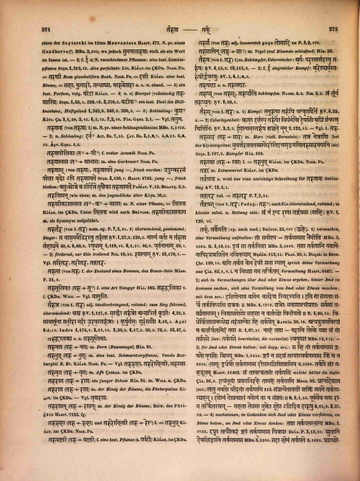
taruṇa 1〉 vyāghryāstaruṇaputrāyāḥ R. 3,53,51. — 2〉e〉 Bez. eines der 7 Ullāsa bei den Śākta Verz. d. Oxf. H. 91,b,41. — 4〉a〉 Z. 3 lies 1,345,19 st. 1,345,9.

Böhtlingk 1879 adjective · substantive masculine · substantive neuter
Original text · German · adjective · substantive masculine · substantive neuter
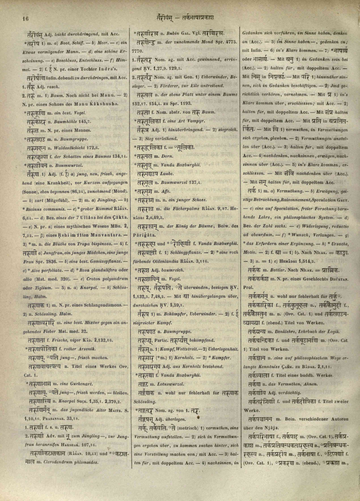
táruṇa — 1〉 Adj. (f. ī) — a〉 jung, neu, frisch, angehend (eine Krankheit), vor Kurzem aufgegangen (Sonne), eben begonnen (Chr. 86,24), zunehmend (Mond). — b〉 zart (Mitgefühl). — 2〉 m. — a〉 Jüngling. — b〉 *Ricinus communis. — c〉 *grober Kümmel RĀJAN. 6,64. — d〉 Bez. eines der 7 Ullāsa bei den Śākta. — e〉 N. pr. — α〉 eines mythischen Wesens MBH. 2,7,22. — β〉 eines Ṛṣi im 11ten Manvantara. — 3〉 *m. n. die Blüthe von Trapa bispinosa. — 4〉 f. taruṇī — a〉 Jungfrau, ein junges Mädchen, eine junge Frau Spr. 2836. — b〉 eine best. Gemüsepflanze. — c〉 *Aloe perfoliata. — d〉 *Rosa glandulifera oder Rosa alba (Mat. med. 320). — e〉 Croton polyandrus oder Croton tiglium. — 5〉 n. — a〉 Knorpel. — b〉 Schössling, Halm.
Apte 1890 adjective · substantive masculine · substantive neuter
Original text · English · adjective · substantive masculine · substantive neuter
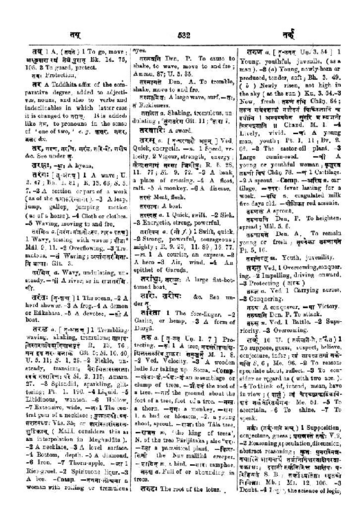
taruṇa a. [tṝ-unan Uṇ. 3. 54] 1 Young, youthful, juvenile, (as a man). 2 (a) Young, newly-born or produced, tender, soft; Bh. 3. 49. (b) Newly risen, not high in the sky (as the sun) Ku. 3. 54. 3 New, fresh; taruṇaṃ dadhi Chāṇ. 64; taruṇaṃ sarṣapaśākaṃ navaudanaṃ picchilāni ca dadhīni . alpavyayena suṃdari gra myajano miṣṭamaśnāti .. Chand. M. 1. 4 Lively, vivid. — ṇaḥ 1 A young man, youth; Pt. 1. 11; Bv. 2. 62. 2 The castor-oil plant. 3 Large cumin-seed. — ṇī A young or youthful woman; vṛddhasya taruṇī viṣaṃ Chāṇ. 78. — ṇaṃ 1 Cartilage. 2 A sprout. Comp. — asthi n. cartilage. — jvaraḥ fever lasting for a week. — dadhi n. coagulated milk five days old. — pītikā red arsenic.
Cappeller 1887 Word type unspecified
Original text · German · Word type unspecified
táruṇa f. ī jung, eben angefangen, neu, frisch, zart (Abstr. ˚tā f.). m. Jüngling; f. ī Mädchen; n.(auch ˚ka) Schössling, Halm.
Burnouf 1866 adjective
Original text · French · adjective
taruṇa taruṇa a. jeune, juvénil; nouveau, frais. — S. m. jeune garçon, jeune homme. Ricin, plante. Grosse graine de cumin. — S. f. taruṇā et taruṇī jeune fille, jeune femme. Aloe perfoliata, bot. — S. n. esp. de fleur.
Occurrences in source texts (2)
DYS 1 occurrence
HP 1 occurrence
Continue with AYI Free
Image source: AYI archive.