

vayuna वयुन – cognition; order; way; course
adjective · substantive masculine · substantive neuter
Dictionary sources
AYI dictionary substantive neuter
cognition; order; way; course
Cappeller 1891 adjective
Original text · English · adjective
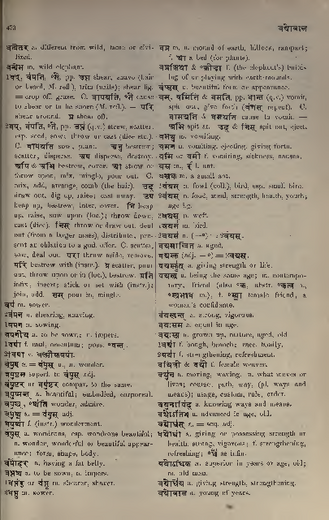
vayúna ·a. moving, waving. n. what moves or lives; course, path, way, (pl. ways and means); usage, custom, rule, order.
Monier-Williams 1872 adjective · substantive neuter
Original text · English · adjective
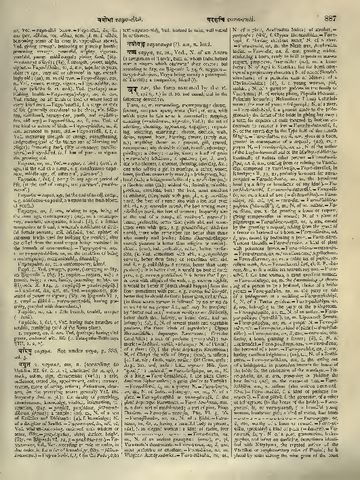
1. vayuna, as, ā, am, Ved. (perhaps) having vital power, endowed with life (in Śata-patha-Brāhmaṇa VIII. 2, 2, 8).
Original text · English · substantive neuter
vayuna 2 . vayuna, am, n. (according to Uṇādi-s. III. 61. fr. rt. vī, substituted for rt. aj), a mark, token, sign, characteristic (Ved.); a rule, ordinance, sacred rite, appointment, order; manner, custom, mode of acting, actions; distinctness, clear- ness, (in the preceding senses generally Ved. and frequently āni, n. pl.); the faculty of perceiving, consciousness, knowledge, wisdom, information, in- struction, (Sāy. = prajñā, prajñāna, jñāna-sā- dhana, jñāna); a temple; (as), m., N. of a son of Kṛśāśva and Dhiṣaṇā; (ā), f. knowledge; N. of a daughter of Svadhā.
Petersburger 1855 adjective · substantive masculine · substantive neuter
Original text · German · adjective
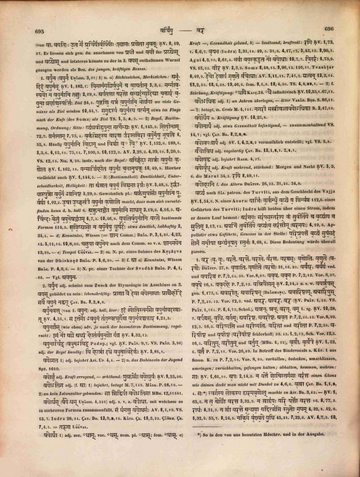
2. vayúna adj. scheint zum Zweck der Etymologie im Anschluss an 3. vayas gebildet zu sein: lebenskräftig: prāṇā vai devā vayonādhāḥ prāṇairhīdaṃ sarvaṃ vayunaṃ naddham ŚAT. BR. 8,2,2,8.
Original text · German · substantive masculine · substantive neuter
1. vayúna (vayuná UṆĀDIS. 3,61) 1〉 n. a〉 Richtzeichen, Merkzeichen: abhū̀di̱daṃ va̱yunàm ṚV. 1,182,1. vi̱mānàma̱gnirva̱yunàṃ ca vā̱ghatā̀m ṚV. 3,3,4. manmā̀va̱syavo̱ na va̱yunā̀ni takṣuḥ ṚV. 2,19,8. ayàtantā carato a̱nyadànya̱didyā ca̱kārà va̱yunā̱ brahmàṇa̱spatìḥ Ziel ṚV. 2,24,5. pu̱rūṇi̱ yatrà va̱yunā̀ni̱ bhojànā wo viele Genüsse als Ziel winken ṚV. 10,44,7. sa̱mu̱drasyà va̱yunàsya patmàn etwa im Fluge nach der Kufe (des Soma) als Ziel TS. 5,5,4,3. — 2〉 Regel, Bestimmung, Ordnung; Sitte: vyàbravīdva̱yunā̱ martyèbhyaḥ ṚV. 1,145,5. kṣi̱tī̱nām ṚV. 1,72,7. janā̀nām ṚV. 7,75,4. vṛkàścidasya vāra̱ṇa ùrā̱mathi̱rā va̱yunèṣu bhūṣati ṚV. 8,55,8. Häufig va̱yunā̀ni vi̱dvān und viśvā̀ va̱˚ vi̱˚ ṚV. 1,152,6. ṚV. 1,189,1. ṚV. 3,5,6. ṚV. 6,15,10. ṚV. 6,75,14. ṚV. 7,100,5. ṚV. 10,122,2. AV. 2,28,2. AV. 4,39,10. AV. 5,20,9. VS. 12,15. NIR. 8,20. instr. nach der Regel: acchìdrā̱ gātrā̀ va̱yunā̀ kṛṇota ṚV. 1,162,18. yanmājìhīta va̱yunā̀ ca̱nānu̱ṣak ṚV. 10,49,5. Hierher vielleicht auch ṚV. 1,144,5. — 3〉 (Bestimmtheit) Deutlichkeit, Unterscheidbarkeit, Helligkeit: tā àtnata va̱yuna̱ṃ viśva̱mā rajàḥ ṚV. 5,48,2. iḻā̀yāspu̱tro va̱yunè 'janiṣṭa ṚV. 3,29,3. Gewöhnlich pl.: akrànnu̱ṣāsò vṛyunā̀ni pū̱rvathā̀ ṚV. 1,92,2. u̱ṣā u̱cchantī̀ va̱yunā̀ kṛṇoti macht, dass man sich zurechtfinden kann d. h. hell ṚV. 1,92,6. a̱ktunāhnā̀ṃ va̱yunā̀ni sādhat ṚV. 2,19,3. ṚV. 4,16,3. avìndaḥ ke̱tuṃ va̱yune̱ṣvahnā̀m ṚV. 6,7,5. ṚV. 10,46,8. yuva̱tirva̱yunā̀ni vaste bestimmte Formen ṚV. 10,114,3. ṛ̱ji̱pyāso̱ na va̱yunèṣu dhū̱rṣadàḥ etwa deutlich, leibhaftig ṚV. 2,34,4. — d〉 Kenntniss, Wissen (= jñāna Comm.) BHĀG. P. 3,4,31. BHĀG. P. 4,23,12. BHĀG. P. 5,11,15. BHĀG. P. 10,8,30. cakṣuṣā vayunena nach dem Comm. so v. a. jñānamayena BHĀG. P. 13,38. — e〉 Tempel UJJVAL. — 2〉 m. N. pr. eines Sohnes des Kṛśāśva von der Dhiṣaṇā BHĀG. P. 6,6,20. — 3〉 f. ā a〉 Kenntniss, Wissen BHĀG. P. 4,9,8. — b〉 N. pr. einer Tochter der Svadhā BHĀG. P. 4,1,63. — Vgl. avayuna.
Böhtlingk 1879 adjective · substantive masculine · substantive neuter
Original text · German · adjective
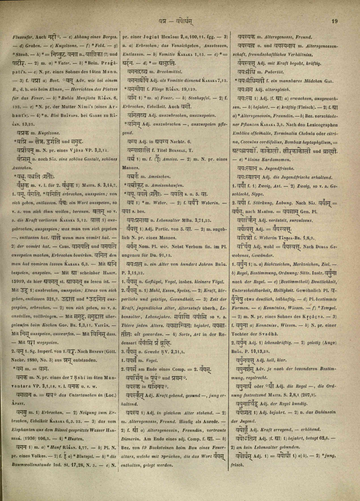
2. vayúna Adj. — 1〉 lebenskräftig. — 2〉 geistig (Auge) BHĀG. P. 10,13,38.
Original text · German · substantive masculine · substantive neuter
1. vayúna — 1〉 n. — a〉 Richtzeichen, Merkzeichen, Ziel. — b〉 Regel, Bestimmung, Ordnung; Sitte. Instr. vayúnā nach der Regel. — c〉 (Bestimmtheit) Deutlichkeit, Unterscheidbarkeit, Helligkeit. Gewöhnlich Pl. vayúneṣu etwa deutlich, leibhaftig. — d〉 Pl. bestimmte Formen. — e〉 Kenntniss, Wissen. — f〉 *Tempel. — 2〉 m. N. pr. eines Sohnes des Kṛśāśva. — 3〉 f. vayunā — a〉 Kenntniss, Wissen. — b〉 N. pr. einer Tochter der Svadhā.
Apte 1890 substantive neuter
Original text · English · substantive neuter
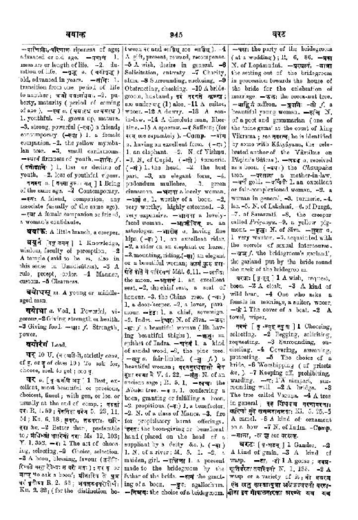
vayunaṃ [vay unan] 1 Knowledge, wisdom, faculty of perception. 2 A temple (said to be m. also in this sense in Uṇādisūtras). 3 A rule, precept, order. 4 Manner, custom. 5 Clearness.
Cappeller 1887 substantive neuter
Original text · German · substantive neuter
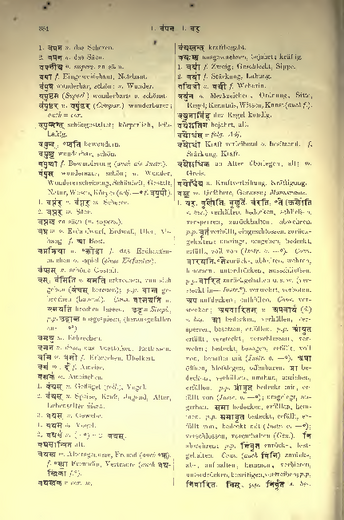
vayúna n. Merkzeichen, Ordnung, Sitte, Regel; Kenntnis, Wissen, Kunst (auch f.).
Occurrences in source texts (2)
IVU 1 occurrence
SVU 1 occurrence
Continue with AYI Free
Image source: AYI archive.