

asta अस्त – Heimat, Heimatstätte.
Adjektiv · Adverb · Substantiv Maskulin · Substantiv Neutrum · Worttyp nicht bestimmt
Wörterbuchquellen
Cappeller 1891 Adjektiv · Substantiv Neutrum
Originaltext · Englisch · Substantiv Neutrum
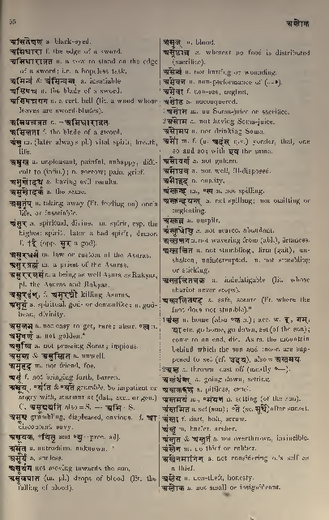
ásta1 ·n. home (also °ka n.); acc. w. ī, gam, yā etc. go home, go down, set (of the sun); come to an end, die. As m. the mountain behind which the sun and moon are supposed to set (cf. udaya), also = astamaya.
Originaltext · Englisch · Adjektiv
asta2 ·a. thrown, cast off (mostly °--).
Monier-Williams 1872 Adjektiv · Substantiv Neutrum · Worttyp nicht bestimmt
Originaltext · Englisch · Adjektiv
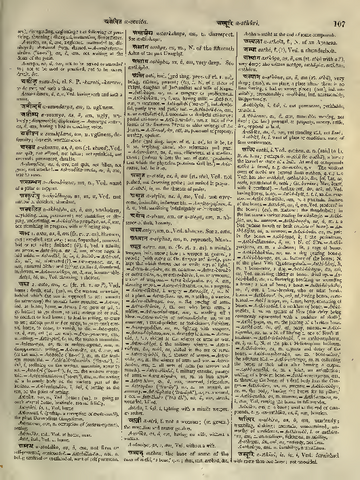
asta 1 . asta, as, ā, am (fr. rt. 2. as), thrown, cast; expelled, sent away; sent, despatched; removed, laid or set aside; finished; (ā), f., Ved. a missile, an arrow.
Originaltext · Englisch · Substantiv Neutrum
asta 2 . asta, am, n. (fr. rt. 1. as ?), Ved. home; death, end; (as), m. the western mountain, behind which the sun is supposed to set; sunset; (in astronomy) the seventh lunar mansion.
Originaltext · Englisch · Worttyp nicht bestimmt
—Astam i or gam or yā, to go home; to go down, to set; astaṃ nī or vah, to conduct or lead home; to lead to setting, to cause to set; astaṃ gam or i or prāp, to go to one's eter- nal home, to cease, to vanish, to die.
Petersburger 1855 Adverb · Substantiv Neutrum · Worttyp nicht bestimmt
Originaltext · Deutsch · Adverb · Substantiv Neutrum
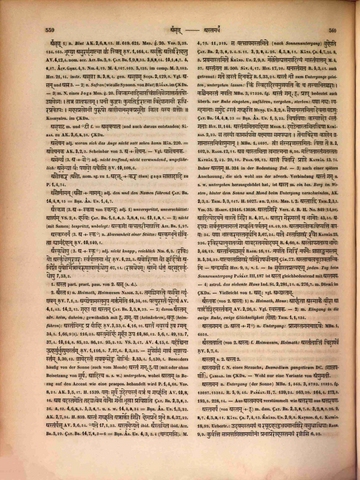
2. ásta 1〉 n. Heimath, Heimwesen NAIGH. 3,4. tama̱gnimaste̱ vasàvo̱ nyṛ̀ṇvan ṚV. 7,1,2. a̱nyeṣā̱masta̱mupa̱ naktàmeti ṚV. 10,34,10. patyu̱rastàṃ pa̱retyà AV. 4,1,43. AV. 14,2,13. gṛhā vā astam ŚAT. BR. 2,5,2,29. — 2〉 davon ástam adv. heim, daheim; gewöhnlich mit i, gam, yā (heimkehren), vah (heimführen): astàmindra̱ pra yā̀hi ṚV. 3,53,6. ṚV. 4,16,10. astàṃ nava̱svà iva gman ṚV. 34,5. ṚV. 1,66,9. (5) ṚV. 1,116,25. asta̱mehì gṛ̱hām̐ u̱pa ṚV. 10,86,12. ṚV. 5,6,1. ṚV. 5,49,12. ṚV. 7,37,4. ṚV. 10,14,8. ṚV. 10,85,33. ṚV. 10,86,21. ṚV. 10,95,2. ṚV. 10,14,13. VS. 3,47. AV. 4,15,6. yadàśvinā ū̱hathùrbhu̱jyumastàm ṚV. 1,116,5. ṚV. 7,37,6. ṚV. 8,3,23. — su̱peśàsa̱ṃ māvà sṛja̱ntyastàm ṚV. 5,30,13. jā̱yedastàṃ maghava̱nsedu̱ yonìḥ ṚV. 3,53,4. ṚV. 1,130,1. Besonders häufig von der Sonne (auch vom Monde) astaṃ gam, i, yā (mit oder ohne Beisetzung von sūrya, āditya u. s. w.) untergehen, wobei astam in Bezug auf den Accent wie eine praepos. behandelt wird P. 1,4,68. VOP. 8,21. AK. 3,5,17. H. 1539. yata̱ḥ sūryà u̱detyasta̱ṃ yatrà ca̱ gacchàti AV. 10,8,16. atha yadastameti tadagnāveva yonau garbho bhūtvā praviśati ŚAT. BR. 2,3,1,3. ŚAT. BR. 2,3,1,36. ŚAT. BR. 2,3,4,12. ŚAT. BR. 4,6,5,5. ŚAT. BR. 5,3,1,7. u. s. w. ŚAT. BR. 14,4,3,34 = BṚH. ĀR. UP. 1,5,23. AK. 2,7,54. H. 859. astaṃ gacchati yatrārko girau hemaprabhe śubhe R. 4,37,22. astaṃyánt AV. 9,6,54. ˚ya̱te AV. 17,1,23. a̱sta̱me̱ṣya̱te ibid. ástamita ibid. AIT. BR. 5,29. ŚAT. BR. 14,7,1,3—ŚAT. BR. 14,7,1,6 = BṚH. ĀR. UP. 4,3,3. BṚH. ĀR. UP. 4,3,4 (candramasi). M. 4,75. M. 11,219. sa yatsāyamastamite (nach Sonnenuntergang) juhoti ŚAT. BR. 2,3,1,2. ŚAT. BR. 2,3,1,4. ŚAT. BR. 2,3,1,9. ŚAT. BR. 2,3,1,11. ŚAT. BR. 3,2,2,4. ŚAT. BR. 3,2,2,26. ŚAT. BR. 4,5,3,11. KĀTY. ŚR. 4,7,24. KĀTY. ŚR. 4,8,3. prathamāstamite CHĀND. UP. 2,9,9. nekṣetodyantamādityaṃ nāstaṃyāntam M. 4,37. astaṃgata H. 500. SĀV. 4,17. HIT. 17,20. anastaṃgata R. 5,3,41. auch getrennt: gate tvastaṃ dinakare R. 1,33,21. astaṃ nī zum Untergange geleiten, untergehen lassen: kiṃ svidādityamunnayati ke ca tasyābhitaścarāḥ . kaścainamastaṃ nayati MBH. 3,17330. fg. astaṃ gam, i, prāp bedeutet auch überh. zur Ruhe eingehen, aufhören, vergehen, sterben: yathā nadyaḥ syandamānāḥ samudre 'staṃ gacchanti MUṆḌ. UP. 3,2,8. saiṣānastamitā devatā yadvāyuḥ ŚAT. BR. 14,4,3,33 = BṚH. ĀR. UP. 1,5,22. viṣayiṇaḥ kasyāpado 'staṃgatāḥ HIT. II, 144. astaṃgamitamahimā MEGH. 1. daṇḍenāstamitatviṣā KUMĀRAS. 2,23. sa tasyāṃ kāmasaṃpanno yakṣmaṇā samapadyata . tenācireṇa kālena jagāmāstamivāṃśumān . MBH. 1,4697. tvāṃ saṃsmarannastamitaḥ pitā te R. 2,102,9. RAGH. 12,11. atha cāstamitā tvamātmanā RAGH. 8,50. matpitāstaṃgatastataḥ KATHĀS. 2,42. KATHĀS. 20,10. PRAB. 98,13. astaṃ pitari prāpte KATHĀS. 13,74. Daher astam H. 324 in der Bedeutung Tod. — 3〉 nach einer spätern Anschauung, die sich wohl aus der adverb. Verbindung astaṃ gam u. s. w. untergehen herausgebildet hat, ist asta m. ein bes. Berg im Westen, hinter dem Sonne und Mond beim Untergang verschwinden, AK. 2,3,2. TRIK. 3,3,147. H. 1027. H. an. 2,158. MED. t. 2. astādri TRIK. 2,3,3. VID. 35. HARIV. 12416. HARIV. 13058. astagiri Verz. d. B. H. No. 849 (14,20). ādityodayane cāste girau R. 4,37,4. antarā merumastaṃ ca bhānoḥ R. 4,43,51. adṛśyaḥ sarvabhūtānāmastaṃ gacchati parvatam R. 4,37,48. R. 4,37,49. R. 4,37,59. astamālokayiṣyanti kapayaḥ R. 4,37,54. yathā bhāskaramastamūrdhani R. 3,67,24. yāte 'staśikharaṃ ravau KATHĀS. 25,236. raviradyānuyātavyo yāvadastamathodayam R. 4,60,8. astopagatasya bhānoḥ R. 3,48,19. astanimagnasūrya RAGH. 16,11. nayati giriṃ nayanaiḥ śaśāṅkamastam R. 5,34,22. yātyastaśikharaṃ patiroṣadhīnām ŚĀK. 77. astācalacūḍāvalambini — candramasi HIT. 9,5, v. l. — In sūryāstapratyaham jeden Tag beim Sonnenuntergang PAÑCAT. III, 187 ist asta gleichbedeutend mit astamaya. — 4〉 astrol. das siebente Haus Ind. St. 2,281,21. n. Ind. St. 276,7. m. DĪPIKĀ_im_ŚKDR. — Vielleicht von 1. as; vgl. abhyastam.
Originaltext · Deutsch · Worttyp nicht bestimmt
1. asta part. praet. pass. von 2. as (s. d.).
Originaltext · Deutsch · Worttyp nicht bestimmt
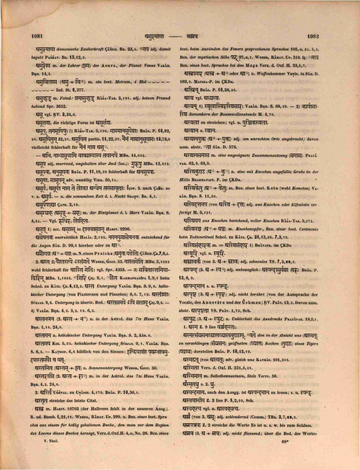
2. asta 2〉 paulastye 'staṃgate WEBER, JYOT. 55. nāstameti MBH. 5,1082 wohl fehlerhaft für cāsti meti; vgl. Spr. 4353. — 3〉 savitāstamiyādgirim MBH. 1,1883. ˚giri ŚIŚ. 9,1. ˚śaila KARMAPRADĪPA 1,9,1 beim Schol. zu KĀTY. ŚR. 4,13,5. asta Untergang VARĀH. BṚH. S. 9,8. heliakischer Untergang (von Fixsternen und Planeten) VARĀH. BṚH. S. 6,6. VARĀH. BṚH. S. 7,19. astāṃśāḥ SŪRYAS. 9,6. Untergang in übertr. Bed.: astasamaye 'pi satām ŚIŚ. 9,5. — 4〉 VARĀH. BṚH. 4,9. VARĀH. BṚH. 5,2. VARĀH. BṚH. 5,15. VARĀH. BṚH. 6,3.
Böhtlingk 1879 Substantiv Maskulin · Substantiv Neutrum
Originaltext · Deutsch · Substantiv Maskulin · Substantiv Neutrum
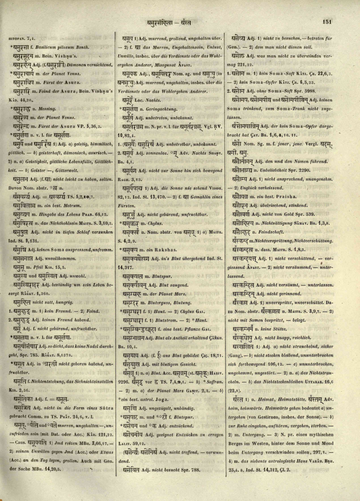
ásta — 1〉 n. Heimat, Heimatstätte. ástam Adv. heim, heimwärts. Heimwärts gehen bedeutet a〉 untergehen (von Gestirnen, insbes. der Sonne). b〉 zur Ruhe eingehen, aufhören, vergehen, sterben. — 2〉 m. Untergang. — 3〉 N. pr. eines mythischen Berges im Westen, hinter dem Sonne und Mond beim Untergang verschwinden sollen Chr. 297,1. — 4〉 m. das siebente astrologische Haus VARĀH. BṚH. 25,4. 8. Ind. St. 14,312, Śl. 2.
Apte 1890 Adjektiv · Substantiv Maskulin · Substantiv Neutrum · Worttyp nicht bestimmt
Originaltext · Englisch · Adjektiv
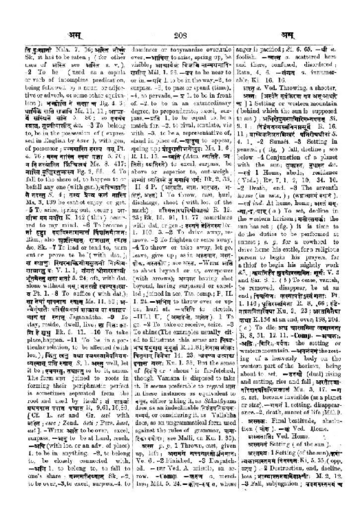
asta p. p. 1 Thrown, cast, given up, left; asamaye yattvayāsto'bhimānaḥ Ve. 6. 2 Finished. 3 Despatched. — stā Ved. A missile, an arrow. Comp. — karuṇa a. merciless; Māl. 5. 24. — kopa, -ruṣ a. whose ([Page 0208-c]) anger is pacified; Śi. 6. 65. — dhī a. foolish. — vyasta a. scattered here and there, confused, disordered; Ratn. 4. 6. — saṃkhya a. innumerable; Ki. 16. 16.
Originaltext · Englisch · Substantiv Maskulin · Substantiv Neutrum
astaḥ [asyaṃte sūryakiraṇā yatra as-ādhāre kta] 1 Setting or western mountain (behind which the sun is supposed to set); adhiroḍhumastagirimabhyapatat Śi. 9. 1; viḍaṃbayatyastanimagnasūryaṃ R. 16. 11; yātyekatostaśikharaṃ patiroṣadhīnāṃ Ś. 4. 1. 2 Sunset. 3 Setting in general; (fig.) fall, decline; see below. 4 Conjunction of a planet with the sun: śakrāsta, budhāsta &c. — staṃ 1 Home, abode, residence (Ved.); Rv. 7. 1. 2, Rv. 10. 34. 10. 2 Death, end. 3 The seventh house (in astr.); (lagnātsaptamaṃ sthānaṃ). — staṃ ind. At home, home; astaṃ gam, — yā, -i, -prāp (a) To set, decline in the western horizon; gatostamarkaḥ the sun has set; (fig.) it is time to do the duties to be performed at sunset; e. g. for a cowherd to drive home his cattle, for a religious person to begin his prayers, for a thief to begin his nightly work &c.; kathamihavai yuvayorastamitaḥ sūryaḥ V. 3 and Sarva. S. 1. (b) To cease, vanish, be removed, disappear, be at an end; viṣayiṇaḥ kasyāpado'staṃ gatāḥ Pt. 1. 146; dhṛtirastamitā R. 8. 66; daṃḍenāstamitatviṣā Ku. 2. 23; astamitaiṣā kathā K. 156 at an end, over; K. 198, K. 204. (c) To die; atha cāstamitā tvamātmanā R. 8. 51, R. 12. 11. Comp. — acalaḥ, — adriḥ, -giriḥ, -parvataḥ the setting or western mountain. — avalaṃbanaṃ the resting of a heavenly body on the western part of the horizon, being about to set. — udayau (dual) rising and setting, rise and fall; astodayāvadiśadapravibhinnakālaṃ Mu. 3. 17. — ga a. set, become invisible (as a planet or star). — gamanaṃ 1 setting, disappearance. 2 death, sunset of life; Māl. 9.
Originaltext · Englisch · Worttyp nicht bestimmt
asta, astu &c. see under as.
Cappeller 1887 Substantiv Maskulin · Substantiv Neutrum
Originaltext · Deutsch · Substantiv Maskulin
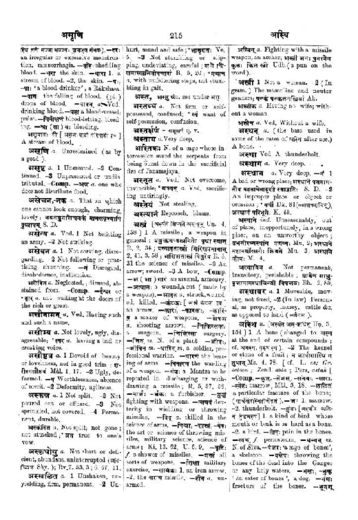
2. ásta m. Untergang, der mythische Untergangsberg (für Gestirne; vgl. udaya).
Originaltext · Deutsch · Substantiv Neutrum
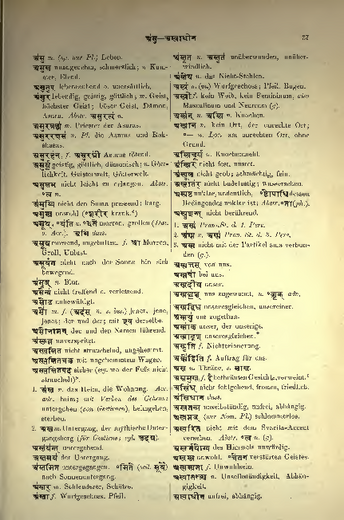
1. ásta n. das Heim, die Wohnung, Acc. adv. heim; mit Verben des Gehens: untergehen (von Gestirnen), heimgehen, sterben.
Burnouf 1866 Substantiv Neutrum
Originaltext · Französisch · Substantiv Neutrum
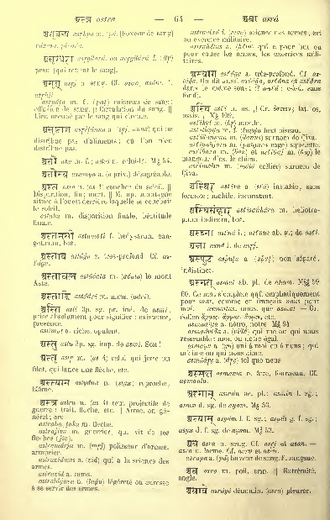
asta asta n. (as 1) coucher du soleil. Disparition, fin; mort. M. np. montagne située à l'ouest derrière laquelle se couchait le soleil. astaka m. disparition finale, béatitude finale.
Quelltextfundstellen (1)
SiSa 1 Fundstelle
Mit AYI Free weitermachen
Bildquelle: AYI Archiv.