

mātaṅga मातङ्ग – Elefant
Substantiv Maskulin · Worttyp nicht bestimmt
Wörterbuchquellen
AYI Wörterbuch Substantiv Maskulin
Elefant
Cappeller 1891 Substantiv Maskulin
Originaltext · Englisch · Substantiv Maskulin
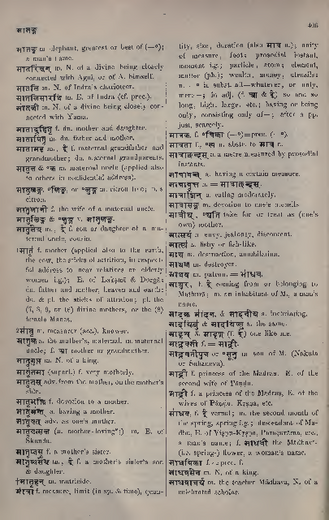
mātaṅga ·m. elephant, greatest or best of (--°); a man's name.
Monier-Williams 1872 Substantiv Maskulin
Originaltext · Englisch · Substantiv Maskulin
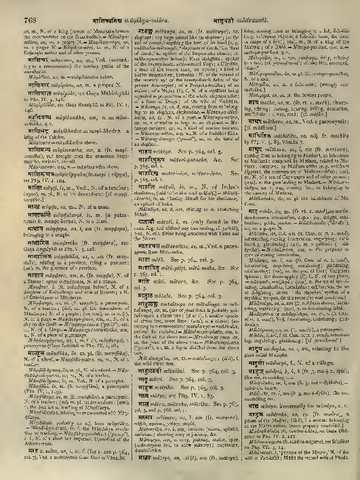
mātaṅga mātaṅga, as, m. (fr. mataṅga), an elephant; any large animal like an elephant; (at the end of comps.) anything the best of its kind (e. g. valāhaka-mātaṅgās, ‘elephants of clouds,’ i. e. ‘best of clouds,’ an epithet of the Saṃvartaka clouds; cf. mātaṅga-nakra below); Ficus Religiosa; epithet of the twenty-fourth astronomical Yoga; a Cāṇḍāla, a man of the lowest rank, an outcast; a kind of Kirāta mountaineer, barbarian; N. of the servant of the seventh and of the twenty-fourth Arhat of the present Ava-sarpiṇī; of a Pratyeka-buddha; of an author; of a Nāga; (ī), f., N. of a mythical being regarded as progenitress of the whole elephant tribe; of a form of Durgā; of the wife of Vasiṣṭha.
Petersburger 1855 Substantiv Maskulin · Worttyp nicht bestimmt
Originaltext · Deutsch · Substantiv Maskulin
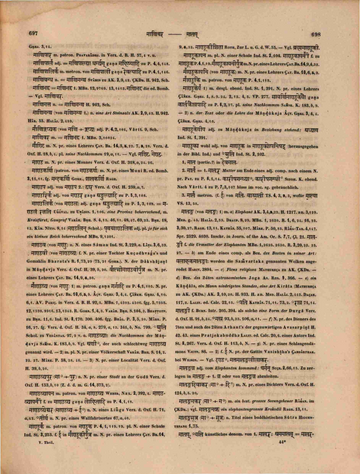
mātaṅga (von mataṅga) 1〉 m. a〉 Elephant AK. 3,4,3,22. H. 1217. H. an. 3,129. MED. g. 45. HALĀY. 2,59. DRAUP. 8,29. MBH. 1,2630. R. 1,6,24. R. 1,16,25. R. 3,30,27. RAGH. 13,11. KATHĀS. 55,107. MĀRK. P. 50,85. RĀJA-TAR. 4,147. Spr. 2529. Spr. 4030. Inschr. in Journ. of the Am. Or. S. 7,7, Śl. 21. mātaṅgī f. die Urmutter der Elephanten MBH. 1,2625. MBH. 1,2630. R. 3,20,23. R. 3,20,25. R. 3,20,27. — b〉 am Ende eines comp. als Bez. des Besten in seiner Art: valāhakamātaṅgāḥ werden die Saṃvartaka genannten Wolken angeredet HARIV. 3894. — c〉 Ficus religiosa MATHUREŚA_zu_AK. ŚKDR. — d〉 Bez. des 24ten astronomischen Yoga As. Res. 9,366. — e〉 ein Kāṇḍāla, ein Mann niedrigsten Standes, eine Art Kirāta (MATHUREŚA_zu_AK. ŚKDR.) AK. 2,10,20. H. 933. H. an. MED. HALĀY. 2,443. DAŚAK. 117,2. LALIT. ed. Calc. 22,15. ˚pati KATHĀS. 71,11. KATHĀS. 73,2. ˚rāja KATHĀS. 71,14. mātaṅgī f. BURN. Intr. 205. BURN. Intr. 394. als solche eine Form der Durgā Verz. d. Oxf. H. 91,b,34. ˚mantra Verz. d. Oxf. H. 93,b,33. Verz. d. Oxf. H. 106,a,11. — f〉 N. pr. des Dieners des 7ten und auch des 24ten Arhantʼs der gegenwärtigen Avasarpiṇī H. 42. H. 43. eines Pratyekabuddha LALIT. ed. Calc. 20,6. eines Autors Ind. St. 8,267. Verz. d. Oxf. H. 113,b, N. — g〉 N. pr. eines Schlangendämons VYUTP. 86. — 2〉 f. ī N. pr. der Gattin Vasiṣṭhaʼs ŚABDĀRTHAK._bei_WILSON. — Vgl. daṇḍa˚, mattamātaṅgalīlākara.
Originaltext · Deutsch · Worttyp nicht bestimmt
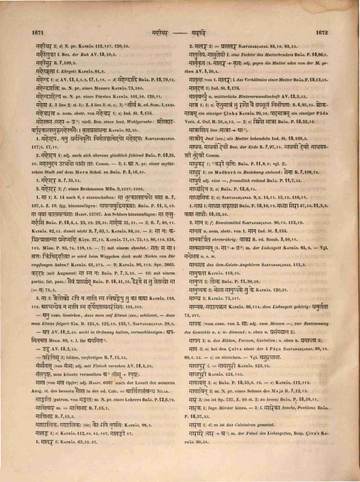
mātaṅga 1〉e〉 KATHĀS. 112,80. KATHĀS. 112,82. KATHĀS. 112,107. mātaṅgī 87.
Böhtlingk 1879 Substantiv Maskulin
Originaltext · Deutsch · Substantiv Maskulin
mātaṅga — 1〉 m. — a〉 Elephant. — b〉 am Ende eines Comp. so v. a. der Beste in seiner Art. mātaṅga˚ BĀLAR. 201,8. — c〉 *Ficus religiosa. — d〉 der 24ste astronomische Yoga. — e〉 ein Caṇḍāla (KĀD. 2,128,2. ˚kumārī f. KĀD. 1,8,21. Nom. abstr. ˚tva n. Chr. 10,20), ein Mann niedrigsten Standes, eine Art Kirāta. — f〉 N. pr. — α〉 *eines Schlangendämons. — β〉 eines Pratyekabuddha. — γ〉 eines Autors und verschiedener anderer Männer. — 2〉 f. ī — a〉 die Urmutter der Elephanten. — b〉 f. zu 1〉e〉. Als solche ein Form der Durgā. — c〉 *N. pr. der Gattin Vasiṣṭhaʼs.
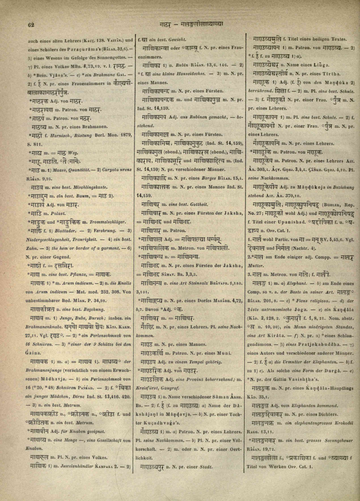
Cappeller 1887 Substantiv Maskulin
Originaltext · Deutsch · Substantiv Maskulin
mātaṅga m. Elefant, grösster o. bester von (—˚); Mannsname.
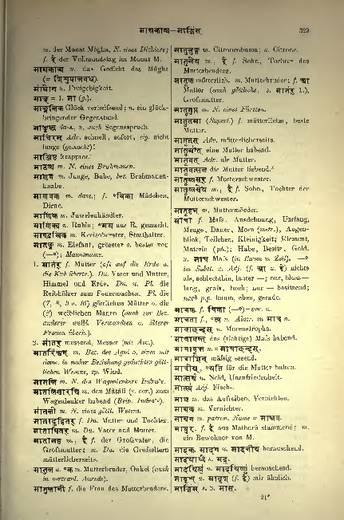
Burnouf 1866 Substantiv Maskulin
Originaltext · Französisch · Substantiv Maskulin
mātaṅga mātaṅga m. (mataṅga) éléphant. Montagnard, barbare; homme de caste vile, caṇḍāla. Ficus religiosa, bot. — F. [ī] Pārvatī; la femme de Vasiṣṭha.
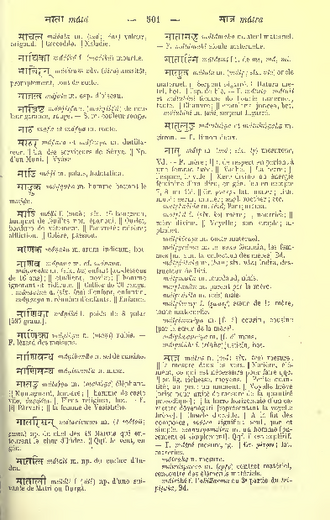
Quelltextfundstellen (3)
HP 1 Fundstelle
Mit AYI Free weitermachen
Bildquelle: AYI Archiv.