

puṣpa पुष्प – Blüte; Blume
Substantiv Maskulin · Substantiv Neutrum · Worttyp nicht bestimmt
Wörterbuchquellen
AYI Wörterbuch Substantiv Neutrum
Blüte; Blume
Cappeller 1891 Substantiv Neutrum
Originaltext · Englisch · Substantiv Neutrum
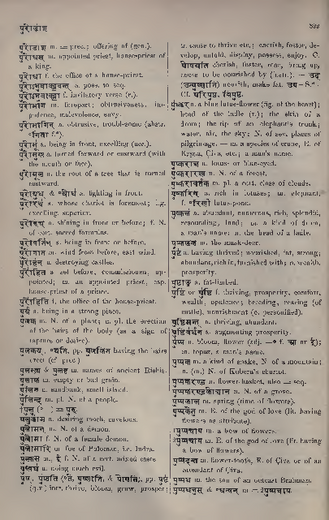
púṣpa ·n. bloom, flower (adj. --° f. ā or ī); m. topaz, a man's name.
Monier-Williams 1872 Substantiv Neutrum
Originaltext · Englisch · Substantiv Neutrum
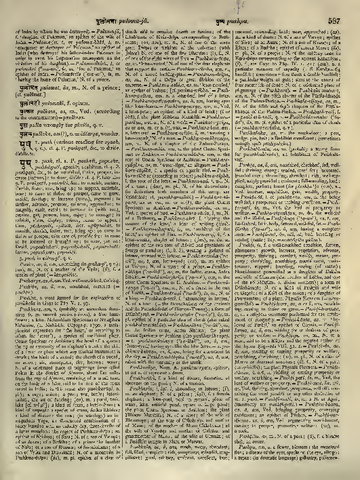
Puṣpa, am, n. a flower, blossom; the menstrual flux; a disease of the eyes, specks on the eye, albugo; a topaz; (in dramatic language) gallantry, politeness, declaration of love; blossoming, blooming, expanding, expansion; the vehicle or car of Kuvera [cf. puṣ- paka]; a kind of perfume; N. of a Sāman; (as), m., N. of a serpent-demon; of a son of Śliṣṭi; of a son of Śaṅkha; of a Bodhi-sattva (?); of a moun- tain; (ā), f. a N. of the town Campā (or the capital of Karṇa; it was in Aṅga and is identified with the modern Bhāgalpur).
Petersburger 1855 Substantiv Maskulin · Substantiv Neutrum · Worttyp nicht bestimmt
Originaltext · Deutsch · Substantiv Maskulin · Substantiv Neutrum
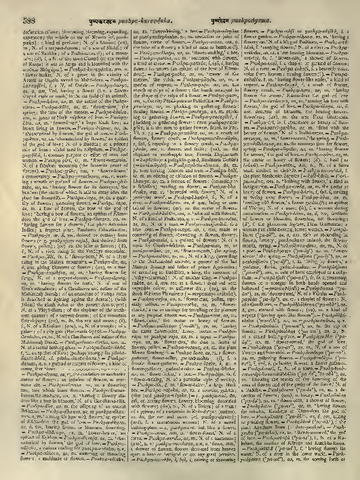
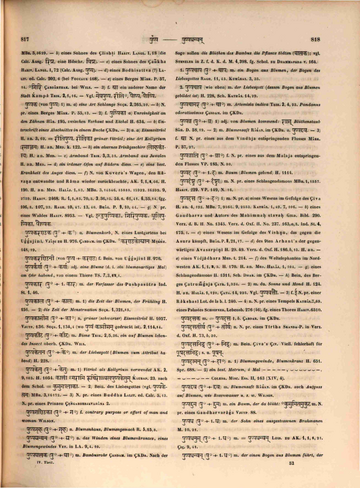
púṣpa (von 1. puṣ) 1〉 n. SIDDH. K. 249,a,11. a〉 Blüthe, Blume AK. 2,4,1,17. TRIK. 3,3,277. H. 1125. H. an. 2,297. MED. p. 9. HALĀY. 2,31. AV. 8,7,12. VS. 22,28. ŚAT. BR. 14,9,4,1. PAÑCAV. BR. 8,4,1. PAÑCAV. BR. 15,3,23. CHĀND. UP. 3,1,2. a̱pām AV. 10,8,34. TBR. 3,7,14,2. a̱pāṃ vā e̱tatpuṣpa̱ṃ yadvèta̱saḥ TS. 5,4,4,2. LĀṬY. 2,11,8. LĀṬY. 3,2,8. lóhita˚, aruṇá adj. ŚAT. BR. 4,5,10,2. ŚĀṄKH. ŚR. 13,6,2. KAUŚ. 10. M. 1,46. M. 4,250. M. 5,10. M. 5,157. SUND. 4,9. N. 13,3. N. 23,14. R. 1,9,6. R. 1,51,23. SUŚR. 1,219,7. SUŚR. 1,223,6. puṣpaphalavant SUŚR. 4,17. RAGH. 2,13. ŚĀK. 43. VID. 105 Am Ende eines adj. comp. f. ā MBH. 1,1307. HARIV. 3600. R. 2,92,22. R. 5,16,37. Ist das comp. N. einer Pflanze, so lautet das f. gewöhnlich auf ī́, seltener auf ā aus, P. 4,1,64 und Vārtt. P. 4,1,1. VOP. 4,15; vgl. aṇḍakoṭarapuṣpī, adhaḥ˚, avāk˚, kāñcana˚, indrapuṣpā und ˚puṣpī, pītapuṣpā und ˚puṣpī, iṣupuṣpā, dhūmaka˚. — b〉 Menstrualblut, les fleurs AK. 2,6,1,31. TRIK. H. 536. H. an. MED. SUŚR. 2,217,5. ˚kāla SUŚR. 1,321,15. strī˚ AK. 3,4,30,233. strīṇāṃ puṣpam MĀRK. P. 51,42. Diese Bedeutung ist viell. im gaṇa devapathādi zu P. 5,3,100 (pratikṛtau saṃjñāyām) gemeint. — c〉 eine best. Krankheit des Auges, albugo SUŚR. 2,277,4. H. an. — d〉 in der Stelle: puṣpārkaketakābhāḥ (acalendrasya deśāḥ) R. 2,94,6 nach dem Schol. = puṣparāga Topas. — e〉 in der Dramatik Galanterie, Artigkeit, Liebeserklärung, fleurettes PRATĀPAR. 21,b,3. PRATĀPAR. 33,b,5. DAŚAR. 1,32. Vgl. vākpuṣpairarcitām (devīm) HARIV. 10234. — f〉 das Aufblühen, = vikāsa H. an. MED. (wo mit ŚKDR. vikāśa zu lesen ist). — g〉 = puṣpaka Kuveraʼs Wagen H. an. — h〉 = barhipuṣpa eine Art Parfum COLEBR. und LOIS._zu_AK. 2,4,4,20. — i〉 N. eines Sāman PAÑCAV. BR. 15,3,22. LĀTY. 7,8,15. vairūpam Ind. St. 3,238,a. — 2〉 m. N. pr. a〉 eines Schlangendämons MBH. 5,3629. — b〉 eines Sohnes des Śliṣṭi HARIV. LANGL. I, 18 (die Calc. Ausg. ripra, eine Hdschr. vipra). — c〉 eines Sohnes des Śaṅkha HARIV. LANGL. I, 72 (Calc. Ausg. puṣya). — d〉 eines Bodhisattva (?) LALIT. ed. Calc. 202,6 (bei FOUCAUX 168). — e〉 eines Berges MĀRK. P. 57,14. ˚giri ŚABDĀRTHAK._bei_WILS. — 3〉 f. ā ein anderer Name der Stadt Campā TRIK. 2,1,16. — Vgl. meghapuṣpa, rīti˚, pauṣpa, pauṣpi.
Originaltext · Deutsch · Worttyp nicht bestimmt
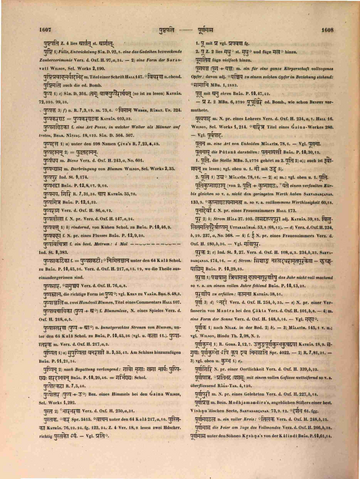
puṣpa 1〉e〉 SĀH. D. 361. (tam) vākpuṣpairārcayat (so ist zu lesen) KATHĀS. 72,395. KATHĀS. 99,38.
Böhtlingk 1879 Substantiv Maskulin · Substantiv Neutrum · Worttyp nicht bestimmt
Originaltext · Deutsch · Substantiv Maskulin · Substantiv Neutrum
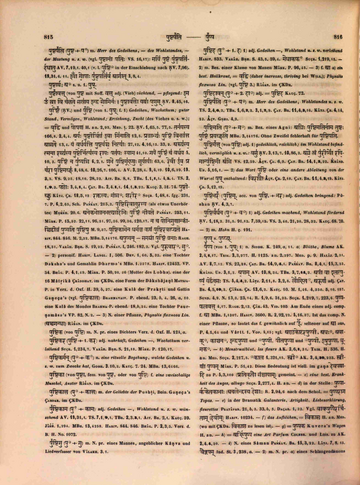
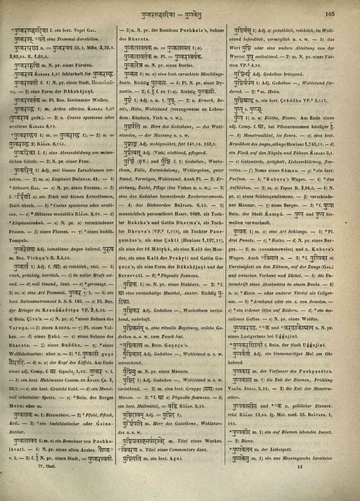
púṣpa — 1〉 n. — a〉 Blüthe, Blume. Am Ende eines adj. Comp. f. ā bei Pflanzennamen häufiger ī — b〉 Menstrualblut, les fleurs. — c〉 eine best. Krankheit des Auges, albugo HEMĀDRI 1,745,11. — d〉 ein Fleck auf den Nägeln und Zähnen CARAKA. 5,1. — e〉 Galanterie, Artigkeit, Liebeserklärung, fleurettes. — f〉 Name eines Sāman. — g〉 *ein best. Parfum. — h〉 *Kuberaʼs Wagen. — i〉 *das Aufblühen. — 2〉 m. — a〉 Topas R. 2,94,6 — b〉 N. pr. — α〉 eines Schlangendämons. — β〉 verschiedener Männer. — γ〉 eines Berges. — 3〉 *f. puṣpā Bein. der Stadt Campā. — puṣpa und puṣya bisweilen verwechselt.
Originaltext · Deutsch · Worttyp nicht bestimmt
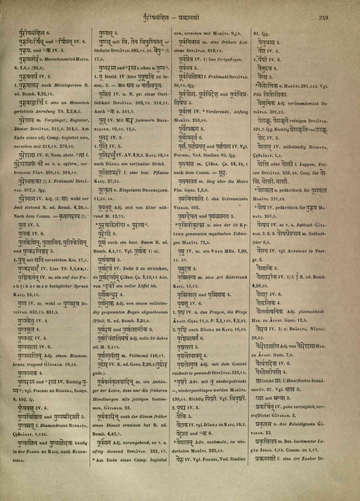
puṣpa IV. m. wohl = puṣpasūtra DIVYĀVAD. 632,15. DIVYĀVAD. 651,9. [Nachtrag, Band 7]
Apte 1890 Substantiv Neutrum
Originaltext · Englisch · Substantiv Neutrum
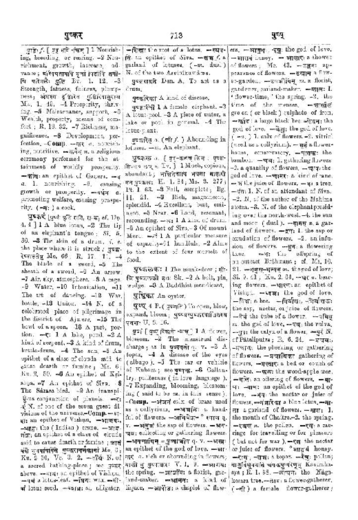
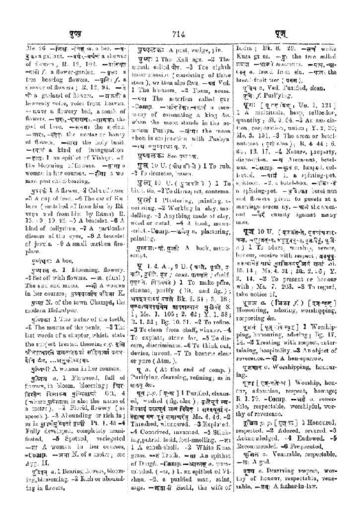
puṣpaṃ [puṣp vikāśe-ac] 1 A flower, blossom. 2 The menstrual discharge; as in puṣpavatī q. v. 3 A topaz. 4 A disease of the eyes (albugo). 5 The car or vehicle of Kubera; see puṣpaka. 6 Gallantry, politeness (in love language). 7 Expanding, blooming, blossoming (said to be m. in this sense). Comp. — aṃjanaṃ calx of brass used as a collyrium. — aṃjaliḥ a handful of flowers. — abhiṣeka = ˚snāna q. v. — aṃbujaṃ the sap of flowers. — avacayaḥ collecting or gathering flowers. — avacāyin = puṣpājīva q. v. — astraḥ an epithet of the god of love. — ākara a. rich or abounding in flowers; māso nu puṣpākaraḥ V. 1. 9. — āgamaḥ the spring. — ājīvaḥ a florist, garland-maker. — ānanaḥ a kind of liquor. — āpīḍaḥ a chaplet of ([Page 0713-c]) flowers. — āyudhaḥ, -iṣuḥ the god of love. — āsavaṃ honey. — āsāraḥ a shower of flowers; Me. 43. — udramaḥ appearance of flowers. — udyānaṃ a flower-garden. — upajīvin m. a florist, gardener, garland-maker. — kālaḥ 1 ‘flower-time,’ the spring. 2 the time of the menses. — kāsīsaṃ green (or black) sulphate of iron. — kīṭaḥ a large black bee. — ketanaḥ the god of love. — ketuḥ the god of love. ( — n.) 1 calx of flowers. 2 vitriol (used as a collyrium). — gṛhaṃ a flowerhouse, conservatory. — ghātakaḥ the bamboo. — cayaḥ 1 gathering flowers 2 a quantity of flowers. — cāpaḥ the god of love. — cāmaraḥ a kind of cane. — jaṃ the juice of flowers. — daḥ a tree. — daṃtaḥ 1 N. of an attendant of Śiva. 2 N. of the author of the Mahimna stotra. 3 N. of the elephant presiding over the north-west. 4 the sun and moon (dual). — dāman n. a garland of flowers. — dravaḥ 1 the sap or exudation of flowers. 2 an infusion of flowers. — drumaḥ a flowering tree. — dhaḥ the offspring of an outcast Brāhmaṇa; cf. Ms. 10. 21. — dhanus, -dhanvan m. the god of love; Śi. 9. 41; Ku. 2. 64. — dhara a. bearing flowers. — dhāraṇaḥ an epithet of Viṣṇu. — dhvajaḥ the god of love. — nikṣaḥ a bee. — niryāsaḥ, -niryāsakaḥ the sap, nectar, or juice of flowers. — netraṃ the tube of a flower. — patrin m. the god of love. — pathaḥ the vulva. — puṭaḥ the calyx of a flower. — puraṃ N. of Pātaliputra; R. 6. 24. — pracayaḥ, — pracāyaḥ the plucking or gathering of flowers. — pracāyikā gathering of flowers. — prastāraḥ a bed or couch of flowers. — phalaḥ the wood-apple tree. — baliḥ an offering of flowers. — bāṇaḥ -vāṇaḥ an epithet of the god of love. — bhavaḥ the nectar or juice of flowers. — maṃjarikā a blue lotus. — mālā a garland of flowers. — māsaḥ 1 the month of Chaitra, 2 the spring. — rajas n. the pollen. — rathaḥ a carriage for travelling or for pleasure (but not for war). — rasaḥ the nectar or juice of flowers. ˚āhvayaṃ honey. — rāgaḥ, -rājaḥ a topaz. — reṇuḥ pollen; vāyurvidhūtayati caṃpakapuṣpareṇūt Kavirahasya; R. 1. 38. — locanaḥ the Nāgakeśara tree. — lāvaḥ a flower-gatherer. — (vī) a female flower-gatherer; ([Page 0714-a]) Me. 26 — likṣaḥ -lih m. a bee. — vaṭukaḥ a gallant. — varṣaḥ, -varṣaṇaṃ a shower of flowers; R. 12. 102. — vāṭikā — vāṭī f. a flower-garden. — vṛkṣaḥ a tree bearing flowers. — vṛṣṭiḥ f. a shower of flowers; R. 12. 94. — ve ṇī a garland of flowers. — śakraṭī a heavenly voice, voice from heaven. — śayyā a flowery bed, a couch of flowers. — śaraḥ, -śarāsanaḥ, -sāyakaḥ the god of love. — samayaḥ the spring. — sāraḥ, -svedaḥ the nectar or honey of flowers. — sārā the holy basil. — snānaṃ a kind of inauguration. — hāsaḥ 1 an epithet of Viṣṇu. 2 the blooming of flowers. — hāsā a woman in her courses. — hīnā a woman past child-bearing.
Cappeller 1887 Substantiv Neutrum
Originaltext · Deutsch · Substantiv Neutrum
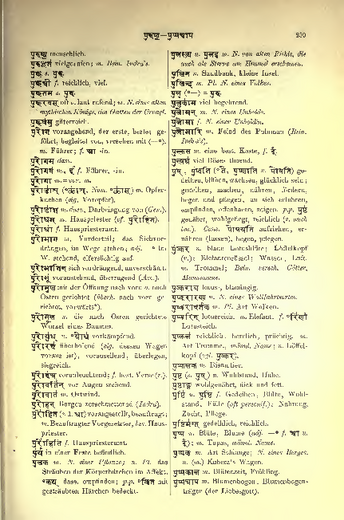
puṣpa n. Blüte, Blume (adj. —˚ f. ā u. ī); m. Topas, männl. Name.
Burnouf 1866 Substantiv Neutrum
Originaltext · Französisch · Substantiv Neutrum
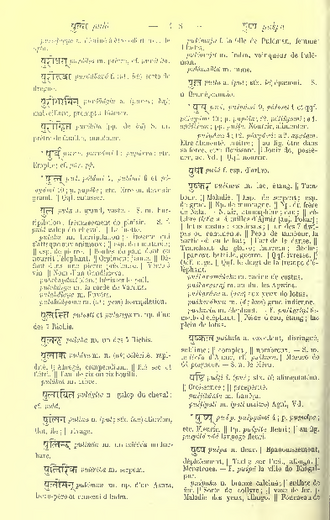
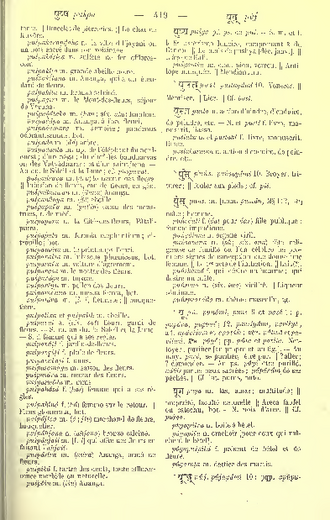
puṣpa puṣpa n. fleur. Epanouissement, déploiement. Tache sur l'œil, albugo. Menstrues. — F. puṣpā la ville de Bhâgalpur. puṣpaka n. bronze calciné; sulfate de fer. Sorte de collyre; vase de fer. Maladie des yeux, albugo. Fourneau de [Page419-1] terre. Bracelet de pierreries. Le char de Kuvera. puṣpakaraṇḍaka n. la ville d'Ujjayanī ou un bois sacre dans son voisinage. puṣpakāsīśa n. sulfate de fer efflorescent. puṣpakīṭa m. grande abeille noire. puṣpaketana m. Anaṅga, qui a un étendard de fleurs. puṣpaketu m. bronze calciné. puṣpagiri m. le Mont-des-fleurs, séjour de Varuṇa. puṣpaghātaka m. (han; sfx. aka) bambou. puṣpacāpa m. Anaṅga, à l'arc fleuri. puṣpacāmara m. armoise; pandanus odorantissimus, bot. puṣpada m. (dā) arbre. puṣpadanta m. np. de l'éléphant du nordouest; d'un nāga; du chef des Gandharvas ou des Vidyādharas; et d'un saint jaina. — Au du. le Soleil et la Lune; cf. puṣpavat. puṣpadrava m. (dru) le nectar des fleurs. Infusion de fleurs, eau de fleurs, en gén. puṣpadhanvan m. (dhanu) Anaṅga. puṣpandhaya m. (dhe) abeille. puṣpapatha m. (pathin) canal des menstrues, t. de méd. puṣpapura n. la Cité-des fleurs, Pāṭaliputra. puṣpaphala m. feronia elephantium; citrouille; bot. puṣpamāsa m. le printemps fleuri. puṣparakta m. hibiscus phœniceus, bot. puṣparatha m. voiture d'agrément. puṣparasa m. le nectar des fleurs. puṣparāga m. topaze. puṣpareṇu m. pollen des fleurs. puṣparocana m. mesua ferrea, bot. puṣpalāva m. [f. ī] fleuriste; bouquetière. puṣpalikṣa et puṣpalih m. abeille. puṣpavat a. (sfx. vat) fleuri, garni de fleurs. — S. m. au du. le Soleil et la Lune. — S. f. femme qui a ses règles. puṣpavāṭī f. jardin-de-fleurs. puṣpavṛṣṭi f. pluie de fleurs. puṣpaśakaṭī f. mms. puṣpasamaya m. saison des fleurs. puṣpasāra m. nectar des fleurs. puṣpasveda m. mms. puṣpahāsā f. (has) femme qui a ses règles. puṣpahīnā f. (hā) femme sur le retour. Ficus glomerata, bot. puṣpājīva m. (ā; jīv) marchand de fleurs, bouquetier. puṣpāñjana n. (añjana) bronze calciné. puṣpāñjali m. [f. ī] qui offre des fleurs en faisant l'añjali. puṣpāstra m. (astra) Anaṅga, armé de fleurs. puṣpikā f. tartre des dents, toute efflorescence morbide ou naturelle. puṣpeṣu m. (iṣu) Anaṅga.
Quelltextfundstellen (1)
VBT 1 Fundstelle
Mit AYI Free weitermachen
Bildquelle: AYI Archiv.