

tārā तारा – Stern; Pupille
Substantiv Feminin
Wörterbuchquellen
AYI Wörterbuch Substantiv Feminin
Stern; Pupille
Petersburger 1855 Substantiv Feminin
Originaltext · Deutsch · Substantiv Feminin
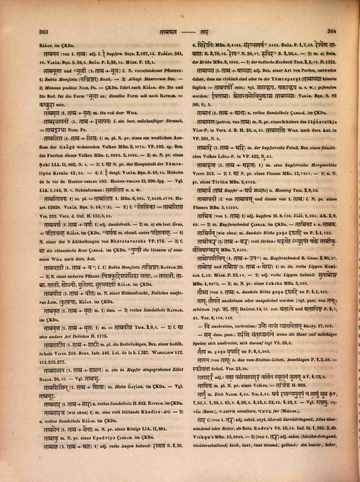
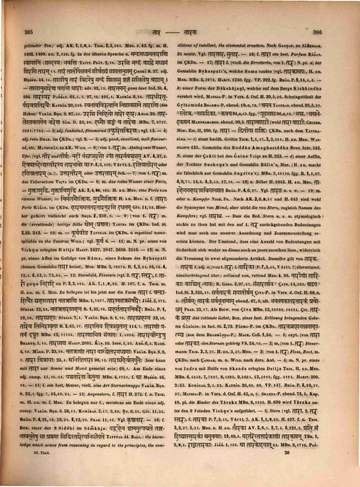
tāra 1〉 (von 1. tar) adj. subst. oxyt. überall durchdringend, Alles überwindend oder Retter, als Bein. Rudraʼs VS. 16,40. Ind. St. 1,385. Ind. St. 2,40. Viṣṇuʼs MBH. 13,6986. — 2〉 (von 1. tar) adj. subst. (hinüberdringend, hinüberschallend) hoch, laut, laut tönend, gellend; ein lauter, hoher, gellender Ton; adj. AK. 1,1,7,2. TRIK. 3,3,351. MED. r. 43. fg. m. H. 1402. H. 1409. H. an. 2,426. fg. In der älteren Sprache n. mandramadhyamatārāṇi sthānāni (śabdasya) bhavanti TAITT. PRĀT. 2,10. urasi mandraṃ kaṇṭhe madhyamaṃ śirasi tā̱ram TAITT. PRĀT. 2,11. tāraṃ tārtīyasavanaṃ śīrṣaṇyaṃ jāgatānugam ŚIKṢĀ 8. ŚIKṢĀ 37. adj. MṚCCH. 44,14. tālīṣu tāraṃ viṭapeṣu mandraṃ śilāsu rūkṣaṃ salileṣu caṇḍam . — tālānusāreṇa patanti dhārāḥ adv. MṚCCH. 92,13. tāratamam ganz laut Ind. St. 4,104. tārasvara PAÑCAT. 64,4. PAÑCAT. 64,5. PAÑCAT. 97,19. PAÑCAT. 101,1. KATHĀS. 6,58. tāradhīratūryāravapratiravaiḥ KATHĀS. 20,226. svabhāvavirutāni niśāvasāne tārāṇi (des Hahns) VARĀH. BṚH. S. 87,34. urasi nihito tāro hāraḥ AMAR. 28. tāralolavalayena kareṇa SĀH. D. 55,20. dadhmau śaṅkhaṃ ca tāreṇa MBH. 7,6737. MBH. 7,3881. MBH. 7,7783. — 3〉 adj. funkelnd, flimmernd (sphuritakiraṇa); vgl. MBH. 7,13. — 4〉 adj. rein DHAR._im_ŚKDR.; vgl. 8. — 5〉 adj. good, excellent, well flavoured, etc. MATHURĀN._zu_AK. WILS. — 6〉 (von 1. tar) m. Abstieg zum Wasser, Ufer, (vgl. tīra und tīrtha)ḥ na̱dīṃ yàntvapsa̱raso̱ 'pāṃ tā̱ramàvaśva̱sam AV. 4,37,3. dikśabdebhyastīrasya tārabhāvo vā P. 6,3,109, Vārtt. 1. dakṣiṇatīram oder dakṣiṇatāram (n.!), uttaratīram oder uttaratāram Sch. — 7〉 (von 1. tar) m. das Uebersetzen VIŚVA_im_ŚKDR. — 8〉 m. das reine Wasser einer Perle, = muktāśuddhi, muktāviśuddhi AK. 3,4,25,168. H. an. MED. eine Perle von reinem Wasser, = nirmalamauktika, śuddhamauktika H. an. MED. n. f. (tārā) Perle RĀJAN._im_ŚKDR. hāramamalataratāramurasi dadhatam GĪT. 11,25. Hierher gehört vielleicht auch SUŚR. 2,259,6. — 9〉 (von 1. tar) m. die (errettende) heilige Silbe om (praṇava) TANTRA_im_ŚKDR. Ind. St. 2,55. Ind. St. 2,315. — 10〉 m. = kūrcavīja TANTRAS._im_ŚKDR. a mystical monosyllable in the Tantras WILS.; vgl. kūrca 8. — 11〉 m. N. pr. eines von Viṣṇu erlegten Daitya HARIV. 2427. HARIV. 2647. HARIV. 2650. HARIV. 3116. — 12〉 m. N. pr. eines Affen im Gefolge von Rāma, eines Sohnes des Bṛhaspati (dessen Gemahlin tārā heisst), MED. MBH. 3,16372. R. 1,3,24. R. 1,16,12. R. 4,13,4. R. 6,13,3. R. 6,75,64. — 13〉 Sternbild, Fixstern (vgl. 2. tar, star), f. tārā́ gaṇa bhidādi zu P. 3,3,104. AK. 1,1,2,22. H. 107. f.n. TRIK. m. H. an. m.f. MED. Zu belegen ist bis jetzt nur die Form tārā f. candrādityau grahāstārā nakṣatrāṇi MBH. 1,7677. tārānakṣatrasaṃcāraiḥ YĀJÑ. 3,172. SŪRYAS. 12,28. nakṣatratārāgahana R. 1,35,16. graharkṣatārānikaraiḥ BHĀG. P. 1,19,30. tārāgrahāḥ SŪRYAS. 7,1. VARĀH. BṚH. S. 1,10. tārāgrahasya VARĀH. BṚH. S. 33,18. tāreva timirāvṛtā R. 2,65,17. tārāmiva divaścyutām R. 2,114,7. tārāṇāṃ patanaṃ dṛṣṭvā MBH. 12,11134. tārāṇāmiva saṃpātaḥ MBH. 1,4096. tārāravīnduṣu BHARTṚ. 1,14. tārāgaṇa HARIV. 2661. CĀṆ. 10. INDR. 1,33. ARJ. 6,5. RAGH. 4,19. MĀRK. P. 23,98. nakṣatrāṇāṃ tārā yāmyottaramadhyamāḥ VARĀH. BṚH. S. 9,5. tārā citrāyāḥ VARĀH. BṚH. S. 25,4. abhijittārā VARĀH. BṚH. S. 96,15. tārāgrahairbalayutaiḥ (hier kann mit tārā nur Sonne und Mond gemeint sein) VARĀH. BṚH. S. 69,1. Am Ende eines adj. comp. VARĀH. BṚH. S. 11,19. VARĀH. BṚH. S. 11,21. pañcatāreṇa ketunā MBH. 4,1751. f. ā MṚCCH. 46,18. — 14〉 f. ein best. Meteor, viell. eine Art Sternschnuppe VARĀH. BṚH. S. 32,1. fgg. VARĀH. BṚH. S. 32,7. VARĀH. BṚH. S. 45,86. fgg. VARĀH. BṚH. S. 45,94. — 15〉 Augenstern, f. tārā H. 575. f.n. TRIK. m. H. an. m.f. MED. Zu belegen nur f., meistens am Ende eines adj. comp. VARĀH. BṚH. S. 58,11. KUMĀRAS. 3,47. KUMĀRAS. 5,68. ṚT. 6,31. GĪT. 11,32. BHĀG. P. 4,21,19. BHĀG. P. 4,25,31. BHĀG. P. 8,12,20. PRAB. 11,16. Vgl. kṛṣṇatāra. — 16〉 f. Bez. einer der 8 Siddhi im Sāṃkhya: yadūhena jñānamutpadyate tattvabhāvabhūteṣu sā prathamā siddhistāretyabhidhīyate TATTVAS. 41. BALL.: the knowledge which arises from reasoning in regard to the principles, the conditions of intellect, the elemental creation: Nach GAUḌAP._zu_SĀṂKHYAK. 51 neutr. Vgl. tāratāra, sutāra. — 16〉 f. tārā ein best. Parfum RĀJAN._im_ŚKDR. — 17〉 tārā f. (viell. die Erretterin, von 1. tar) N. pr. a〉 der Gemahlin Bṛhaspatiʼs, welche Soma raubte (vgl. tārakāmaya), H. an. MED. MBH. 5,3972. HARIV. 1340. fgg. VP. 392. fg. BHĀG. P. 9,14,4. BHĀG. P. 9,14,8. — b〉 einer Form der Dākṣāyaṇī, welche auf dem Berge Kiṣkindha verehrt wird, MATSYA-P._in_Verz. d. Oxf. H. 39,b,26. Schutzgottheit der Gṛtsamada BRAHMA-P. ebend. 19,a,12. ˚camana TANTRAS. ebend. 93,b,31. ˚stotra, ˚pajphaṭikā, ˚kavaca Verz. d. Oxf. H. 94,a,45. fgg. ˚pūjāyantra Verz. d. Oxf. H. 96,a,10. ˚mantra, ˚mantrabhedakathana MANTRAMAHOD. ebend. 99,b. tārācāṇḍī (wohl tārā caṇḍī) COLEBR. Misc. Ess. II, 290. fg. tārā = dvitīyā śaktiḥ ŚKDR. nach dem TANTRASĀRA. — c〉 einer buddh. Göttin TRIK. 1,1,17. TRIK. 3,3,351. H. an. MED. WASSILJEW 125. Gemahlin des Buddha Amoghasiddha BURN. Intr. 542. N. einer der Śakti bei den Jaina VYĀḌI_zu_H. 233. — d〉 einer Aeffin, der Tochter Suṣeṇaʼs und Gemahlin Bālinʼs, MED. (H. an. macht sie fälschlich zur Gemahlin Sugrīvaʼs). MBH. 3,16110. fgg. R. 1,1,67. R. 4,9,71. R. 4,14,6. R. 6,3,45. R. 6,17,18. — 18〉 n. Silber H. 1043. H. an. MED. tārahemamahāratnavimānaśata BHĀG. P. 4,6,27. Vgl. tāraja u. s. w. — 19〉 m. oder n. Kampfer NIGH. PR. Nach AK. 2,6,3,31 und H. 643 sind wohl die Synonyme von Mond, aber nicht die von Stern, zugleich Namen des Kampfers; vgl. tārābhra. — Dass die Bed. Stern u. s. w. etymologisch nichts zu thun hat mit den auf 1. tar zurückgehenden Bedeutungen wird man auch aus unserer Anordnung und Zusammenstellung ersehen können. Der Umstand, dass eine Anzahl von Bedeutungen mit Sicherheit sich weder an dieses noch an jenes anreihen liess, widerrieth die Trennung in zwei abgesonderte Artikel. Dasselbe gilt von tāraka.
Apte 1890 Substantiv Feminin
Originaltext · Englisch · Substantiv Feminin
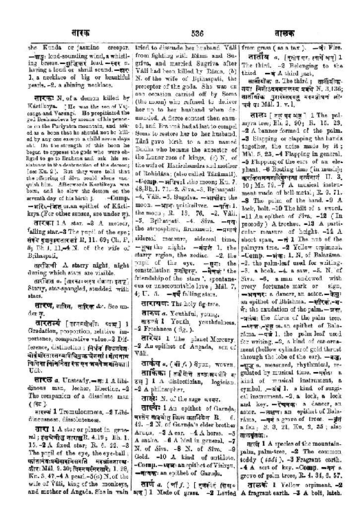
tārā 1 A star or planet in general; haṃsaśreṇīsu tārāsu R. 4. 19; Bh. 1. 15. 2 A fixed star; R. 6. 22. 3 The pupil of the eye, the eye-ball; kāṃtāmaṃtaḥ pramodādabhisarati madabhrāṃtatāraścakoraḥ Māl. 9. 30; vismayasmeratāraiḥ Māl. 1. 28, Ku. 3, Ku. 47. 4 A pearl. 5 (a) N. of the wife of Vāli, king of the monkeys, and mother of Aṅgada. She in vain ([Page 0536-b]) tried to dissuade her husband Vāli from fighting with Rāma and Sugrīva, and married Sugrīva after Vāli had been killed by Rāma. (b) N. of the wife of Bṛhaspati, the preceptor of the gods. She was on one occasion carried off by Soma (the moon) who refused to deliver her up to her husband when demanded. A fierce contest then ensued, and Brahmā had at last to compel Soma to restore her to her husband. Tārā gave birth to a son named Budha who became the ancestor of the Lunar race of kings. (c) N. of the wife of Hariścandra and mother of Rohidāsa; (also called Tārāmatī). Comp. — adhipaḥ 1 the moon; Ku. 7. 48; Bh. 1. 71. 2 Śiva. 3 Bṛhaspati. 4 Vāli. 5 Sugrīva. — āpīḍaḥ the moon. — ābhaḥ quicksilver. — patiḥ 1 the moon; R. 13. 76. 2 Vāli. 3 Bṛhaspati. 4 Śiva. — pathaḥ the atmosphere, firmament. — pramāṇaṃ sidereal measure, sidereal time. — bhūṣā the night. — maṃḍalaṃ 1 the starry region, the zodiac. 2 the pupil of the eye. — mṛgaḥ the constellation mṛgaśiras. — maitrakaṃ ‘the friendship of the stars’, spontaneous or unaccountable love; Māl. 7, Māl. 4; U. 5. — varṣaṃ falling stars.
Quelltextfundstellen (3)
HP 2 Fundstellen
PYS 1 Fundstelle
Mit AYI Free weitermachen
Bildquelle: AYI Archiv.