

turīya तुरीय – der vierte.
Adjektiv · Substantiv Neutrum · Worttyp nicht bestimmt
Wörterbuchquellen
Cappeller 1891 Worttyp nicht bestimmt
Originaltext · Englisch · Worttyp nicht bestimmt
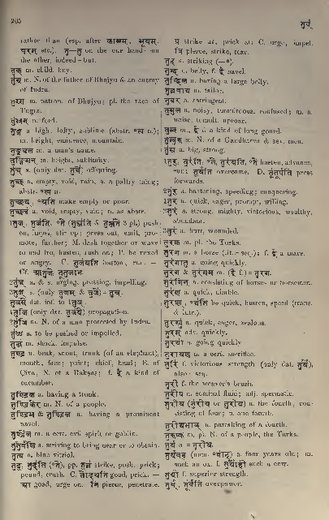
turī́ya ·(túrīya or turīyá) a. the fourth, consisting of four; n. one fourth.
Monier-Williams 1872 Adjektiv · Worttyp nicht bestimmt
Originaltext · Englisch · Adjektiv
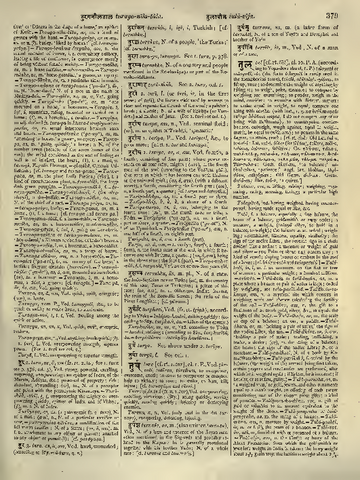
turīya 2 . turīya, as, ā, am, Ved. fourth, a fourth; consisting of four parts; whose power ex- tends on all four sides, mighty; (am), n. the fourth state of the soul (according to the Vedānta phil.), that state in which it has become one with Brahma or the universal spirit; (as, ā, am), (with a different accent), a fourth, constituting the fourth part; (am), n. a fourth part, a quarter; [cf. turya and caturtha.]
Originaltext · Englisch · Worttyp nicht bestimmt
turīya 1 . turīya, P., Ved. turīyati, &c., to go or move; [cf. rt. 1. tur and turaṇya.]
Petersburger 1855 Adjektiv · Substantiv Neutrum · Worttyp nicht bestimmt
Originaltext · Deutsch · Adjektiv · Substantiv Neutrum
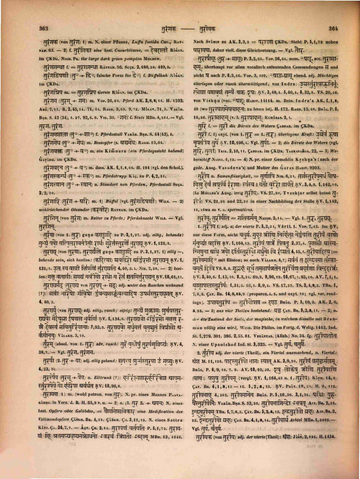
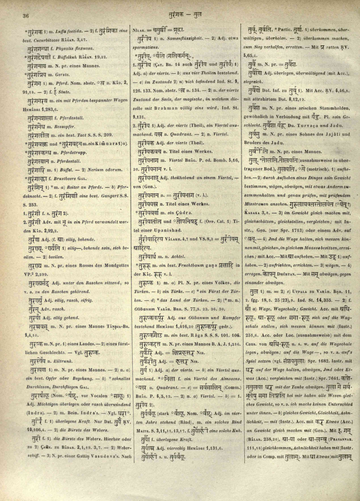
1. turī́ya 1〉 adj. a〉 der vierte P. 5,2,51, Vārtt. ?1. VOP. 7,43. Im ṚV. nur diese Form, nicht caturtha. guhā̱ trīṇi̱ nihìtā̱ neṅgàyanti tu̱rīyàṃ vā̱co mànu̱ṣyā̀ vadanti ṚV. 1,164,45. tu̱rīya̱ṃ pātràṃ pibatu ṚV. 2,37,4. pṛ̱kṣāsò asminmithu̱nā adhi̱ trayo̱ dṛtìstu̱rīyo̱ madhùno̱ vi ràpśate ṚV. 4,45,1. turī̀yāditya̱ (= turīyamādi˚ mit Elision; so auch VĀLAKH. 4,7) savànaṃ ta indri̱yamā tàsthāva̱mṛtàṃ di̱vi VS. 8,3. gū̱ḻhaṃ sūrya̱ṃ tama̱sāpàvratena tu̱rīyèṇa̱ brahmàṇā vinda̱datrìḥ ṚV. 5,40,6. ṚV. 1,15,10. ṚV. 8,3,24. ṚV. 8,69,9. ṚV. 9,96,19. ṚV. 10,67,1. ṚV. 10,85,40. AV. 7,1,1. ā̱śā̱pā̱lastu̱rīyàḥ AV. 1,31,3. AV. 1,16,1. AV. 8,9,4. VS. 17,57. TS. 3,4,2,2. TBR. 1,7,1,3. ŚAT. BR. 14,8,15,9 (proparox. ŚAT. BR. 4. ŚAT. BR. 5. und oxyt. ŚAT. BR. 10; vgl. var. readings). upāyaturīya = turīyopāya = daṇḍa BHĀG. P. 5,10,3. AK. 2,6,3,25. — b〉 aus vier Theilen bestehend: yajña ŚAT. BR. 9,2,3,11. — 2〉 n. der 4te Zustand der Seele, der magische, in welchem dieselbe mit Brahman völlig eins wird, WIND. Die Philos. im Fortg. d. Weltg. 1442. Ind. St. 1,279. Ind. St. 1,301. Ind. St. 1,386. Ind. St. 2,55. Ind. St. 2,61. VEDĀNTAS. (Allah.) No. 34. fg. turīyātīta N. einer Upaniṣad Ind. St. 3,325. — Vgl. turya, caturthá.
Originaltext · Deutsch · Adjektiv
2. túrīya adj. der vierte (Theil), ein Viertel ausmachend, n. Viertel: aṃśa M. 11,126. pādasturīyo bhāgaḥ syāt AK. 2,9,90. turīyaṃ jagṛhurmalam BHĀG. P. 6,9,10. BHĀG. P. 6,9,7. BHĀG. P. 6,9,9. AV. 10,10,29. eṣu lokeṣu trīṇi turīyāṇi (vācaḥ) paśuṣu turīyam (vergl. ṚV. 1,164,45 u. 1. turīya) KĀṬH. 14,5. ŚAT. BR. 4,1,3,13—ŚAT. BR. 4,1,3,16. ŚAT. BR. 5,2,4,13. ṚV. PRĀT. 18,21. M. 9,112. turīyabhāj M. 4,202. turīyamānena BHĀG. P. 5,16,30. BHĀG. P. 3,1,34. ṣaḍbhiḥ puruṣaisturīyonaiḥ VARĀH. BṚH. S. 53,38. turīyabhāgindro 'bhavat AIT. BR. 2,25. i̱ndra̱tu̱rī̱yam TBR. 1,7,1,3. ŚAT. BR. 5,2,4,13. indraturīyo grahaḥ AIT. BR. 2,25. aindraturīyo grahaḥ ŚAT. BR. 4,1,3,14. turīyārdha Achtel MBH. 1,3862. — Vgl. turya, cáturtha.
Originaltext · Deutsch · Worttyp nicht bestimmt
1. turīya 2〉 Verz. d. Oxf. H. 228,a,23. WEBER, RĀMAT. UP. 342. fg. WEBER, RĀMAT. UP. 347. fg. WEBER, RĀMAT. UP. 349.
Originaltext · Deutsch · Worttyp nicht bestimmt
2. turīya , turīyaṃ yantram ein Quadrant Verz. d. Oxf. H. 250,a,38; vgl. u. turya 3〉.
Böhtlingk 1879 Adjektiv · Substantiv Neutrum
Originaltext · Deutsch · Adjektiv · Substantiv Neutrum
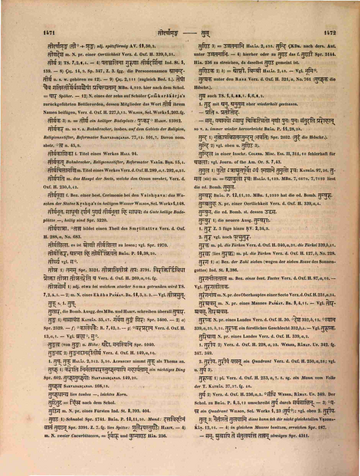
1. turī́ya (ŚAT. BR. 14 auch túrīya und turīyá) — 1〉 Adj. — a〉 der vierte. — b〉 aus vier Theilen bestehend. — c〉 im Zustande 2〉n〉 sich befindend Ind. St. 9,126. 133. Nom. abstr. ˚tva n. Ind. St. 9,134. — 2〉 n. der vierte Zustand der Seele, der magische, in welchem dieselbe mit Brahman völlig eins wird, Ind. St. 9,131.
Originaltext · Deutsch · Adjektiv · Substantiv Neutrum
1. turī́ya (ŚAT. BR. 14 auch túrīya und turīyá) — 1〉 Adj. — a〉 der vierte. — b〉 aus vier Theilen bestehend. — c〉 im Zustande 2〉n〉 sich befindend Ind. St. 9,126. 133. Nom. abstr. ˚tva n. Ind. St. 9,134. — 2〉 n. der vierte Zustand der Seele, der magische, in welchem dieselbe mit Brahman völlig eins wird, Ind. St. 9,131.
Originaltext · Deutsch · Adjektiv · Substantiv Neutrum
2. túrīya — 1〉 Adj. der vierte (Theil), ein Viertel ausmachend. yantra n. Quadrant. — 2〉 n. Viertel.
Apte 1890 Adjektiv · Substantiv Neutrum
Originaltext · Englisch · Adjektiv · Substantiv Neutrum
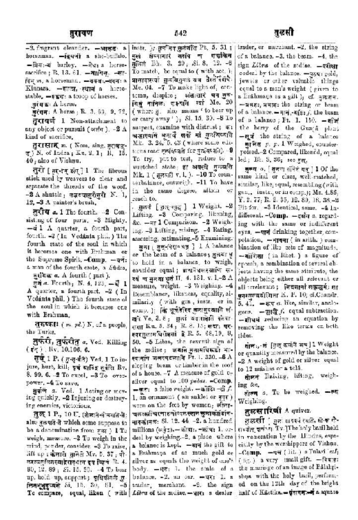
turīya a. 1 The fourth. 2 Consisting of four parts. 3 Mighty. — yaṃ 1 A quarter, a fourth part, fourth. 2 (In Vedānta phil.) The fourth state of the soul in which it becomes one with Brahman or the Supreme Spirit. Comp. — varṇaḥ a man of the fourth caste, a Śūdra.
Cappeller 1887 Worttyp nicht bestimmt
Originaltext · Deutsch · Worttyp nicht bestimmt
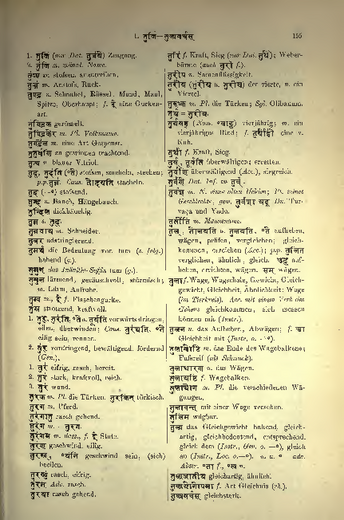
turīya (túrīya u. turīyá) der vierte, n. ein Viertel.
Burnouf 1866 Adjektiv
Originaltext · Französisch · Adjektiv
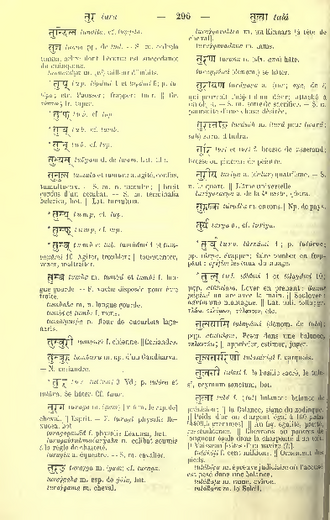
turīya turīya a. (catur) quatrième. — S. n. le quart. L'âme universelle. turīyavarṇa a. de la 4ᵉ caste, śūdra.
Quelltextfundstellen (1)
SiSa 1 Fundstelle
Mit AYI Free weitermachen
Bildquelle: AYI Archiv.