

śaṅkha शङ्ख – conch shell
substantive masculine · substantive neuter
Dictionary sources
AYI dictionary substantive masculine
conch shell
Cappeller 1891 substantive masculine · substantive neuter
Original text · English · substantive masculine · substantive neuter
śaṅkhá ·m. n. conch-shell (used to blow upon or as ornament); m. the temporal bone, temple, one of the treasures of Kubera, N. of an Asura, etc.
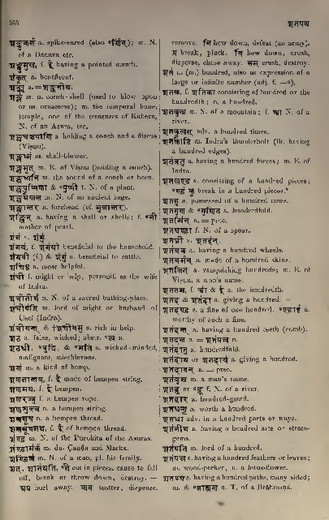
Monier-Williams 1872 substantive masculine · substantive neuter
Original text · English · substantive masculine · substantive neuter
śaṅkha śaṅkha, as, am, m. n. (in Uṇādi-s. I. 104. said to be fr. rt. 1. śam), a shell, the conch- shell (used for offering libations or, when perforated at one end, for blowing as a horn); a horn, trumpet, (in the battle pieces of epic poetry each hero is represented as provided with a conch-shell, which serves as his horn, and often has a name; that of Kṛṣṇa was called pāñcajanya, q. v.); (as), m. the temporal bone, temple; the bone of the forehead or frontal bone; an elephant's cheek or the part between his tusks (= hasti-danta-madhya); a par- ticular high number (said to equal a hundred bil- lions or one hundred thousand Krores, = daśa-ni- kharva; cf. śaṅku); one of Kuvera's treasures; a particular perfume (commonly called Nakhī and ap- parently a kind of dried shell-fish); a military drum or other martial instrument; N. of a Daitya (who conquered the gods, stole the Vedas, and carried them off to the bottom of the sea, from whence they were recovered by Viṣṇu in the form of a fish); N. of one of the eight chiefs of the Nāgas or serpents of Pātāla (described as of a yellow colour); N. of the author of a law-book; of a poet (one of the nine gems at the court of king Vikramāditya); of the author of the hymn Ṛg-veda X. 15 (having the patronymic Yāmāyana); of one of the six minor Dvīpas; (ās), m. pl., N. of a Gotra; [cf. Gr. κόγχος, κόγχη, κόλχος, κόχλος, κάλχη; Lat. concha.]
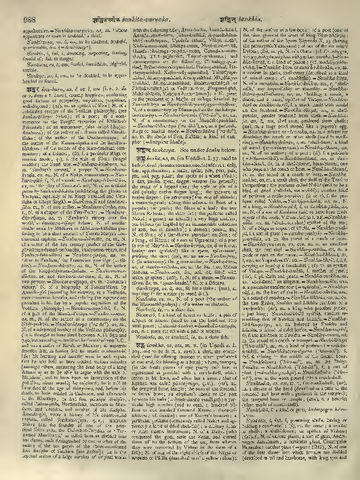
Petersburger 1855 substantive masculine · substantive neuter
Original text · German · substantive masculine · substantive neuter
śaṅkhá UṆĀDIS. 1,104. m.n. gaṇa ardharcādi zu P. 2,4,31. TRIK. 3,5,10. 1〉 m. (nach den Lexicographen auch n.) Muschel (als Blasinstrument ein Attribut Viṣṇuʼs; auch als Schmuck am Arm getragen) AK. 1,1,1,23. AK. 1,2,3,23. AK. 3,4,2,19. AK. 3,4,21,136. H. 48. H. 222. H. 1205. H. an. 2,26. MED. kh. 5. HALĀY. 3,42. VIŚVA_bei_UJJVAL. AV. 4,10,1. fgg. ŚAT. BR. 14,5,4,9. ŚAT. BR. 14,7,3,10. KAUŚ. 83. KAUŚ. 85. M. 5,121. śaṅkhaṃ dadhmau BHAG. 1,12. fg. MBH. 3,12075. MBH. 5,7109. HARIV. 12409. R. 2,81,2. R. 2,81,16 SUŚR. 1,205,20. SUŚR. 1,206,1. RAGH. 13,13. VARĀH. BṚH. S. 12,4. fgg. VARĀH. BṚH. S. 15,25. VARĀH. BṚH. S. 16,7. fgg. VARĀH. BṚH. S. 24,16. VARĀH. BṚH. S. 33,10. fgg. VARĀH. BṚH. S. 43,24. VARĀH. BṚH. S. 44,7. fgg. VARĀH. BṚH. S. 44,16. VARĀH. BṚH. S. 48,49. fgg. VARĀH. BṚH. S. 48,73. VARĀH. BṚH. S. 58,33. fgg. VARĀH. BṚH. S. 60,16. VARĀH. BṚH. S. 69,17. fgg. VARĀH. BṚH. S. 80,5 (zu den ratna gerechnet). VARĀH. BṚH. S. 81,1. VARĀH. BṚH. S. 81,28 Perlen darin; vgl. śaṅkhamuktā. WEBER, RĀMAT. UP. 288. WEBER, RĀMAT. UP. 306. WEBER, RĀMAT. UP. 327. fg. KṚṢṆAJ. 266. fgg. KṚṢṆAJ. 279. KṚṢṆAJ. 289. fgg. KṚṢṆAJ. 294. KṚṢṆAJ. 297. fgg. KṚṢṆAJ. 302. fg. Verz. d. Oxf. H. 14,b,17. Verz. d. Oxf. H. 34,a,3. Verz. d. Oxf. H. 123,a,35. Verz. d. Oxf. H. 190,b,17. Verz. d. Oxf. H. 268,a,29. PAÑCAT. 20,8. ˚mudrāṅkita RĀJA-TAR. 3,387. MEGH. 78. ˚pāṇḍura R. 7,34,7. na śvetabhāvamujjhaji śaṅkhaḥ śikhibhuktamukto 'pi Spr. (II) 355. Spr. (II) 798. ˚pūrṇābhyāṃ bāhubhyām MBH. 4,573. BHĀG. P. 11,9,6. BHĀG. P. 11,9,7. sthūlaśaṅkhāḥ striyaḥ MBH. 8,2041. ekaśaṅkhā nāryaḥ HARIV. 11164. — 2〉 m. Schläfe, Schläfenbein AK. 3,4,2,19. H. 574. H. an. MED. VIŚVA a. a. O. YĀJÑ. 3,96. MBH. 6,5397. HARIV. 11951. SUŚR. 1,15,20. SUŚR. 1,36,4. SUŚR. 1,66,2. SUŚR. 1,357,9. SUŚR. 2,113,3. SUŚR. 2,377,9. SUŚR. 2,113,10. VARĀH. BṚH. S. 51,8. VARĀH. BṚH. S. 51,34. VARĀH. BṚH. S. 52,2. VARĀH. BṚH. S. 58,6. VARĀH. BṚH. S. 66,2 (beim Pferde). VARĀH. BṚH. S. 68,70. VET. in LA. (III) 13,13 (śaṅke Druckfehler). TRIK. 2,8,38 (beim Elephanten). — 3〉 Bez. der Zähne eines 23jährigen Pferdes VARĀH. BṚH. S. 66,5. — 4〉 m. ein best. Parfum, = nakha, nakhī, śukti, khura AK. 2,4,4,18. H. an. MED. VIŚVA a. a. O. SUŚR. 2,325,13. SUŚR. 2,342,7. VARĀH. BṚH. S. 77,10. PAÑCAR. 1,11,13. — 5〉 m.n. eine best. hohe Zahl MBH. 2,2143. ˚śata R. 4,39,19. R. 6,2,20. śataṃ koṭisahasrāṇāṃ śaṅkha ityabhidhīyate R. 6,4,56. śataṃ śaṅkhasahasrāṇāṃ vṛndamāhuḥ R. 6,2,57. BRAHMĀṆḌA-P._im_ŚKDR. — 6〉 ein best. Metrum Ind. St. 8,410. — 7〉 m. einer der Schätze Kuberaʼs und dessen Genius AK. 1,1,1,67. AK. 3,4,2,19. TRIK. 1,1,79. H. 193. H. an. MED. VIŚVA a. a. O. Verz. d. Oxf. H. 184,a,40. MBH. 2,418. MBH. 13,6261. HARIV. 2467. HARIV. 6276. HARIV. 6552. fgg. R. 7,15,16. RĀJA-TAR. 1,30. MĀRK. P. 68,5. MĀRK. P. 68,41. fgg. Spr. (II) 3950. — 8〉 N. pr. a〉 eines Schlangendämons TRIK. 1,2,6. H. 1310. MBH. 1,1553. MBH. 5,3628. MBH. 16,119. HARIV. 230. R. 5,78,9. WEBER, RĀMAT. UP. 314. RĀJA-TAR. 1,30. VP. 149. BHĀG. P. 5,24,31. — b〉 eines mythischen Elephanten (diggaja) R. 3,20,27. — c〉 eines Asura Verz. d. Oxf. H. 16,a,12. Verz. d. Oxf. H. 16,a,25. — d〉 eines Mannes gaṇa kuñjādi zu P. 4,1,98. gargādi zu P. 4,1,105. aśvādi zu P. 4,1,110. AV. 19,22,8. ĀŚV. ŚR. 12,12,3. PRAVARĀDHY._in_Verz. d. B. H. 56,7. Verz. d. Oxf. H. 31,b,19. Verz. d. Oxf. H. 34,a,10. Verz. d. Oxf. H. 52,a,39. PAÑCAR. 1,10,61. Yāmāyana, Liedverfasser von ṚV. 10,15. Kauṣya Ind. St. 3,472. ein Sohn Virāṭaʼs MBH. 1,6988. MBH. 4,1015. Vajranābhaʼs HARIV. 827. VP. 386, N. 23 (vgl. śaṅkhanābha). Häufig in Verbindung mit seinem Bruder Likhita genannt; jeder von ihnen und auch beide zusammen gelten als Verfasser eines Gesetzbuchs. YĀJÑ. 1,5. MBH. 2,292. fgg. MBH. 12,668. fgg. MBH. 13,3320. Ind. St. 1,20. Ind. St. 1,232. Ind. St. 1,234. Ind. St. 1,467. Ind. St. 2,23. Verz. d. B. H. No. 322. Verz. d. B. H. No. 1017. Verz. d. B. H. No. 1024. Verz. d. B. H. No. 1028. Verz. d. B. H. No. 1231. Verz. d. Oxf. H. 14,a, N. 1. fgg. Verz. d. Oxf. H. 266,b,1. Verz. d. Oxf. H. 266,b,10. fgg. Verz. d. Oxf. H. 267,b,22. Verz. d. Oxf. H. 270,b,50. fgg. Verz. d. Oxf. H. 271,b,1. Verz. d. Oxf. H. 279,b,11. fg. Verz. d. Oxf. H. 356,a,30. fg.; vgl. auch unter likhita 2〉. — e〉 einer Gegend gaṇa śaṇḍikādi zu P. 4,3,92. im Süden Indiens, reich an Muscheln, VARĀH. BṚH. S. 14,14. — f〉 eines Berges HARIV. 12410 (vgl. HARIV. 12409). MĀRK. P. 58,24. BHĀG. P. 5,16,27. — Vgl. nakha˚, mahā˚, vṛddha˚, saṃdhyā˚, hema˚, śāṅkhāyana, śāṅkhika, śāṅkhya.
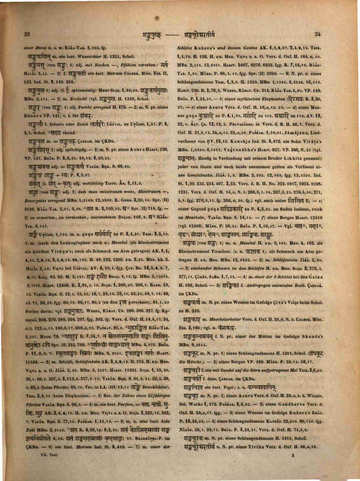
Böhtlingk 1879 substantive masculine · substantive neuter
Original text · German · substantive masculine · substantive neuter
śaṅkhá — 1〉 m. n. — a〉 Muschel. Als Blaseinstrument ein Attribut Viṣṇuʼs; auch als Schmuck am Arm und an den Ohren eines Elephanten KĀD. 98,3 (174,6). KĀD. 109,17 (197,8). *n. Am Ende eines adj. Comp. f. ā. — b〉 eine best. hohe Zahl. — 2〉 m. — a〉 Schläfe, Schläfenbein ŚIŚ. 19,77. n. nach ŚĀŚVATA 203. — b〉 Bez. der Zähne eines 23jährigen Elephanten. — c〉 Unguis odoratus RĀJAN. 12,128. — d〉 ein best. Mantra GOBH. 4,8,7. — e〉 ein best. Metrum. — f〉 einer der Schätze Kuberaʼs (ŚIŚ. 1,55) und dessen Genius. — g〉 N. pr. — α〉 eines Schlangendämons. — β〉 eines Weltelephanten. — γ〉 eines Asura. — δ〉 verschiedener Männer, unter Andern eines Gesetzgebers, der häufig in Verbindung mit seinem Bruder Likhita genannt wird; vgl. śagkhalikhita. — ε〉 einer Gegend (reich an Muscheln). — ζ〉 eines Berges. — η〉 eines Waldes VP.² 2,118. — 3〉 f. śaṅkhā eine Art Flöte S. S. S. 195.
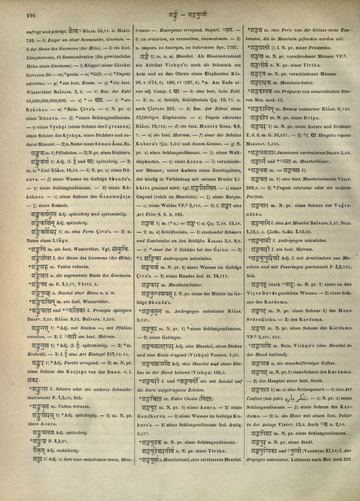
Original text · German · substantive masculine
śaṅkha m. auch ein best. Kinderdämon SUD. zu ĀPAST. GṚHY. 18,3. [Nachtrag, Band 7]
Cappeller 1887 substantive masculine · substantive neuter
Original text · German · substantive masculine · substantive neuter
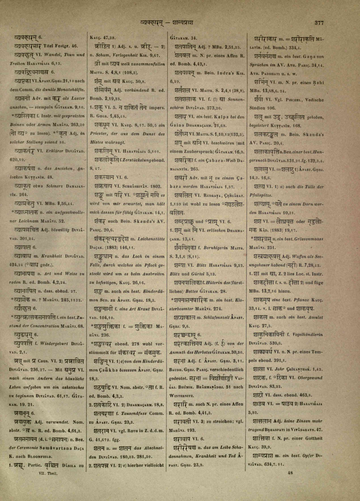
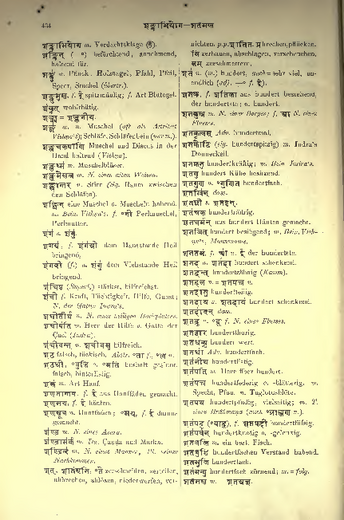
śaṅkha m. n. Muschel (oft als Attribut Viṣṇu's); Schläfe, Schläfenbein (nur m.).
Burnouf 1866 substantive masculine · substantive neuter
Original text · French · substantive masculine · substantive neuter
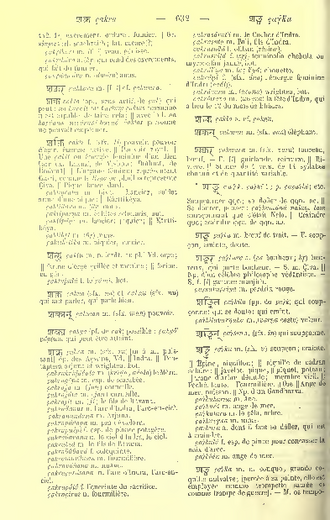
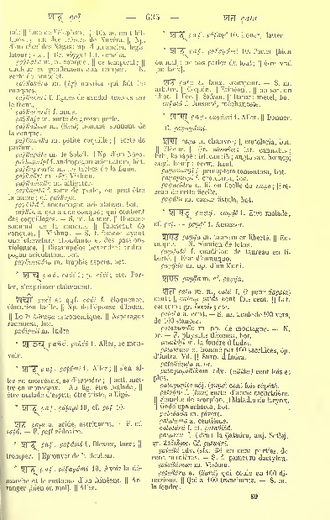
śaṅkha śaṅkha m. n. conque, grande coquille univalve; [percée à sa pointe, elle est employée comme trompette sacrée et comme trompe de guerre]. — M. os temporal; [Page633] sautée, absente de l'original [Page634] sautée, absente de l'original [Page635-1] joue de l'éléphant. Dix ou cent billions; un des trésors de Kuvera. Np. d'un chef des Nāgas; np. d'un ancien législateur; etc. Gr. ϰόγχη; lat. concha. śaṅkhaka m. n. conque; os temporal; douleur et gonflement aux tempes. — N. sorte de bracelet. śaṅkhakāra m. (kṛ) ouvrier qui fait les conques. śaṅkhacarī f. lignes de sandal tracées sur le front. śaṅkhacarcī f. mms. śaṅkhaja m. sorte de grosse perle. śaṅkhadhma m. (dhmā) homme sonnant de la conque. śaṅkhanakha m. petite coquille; sorte de parfum. śaṅkhapāla m. le Soleil. Np. d'un Nāga. śaṅkapuṣpī f. andropogon aciculatum, bot. śaṅkhaprastha m. les taches de la Lune. śaṅkhabhṛt m. (bhṛ) Viṣṇu. śaṅkhamukha m. alligator. śaṅkhaśilā f. sorte de perle, ou peut-être la nacre; cf. śaṅkhaja. śaṅkhikā f. andropogon aciculatum, bot. śaṅkhin a. qui a une conque; qui contient des coquillages. — S. m. la mer. Homme sonnant de la conque. Fabricant de conques. Viṣṇu. — S. f. femme ayant une chevelure abondante et des passions violentes. Cissampelos hexandra; andropogon aciculatum, bot. śaṅkhinīvāsa m. trophis aspera, bot.
Occurrences in source texts (7)
HP 1 occurrence
HTK 3 occurrences
HTK 10.26–29*1: Cakra, Śaṅkha, Vāmāvartta, Vartmagati and Gadā 3 occurrences
Direct occurrences
-
HTK 10.26 Segment 6
-
HTK 10.27*1 Segment 10
-
HTK 10.29*1 Segment 3
MAN 3 occurrences
Continue with AYI Free
Image source: AYI archive.