

aśva अश्व – horses; respect of horses
substantive masculine · Word type unspecified
Dictionary sources
AYI dictionary substantive masculine
horses; respect of horses
Cappeller 1891 substantive masculine
Original text · English · substantive masculine
áśva ·m. horse, a man's name; f. ā mare.
Monier-Williams 1872 substantive masculine · Word type unspecified
Original text · English · substantive masculine
aśva 1 . aśva, as, m. (rt. 1. aś?), a horse, especially a stallion; the number ‘seven’ (that being the number of the horses of the sun); a race of men horse-like in strength; N. of a son of Citraka, also of a Dānava; (ā), f. a mare; (au), du. a horse and a mare [cf. Zend aśpa; Lat. equus; Gr. ἵππος Lith. aszwa; Old Sax. ehuscalc].
Original text · English · Word type unspecified
2. aśva, nom. P. aśvati, to behave like a horse.
Petersburger 1855 substantive masculine
Original text · German · substantive masculine
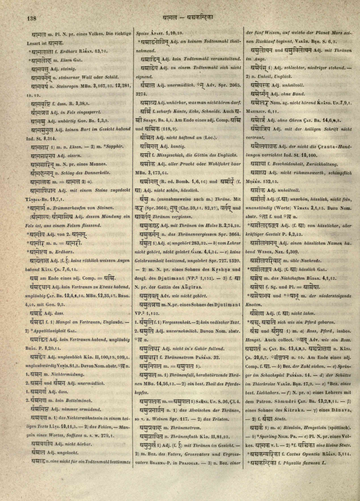
áśva Uṇ. 1,150. 1〉 m. a〉 Ross, Pferd, bes. Hengst NAIGH. 1,14. AK. 2,8,2,11. TRIK. 2,8,41. H. 1232. MED. v. 3. ra̱thīva̱ kaśa̱yāśvā̀m̐ abhikṣi̱pan ṚV. 5,83,3. indrā̀ya ca̱kruḥ su̱yujā̱ ye aśvā̀ ṚV. 4,33,10. vṛṣṇo̱ aśvàsya̱ dhārā̀ḥ (AV. 4,15,11. AV. 11,2,22) AV. 5,83,6. aśva̱ṃ na vā̱jinàm (AV. 6,72,3) AV. 7,7,1. vahàmāno̱ aśvaìḥ ṚV. 10,11,7. ṚV. 10,107,7. ṚV. 10,119,3. aśvo̱ voḻhā̀ ṚV. 9,112,4. aśva̱ḥ kanìkrada̱dyathā̀ AV. 2,30,5. hiràṇya̱maśvàmu̱ta gāma̱jāmavìm AV. 6,71,1. gauraśva̱ḥ purùṣaḥ pa̱śuḥ AV. 8,2,25. AV. 8,7,11. AV. 11,2,9. sthāmnyaśvàmatiṣṭhipam AV. 6,77,1. ŚAT. BR. 7,5,2,15. ŚAT. BR. 13,4,2,1. ŚAT. BR. 13,4,2,2. hayo bhūtvā devānavahat vājī gandharvānarvāsurānaśvo manuṣyān ŚAT. BR. 10,6,4,1 = BṚH. ĀR. UP. 1,1,2. tato 'śvaḥ samabhavadyadaśvattanmedhyamabhūt BṚH. ĀR. UP. 1,2,7. M. 2,204. M. 2,246. M. 3,64. M. 3,162. M. 4,120. M. 4,188. M. 4,189. M. 5,133. M. 7,96. M. 7,192. u. s. w. N. 1,1. N. 2,10. u. s. w. Das Pferd ist Opferthier und zwar das vornehmste ṚV. 1,162,3. AIT. BR. 2,8. AIT. BR. 8,22. ŚAT. BR. 1,2,3,6. ŚAT. BR. 1,2,3,9. ŚAT. BR. 6,2,1,2. Vgl. aśvamedha. Der Sonnenball wird als ein den Himmel durchlaufendes Ross (unter dessen verschiedenen Namen) vorgestellt, z. B.: sūrā̱daśvàṃ vasavo̱ niràtaṣṭa ṚV. 1,163,2; vgl. ŚAT. BR. 2,6,3,9. ŚAT. BR. 3,5,1,19. ŚAT. BR. 3,5,1,20. ŚAT. BR. 6,3,1,29 und sonst. aśvavat adv. wie ein Ross NIR. 2,27. KĀTY. ŚR. 22,8,24. aśvaśaphá ŚAT. BR. 1,2,2,10. aśvakaśā NIR. 9,19. aśvahāraka M. 11,51. aśvacaryā R. 1,40,6. aśvānusāra Begleitung des (zum Pferdeopfer) bestimmten Rosses MBH. 15,73—MBH. 15,84. LIA. I, 542. aśvalakṣaṇa und aśvaceṣṭita VARĀH. BṚH. S. 65. VARĀH. BṚH. S. 92_in_Verz. d. B. H. 248. Verz. d. B. H. 249. aśvarathá ein mit Rossen bespannter Wagen ŚAT. BR. 5,2,4,9. AIT. BR. 4,9. KĀTY. ŚR. 15,1,22. KĀTY. ŚR. 22,2,1. dakṣiṇāśvarathaścaturyuk KĀTY. ŚR. 22,5,10. aśvarathadāna heisst das 14te Pariśiṣṭa zum AV. Verz. d. B. H. 90. aśvadūta ein berittener Bote LALIT. (Hdschr.) KAP. 15. go'śva n. ŚAT. BR. 12,8,1,14. ŚAT. BR. 12,8,3,22. aśvakharau KĀTY. ŚR. 16,3,10. aśvagardabhājāḥ KĀTY. ŚR. 16,2,4. Am Ende eines adj. comp. f. ā R. 5,35,35. AK. 2,8,2,48. H. 748. pañcāśvā für fünf Pferde gekauft P. 4,1,22, Sch. Accent eines adj. comp. auf aśva P. 6,2,107. P. 6,2,108. — b〉 (wegen der 7 Pferde der Sonne) Bezeichnung der Zahl sieben ŚRUT. 39. — c〉 ein bes. Menschenart (puṃjātibheda) MED. v. 3. tasya lakṣaṇam . kāṣṭhatulyavapurdhṛṣṭo mithyācāraśca nirbhiyaḥ . dvādaśāṅgulameḍhraśca daridrastu hayo mataḥ .. RATIM._im_ŚKDR. — d〉 N. pr. ein Sohn Citrakaʼs HARIV. 1921. m. pl. N. eines Volkes RĀJA-TAR. t. II, p. 311. ein Dānava MBH. 1,2532. — 2〉 f. áśvā Stute gaṇa ajādi; AK. 2,8,2,14. AK. 2,3,4,231. TRIK. 3,3,422. H. 1233. aśvè iva̱ viṣìte̱ hāsàmāne ṚV. 3,33,1. ṚV. 3,1,4. ṚV. 1,30,21. ṚV. 9,107,8. VS. 37,12. ŚAT. BR. 5,5,4,35. ŚAT. BR. 14,1,3,25. ĀŚV. ŚR. 12,6. BṚH. DEV._in_Z. f. vgl. Spr. 1,442. — Ueber die Etym. s. u. aśan und vgl. NIR. 1,12. NIR. 2,27.
Böhtlingk 1879 substantive masculine
Original text · German · substantive masculine
áśva und áśua — 1〉 m. — a〉 Ross, Pferd, insbes. Hengst. Auch collect. ˚vat Adv. wie ein Ross. aśvaśatá n. ŚAT. BR. 13,4,2,5. aśvaprokṣaṇa n. KĀTY. ŚR. 20,6,7. ˚saṃjñapana n. KĀTY. ŚR. 20,6,10. Am Ende eines adj. Comp. f. ā — b〉 Bez. der Zahl sieben. — c〉 Springer im Schachspiel PAÑCAD. 14. — d〉 der Schütze im Thierkreise VARĀH. BṚH. 17,9. — e〉 *Bez. eines best. Liebhabers. — f〉 N. pr. — α〉 eines Lehrers mit dem Patron. Sāmudri ŚAT. BR. 13,2,2,14. — β〉 eines Sohnes des Citraka. — γ〉 eines Dānava. — 2〉 f. áśvā Stute.
Apte 1890 substantive masculine
Original text · English · substantive masculine
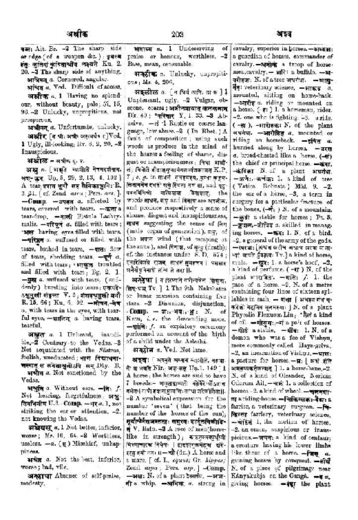
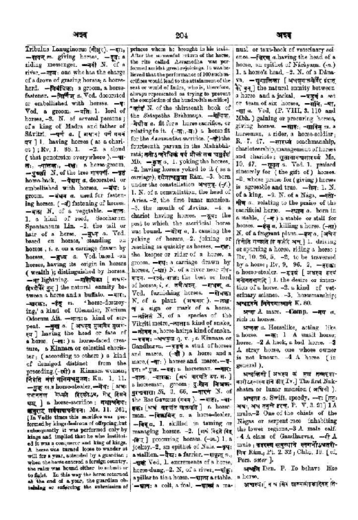
aśvaḥ [aśnute adhvānaṃ vyāpnoti, mahāśano vā bhavati Nir.; aś-kvan Uṇ. 1. 149] 1 A horse; the horses are said to have 7 breeds: -amṛtādbāṣpato vahrervedebhyoṃ'ḍācca garbhataḥ . sāmno hayānāmutpattiḥ saptadhā parikīrtitā ... 2 A symbolical expression for the number ‘seven’ (that being the number of the horses of the sun); sūryāśvairmasajastatāḥ saguravaḥ śārdūlavikrīḍitaṃ V. Ratn. 3 A race of men (horselike in strength); kāṣṭhatulyavapurdhṛṣyo mithyācāraśca nirbhayaḥ . dvādaśāṃgulameḍhraśca daridrastu hayo mataḥ .. — śvau (du.) A horse and a mare. [cf. L. equus; Gr. hippos; Zend aspa; Pers. asp.] Comp. — akṣaḥ N. of a plant devasarṣapa. — ajanī a whip. — adhika a. strong in ([Page 0203-c]) cavalry, superior in horses. — adhyakṣaḥ a guardian of horses, commander of cavalry. — anīkaṃ a troop of horse men, cavalry. — ariḥ a buffalo. — avarohakaḥ N. of a tree aśvagaṃdhā. — āyurvedaḥ veterinary science. — ārūḍha a. mounted, sitting on horse-back. — āroha a. riding or mounted on a horse. — (haḥ) 1 a horseman, rider. 2 one who is fighting. 3 a ride. (-hā), -ārohakaḥ N. of the plant aśvagaṃdhā. — ārohin a. mounted or riding on horseback. — iṣita a. hurried along by horses. — urasa a. broad-chested like a horse. — (saṃ) the chief or principal horse. — kaṃdā, — kaṃdikā N. of a plant aśvagaṃdhā. — karṇaḥ, -karṇakaḥ 1 a kind of tree (Vatica Robusta) Māl. 9. 2 the ear of a horse. 3 a term in surgery for a particular fracture of the bones. — (rṇaḥ) N. of a mountain. — kuṭī a stable for horses; Pt. 5. — kuśala, -kovida a. skilled in managing horses. — kraṃdaḥ 1 N. of a bird. 2 a general of the army of the gods. — kharajaḥ [aśvaśca kharīca aśvāca kharaśca vā tābhyāṃ jāyate puṃvadbhāvaḥ Tv.] a kind of horse, mule. — khuraḥ 1 a horse's hoof. 2 a kind of perfume. — (rā) N. of the plant aparājitā. — gatiḥ f. 1 the pace of a horse. 2 N. of a metre containing four lines of sixteen syllables in each. — gaṃdhā [aśvasya gaṃdha ekadeśo meḍhramiva mūlamasyāḥ] N. of a plant Physalis Flexuosa Lin; ˚tailaṃ a kind of oil. — goyugaḥ, -gaṃ a pair of horses. — goṣṭhaṃ a stable. — grīvaḥ 1 N. of a demon who was a foe of Viṣṇu, more commonly called Haya-grīva. 2 an incarnation of Viṣṇu. — ghāsaḥ a pasture for horses. — ghnaḥ [aśvaṃ haṃti amanuṣyakartṛkatvāt] 1 a horse-bane. 2 N. of a kind of Oleander, Nerium Odorum Ait. — cakraṃ 1 a collection of horses. 2 a kind of wheel. — calanaśālā a riding-house. — cikitsakaḥ -vaidyaḥ a farrier, a veterinary surgeon. — cikitsā farriery, veterinary science. — ceṣṭitaṃ 1 the motion of horses. 2 an omen, auspicious or inauspicious. — jaghanaḥ a kind of centaur; a creature having his lower limbs like those of a horse. — jit a. gaining horses by conquest. — tīrthaṃ N. of a place of pilgrimage near Kānyakubja on the Gaṅgā. — da a. giving horses. — daṃṣṭrā the plant ([Page 0204-a]) Tribulus Lanuginosus (gokṣura). — dāḥ, — dāvan m. giving horses. — dūtaḥ a riding messenger. — nadī N. of a river. — nāyaḥ one who has the charge of a drove of grazing horses; a horseherd. — nibaṃdhikaḥ a groom, a horsefastener. — nirṇij a. Ved. decorated or embellished with horses. — paḥ Ved. a groom. — patiḥ 1 lord of horses. 2 N. of several persons; of a king of Madra and father of Sāvitrī. — parṇa a. [aśvānāṃ parṇaṃ gamanaṃ yatra] 1 having horses (as a chariot); Rv. 1. 88. 1. 2 a cloud (that penetrates everywhere). — pālaḥ, -pālakaḥ, -rakṣaḥ a horse-groom. — pucchī N. of the tree māṣapaṇīṃ. — pṛṣṭhaṃ horse-back. — peśas a. decorated or embellished with horses. — baṃdhaḥ a groom. — baṃdhana a. used for fastening horses. — (naṃ) fastening of horses. — balā N. of a vegetable. — bālaḥ 1 a kind of reed, Saccharum Spontaneum Lin. 2 the tail or hair of a horse. — budhna a. Ved. based on horses, standing on horses, i. e. on a carriage drawn by horses. — budhya a. Ved. based on horses, having its origin in horses (wealth); distinguished by horses. — bhā lightning. — mahiṣikā [ aśvamahiṣayorvairaṃ vun] the natural enmity between a horse and a buffalo. — māraḥ, — mārakaḥ, -haṃtṛ m. ‘horse-destroying,’ a kind of Oleander, Nerium Odorum Ait. — mālaḥ a kind of serpent. — mukha a. [aśvasya mukhamiva mukhamasya] having the head or face of a horse. — (khaḥ) a horse-faced creature, a Kinnara or celestial chorister; (according to others) a kind of demigod distinct from the preceding. — (khī) a Kinnara woman; bhiṃdaṃti maṃdāṃ gatimaśvamukhyaḥ Ku. 1. 11. — muk m. a horse-stealer. — medhaḥ [aśvaḥ pradhānatayā medhyate hiṃsyate'tra, medh hiṃsane ghañ] a horse-sacrifice; yathāśvamedhaḥ kraturāṭ sarvapāpāpanodanaḥ Ms. 11. 261. [In Vedic times this sacrifice was performed by kings desirous of offspring; but subsequently it was performed only by kings and implied that he who instituted it was a conqueror and king of kings. A horse was turned loose to wander at will for a year, attended by a guardian; when the horse entered a foreign country, the ruler was bound either to submit or to fight. In this way the horse returned at the end of a year, the guardian obtaining or enforcing the submission of ([Page 0204-b]) princes whom he brought in his train. After the successful return of the horse, the rite called Aśvamedha was performed amidst great rejoicings. It was believed that the performance of 100 such sacrifices would lead to the attainment of the seat or world of Indra, who is, therefore, always represented as trying to prevent the completion of the hundredth sacrifice]. ˚kāṃḍaṃ N. of the thirteenth book of the Śatapatha Brāhmaṇa. — medhika, — medhīya a. fit for a horse-sacrifice, or relating to it. — (kaḥ, -yaḥ) a horse fit for the Aśvamedha sacrifice. — (kaṃ) the fourteenth parvan in the Mahābhārata; tato'śvamedhikaṃ parva proktaṃ tacca caturdaśaṃ Mb. — yuj a. 1 yoking the horses. 2 having horses yoked to it (as a carriage); rathenāśvayujā Rām. 3 born under the constellation aśvayuj. ( — f.) 1 N. of a constellation, the head of Aries. 2 the first lunar mansion. 3 the month of Āśvina. 4 a chariot having horses. — yūpaḥ the post to which the sacrificial horse was bound. — yoga a. 1 causing the yoking of horses. 2 joining or reaching as quickly as horses. — rakṣaḥ the keeper or rider of a horse, a groom. — rathaḥ a carriage drawn by horses. — (thā) N. of a river near gaṃdhamādana. — ratnaṃ, -rājaḥ the best or lord of horses; i. e. uccaiḥśravas. — rādhas a. Ved. furnishing horses. — rodhakaḥ N. of a plant (aśvamāra). — lakṣaṇaṃ a sign or mark of a horse. — lalitaṃ N. of a species of the Vikṛti metre. — lālā a kind of snake. — loman n. horse-hair; a kind of snake. — vaktraḥ = aśvamukha q. v.; a Kinnara or Gandharva. — vaḍavaṃ a stud of horses and mares. — (vau) a horse and a mare. — (vāḥ) horses and mares. — vadanaḥ = ˚mukha. — vahaḥ a horseman. — vāraḥ — vālaḥ, -vārakaḥ [aśvaṃ vārayati upa. sa.] a horseman, groom; duḥkhena niścakramuraśvavārāḥ Śi. 3. 66. — vāraṇaṃ N. of the Bos Gavæus (gavaya). — vāhaḥ, — vāhakaḥ [aśvaṃ vāhayati cālayati] a horseman. — vikrayin a. a horse-dealer. — vid a. 1 skilled in taming or managing horses. 2 [aśvaṃ viṃdate vid-kvip] procuring horses. ( — m.) 1 a jockey. 2 an epithet of Nala. — vṛṣaḥ a stallion. — vaidyaḥ a farrier. — śakṛt n., — śakaṃ Ved. 1 excrements of a horse, horse-dung. 2 N. of a river. — śaṃkuḥ a pillar to tie a horse. — śālā a stable. — śāvaḥ a colt, a foal. — śāstraṃ a ([Page 0204-c]) manual or text-book of veterinary science. — śiras a. having the head of a horse, an epithet of Nārāyaṇa. ( — n.) 1 a horse's head. 2 N. of a Dānava. — śṛgālikā [aśvaśṛgālayorvairaṃ dvaṃdvāt vaire vun] the natural enmity between a horse and a jackal. — ṣaḍgavaṃ a set or team of six horses. — sani, -ṣā, — sā a. Ved. (P. VIII. 3. 110 and Mbh.) gaining or procuring horses, giving horses. — sādaḥ, -sādin m. a horseman, a rider, a horse-soldier; R. 7. 47. — sārathyaṃ coachmanship, charioteership, management of horses and chariots; sūtānāmaśvasārathyaṃ Ms. 10. 47. — sūnṛta a. Ved. 1 praised sincerely for (the gift of) horses. 2 whose praise for (giving) horses is agreeable and true. — senaḥ 1 N. of a king. 2 N. of a Nāga. — stomīya a. relating to the praise of the sacrificial horse. — sthāna a. born in a stable. — (naṃ) a stable or stall for horses. — haṃtṛ a. killing a horse. — (tā) N. of a fragrant plant. — haya a. [aśvena hinoti gacchati hi kartari ac] 1 driving or spurring a horse, riding a horse; Rv. 10. 26. 5. 2 to be traversed by a horse; Rv. 9. 96. 2. — harakaḥ a horse-stealer. — hṛdayaṃ [aśvasya hṛdayaṃ manogatabhāvādi] 1 the desire or intention of a horse. 2 a kind of veterinary science. 3 horsemanship; aśvahṛdaye niveśyātmānaṃ K. 80.
Cappeller 1887 Word type unspecified
Original text · German · Word type unspecified
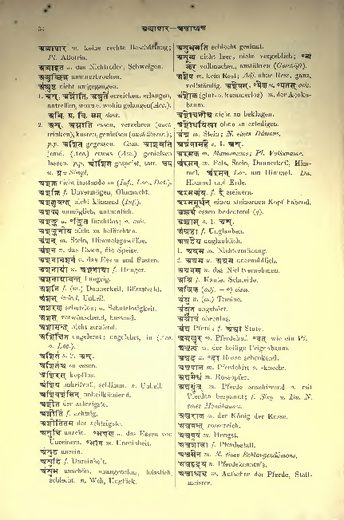
áśva Pferd; f. áśvā Stute.
Burnouf 1866 substantive masculine
Original text · French · substantive masculine
aśva aśva m. cheval. — aśvā f. jument. — aśvau du. cheval et jument. [D'une racine perdue aś aller, gr. ἰϰνέομαι.] Zd. aspa; lith. aszwa; lat. equus; gr. ἵππος. Cf. arvan. aśvakarṇa m. (karṇa) shorea robusta, bot. aśvakinī f. 1ᵉʳ astérisme lunaire. aśvakhurī f. (khura) clitoria ternatea, bot. aśvagandhā f. (gandh) physalis flexuosa, bot. aśvagoyuga n. (go-yuj) paire de chevaux. aśvagoṣṭha n. (g-sthā) écurie de chevaux. aśvaghna m. (han) nerium odorum, bot.
Occurrences in source texts (3)
SiSa 1 occurrence
Continue with AYI Free
Image source: AYI archive.