

ācāra आचार – conduct, manner of action
substantive masculine · substantive neuter · Word type unspecified
Dictionary sources
Cappeller 1891 substantive masculine
Original text · English · substantive masculine
ācāra ·m. conduct, (good) behaviour; custom, usage, ordinance, institute; abl. in °tas.
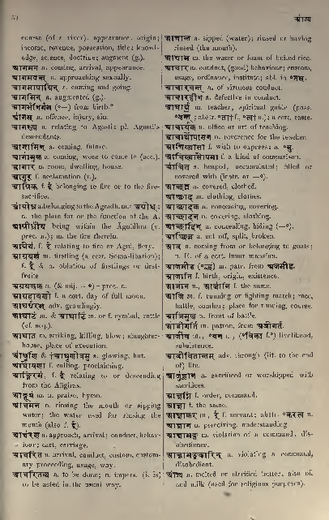
Monier-Williams 1872 substantive masculine
Original text · English · substantive masculine
Ā-cāra, as, m. conduct, manner of action; beha- viour; good conduct, good behaviour; custom, prac- tice, usage; an established rule of conduct, an ordi- nance, an institute, a precept; manner of conducting one's self, diet; rule; [cf. Hib. acara, ‘convenience, conveniency, use.’]
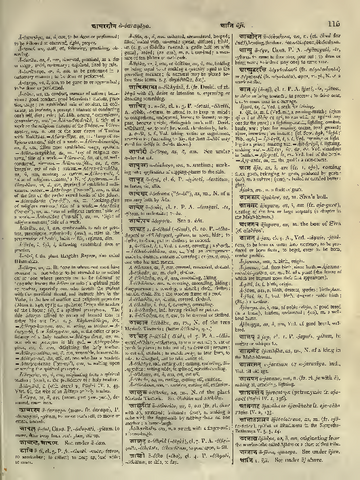
Petersburger 1855 substantive masculine · substantive neuter · Word type unspecified
Original text · German · substantive masculine
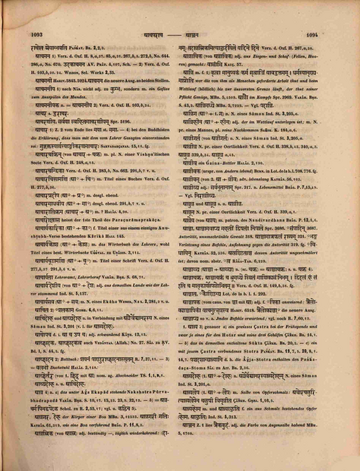
ācāra (von car mit ā) m. 1〉 Wandel, Handlungsweise, Betragen, Benehmen; guter Wandel, gutes Betragen; Herkommen, Brauch, Sitte, Observanz (die Bedeutungen spielen bisweilen so in einander über, dass keine Scheidung möglich ist) AK. 3,4,141. AK. 3,4,151. H. 80. H. 843. P. 3,1,10. upanīya guruḥ śiṣyaṃ śikṣayecchaucamāditaḥ . ācāramagnikāryaṃ ca saṃdhyopāsanameva ca .. M. 2,69. ācāraścaiva sādhūnām 6. sadācāra m. M. 2,12. M. 4,155. VP. 300. sādhvācāra adj. M. 2,193. svācārā YĀJÑ. 1,87. śiṣṭācāra m. MBH. 3,13760. fgg. śuklācārā R. 6,10,24. kalyāṇācāra adj. P. 3,2,1, Vārtt. 6, Sch. (als adj. erklärt). vigarhitācāra adj. M. 3,167. krūrācāra m. M. 10,9. adj. M. 4,246. nīcācāra adj. SUŚR. 2,144,6. durācāra adj. M. 4,157. BHAG. 9,30. f. ā PAÑCAT. I, 437. PRAB. 16,3. neben sadācārā PAÑCAT. 48,4. mithyācāra adj. BHAG. 3,6. pāpācāra adj. HIḌ. 1,48. rūpacāturyamādhuryaśīlācāraguṇānvitaḥ R. 1,6,13. ācāreṇa ca saṃyuktā SĀV. 6,16. caturṇāmapi varṇānāmācāraścaiva śāśvataḥ M. 1,107. fgg. tasmindeśe ya ācāraḥ pāraṃparyakramāgataḥ M. 2,18. YĀJÑ. 1,342. abhidakṣiṇamācāro devānāṃ prasavyaṃ pitṝṇām KAUŚ. 1. na śaucaṃ nāpi cācāro na satyaṃ teṣu vidyate BHAG. 16,7. ācārahīna M. 3,165. ācārādvicyutaḥ M. 1,109. ācārasya ca varjanāt M. 5,4. vibhīṣaṇaśca — rākṣasācāravarjitaḥ R. 3,23,38. lokācāravivarjita PAÑCAT. V, 33. bhraṣṭācāra adj. R. 3,37,5. ācārapālana MBH. 3,13764. ācārasaṃkara R. 1,6,17. ācārabheda Verletzung der hergebrachten Sitte P. 8,1,60, Sch. ekabrahmavratācārā mithaḥ sabrahmacāriṇaḥ AK. 2,7,11. maṅgalācārayukta M. 4,145. M. 4,146. śaucācārāṃśca śikṣayet YĀJÑ. 1,15. laukike samayācāre R. 2,1,16. ācāralājaiḥ farre sollemnt RAGH. 2,10. ācāradhūmagrahaṇāt RAGH. 7,24. guruśuśrūṣaṇācārā die gewohnt ist dem Lehrer zu gehorchen R. 3,1,7. NIR. 7,4. ṚV. PRĀT. 3,13. ṚV. PRĀT. 3,14. ācāra (es ist hergebrachte Sitte) iti — mamā gṛhītā yā vetrayaṣṭiḥ ŚĀK. 100. ācāra heisst der 1ste Adhyāya in YĀJÑAVALKYAʼs Gesetzbuch. — 2〉 bestimmte Verhaltungsweise, Diät SUŚR. 2,184,8. Vgl. ācārika. — 3〉 Richtschnur: tvamācāraḥ kriyāvatām (die Sonne wird angeredet) MBH. 3,166. — Vgl. anācāra.
Original text · German · substantive neuter
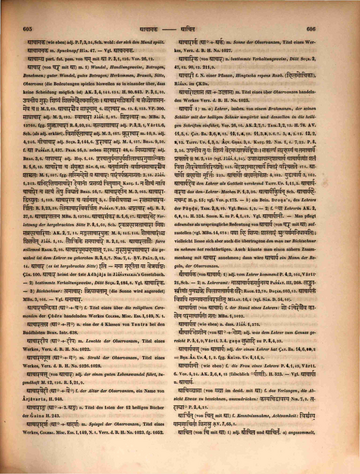
ācāra , atyācāra n. zu feines Benehmen und anācāra n. grobes Benehmen Spr. (II) 156.
Original text · German · Word type unspecified
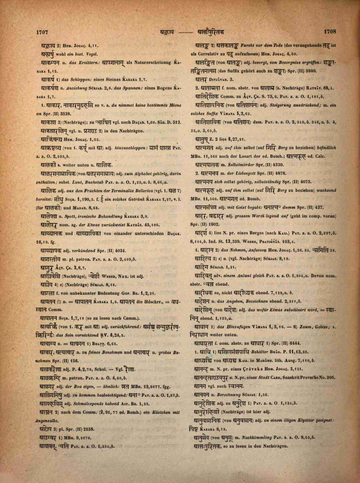
ācāra 1〉 Z. 2 vom Ende lies mayā st. mamā. — 4〉 bei den Buddhisten die Erklärung, dass man mit dem vom Lehrer Gesagten einverstanden sei: gurūktasyārthasyāṅgīkaraṇamācāraḥ SARVADARŚANAS. 15,11. fg.
Böhtlingk 1879 substantive masculine
Original text · German · substantive masculine
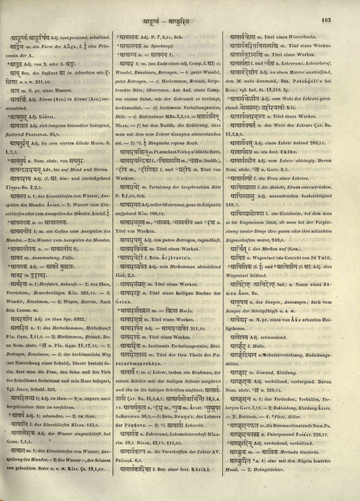
ācāra — 1〉 m. (am Ende eines adj. Comp. f. ā) — a〉 Wandel, Benehmen, Betragen. — b〉 guter Wandel, gutes Betragen. — c〉 Herkommen, Brauch, hergebrachte Sitte, Observanz. Am Anf. eines Comp. vor einem Subst. wie der Gebrauch es verlangt, herkömmlich. — d〉 bestimmte Verhaltungsweise, Diät. — e〉 Richtschnur MBH. 3,3,36 = āntaryāmin. NĪLAK. — f〉 bei den Buddh. die Erklärung, dass man mit dem vom Lehrer Gesagten einverstanden sei. — 2〉 *f. ī Hingtsha repens Roxb.
Apte 1890 substantive masculine
Original text · English · substantive masculine
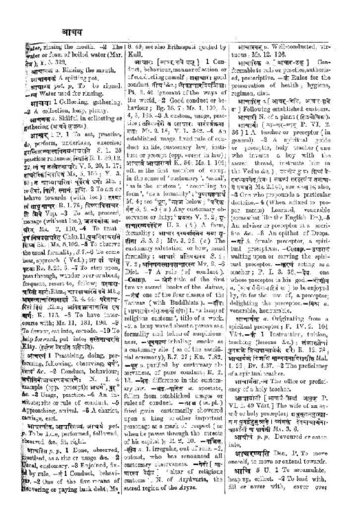
ācāraḥ [ācar-bhāve ghañ] 1 Conduct, behaviour, manner of action or of conducting oneself; sadācāraḥ good conduct; nīca˚ &c.; lokācāravivarjitāḥ Pt. 5. 40 ignorant of the ways of the world. 2 Good conduct or behaviour; Bg. 16. 7; Ms. 1. 109, Ms. 5. 4, Ms. 3. 165. 3 A custom, usage, practice; tasmindeśe ya ācāraḥ pāraṃparyakramāgataḥ Ms. 2. 18; Y. 1. 342. 4 An established usage, fixed rule of conduct in life, customary law, institute or precept (opp. vyavahāra in law); ācārya ācārāṇāṃ K. 56; Ms. 1. 109; oft. as the first member of comp. in the sense of ‘customary’, ‘usual’, ‘as is the custom’, ‘according to form’, ‘as a formality’; ˚puṣpagrahaṇārthaṃ M. 4; see ˚dhūma, ˚lāja below; ˚parikarman Ś. 2. 5 (a) Any customary observance or duty; ˚prayataḥ V. 3. 2; gṛhācāravyapadeśena U. 3. (b) A form, formality; ācāra ityavahitena mayā gṛhītā Ś. 5. 3; Mv. 3. 26. (c) The customary salutation or bow, usual formality; ācāraṃ pratipadyasva Ś. 4; V. 2; aviṣayastāvadācārasya Mv. 2. 6 Diet. 7 A rule (of conduct). Comp. — aṃgaṃ title of the first twelve sacred books of the Jainas. — taṃtraṃ one of the four classes of the Tantras (with Buddhists). — dīpaḥ [ācārārthaḥ nīrājanārtho dīpaḥ] 1 ‘a lamp of religious customs’, title of a work. 2 a lamp waved about a person as a formality and token of auspiciousness. — dhūmagrahaṇaṃ inhaling smoke as a customary rite (as of the sacrificial ceremony); R. 7. 27; Ku. 7. 82. — pūta a. purified by customary observances, of pure conduct; R. 2. 13. — bhedaḥ difference in the customary law. — bhraṣṭa, -patita a. apostate, fallen from established usages or rules of conduct. — lāja (m. pl.) fried grain customarily showered upon a king or other important personage as a mark of respect (as when he passes through the streets of his capital); R. 2. 10. — varjita, — hīna a. 1 irregular, out of rule. 2 outcast, who has renounced all customary observances. — vedī [ ācārasya vedīva] ‘altar of religious customs’, N. of Āryāvarta, the sacred region of the Āryas.
Cappeller 1887 substantive masculine
Original text · German · substantive masculine
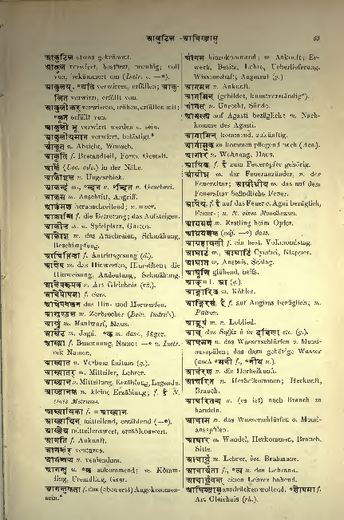
ācāra m. Wandel, Herkommen, Brauch, Sitte.
Burnouf 1866 substantive masculine
Original text · French · substantive masculine
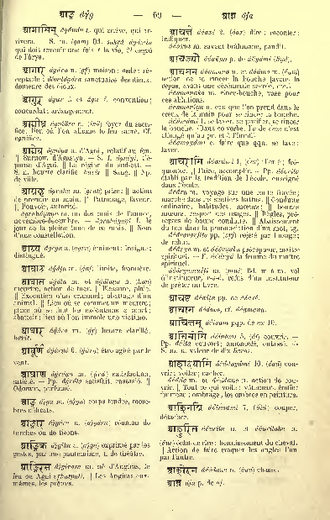
ācāra m. voyage sur une route frayée; marche dans les sentiers battus. Conduite ordinaire, habitudes, mœurs; bonnes mœurs, respect des usages. Règles, préceptes de bonne conduite. Abaissement du ton dans la prononciation d'un mot, tg.
Occurrences in source texts (4)
SiSa 4 occurrences
Continue with AYI Free
Image source: AYI archive.