

ādya आद्य – first; initial
adjective · substantive masculine · substantive neuter · Word type unspecified
Dictionary sources
AYI dictionary adjective
first; initial
Cappeller 1891 adjective
Original text · English · adjective
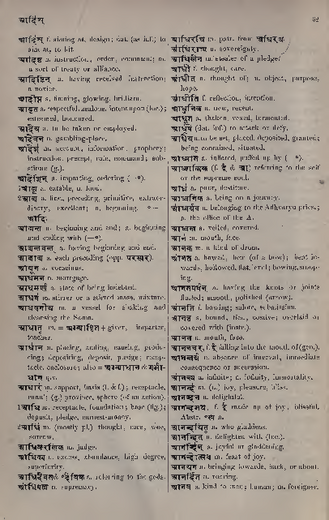
ādya2 ·a. first, preceding, primitive, extraordinary, excellent; n. beginning. °-- = ādi.
Monier-Williams 1872 adjective
Original text · English · adjective
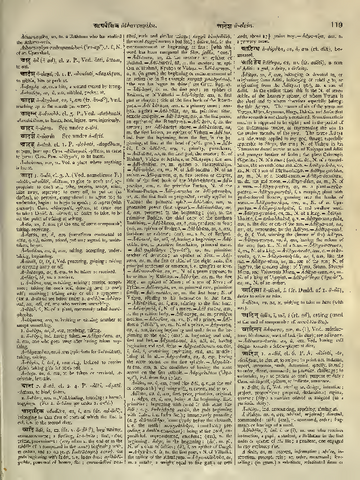
1. ādya, as, ā, am, being at the beginning, first, primitive; beginning with (used in this sense like ādi; e. g. Indrādyāḥ surāḥ, the gods beginning with Indra, i. e. Indra &c.); immediately preceding (e. g. ekādaśādya, immediately before the eleventh, i. e. the tenth; saṃyuktādya, immediately pre- ceding a double consonant); being at the head, un- paralleled, unprecedented, excellent; (am), n. the beginning; ādye, in the beginning; (ās), m. pl., N. of a class of deities; (ā), f. an epithet of Durgā.
Original text · English · adjective
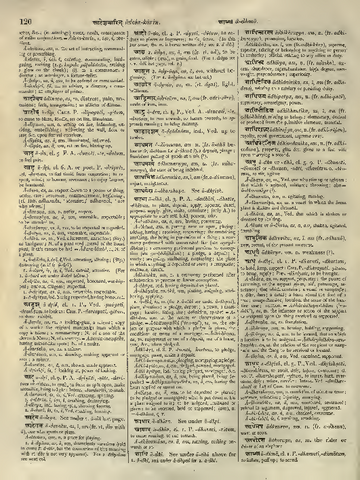
ādya 2 . ādya, as, ā, am (fr. rt. ad), to be eaten edible; (am), n. grain, food. (For 1. ādya see s. v. ādi last page, col. 2.)
Petersburger 1855 adjective · substantive masculine · substantive neuter · Word type unspecified
Original text · German · adjective · substantive neuter
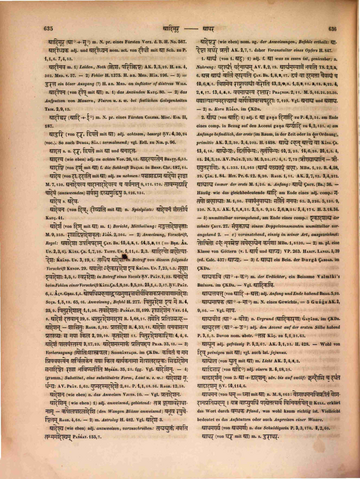
1. ādyà (von 1. ad) 1〉 adj. f. ā was zu essen ist, geniessbar; n. Nahrung: yadā̱dyaṃ1̱̀ yadànā̱dyam AV. 8,2,19. ā̱dyàma̱syānnàṃ bhavati TS. 2,2,5,6. attra ādyaṃ baliṃ hārayati ŚAT. BR. 1,8,2,17. dvayaṃ vā idamattā caivādyaṃ ca ŚAT. BR. 10,6,2,1. viśameva rāṣṭrāyādyāṃ karoti ŚAT. BR. 13,2,9,8. ŚAT. BR. 1,3,2,11. ŚAT. BR. 1,3,3,18. ŚAT. BR. 1,3,5,22. ŚAT. BR. 4,2,1,17. ŚAT. BR. 13,4,4,8. vayamādyasya dātāraḥ PRAŚNOP. 2,11. M. 5,16. M. 5,24. M. 5,25. M. 5,30. yathālpālpamadantyādyaṃ vāryokovatsaṣaṭpadāḥ M. 7,129. Vgl. anādya und annādya. — 2〉 n. Korn RĀJAN._im_ŚKDR.
Original text · German · adjective · substantive masculine
2. ā́dya (von ādi) 1〉 adj. f. ā gaṇa digādi zu P. 4,3,54. am Ende eines comp. in Bezug auf den Accent gaṇa vargyādi zu P. 6,2,131. a〉 am Anfange befindlich, der erste (im Raum, in der Zeit oder in der Ordnung), primitiv AK. 3,2,30. AK. 3,4,202. H. 1458. ādye 'han antye vā KĀTY. ŚR. 13,4,18. ādyebhyaḥ, dvitīyebhyaḥ, tṛtīyebhyaḥ KĀTY. ŚR. 10,2,25. KĀTY. ŚR. 16,6,28. KĀTY. ŚR. 20,1,5. KĀTY. ŚR. 20,4,15. KĀTY. ŚR. 24,3,38. AV. PRĀT. 3,23. M. 3,24. M. 3,47. M. 4,1. M. 7,72 (trīṇyādyāni — trīṇyuttarāṇi). M. 8,4. M. 8,333. M. 11,265 (ādyaṃ yattryakṣaraṃ brahma). MBH. 1,22. R. 4,58,29. ŚĀK. 1. ŚĀK. 84. HIT. Pr. 6. HIT. Pr. 12. HIT. Pr. 8,20. RAGH. 1,11. AK. 2,7,12. AK. 3,4,212. ādyādya immer der erste M. 1,20. n. Anfang: ādye ŚRUT. (BR.) 36. — Häufig wie das gleichbedeutende ādi am Ende eines adj. comp.: gatayo brahmādyāḥ M. 1,50. svāyaṃbhuvādyāḥ saptaite manavaḥ M. 1,63. M. 3,226. M. 5,131. M. 9,230. N. 3,5. AK. 1,1,1,31. AK. 1,2,5,8. AK. 1,1,9,24. AK. 2,6,3,21. AK. 2,3,4,171. H. 3. H. 18. H. 34. — b〉 unmittelbar vorangehend, am Ende eines comp.: ekādaśādya der zehnte ŚRUT. 27. saṃyuktādya einem Doppelconsonanten unmittelbar vorangehend 2. — c〉 voranstehend, einzig in seiner Art, ausgezeichnet: toṣito 'haṃ nṛpaśreṣṭha tvayehādyena karmaṇā MBH. 1,8130. — 2〉 m. pl. eine Klasse von Göttern (v. l. ārya und āpya) VP. 263. HARIV. LANGL. I, 39 (ed. Calc. 437: āpya). — 3〉 f. ādyā ein Bein. der Durgā ŚABDAR._im_ŚKDR.
Original text · German · Word type unspecified
2. ādya 1〉c〉 Spr. 3684. — 3〉 = pradhānā śaktiḥ, mahāvidyā MUṆḌAMĀLĀT. 10_im_ŚKDR.
Böhtlingk 1879 adjective · substantive masculine · substantive neuter
Original text · German · adjective · substantive neuter
1. ādyà, ādía — 1〉 Adj. (f. ā) essbar, geniessbar; n. Nahrung. — 2〉 n. *Korn.
Original text · German · adjective · substantive masculine
2. ādya — 1〉 Adj. (f. ā) — a〉 am Anfange befindlich, der erste. An Ende eines adj. Comp. (f. ā) den und den zum Ersten habend, so v. a. der und die übrigen. — b〉 am Ende eines Comp. unmittelbar vorangehend. — c〉 früher, älter BĪJAG. 162. 166. — d〉 voranstehend, einzig in seiner Art, unvergleichlich. — 2〉 m. Pl. eine Klasse von Göttern unter Manu Cākṣuṣa HARIV. 1,7,31 (v. l. āpya), VP. 3,1,27. — 3〉 f. ā — a〉 eine best. Form der Durgā. — b〉 *die Erde RĀJAN. 2,2.
Apte 1890 adjective · substantive neuter · Word type unspecified
Original text · English · adjective · substantive neuter
ādya a. [ādau bhavaḥ yat] 1 First, primitive, being at the beginning. 2 Being at the head, excellent, unparalleled, pre-eminent, foremost; āsīnmahīkṣitāmādyaḥ praṇavaśchaṃdasāmiva R. 1. 11. 3 (At the end of comp.) Beginning with, and so on; see ādi. 4 Immediately preceding; ekādaśādyaṃ Śrut. 27 immediately before the 11th, i. e. 10th; so saṃyuktādyaṃ Śrut. 2. 5 Eatable (ad-ṇyat). — dyāḥ (m. pl.) A class of deities. — dyā 1 An epithet of Durgā. 2 The first day (tithi) of a month. — dyaṃ 1 The beginning. 2 Grain, food. 3 A kind of funeral obsequial ceremony ( pitṛśrāddhameda). Comp. — kaviḥ ‘the first poet,’ an epithet of Brahmā or Vālmīki; see ādikavi. — bījaṃ the primary or material cause of the universe, which, according to the Sāṃkhyas, is pradhāna or the inanimate principle. — māṣakaḥ a measure of five gunjas (about 17.5 grains Troy).
Original text · English · Word type unspecified
ādya see under ādi.
Cappeller 1887 Word type unspecified
Original text · German · Word type unspecified
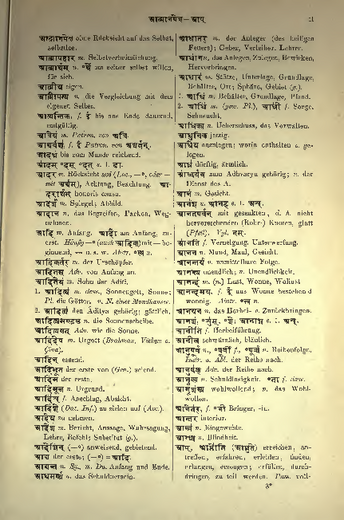
ādya der erste; (—˚) = ādi.
Burnouf 1866 adjective
Original text · French · adjective
ādya ādya a. (ādi) premier; primitif, primordial. Qui est dans la fleur de l'âge. — À la fin des composés, ce mot s'emploie comme ādi: mahendrādya précédé du grand Indra; sraja uttamagandhādyās guirlandes ayant pour première vertu un parfum délicieux. M§ 16, 6°. — S. f. ādyā, surnom de durgā. ādyakavi m. (kavi) surnom de Vālmīki. ādyamāṣaka m. un māṣa. ādyavīja n. la première semence, la fécondation primordiale.

Occurrences in source texts (6)
DYS 1 occurrence
SiSa 5 occurrences
Continue with AYI Free
Image source: AYI archive.