

bāla बाल – young; childlike
adjective · substantive masculine · substantive neuter · Word type unspecified
Dictionary sources
AYI dictionary adjective · substantive masculine
Cappeller 1891 adjective · Word type unspecified
Original text · English · adjective
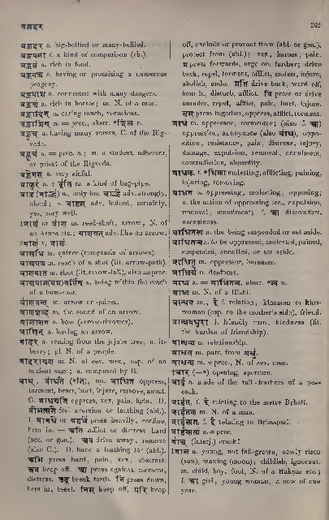
bāla1 ·a. young, not full-grown, newly risen (sun), waxing (moon); childish, ignorant. m. child, boy, fool, N. of a Rakṣas etc.; f. ā girl, young woman, a cow of one year.
Original text · English · Word type unspecified
bā́la2 ·-> vāla.
Monier-Williams 1872 adjective
Original text · English · adjective
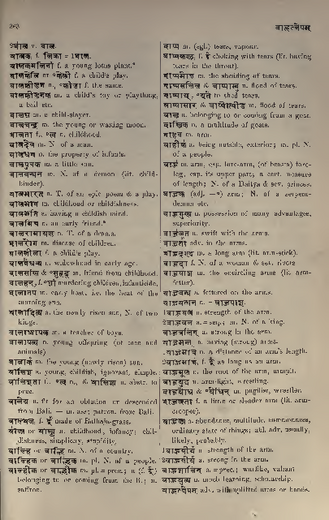
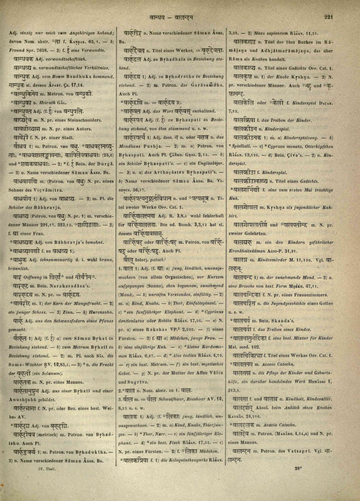
bāla bāla, as, ā, am (said to be fr. rt. 2. bal), young, childish, infantine, immature, not full- grown; newly risen (as the sun, cf. bālātapa, bālā- ditya, bālārka), new or waxing (as the moon, cf. bāla-candra, bālendu); puerile, ignorant, un- wise, uninstructed; pure (said especially of a female animal, as a heifer &c., fit for sacrifice); (as, ā), m. f. a child (especially one under five years of age, but also one under sixteen years of age generally), an infant; (in law) a minor (who is distinguished as a kumāra or boy under five years of age; śiśu, a boy under eight; pogaṇḍa, a boy from the fifth to the end of the ninth year, or where the next distinction is omitted, till the sixteenth year; and kiśora, a boy from the tenth to the sixteenth year); the young of an animal, a five years old elephant [cf. bāla-gaja]; a colt, foal; one whose under- standing is not matured, a simpleton, fool; a tail, an elephant or horse's tail; hair; (as, am), m. n. a kind of perfume or fragrant grass, Andropogon Schœnanthus; (as), m. a boy; a kind of fish, Cyprinus Denticulatus or Cyprinus Rohita; N. of a prince; (ā), f. a female child, girl, young woman not more than sixteen years of age; a woman, female; small cardamoms [cf. candra-b˚]; Aloe Indica [cf. ghṛta-kumārī]; a species of plant, com- monly called Aknadhi; a variety of jasmine; a species of flower, Hibiscus Tortuosus; the cocoa-nut; turmeric; a kind of metre, the quantities of the first three lines being ˘¯˘¯¯˘˘¯˘¯¯ and that of the fourth ¯¯˘¯¯ &c.; N. of the mother of Bālin and Sugrīva, (she is said to have been formed by Prajā- pati out of some dust which had fallen into his eyes); N. of a mystical prayer; (ī), f. a kind of ear-ring; [cf. Lith. wála-s, ‘horsehair.’]
Petersburger 1855 adjective · substantive masculine · substantive neuter
Original text · German · adjective · substantive masculine
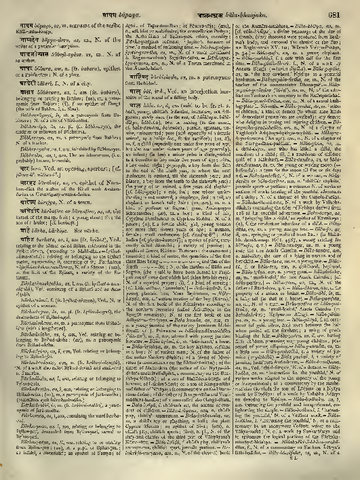
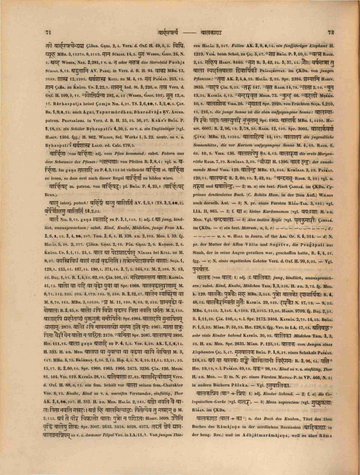
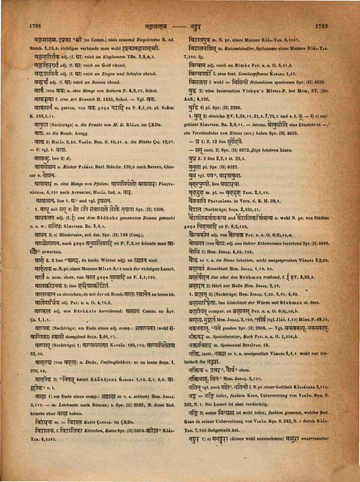
bālá NIR. 9,10. gaṇa jvalādi zu P. 3,1,140. 1〉 adj. f. ā jung, kindlich, unausgewachsen; subst. Kind, Knabe, Mädchen, junge Frau AK. 2,6,1,42. AK. 3,4,26,207. TRIK. 2,6,8. H. 338. H. an. 2,502. MED. I. 39. fg. HALĀY. 5,20. HALĀY. 2,377. ŚĀṄKH. GṚHY. 2,16. PĀR. GṚHY. 2,9. KAṬHOP. 2,6. CHĀND. UP. 5,1,11. CHĀND. UP. 5,24,5. bāla ā ṣoḍaśādvarṣāt NĀRADA_bei_KULL._zu_M. 8,27. vayastrividhaṃ bālaṃ madhyaṃ vṛddhamiti . tatronaṣoḍaśavarṣā bālāḥ SUŚR. 1,129,1. SUŚR. 1,155,11. SUŚR. 1,167,14. SUŚR. 1,180,1. SUŚR. 1,371,18. SUŚR. 2,7,3. SUŚR. 2,544,12. M. 2,208. N. 13,23. DAŚ. 1,11. R. 1,4,31. R. 1,62,10. ŚĀK. 101,21. mantriṇastasya bālaḥ KATHĀS. 41,12. bālo vā yadi vā yadi vā vṛddho yuvā vā Spr. 1968. bālavṛddhāturāṇām M. 8,71. M. 8,312. M. 8,350. M. 8,395. M. 4,179. M. 4,184. M. 9,230. R. 2,32,27. bālena sthavireṇa vā M. 8,70. M. 8,163. MBH. 3,10630. ˚ghna M. 11,190. M. 8,89. M. 9,232. jñānavṛddho vayobālaḥ R. 2,45,8. bālo 'pi vipro vṛddhasya pitā bhavati dharmataḥ M. 2,150. bālādapi grahītavyaṃ yuktamuktaṃ manīṣibhiḥ Spr. 1964. bālādapi subhāṣitam (grāhyam) Spr. 2870. bālo 'pi nāvamantavyo manuṣya iti nṛpaḥ Spr. 1967. mātā śatruḥ pitā vairīyena bālo na pāṭhitaḥ Spr. 2170. ˚vanitā Spr. 2087. bālāpatya Spr. 3891. HIT. 111,16. bālā gaṇa ajādi zu P. 4,1,4. VOP. 4,28. AK. 1,1,7,14. H. 333. H. an. MED. bālayā vā yuvatyā vā vṛddhayā vāpi yoṣitā M. 5,147. MBH. 4,75. BRĀHMAṆ. 1,30. BRĀHMAṆ. 2,14. HIḌ. 4,4. N. 4,29. N. 11,14. N. 13,21. N. 13,25. N. 15,17. R. 2,60,10. Spr. 1960. Spr. 1965. Spr. 1966. Spr. 2475. Spr. 3236. ŚĀK. 126. MEGH. 81. MEGH. 104. VID. 119. KATHĀS. 28,14. atibālā KATHĀS. 27,82. bālābhairavīṇām Verz. d. Oxf. H. 88,a,15. ein fem. behält vor bālā seinen fem.-Charakter VOP. 6,13. Knabe, Kind so v. a. unreifen Verstandes, einfältig, Thor AK. 3,4,26,207. H. 352. H. an. MED. HALĀY. 2,181. ajño bhavati vai bālaḥ pitā bhavati mantradaḥ . ajñaṃ hi bālamityāhuḥ pitetyeva tu mantradam .. M. 2. M. 153. ayaṃ te vīra vikrānto bālaḥ putro na paṇḍitaḥ HARIV. 5699. upaiti vṛddhiṃ bāleṣu śokaḥ Spr. 3007. Spr. 2635. Spr. 3454. Spr. 4028. Spr. 4575. tadrataṃ jñeyaṃ grāmabālajanapriyam so v. a. dummer Tölpel VET. in LA. 11,7. Von jungen Thieren HALĀY. 2,347. Füllen AK. 2,8,2,14. ein fünfjähriger Elephant H. 1219. VAIJ. beim Schol. zu ŚIŚ. 5,47. ˚gaja BHĀG. P. 9,10,6. ˚vatsa RAGH. 2,45. mahiṣa HARIV. 8440. ˚mṛga R. 3,42,24. R. 5,37,42. (gauḥ) varṣamātrā tu bālā syādatibālā dvivārṣikī PRĀYAŚCITTAT._im_ŚKDR. von jungen Pflanzen: ˚tṛṇa AK. 2,4,5,33. HALĀY. 2,35. Spr. 2394. śasyāni HARIV. 3835. ˚pādapa ŚĀK. 8,23. ˚taru ŚĀK. 147. ˚vṛkṣa RAGH. 14,78. ˚latā RAGH. 2,10. ˚cūta RAGH. 13,34. KATHĀS. 4,12. ˚mandāravṛkṣa MEGH. 73. ˚kunda MEGH. 66. ˚kadalī MṚCCH. 10,8. bālāśoka VIKR. 26. ˚mṛṇāla Spr. 2920. von Früchten SUŚR. 1,210,11. SUŚR. 1,216,8. die junge Sonne ist die eben aufgegangene Sonne: bālasyāpi raveḥ pādāḥ patantyupari bhūbhṛtām Spr. 1962. bālārka MBH. 1,4492. HARIV. 6007. R. 2,96,19. R. 3,78,30. RAGH. 12,100. Spr. 3005. bālārkavarṇa (Śiva) MBH. 12,10383. bālāditya MBH. 14,187. bālātapa die jugendliche Sonnenhitze, die vor Kurzem aufgegangene Sonne M. 4,69. RAGH. 6,60. RAGH. 10,9. VIKR. 136. bālātapeṣu ṚT. 4,13. bālāruṇa die erste Morgenröthe RAGH. 7,39. KUMĀRAS. 3,30. ˚saṃdhyā H. 1396. bāla induḥ der zunehmende Mond VIKR. 129. bālendu MBH. 13,846. KUMĀRAS. 3,29. PAÑCAT. 120,11. bālacandra R. 2,60,10. R. 3,42,34. ˚candramas RAGH. 3,22; vgl. u. taruṇa und abālendu. — 2〉 m. a〉 ein best. Fisch ŚABDAC._im_ŚKDR. Cyprinus denticulatus Buch. (C. Rohita Ham. in der 2ten Aufl.) WILSON nach derselb. Aut. — b〉 N. pr. eines Fürsten RĀJA-TAR. 3,103; vgl. LIA. II, 865. — 3〉 f. ā a〉 kleine Kardamomen (vgl. vayaḥsthā) H. an. MED. Vgl. candrabālā. — b〉 Aloe indica Royle (vgl. ghṛtakumārī) ŚABDAC._im_ŚKDR. — c〉 ein best. Metrum, a. b. c: ⏑ – ⏑ – – ⏑ ⏑ – ⏑ – – d: – – ⏑ – – u. s. w. HALL_in_Journ. of the Am. Or. S. 6,514. — d〉 N. pr. der Mutter der Affen Vālin und Sugrīva, die Prajāpati aus Staub, der in seine Augen gerathen war, geschaffen hatte, R. 6,4,31. fgg. — e〉 N. eines mystischen Gebetes Verz. d. Oxf. H. 99,b,23. — Vgl. punarbāla.
Original text · German · substantive neuter
bālá n. nom. abstr. von bāla gaṇa pṛthvādi zu P. 5,1,122.
Böhtlingk 1879 adjective · substantive masculine · substantive neuter
Original text · German · adjective · substantive masculine
1. bāla — 1〉 Adj. (f. ā) — a〉 jung, kindlich, unausgewachsen (von allem Organischen), vor Kurzem aufgegangen (Sonne), eben begonnen, zunehmend (Mond). — b〉 unreifen Verstandes, einfältig. — 2〉 m. — a〉 Kind, Knabe. — b〉 Thor, Einfaltspinsel. — c〉 *ein fünfjähriger Elephant. — d〉 *Cyprinus denticulatus oder Cyprinus rohita RĀJAN. 17,56. — e〉 N. pr. — α〉 eines Rakṣas VP. 22,293. — β〉 eines Fürsten. — 3〉 f. ā — a〉 Mädchen, junge Frau. — b〉 eine einjährige Kuh. — c〉 *kleine Kardamomen RĀJAN. 6,87. — d〉 *Aloe indica RĀJAN. 4,79. — e〉 ein best. Metrum. — f〉 ein best. mystisches Gebet. — g〉 N. pr. der Mutter der Affen Vālin und Sugrīva.
Original text · German · substantive masculine
3. bā́la m. = bā́la Schweifhaar, Rosshaar AV. 10,8,25 u. s. w.
Original text · German · substantive neuter
2. *bāla n. Nom. abstr. zu 1. bāla.
Apte 1890 adjective · substantive masculine
Original text · English · adjective · substantive masculine
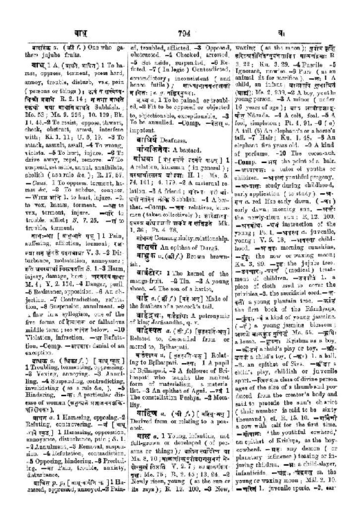
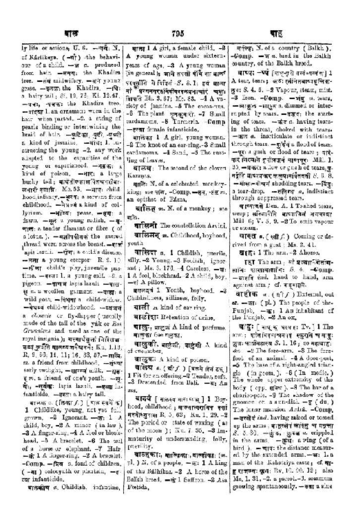
bāla a. 1 Young, infantine, not full-grown or developed (of persons or things); bālena sthavireṇa vā Ms. 8. 70; bālāśokamupoḍharāgasubhagaṃ bhedonmukhaṃ tiṣṭhati V. 2. 7; so bālamaṃdāravṛkṣaḥ Me. 75; R. 2. 45; R. 13. 24. 2 Newly risen, young (as the sun or its rays); R. 12. 100. 3 New, ([Page 0794-c]) waxing (as the moon); puṣoṣa vṛddhiṃ haridaśvadīdhiteranupraveśādiva bālacaṃdramāḥ R. 3. 22; Ku. 3. 29. 4 Puerile 5 Ignorant, unwise. 6 Pure (as an animal fit for sacrifice). — laḥ 1 A child, an infant; bālādapi subhāṣitaṃ (grāhyaṃ); Ms. 2. 239. 2 A boy, youth, young person. 3 A minor (under 16 years of age); bāla āṣoḍaśādvarṣāt Nārada. 4 A colt, foal. 5 A fool, simpleton; Pt. 4. 91. 6 (a) A tail. (b) An elephant's or a horse's tail. 7 Hair; Ku. 1. 48. 8 An elephant five years old. 9 A kind of perfume. 10 The cocoa-nut. Comp. — agraṃ the point of a hair. — adhyāpakaḥ a tutor of youths or children. — apatyaṃ youthful progeny. — abhyāsaḥ study during childhood, early application (to study). — aruṇa a. red like early dawn. — (ṇaḥ) early dawn; morning sun. — arkaḥ the newly-risen sun; R. 12. 100. — avabodhaḥ -dhanaṃ instruction of the young; Pt. 1. — avastha a. juvenile, young; V. 5. 18. — avasthā childhood. — a tapaḥ morning sunshine. — iṃduḥ the new or waxing moon; Ku. 3. 29. — iṣṭaḥ the jujube tree. — upacāraḥ, -caraṇaṃ (medical) treatment of children. — upavītaṃ 1 a piece of cloth used to cover the privities. 2 the sacrificial cord. — kadalī a young plantain tree. — kāṃḍaṃ the first book of the Rāmāyaṇa. — kuṃdaḥ, -daṃ a kind of young jasmine. — (daṃ) a young jasmine blossom; alake bālakuṃda nuviddhaṃ Me. 65. — kṛmiḥ a louse. — kṛṣṇaḥ Kṛṣṇa as a boy. — krīḍanaṃ a child's play or toy. — krīḍanakaṃ a child's toy. — (kaḥ) 1 a ball. 2 an epithet of Śiva. — krīḍā a child's play, childish or juvenile sport. — khilyaḥ a class of divine person ages of the size of a thumb and produced from the creator's body and said to precede the sun's chariot (their number is said to be sixty thousand); cf. R. 15. 10. — garbhiṇī a cow with calf for the first time. — gopālaḥ ‘the youthful cowherd,’ an epithet of Kṛṣṇa, as the boycowherd. — grahaḥ any demon (or planetary influence) teasing or injuring children. — ghnaḥ a child-slayer, infanticide. — caṃdraḥ, -caṃdramas m. the young or waxing moon; Māl. 2. 10. — caritaṃ 1 juvenile sports. 2 ([Page 0795-a]) early life or actions; U. 6. — caryaḥ N. of Kārtikeya. — (ryā) the behaviour of a child. — ja a. produced from hair. — tanayaḥ the Khadira tree. — taṃtraṃ midwifery. — tṛṇaṃ young grass. — dalakaḥ the Khadira. — dhiḥ a hairy tail; Śi. 12. 73; Ki. 12. 47. — patraḥ, -patrakaḥ the Khadira tree. — pāśyā 1 an ornament worn in the hair when parted. 2 a string of pearls binding or intertwining the braid of hair. — puṣṭikā, -puṣṭī, -puṣpī a kind of jasmine. — bodhaḥ 1 instructing the young 2 any work adapted to the capacities of the young or experienced. — bhadrakaḥ a kind of poison. — bhāraḥ a large bushy tail; bādhetolkākṣapitacamarībālabhāro davāgniḥ Me. 53. — bhāvaḥ childhood, infancy. — bhṛtyaḥ a servant from childhood. — bhaiṣajyaṃ a kind of collyrium. — bhojyaḥ pease. — mṛgaḥ a fawn. — mūlaṃ a young radish. — mṛṇālaḥ a tender filament or fibre (of a lotus.). — yajñopavītakaṃ the sacred thread worn across the breast. — rājaṃ lapis lazuli. — rogaḥ a child's disease. — latā a young creeper. R. 2. 10. — līlā child's play, juvenile pastime. — vatsaḥ 1 a young calf. 2 a pigeon. — vāyajaṃ lapis lazuli — vāsas n. a woollen garment. — vāhyaḥ a wild goat. — vidhavā a child-widow. — vaidhavyaṃ child-widowhood. — vyajanaṃ a chowrie or fly-flapper (usually made of the tail of the yāk or Bos Grunniens and used as one of the royal insignia); yasyārthayuktaṃ girirājaśabdaṃ kurvaṃti bālavyajanaiścamaryaḥ Ku. 1. 13; R. 9. 66; R. 14. 11; R. 16. 33, R. 16. 57. — sakhi, m. a friend from childhood. — saṃdhyā early twilight. — sātmyaṃ milk. — suhṛd m. a friend of one's youth. — sūryaḥ, -sūryakaḥ lapis lazuli. — hatyā infanticide. — hastaḥ a hairy tail.
Cappeller 1887 substantive masculine · Word type unspecified
Original text · German · substantive masculine
2. bā́la m. s. vāla.
Original text · German · Word type unspecified
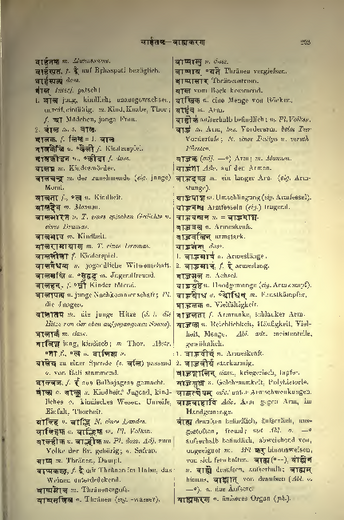
1. bāla jung, kindlich; unausgewachsen, unreif, einfältig, m. Kind, Knabe, Thor; f. ā Mädchen, junge Frau.
Burnouf 1866 adjective
Original text · French · adjective
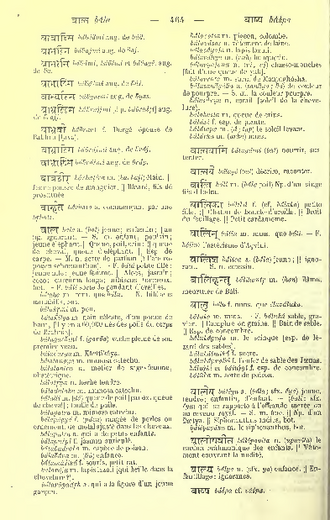
bāla bāla a. (bal) jeune; enfantin; au fig. ignorant. — S. m. enfant; poulain; jeune éléphant. Queue, poil, crin; queue de cheval, queue d'éléphant. Esp. de carpe. — M. n. sorte de parfum [? l'andropogon schœnanthus]. — F. bālā petite fille; jeune fille; jeune femme. Aloès; jasmin; coco; curcuma longa; hibiscus tortueux, bot. — F. bālī sorte de pendant d'oreilles. bālaka m. mm. que bāla. — N. hibiscus mutabilis, bot. bālakṛmi m. pou. bālakhilya m. nain céleste, d'un pouce de haut; [il y en a 60,000 nés des poils du corps de Brahmā]. bālagarbhinī f. (garbha) vache pleine de son premier veau. bālacarya m. Kārttikeya. bātatanaya m. mimosa catechu. bātatantra n. métier de sage-femme, obstétrique. bālatṛṇa n. herbe tendre. bāladalaka m. mimosa catechu. bāladhi m. (dhā) queue de poil [par ex. queue de cheval]; touffe de poils. bālapatra m. mimosa catechu. bālapāśyā f. (pāśa) rangée de perles ou ornement. de métal ajusté dans les cheveux. bālaputra a. qui a de petits enfants. bālapuṣpī f. jasmin auriculé. bālabhadraka m. espèce de poison. bālabhāva m. (bhū) enfance. bālamūṣikā f. souris, petit rat. bālarāja m. lapis lazuli [qui brille dans la chevelure ?]. bālarūpadṛh a. qui a la figure d'un jeune garçon. [Page464-2] bhālavatsa m. pigeon, colombe. bālavāsas n. vêtement de laine. bālavāyaja n. lapis lazuli. bālavāhya m. (vah) bouquetin. bālavyajana n. (vi; aj) chasse-mouches [fait d'une queue de yak]. bālavrata m. surn. de Mañjughoṣa. bālasandhyābha a. (sandhyā; bhā) de couleur de pourpre. — S. m. la couleur pourpre. bālasūrya n. corail [soleil de la chevelure]. bālahasta m. queue de crins. bālākṣī f. esp. de plante. bālātapa m. (ā; tap) le soleil levant. bālārka m. (arka) mms.
Occurrences in source texts (5)
HP 2 occurrences
SiSa 2 occurrences
VBT 1 occurrence
Continue with AYI Free
Image source: AYI archive.