

bhadra भद्र – auspicious; favourable; beneficial
adjective · substantive masculine · substantive neuter · Word type unspecified
Dictionary sources
AYI dictionary adjective
auspicious; favourable; beneficial
Cappeller 1891 adjective
Original text · English · adjective
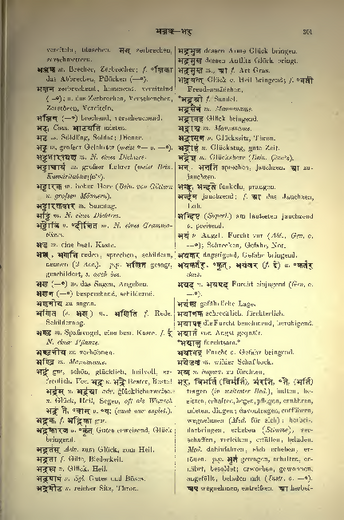
bhadrá ·a. bright, pleasing, good, happy; voc. bhadra, bhadre & bhadrās good sir, good lady, & good people! bhadrám & bhadráyā adv. luckily, fortunately. n. luck, prosperity, good fortune, bhadraṃ te or vaḥ happiness to thee or you (often only explet.).
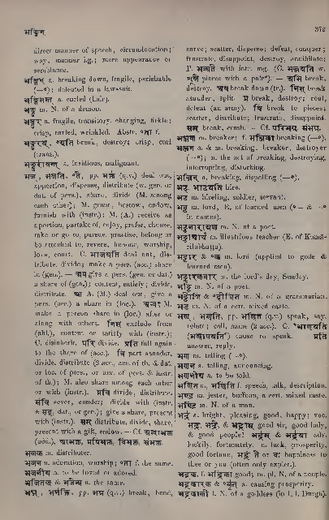
Monier-Williams 1872 adjective · Word type unspecified
Original text · English · adjective
Bhadra, as, ā, am, good, well, prosperous, happy, auspicious (e. g. bhadrā diś, the auspicious quarter, the south); favourable, propitious, gracious, kind, friendly, benevolent, pious, excellent, (bhadro nṛpatiḥ, a good or gracious king; often used in voc. sing. m. bhadra as a familiar mode of address, in the sense of ‘my good sir,’ ‘my dear fellow;’ and in voc. sing. f. bhadre, ‘my good lady,’ ‘my dear madam’); pleasant, enjoyable, desirable, laudable, commendable; lovely, beauti- ful; beloved, dear; specious, plausible, hypocritical, any hypocrite or impostor, (according to Kullūka on Manu IX. 258 = kalyāṇācāra-pracchanna-pāpa); (am), n. prosperity, happiness, welfare, good fortune, fortune, (bhadrāṇi, n. pl. = bhadram, good for- tune; bhadram a-vyāhatam, uninterrupted happi- ness or prosperity; bhadraṃ te, prosperity to thee! bhadraṃ vaḥ, happiness to you! may it be well with you! frequently mere forms politely used in conversation, and sometimes equivalent to our expres- sions ‘if you please,’ ‘with all deference or respect for you,’ &c.); gold; iron, steel; a fragrant grass, Cyperus Rotundus [cf. bhadra-musta]; a particular posture in sitting (= bhadrāsana); N. of the seventh of the eleven astronomical periods called Karaṇas; of various Sāmans; (as), m. a bullock; a term applied to a particular kind of elephant; N. of one of the elephants which support the world; a water wag-tail [cf. bhadra-nāman]; a heap, multi- tude (?); Nauclea Cadamba; Tithymalus Antiquorum; an epithet of Śiva; N. of one of the twelve sons of Viṣṇu and one of the Tuṣita deities in the Svā- yambhava Manv-antara; (with Jainas) N. of the third of the nine white Balas; N. of a son of Vasu- deva and Pauravī; of a son of Vasu-deva and Devakī; of a son of Upacāru-mat; of an actor; of a friend of Bāṇa; of a son of Kṛṣṇa; an epithet of mount Meru; (with Buddhists) N. of a particular world; (ās), m. pl., N. of a class of divinities under the third Manu; N. of a people; (ā), f. a cow; N. of various plants (= kṛṣṇā, anantā, rāsnā, pra-sāriṇī, jīvantī, aparājitā, nīlī, balā, śamī, vacā, dantī, haridrā, śveta-dūrvā, kāś- marī, sārivā-viśeṣa, kākoḍumbarikā); Gmelina Arborea; a kind of metre, the first and third lines of which are ˘¯˘¯¯˘˘¯˘¯¯, and the second and fourth ¯¯˘¯¯ &c.; N. of the second, seventh, and twelfth days of the lunar fortnight; of a goddess; of a Buddhist woman; of Dākṣāyaṇī in Bhadre- śvara; of a Vidyā-dharī; of a daughter of Surabhi; of a wife of Vasu-deva; of the wife of Vaiśravaṇa; of a daughter of Soma and wife of Utathya; of a daughter of Raudrāśva and the Apsaras Ghṛtācī; of a Kākṣīvatī and wife of Vyuṣitāśva; of a daughter of Meru and wife of Bhadrāśva; of a daughter of Sruta-kīrtti and wife of Kṛṣṇa; of various rivers; of a river described as rising on the northern summit of Meru and flowing through Uttara-kuru into the northern ocean; the celestial Ganges; bhadram, bhadrayā, bhadrebhis, ind., Ved. auspiciously, favourably, propitiously, happily, well, rightly; [cf. Lat. fastus for fad-tus, fastigium, fastidium, festivus: Goth. bats, bat-iza, ‘better;’ bat-ista, ‘best:’ Angl. Sax. bet: Old Germ. baz, ‘better;’ beziro, bezisto, ‘best:’ Goth. ga-bat-non, bot-a, bot-jan: Angl. Sax. bót: Hib. feodhas, ‘better;’ badhach, ‘famous;’ perhaps maith: Cambro-Brit. mad, ‘good.’]
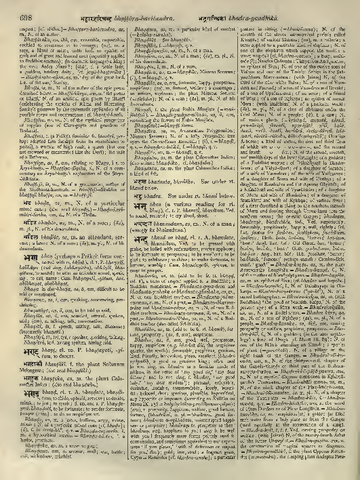
Original text · English · Word type unspecified
bhadra bhadra. See under rt. bhand below.
Petersburger 1855 adjective · substantive masculine · substantive neuter · Word type unspecified
Original text · German · adjective · substantive masculine · substantive neuter
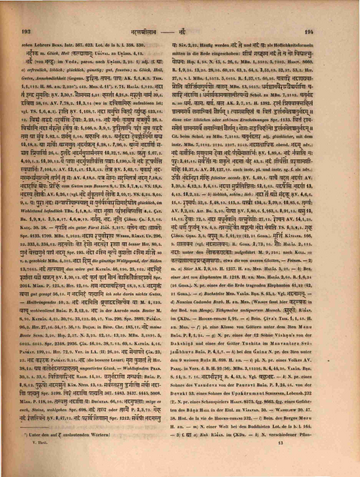
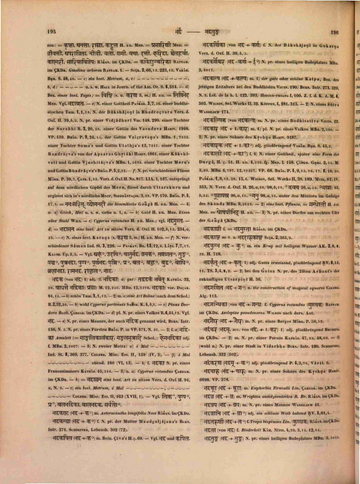
bhadrá (von bhand) im Veda, parox. nach UṆĀDIS. 2,28. 1〉 adj. (f. ā) a〉 erfreulich, löblich; glücklich, günstig; gut, faustus; n. Glück, Heil, Gutes, Annehmlichkeit (Gegens. durita, tapana, pāpa) AK. 1,1,4,3. TRIK. 1,1,113. H. 86. H. an. 2,230*⁾. an. 2,442. MED. d. 11*⁾. MED. r. 71. HALĀY. 1,122. bha̱drā tà indra suma̱tiḥ ṚV. 3,30,7. saumanasa ṚV. 3,1,21. hastā̀ ṚV. 4,21,9. ma̱rutā̱ṃ nāmà ṚV. 4,39,4. draviṇa ṚV. 4,58,10. AV. 7,78,2. AV. 18,3,14 (wo in draviṇamiha aufzulösen ist; vgl. TS. 1,6,4,3). rāti ṚV. 1,168,7. bha̱drā tvamùṣo vita̱raṃ vyùccha ṚV. 123,11. ṚV. 1,12. viśva̱ṃ tadbha̱draṃ yadavànti de̱vāḥ ṚV. 2,23,19. bha̱draṃ manàḥ kṛṇuṣva vṛtra̱tūryè ṚV. 2,26,2. viśvā̀ni bha̱drā màruto̱ rathèṣu vaḥ ṚV. 1,166,9. ṚV. 3,9,7. du̱ri̱tāni̱ parā̀ suva̱ yadbha̱draṃ tanna̱ ā sùva ṚV. 5,82,5. śarman ṚV. 5,1,10. ahāni ṚV. 5,49,3. abhū̀dbha̱drā de̱vahū̀tirno a̱dya ṚV. 10,18,3. ā gāvò agmannu̱ta bha̱dramàkran ṚV. 6,28,1. ṚV. 7,96,3. a̱sme bha̱drāṇì saścata pri̱yāṇì ṚV. 7,26,4. e̱tadvai bha̱dramànu̱śāsànasya ṚV. 10,32,7. ṚV. 10,86,23. kratu ṚV. 1,67,2. ṚV. 4,10,1. ṚV. 4,10,2. ṚV. 10,30,12. ye pā̱pā bha̱dramùpa̱jīvànti pa̱jrāḥ ṚV. 1,190,5. ye bha̱draṃ dū̱ṣayànti sva̱dhābhìḥ ṚV. 7,104,9. AV. 12,1,47. AV. 13,4,42. kṣetra ṚV. 5,62,7. ca̱kārà bha̱drama̱smabhyàmā̱tmane̱ tapàna̱ṃ tu saḥ AV. 4,18,6. yatra̱ soma̱ḥ sada̱mittatrà bha̱dram AV. 7,18,2. bha̱drādadhi̱ śreya̱ḥ prehì vom Guten zum Bessern AV. 4,8,1. TS. 5,7,2,4. VS. 18,8. bha̱drasya̱ lokàḥ AV. 6,26,1 (vgl. bha̱dre sùkṛ̱tasyà loke AV. 2,10,7). VS. 4,34. VS. 8,60. VS. 9,4. yaḥ pu̱rā bha̱draḥ sanpāpī̀yā̱nsyāt sa punàrvasvora̱gnimādàdhīta glücklich, im Wohlstand befindlich TBR. 1,1,2,3. bha̱drā bhū̱tvā parā̀bhaviṣyanti TBR. 4,4. ŚAT. BR. 1,9,7,4. ŚAT. BR. 3,5,4,17. ŚAT. BR. 4,6,9,19. bhargas, bhadra, bhūti ŚĀṄKH. ŚR. 5,1,10. KAUŚ. 50. KAUŚ. 58. — nṛpati ein guter Fürst YĀJÑ. 1,317. vṛttena bhadraḥ (jāyate) Spr. 4135. Spr. 1709. MBH. 1,2622. bhadrāya raghuvīrāya WEBER, RĀMAT. UP. 296,22. WEBER, RĀMAT. UP. 333,6. WEBER, RĀMAT. UP. 334,12. tadanayoḥ ko deśo bhadrataro rājā vā besser HIT. 80,5. śubhaṃ vettyaśubhaṃ pāpaṃ bhadram Spr. 195. bhadro 'smi nṛtye kuśalo 'smi gīte so v. a. geschickt MBH. 4,305. bhadrā diś die günstige Weltgegend, der Süden MBH. 13,7665. bhadraṃ tatsyāt das wäre gut KATHĀS. 46,190. KATHĀS. 25,162. bha̱drami̱daṃ ruśàmā agne akran ṚV. 5,30,12. bhadraṃ kṛtaṃ kṛtaṃ maunaṃ kokilairjaladāgame Spr. 2014. MĀRK. P. 125,8. HIT. 12,10. tanna bhadramācaritam HIT. 18,3, v. l. bhadramuktaṃ tvayā gut gesagt HIT. 56,18. na bhadramidaṃ paśyāmi ich sehe darin nichts Gutes, — Heilbringendes HIT. 10,3. bhadraṃ bhadramiti brūyādbhadramityeva vā M. 4,139. vāc wohlwollend BHĀG. P. 3,12,9. bhadra in der Anrede mein Bester M. 8,90. KATHĀS. 4,33. KATHĀS. 30,76. KATHĀS. 33,123. KATHĀS. 40,47. VID. 290. Spr. 3889. PAÑCAT. 96,3. HIT. 27,16. HIT. 54,17. HIT. 56,15. DAŚAK._in_BENF. Chr. 185,11. bhadre meine Beste SUND. 3,20. HIḌ. 2,37. N. 3,25. N. 12,51. N. 13,39. MBH. 3,2891. MBH. 5,6025. MBH. 5,6045. Spr. 2348. Spr. 2936. ŚĀK. 16,20. ŚĀK. 38,7. ŚĀK. 38,15. ŚĀK. 69,8. KATHĀS. 4,16. PAÑCAT. 199,24. HIT. 72,9. VET. in LA. (II) 26,20. bhadra senāpate ŚĀK. 23,23. bhadra karaṭka PAÑCAT. 9,21. bhadra (die bessere Lesart) mṛga kuśalaṃ te HIT. 38,12. atha kalerbhadramavyāhatam ungestörtes Glück, — Wohlbefinden PRAB. 30,3. PRAB. 30,4. PRAB. 33,6. vijitāribhadra RAGH. 14,31. jagurbhadrāṇi gandharvāḥ BHĀG. P. 8,8,12. puruṣo bhadramaśnute KĀM. NĪTIS. 13,12. sarvastaratu durgāṇi sarvo bhadrāṇi paśyatu Spr. 5199. ciraṃ bhadrāṇi paśyati Spr. 367. Spr. 1483. Spr. 3437. Spr. 4445. Spr. 5008. MĀRK. P. 118,20. tanvantu bhadrāṇi vaḥ DHŪRTAS. 66,10. bhadramupalāḥ möge es euch, Steine, wohlgehen Spr. 698. bhadraṃ tasya oder tasmai P. 2,3,73. neha bha̱draṃ ràkṣasvine ṚV. 8,47,12. bhadraṃ parārthekṣiṇām Spr. 1212. sarveṣāṃ bhadramastu vaḥ SĀV. 2,32. Häufig werden bhadraṃ te und bhadraṃ vaḥ als Höflichkeitsformeln mitten in die Rede eingeschoben: śīghraṃ gacchāma bhadraṃ te na no vidyātsuyodhanaḥ HIḌ. 4,58. N. 15,5. N. 26,6. MBH. 1,5582. MBH. 5,7303. HARIV. 8660. R. 1,9,34. R. 1,13,20. R. 1,28,30. R. 1,60,29. R. 1,63,2. R. 1,64,5. R. 3,51,19. R. 3,52,37. R. 3,53,2. HIT. 27,9, v. l. MBH. 1,5573. MBH. 5,6034. R. 1,57,17. R. 1,60,26. catvāri bhadrāṇyavāpnoti kīrtimāyuryaśo balam MBH. 13,5657. dharmajñānavairāgyaiśvaryāṇi catvāri bhadrāṇi . dharmārthakāmabalānītyanye Schol. zu MBH. 7,2182. caturbhadra n. = dharma, kāma, artha, bala AK. 2,7,57. H. 1382. dānaṃ priyavāksahitaṃ jñānamagarvaṃ kṣamānvitaṃ śauryam . tyāgasahitaṃ ca vittaṃ durlabhametaccaturbhadram .. diese vier löblichen oder schönen Erscheinungen Spr. 1133. vittaṃ dānasametaṃ jñānamagarvaṃ kṣamānvitaṃ śauryam . bhogaḥ saṅgavihīno durlabhametaccaturbhadram .. Cit. beim Schol. zu MBH. 7,2182. caturbhadratara adj. glücklicher, mit dem instr. MBH. 7,2182. MBH. 7,2194. MBH. 7,2207. MBH. 7,2449. bhadraśatādhika ebend. bhadram adv.: bha̱draṃ karṇèbhiḥ śṛṇuyāma devā bha̱draṃ pàśyemā̱kṣabhìḥ ṚV. 1,89,8. bha̱draṃ bhàvāti naḥ pu̱raḥ ṚV. 2,41,11. sa̱rvatò naḥ śakune bha̱dramā vàda ṚV. 2,43,2. bha̱draṃ jīvànto jara̱ṇāmaśīmahi ṚV. 10,37,6. AV. 20,127,10. auch instr. pl. und instr. sg. f. als adv.: uṣò bha̱drebhi̱rā gàhi feliciter accede ṚV. 1,49,1. vācàṃ vadata bha̱drayā̀ AV. 3,30,3. AV. 4,12,2. AV. 9,4,11. bha̱drayā̱ supràtiṣṭhitaḥ AV. 12,1,63. yadvarṣàsi bha̱drayā̀ AV. 13,4,43. AV. 18,2,52. *⁾ Unter den auf da auslautenden Wörtern! — b〉 lieblich, schön; lieb: bha̱drā tè agne sa̱ṃdṛk ṚV. 4,6,6. ṚV. 4,11,1. ra̱śmayàḥ ṚV. 52,5. ṚV. 1,48,13. ṚV. 115,2. vastrā̀ ṚV. 134,4. ṚV. 3,39,2. ṚV. 10,85,6. ta̱nvàḥ AV. 9,2,25. AIT. BR. 5,25. yoṣā ṚV. 5,80,6. ṚV. 1,163,5. ṚV. 8,91,15. asu ṚV. 10,14,12. devāḥ ṚV. 10,72,5. bha̱drā va̱dhūrbhàvati̱ yatsu̱peśā̀ḥ ṚV. 10,27,12. rocana AV. 14,1,38. bha̱draṃ varṇa̱ṃ puṣpàn VS. 4,2. tasmā̱dekò bahū̱nāṃ bha̱dro bhàvati TS. 6,5,1,4. gṛha ŚĀṄKH. GṚHY. 3,5. vapus R. 1,41,22 (R. 1,42,21 GORR.). mūrti KĀVYAPR. 166,9. śālavana (vgl. bhadrasālavana) R. GORR. 2,73,10. gauḥ HALĀY. 2,115. bhadrāḥ unter den lokakaṇṭakāḥ aufgeführt M. 9,258; nach KULL. = kalyāṇācārapracchannapāpāḥ, etwa die von aussen Glatten, — Feinen. — 2〉 m. a〉 Stier AK. 2,9,59. H. 1257. H. an. MED. HALĀY. 5,21. — b〉 Bez. einer Art von Elephanten H. 1218. H. an. MED. HALĀY. 2,60. R. 1,6,24 (R. 1,6,26 GORR.). N. pr. eines der die Erde tragenden Elephanten R. 1,41,22 (R. 1,42,21 GORR.). — c〉 Bachstelze MED. VARĀH. BṚH. S. 45,2. Vgl. bhadranāman. — d〉 Nauclea Cadamba Roxb. H. an. MED. (WILSON fasst hier kadambaka in der Bed. von Menge). Tithymalus antiquorum Moench. (snuhī) RĀJAN._im_ŚKDR. — HIOUEN-THSANG I, 91. — e〉 Bein. Śivaʼs TRIK. 1,1,48. H. an. MED. — f〉 pl. eine Klasse von Göttern unter dem 3ten Manu BHĀG. P. 8,1,24. — g〉 N. pr. eines der 12 Söhne Viṣṇuʼs von der Dakṣiṇā und eines der Götter Tuṣita im Manvantara Svāyaṃbhuva BHĀG. P. 4,1,7. — h〉 bei den Jaina N. pr. des 3ten unter den 9 weissen Bala H. 698. H. an. — i〉 pl. N. pr. eines Volkes AV. PARIŚ._in_Verz. d. B. H. 93 (56). MBH. 3,15256. R. 4,44,20. VARĀH. BṚH. S. 14,2. VARĀH. BṚH. S. 14,7. VARĀH. BṚH. S. 14,16. bhadrābhīrān R. 4,43,5. Vgl. bahubhadra. — k〉 N. pr. eines Sohnes des Vasudeva von der Pauravī BHĀG. P. 9,24,46. von der Devakī BHĀG. P. 53. eines Sohnes des Upakārumant SCHIEFNER, Lebensb. 232 (2). N. pr. eines Schauspielers HARIV. 8575. fgg. HARIV. 8665. fgg. eines Gefährten des Bāṇa HALL in der Einl. zu VĀSAVAD. 50. — WASSILJEW 30. WASSILJEW 47. WASSILJEW 58. Hist. de la vie de HIOUEN-THSANG 332. — l〉 Bein. des Berges Meru H. an. — m〉 N. einer Welt bei den Buddhisten Lot. de la b. l. 164. — 3〉 f. ā a〉 Kuh RĀJAN._im_ŚKDR. — b〉 N. verschiedener Pflanzen: = kṛṣṇā, anantā, rāsnā, kaṭphala H. an. MED. = prasāriṇī MED. = jīvantī, aparājitā, nīlī, valā, śamī, vacā, dantī, haridrā, śvetarūrvā, kāśmarī, sārivāviśeṣaḥ RĀJAN._im_ŚKDR. = kākoḍumbarikā RATNAM._im_ŚKDR. Gmelina arborea RATNAM. 1. — SUŚR. 2,66,13. SUŚR. 2,223,15. VARĀH. BṚH. S. 48,40. — c〉 ein best. Metrum, a. c: ⏑ – ⏑ – – ⏑ ⏑ – ⏑ – –, b. d: – – ⏑ – – u. s. w. HALL_in_Journ. of the Am. Or. S. 6,514. — d〉 Bez. eines best. Tages; = viṣṭi (s. u. karaṇa 3,m.) H. an. = tithibheda MED. Vgl. bhadrāvrata. — e〉 N. einer Gottheit PAÑCAR. 3,7,36. einer buddhistischen TRIK. 1,1,18. N. der Dākṣāyaṇī in Bhadreśvara Verz. d. Oxf. H. 39,b,3. N. pr. einer Vidyādharī VID. 148. VID. 290. einer Tochter der Surabhi R. 3,20,28. einer Gattin des Vasudeva HARIV. 1948. VP. 439. BHĀG. P. 9,24,44. der Gattin Vaiśravaṇaʼs MBH. 1,7352. einer Tochter Somaʼs und Gattin Utathyaʼs MBH. 13,7241. einer Tochter Raudrāśvaʼs von der Apsaras Ghṛtāci HARIV. 1661. einer Kākṣīvatī und Gattin Vyuṣitāśvaʼs MBH. 1,4695. einer Tochter Meruʼs und Gattin Bhadrāśvaʼs BHĀG. P. 5,2,22. — f〉 N. pr. verschiedener Flüsse MĀRK. P. 59,7. ŚATR. 1,55. Verz. d. Oxf. H. No. 817. LIA. I, 167. entspringt auf dem nördlichen Gipfel des Meru, fliesst durch Uttarakuru und ergiesst sich inʼs nördliche Meer, SIDDHĀNTAŚIR. 3,38. VP. 170. BHĀG. P. 5,17,8. = nabhaḥsarit, vyomanadī die himmlische Gaṅgā H. an. MED. — 4〉 n. a〉 Glück, Heil u. s. w. siehe u. 1,a. — b〉 Gold H. an. MED. Eisen oder Stahl WILS. — c〉 Cyperus rotundus H. an. MED.; vgl. bhadramusta. — d〉 = bhadrāsana eine best. Art zu sitzen Verz. d. Oxf. H. 102,b,13. Verz. d. Oxf. H. 234,a,23. — e〉 N. eines best. Karaṇa (s. karaṇa 3,m.) H. an. MED. — f〉 N. verschiedener Sāman Ind. St. 3,226. — PAÑCAV. BR. 13,12,6. LĀṬY. 7,7,17. KAUṢ. UP. 1,5. — Vgl. ahaṃ˚, udayi˚, cāturbhadra, janaka˚, tathāgata˚, tuṅga˚, pañca˚, putrabhadrā, puṣpa˚, pūrṇabhadra, pṛśni˚, pra˚, bala˚, bahu˚, buddha˚, bodhi˚, brahmabhadrā, rāmabhadra, rāhula˚, bhādra.
Original text · German · Word type unspecified
bhadra 2〉b〉 VARĀH. BṚH. S. 67,1. VARĀH. BṚH. S. 67,5. — k〉 N. pr. KATHĀS. 123,92. ein Sohn Kṛṣṇaʼs BHĀG. P. 10,61,14. — 3〉d〉 vgl. Ind. St. 10,297. — e〉 eine Tochter Śrutakīrtiʼs und Gattin Kṛṣṇaʼs BHĀG. P. 10,58,56. BHĀG. P. 10,61,17. — Vgl. noch mahā˚, su˚.
Böhtlingk 1879 substantive masculine · substantive neuter · Word type unspecified
Original text · German · substantive masculine · substantive neuter
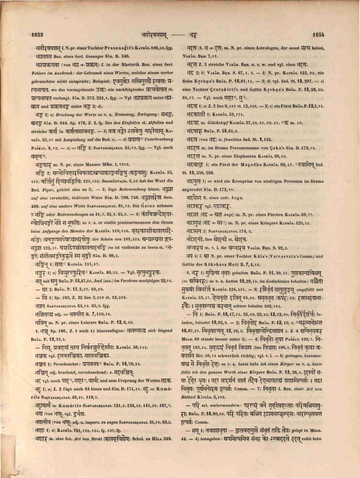
bhadrá (f. ā́) — 1〉 erfreulich, gut, herrlich, schön; faustus, glücklich, im Wohlstand sich befindend. Mit einem Loc. gut in, so v. a. geschickt in; diś f. die glückbringende Weltgegend, Süden; vāc f. erfreuliche, wohlwollende Worte, Voc. bhadra so v. a. mein Bester, guter Freund, bhadre meine Beste, bhadrās (KĀD. 2,104,10) lieben Leute. Auch mit einem Subst. bhadra senāpate lieber General. bhadratara besser; bhadrám und bhadráyā als Adv. erfreulich, zur Freude. — 2〉 m. — a〉 Pl. Bez. einer Art von Bösewichtern M. 9,258. — b〉 eine bes. Art von Elephanten RĀJAN. 19,17. — c〉 Stier. — d〉 Bachstelze. — e〉 Nauclea cadamba. — f〉 Tithymalus antiquorus RĀJAN. 8,51. — g〉 Bein. — α〉 Śivaʼs. — β〉 des Berges Meru. — h〉 N. pr. — α〉 Pl. einer Klasse von Göttern unter dem 3ten Manu. — β〉 Pl. eines Volkes. — γ〉 eines Sohnes des Viṣṇu. — δ〉 des 3ten unter den 9 Bala bei den Jaina. — ε〉 eines Sohnes des Vasudeva, des Kṛṣṇa und verschiedener anderer Männer. — ζ〉 eines Weltelephanten. — η〉 einer Welt bei den Buddhisten. — 3〉 f. bhadrā — a〉 Kuh RĀJAN. 19,27. — b〉 Bez. verschiedener Pflanzen. Nach den Lexicographen Gmelina arborea und = anantā, āparājitā, kaṭphala, kākodumbarikā, kṛṣṇā, jīvantī, dantī, nīlī, prasāriṇī, balā, rāsnā, vacā, śamī, śvetadūrvā, sārivāviśeṣa und haridrā. — c〉 ein best. Metrum. — d〉 das 7ten bewegliche Karaṇa; Vgl. 2. karaṇa 4〉n〉. — e〉 der zweite lunar Tag Ind. St. 10,297. — f〉 eine Form der Durgā VP. 5,1,83. — g〉 N. pr. — α〉 einer Gottheit, auch einer buddhistischen. — β〉 einer Śakti HEMĀDRI 1,198,5. — γ〉 der Dākṣāyaṇī in Bhadreśvara. — δ〉 einer Vidyādharī. — ε〉 einer Surāṅganā Ind. St. 15,232. — ζ〉 einer Tochter der Surabhi, einer Gattin des Vasudeva und verschiedener anderer Frauen HEM. PAR. 11,130. — η〉 verschiedener Flüsse. — ϑ〉 eines Sees HEMĀDRI 1,352,15. Vgl. bhadrasaras. — 4〉 n. — a〉 Glück, Heil, Gutes, Annehmlichkeit. Auch. Pl. bhadramupalāḥ möge es euch, Steine, wohlgehen! bhadraṃ te und bhadraṃ vaḥ als Höflichkeitsformeln mitten in die Rede eingeschoben. — b〉 Gold. — c〉 Eisen oder Stahl. [Page4-248-c] — d〉 eine Cyperus-Art. — e〉 eine best. Art zu sitzen. — f〉 eine best. Karaṇa; vgl. 2. karaṇa 4〉n〉. — g〉 Name verschiedener Sāman ĀRṢ. BR. — h〉 ein best. mystisches Zeichen AGNI-P. 29,28.
Original text · German · Word type unspecified
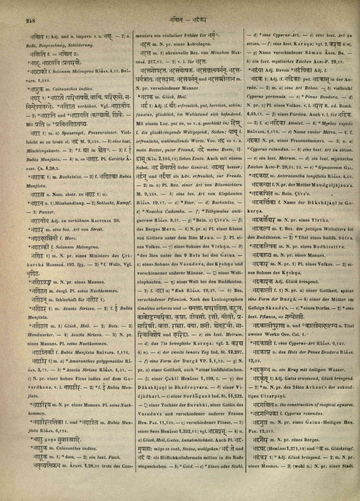
bhadra 2〉g〉β〉 vgl. ZACH. Beitr. [Nachtrag, Band 5]
Original text · German · Word type unspecified
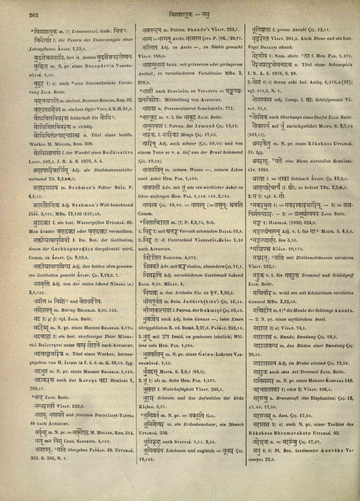
bhadra IV. 5. n. ein best. Theil des Hauses DAMAYANTĪK. 258. [Nachtrag, Band 7]

Apte 1890 adjective · substantive masculine · substantive neuter
Original text · English · adjective · substantive masculine · substantive neuter
bhadra a. [bhaṃd-rak ni˚ nalopaḥ Uṇ. 2. 28] 1 Good, happy, prosperous. 2 Auspicious, blessed; as in bhadramukha. 3 Foremost, best, chief, papraccha bhadraṃ vijitāribhadraḥ R. 14. 31. 4 Favourable, propitious. 5 Kind, gracious, excellent, friendly, good; often used in voc. sing. in the sense of ‘my good sir’ or ‘my good friend’, ‘my good lady’, ‘my dear madam’. 6 Pleasant, enjoyable, lovely, beautiful; Pt. 1. 181. 7 Laudable, desirable, praiseworthy. 8 Beloved, dear. 9 Specious, plausible, hypocritical. — draṃ 1 Happiness, good fortune, welfare, blessing, prosperity; bhadraṃ bhadraṃ vitara bhagavan bhūyase maṃgalāya Māl. 1. 3; Māl. 6. 7; tvayi vitaratu bhadraṃ bhūyase maṃgalāya U. 3. 48; oft. used in pl. in this sense; sarvo bhadrāṇi paśyatu; bhadraṃ te ‘god bless you’, ‘prosperity to you’. 2 Gold. 3 A fragrant ([Page 0808-b]) grass. 4 Iron, steel. 5 The seventh Karaṇa. — draḥ 1 A bullock. 2 A species of wag-tail. 3 A term applied to a particular kind of elephants. 4 An impostor, a hypocrite; Ms. 9. 258. 5 N. of Śiva. 6 An epithet of mount Meru. 7 The Devadāru tree. 8 A kind of Kadamba. (bhadrākṛ means ‘to shave’; bhadrākaraṇaṃ shaving). Comp. — aṃgaḥ an epithet of Balarāma. — aśvaḥ N. of a Dvīpa. — ākāra, -ākṛti a. of auspicious features. — ātmajaḥ a sword. — āśrayaḥ the sandal tree. — āsanaṃ 1 a chair of state, splendid seat, a throne. 2 a particular posture in meditation. — īśaḥ an epithet of Śiva. — elā large cardamoms. — kapilaḥ an epithet of Śiva. — kāraka a. propitious. — kālī N. of Durgā. — kāṣṭhaṃ the tree called Devadāru. — kuṃbhaḥ a golden jar filled with water from a holy place, particularly from the Ganges. — gaṇitaṃ the construction of magical diagrams. — ghaṭaḥ, -ghaṭakaḥ a vessel from which a lottery is drawn. — dāru m., n. a sort of pine. — nāman m. 1 a wag-tail. 2 the wood-pecker. — pīṭhaṃ 1 a splendid seat, chair of state, throne; R. 17. 10. 2 a kind of winged insect. — balanaḥ an epithet of Balarāma. — mukha a. ‘of an auspicious face’, used as a polite address, ‘good sir,’ ‘gentle sir’; Ś. 7. — (khī) good lady; V. 2. — mṛgaḥ an epithet of a particular kind of elephant. — reṇuḥ N. of Indra's elephant. — varman m. a kind of jasmine. — śākhaḥ an epithet of Kārtikeya. — śrayaṃ, -śriyaṃ sandal-wood. — śrīḥ f. the sandal tree. — somā an epithet of the Ganges.
Cappeller 1887 Word type unspecified
Original text · German · Word type unspecified
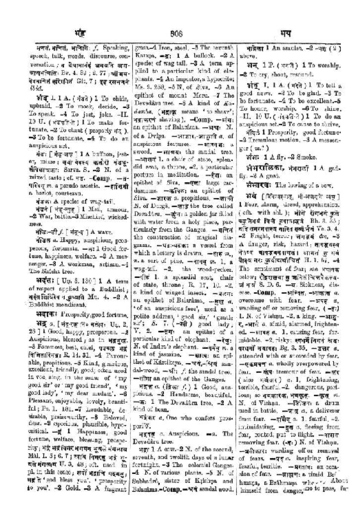
bhadrá gut, schön, glücklich, heilvoll, erfreulich. Voc. bhadra u. bhadre Bester, Beste! bhadrám u. bhadráyā adv. glücklicherweise. n. Glück, Heil, Segen, oft als Wunsch bhadraṃ te, ˚vām o. ˚vaḥ (auch nur explet.).
Burnouf 1866 adjective
Original text · French · adjective
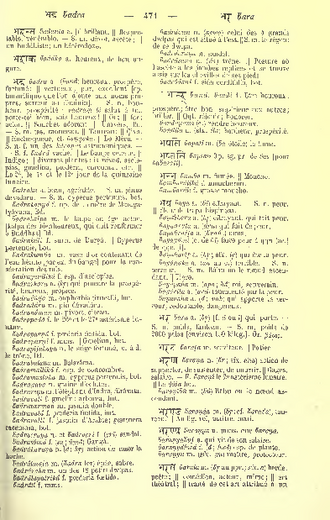
bhadra bhadra a. (bhand) heureux, prospère, fortuné; vertueux, pur, excellent [ép. honorifique que l'on ajoute aux noms propres, surtout au féminin]. — S. n. bonheur, prospérité: badraṃ te salut à toi, porte-toi bien, sois heureux! Or; fer; acier. Souchet odorant. Univers, Bd. — S. m. tas, monceau. Taureau; Śiva. Hoche-queue, cf. bhaṇḍaka. Le Meru. — S. n. f. un des kāraṇas astronomiques. — S. f. bhadrā vache. Le Gange céleste. Indigo; diverses plantes: la rāsnā, asclepias, gmelina, pæderia, curcuma, etc. Le 2ᵈ, le 7ᵉ et le 12ᵉ jour de la quinzaine lunaire. bhadraka a. beau, agréable. — S. m. pinus devadāru. — S. n. cyperus pertenuis, bot. bhadrakanyā f. np. de la mère de Maudgalyāyana, Bd. bhadrakalpa m. le kalpa ou âge actuel [kalpa des bienheureux, qui doit renfermer 5 Buddhas] Bd. bhadrakālī f. surn. de Durgā. Cyperus pertenuis, bot. bhadrakumbha m. vase d'or contenant de l'eau bénite [par ex. du Gange] pour la consécration des rois. bhadragandhikā f. esp. d'asclepias. bhadraṅkara a. (kṛ) qui procure la prospérité, heureux, propice. bhadracūḍa m. euphorbia tirucalli, bot. bhadradāru m. pin devadāru. bhadranāman m. pivert, oiseau. bhadrapadā f. le 26ᵉ et le 27ᵉ astérisme lunaire. bhadraparṇā f. pæderia fœtida, bot. bhadraparṇī f. mms. Gmelina, bot. bhadrapīṭakaya n. le siège fortuné, c-à-d. le trône, Bd. bhadrabalana m. Balarāma. bhadramallikā f. esp. de concombre. bhadramustaka m. cyperus pertenuis, bot. bhadrayava n. graine d'echites. bhadrareṇu m. l'éléphant d'Indra, Airāvata. bhadravatī f. gmelina arborea, bot. bhadravarman m. jasmin double. bhadravalā f. pæderia fœtida, bot. bhadravallī f. jasmin d'Arabie; gœrtnera racemosa, bot. bhadracraya n. et bhadraśrī f. (śrī) sandal. bhadrasomā f. (sa; ūmā) Gaṅgā. bhadrākaraṇa n. (ā; kṛ) action de raser la barbe. bhadrātmaja m. (bhadra fer) épée, sabre. bhadrāraka m. un des 18 petits dvīpas. bhadrālapatrikā f. pæderia fœtida. bhadrālī f. mms. [Page471-2] bhadrāśva n. (aśva) celui des 4 grands dvīpas qui est situé à l'est. S. m. le régent de ce dvīpa. bhadrāśraya n. sandal. bhadrāsana n. (ās) trône. Posture où l'ascete a les jambes repliées et se trouve assis sur les chevilles de ses pieds. bhadrodanī f. sida cordifolia, bot.
Occurrences in source texts (10)
AsS1 1 occurrence
HP 3 occurrences
HP 3.103-3.107*2: Conclusion of the Mudrā Teaching 1 occurrence
Direct occurrences
-
HP 3.107 Segment 12
MAN 2 occurrences
MandUp 3 occurrences
MandUp Śānti: Peace invocation 3 occurrences
Direct occurrences
-
MandUp Śānti 1 Segment 2
-
MandUp Śānti 1 Segment 6
-
MandUp Śānti 2 Segment 1
VBT 1 occurrence
Continue with AYI Free
Image source: AYI archive.