

dhvani ध्वनि – sound; tone
substantive masculine · Word type unspecified
Dictionary sources
AYI dictionary substantive masculine
sound; tone
Cappeller 1891 substantive masculine
Original text · English · substantive masculine
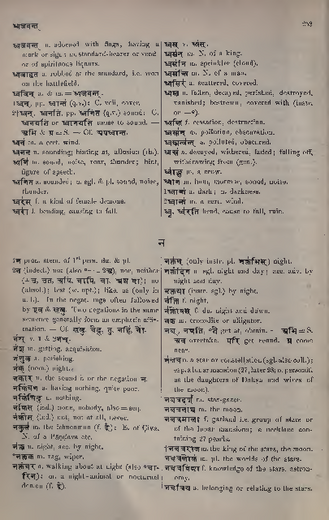
dhvaní ·m. sound, noise, roar, thunder; hint, figure of speech.
Monier-Williams 1872 substantive masculine
Original text · English · substantive masculine
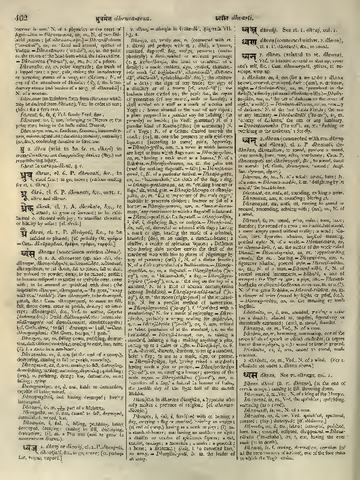
Dhvani, is, m. sound, echo, noise; tone, tune; thunder; the sound of a drum; an inarticulate sound, a mere empty sound without reality; a word; allu- sion, hint, figurative allusion, implied meaning, poetical style; N. of a work.
Petersburger 1855 substantive masculine · Word type unspecified
Original text · German · substantive masculine
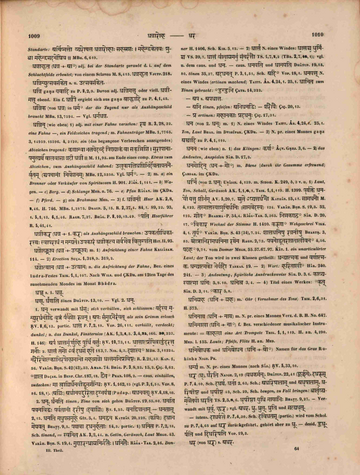
dhvaní (von 2. dhvan) UṆĀDIS. 4,139. m. SIDDH. K. 249,b,3 v. u. 1〉 Laut, Ton, Schall, Geräusch AK. 1,1,6,1. TRIK. 1,1,119. H. 1399. pṛthàkte dhva̱nayò yantu̱ śībhàm AV. 5,20,7. śrute 'pyantardhvanau KATHĀS. 15,41. sāmadhvanau M. 4,123. tasmāttasyāśucirdhvaniḥ (sāmavedasya) M. 124. VARĀH. BṚH. S. 19,3. VARĀH. BṚH. S. 52,125. gīta˚ BRAHMA-P. 54,4. RĀJA-TAR. 5,363. bhinnakaṇṭha˚ SĀH. D. 20,17. ˚vikāra Wechsel der Stimme H. 1410. karuṇa˚ Wehgeschrei VIKR. 4,1. tūrya˚ VARĀH. BṚH. S. 43 (34), 7. VARĀH. BṚH. S. 43 (34),24. śāntadhvaniṣu rajanīṣu BHARTṚ. 3,85. śrotrābhirāmadhvaninā rathena RAGH. 2,72. pavanoddhūtarājatālīvana˚ RAGH. 4,56. paṭaha˚ RAGH. 9,71. vom Donner MEGH. 55. MEGH. 57. MEGH. 67. MEGH. 97. CĀT. 1. ein unarticulirter Laut; der Ton wird in zwei Klassen getheilt: dhvanyātmaka und varṇātmaka, dhvanyātmako bheryādau TARKAS. 19. — 2〉 Wort: haritālī˚ HĀR. 240. HĀR. 241. — 3〉 Andeutung, figürliche Ausdrucksweise SĀH. D. 3,6. kāvyasyātmā dhvaniḥ SĀH. D. 5,9. SĀH. D. 5,10. dhvanitva SĀH. D. 3,4. — 4〉 Titel eines Werkes: ˚kṛt SĀH. D. 3,11. ˚kāra SĀH. D. 5,8.
Original text · German · Word type unspecified
dhvani 3〉 SĀH. D. 250. fgg. SĀH. D. 262. PRATĀPAR. 12,a,9. Schol. zu KĀVYĀD. 2,147. — Vgl. prati˚, mahā˚.
Böhtlingk 1879 substantive masculine
Original text · German · substantive masculine
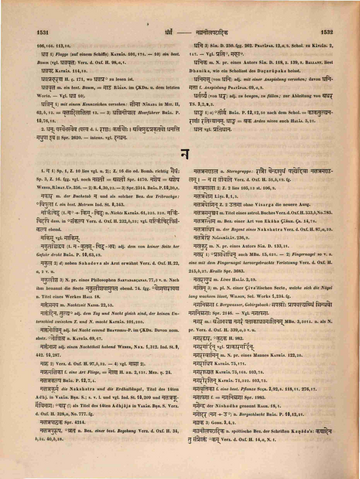
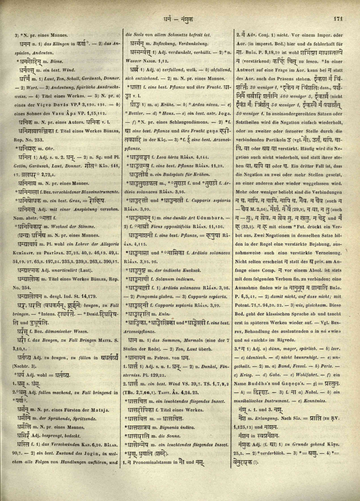
dhvaní m. — 1〉 Laut, Ton, Schall, Geräusch, Donner. — 2〉 Wort. — 3〉 Andeutung, figürliche Ausdrucksweise. — 4〉 Titel eines Werkes. — 5〉 N. pr. — a〉 eines der Viśve Devās VP.² 3,190. 191. — b〉 eines Sohnes des Vasu Āpa VP. 1,15,112.
Apte 1890 substantive masculine
Original text · English · substantive masculine
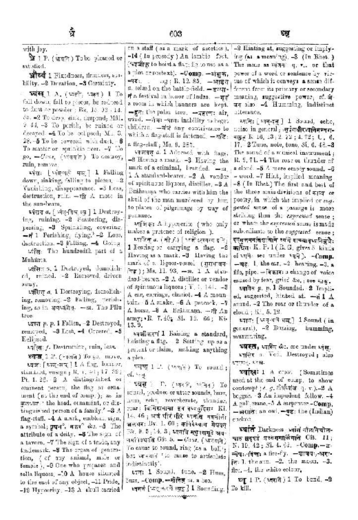
dhvaniḥ [dhvan-in] 1 Sound, echo, noise in general; mṛdaṃgadhīradhvanimanvagacchat R. 16. 13; R. 2. 72; R. 4. 72; U. 6. 17. 2 Tune, note, tone; Śi. 6. 48. 3 The sound of a musical instrument; R. 9. 71. 4 The roar or thunder of a cloud. 5 A mere empty sound. 6 -word. 7 Hint, implied meaning. 8 (In Rhet.) The first and best of the three main divisions of kāvya or poetry, in which the implied or suggested sense of a passage is more striking than the expressed sense; or where the expressed sense is made subordinate to the suggested sense; idamuttamamatiśayini vyaṃge vācyāddhvanirbudhaiḥ kathitaḥ K. P. 1 (R. G. gives 5 kinds of dhvaniḥ see under dhvani). Comp. — grahaḥ 1 the ear. 2 hearing. 3 a fife, pipe. — vikāraḥ a change of voice caused by fear, grief &c.; see kāku.
Cappeller 1887 substantive masculine
Original text · German · substantive masculine
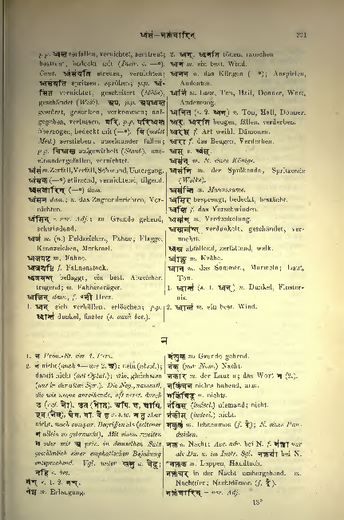
dhvaní m. Laut, Ton, Hall, Donner, Wort, Andeutung.
Burnouf 1866 substantive masculine
Original text · French · substantive masculine
dhvani dhvani m. son; murmure. Style figuré et sonore, tg. dhvanigraha m. (grah) oreille. dhvaninālā f. fifre; sorte de trompette. Vīnā ou luth. dhvanirūpa a. sonore. dhvanivikāra m. altération du son de la voix.

Occurrences in source texts (11)
HP 8 occurrences
HP 4.20-4.27: Four Stages of Nāda 2 occurrences
Direct occurrences
HP 4.37-4.46: Listening to Nāda 3 occurrences
Direct occurrences
Continue with AYI Free
Image source: AYI archive.