

nija निज – own; innate
adjective · substantive masculine · Word type unspecified
Dictionary sources
AYI dictionary adjective
own; innate
Cappeller 1891 adjective
Original text · English · adjective
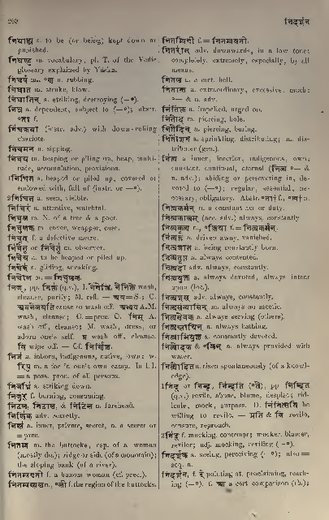
nijá ·a. inborn, indigenous, native, own; w. ripu m. a foe in one's own camp. In l. l. = a poss. pron. of all persons.
Monier-Williams 1872 adjective
Original text · English · adjective
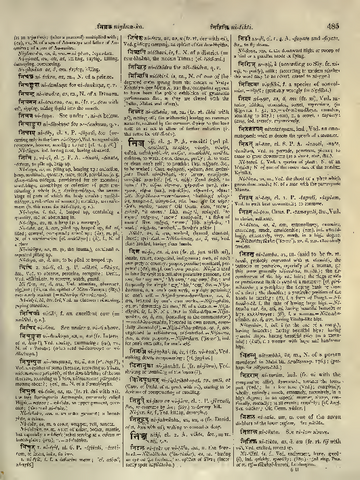
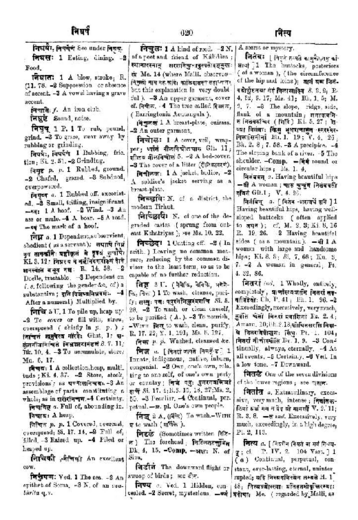
nija ni-ja, as, ā, am, (fr. rt. jan with ni), innate, native, congenital, indigenous; own, of one's own party or country; proper, peculiar; continual, per- petual; (ās), m. pl. one's own people. Ni-ja is used in later Sanskrit as a reflexive possessive pronoun, like sva, for ‘my own,’ ‘his own,’ ‘our own,’ &c.; and frequently for simple ‘my,’ ‘his,’ ‘our,’ &c.
Petersburger 1855 adjective · Word type unspecified
Original text · German · adjective
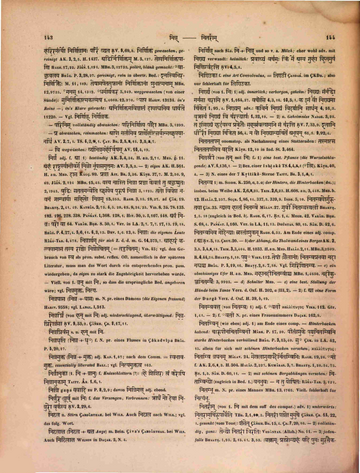
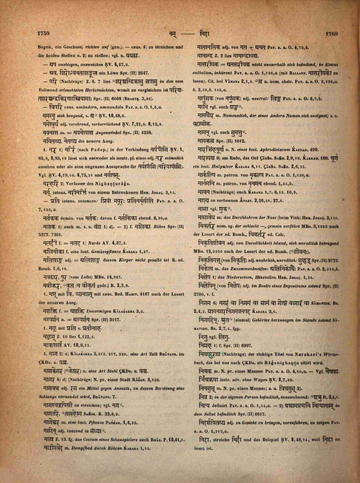
nijá adj. f. ā 1〉 beständig AK. 3,4,34. H. an. 2,71. MED. j. 11. a̱haṃ rā̱ṣṭrasyā̀bhīva̱rge ni̱jo bhū̀yāsamutta̱maḥ AV. 3,5,2. — 2〉 eigen AK. H. 561. H. an. MED. dāsa KAUŚ. 89. prajā AIT. BR. 3,36. KĀṬH. 37,7. M. 2,50. M. 9,69. YĀJÑ. 2,124 MBH. 15,45. yasya nāsti nijā prajñā kevalaṃ tu bahuśrutaḥ MBH. 2,1945. buddhiḥ satatamanveti cchāyeva puruṣaṃ nijā MBH. 3,1125. tato viveśa bhavanaṃ gāndhāryā sahito nijam MBH. 15,355. RAGH. 3,15. RAGH. 18,27. ad ŚĀK. 19. BHARTṚ. 2,41. BHARTṚ. 2,49. KATHĀS. 2,75. KATHĀS. 4,5. KATHĀS. 4,28. KATHĀS. 4,69. KATHĀS. 8,34. KATHĀS. 8,35. VID. 8. VID. 35. VID. 78. VID. 135. VID. 182. VID. 196. VID. 228. VID. 338. PAÑCAT. I, 368. PAÑCAT. I,128,1. HIT. 30,2. HIT. I, 107. HIT. I,148. ayaṃ nijaḥ paro vā HIT. I,64. VARĀH. BṚH. S. 50,1. VET. in LA. 2,7. VET. in LA. 7,7. VET. in LA. 17,13. VET. in LA. 19,18. BHĀG. P. 4,27,4. BHĀG. P. 5,6,11. BHĀG. P. 6,3,13 DEV. 1,6. DEV. 13,8. nijāḥ die eigenen Leute RĀJA-TAR. 4,478. nijārtham für sich Z. d. d. m. G. 14,575,7. āhāraṃ kalpayāmāsa tasya rājño nijocitam (= taducitam) VID. 45; vgl. den Gebrauch von sva als pron. subst. reflex. Oft, namentlich in der späteren Literatur, muss man das Wort durch ein entsprechendes pron. poss. wiedergeben, da eigen zu stark die Zugehörigkeit hervorheben würde. — Viell. von 1. jan mit ni, so dass die ursprüngliche Bed. angeboren wäre; vgl. nijamukta, nitya.
Original text · German · Word type unspecified
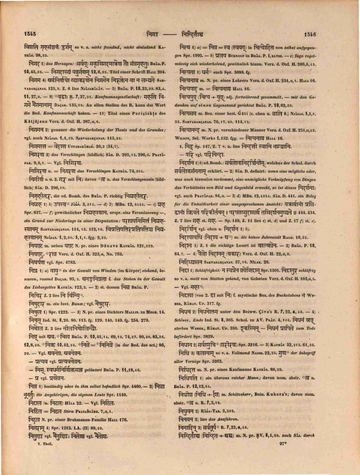
nija 1〉 beständig oder in ihm selbst befindlich Spr. 4460. — 2〉 nijā bhūbhartuḥ die Angehörigen, die eigenen Leute Spr. 1140.
Original text · German · Word type unspecified
nija 2〉 in der eigenen Person befindlich, innewohnend: ˚śatru R. 2,1,1.
Böhtlingk 1879 adjective · substantive masculine
Original text · German · adjective · substantive masculine
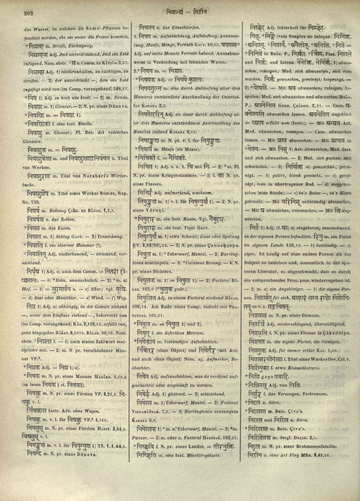
nijá — 1〉 Adj. (f. ā) — a〉 eingeboren, innewohnend, in der eigenen Person befindlich. ripu m. ein Feind im eigenen Lande Chr. 156,12. — b〉 beständig. — c〉 eigen. Ist häufig auf eine andere Person als des Subject zu beziehen und, namentlich in der späteren Literatur, so abgeschwächt, dass es durch ein entsprechendes Pron. poss. wiederzugeben ist. — 2〉 m. — a〉 ein Angehöriger. — b〉 die eigene Person. nijārtham für sich, āhāraṃ tasya rājño nijocitam so v. a. taducitam.
Apte 1890 adjective · substantive masculine
Original text · English · adjective · substantive masculine
nija a. [nitarāṃ jāyate nijaṇ-ḍa] 1 Innate, indigenous, native, inborn, congenial. 2 Own, one's own, relating to one-self, of one's own party or country; nijaṃ vapuḥ punaranayannijāṃ ruciṃ Śi. 17. 4; R. 3. 15, R. 18. 27; Ms. 2. 50. 3 Peculiar. 4 Continual, perpetual. — m. pl. One's own people.
Cappeller 1887 Word type unspecified
Original text · German · Word type unspecified
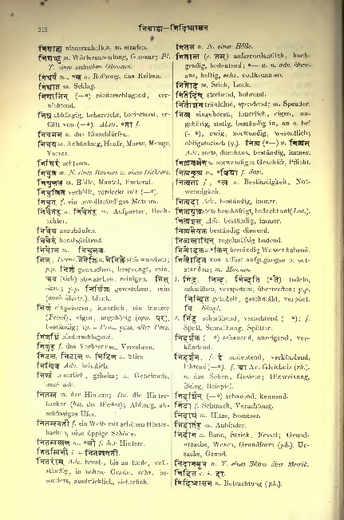
nijá eingeboren, innerlich, ein innerer (Feind), eigen, angehörig (opp. para), beständig; sp. = Pron. poss. aller Pers.
Burnouf 1866 adjective
Original text · French · adjective
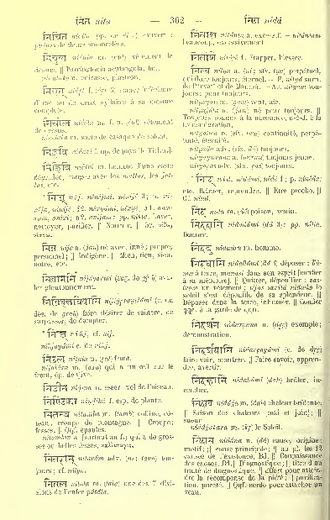
nija nija a. (jan) né avec, inné; propre, personnel; indigène. Mien, tien, sien, notre, etc.
Occurrences in source texts (4)
HTK 1 occurrence
HTK 10.11*2–14*1: Bhastrikā: Breath like a bellows 1 occurrence
Direct occurrences
-
HTK 10.13 Segment 23
PJH 1 occurrence
Continue with AYI Free
Image source: AYI archive.