

pati पति – lord; king
substantive feminine · substantive masculine · Word type unspecified
Dictionary sources
AYI dictionary substantive masculine
lord; king
Cappeller 1891 substantive masculine
Original text · English · substantive masculine
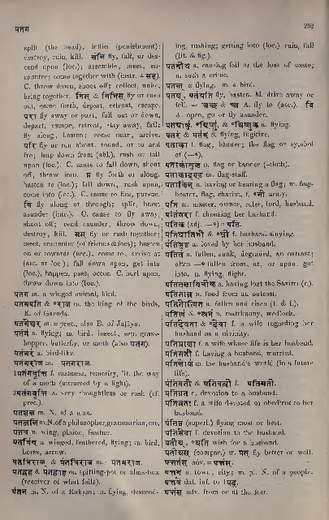
páti ·m. master, owner, ruler, lord, husband.
Monier-Williams 1872 substantive masculine
Original text · English · substantive masculine
pati pati, is, m. (said to be fr. rt. 3. pā, to protect, but connected with rt. 1. pat and pro- bably for original pātan), a master, owner, possessor, proprietor, lord, ruler, governor, sovereign; one who presides over, (often applied to tutelary deities or regents, e. g. oṣadhīnām patiḥ, the Moon as guardian or lord of medicinal plants; saritām patiḥ, the Ocean as lord of the rivers; vaca- sām patiḥ, Bṛhas-pati as lord of speech; some- times at the end of a comp., cf. oṣadhi-p˚, bṛhas-p˚, vācas-p˚, vanas-p˚); a husband; a root; going, motion, flight ? (in these senses pro- bably connected with rt. 2. pat); (is), f. a female possessor, mistress (e. g. grāmasya patiḥ, the mistress of a village); a wife (at the end of a non- adj. comp., e. g. vṛddha-pati = vṛddha-patnī, the wife of an old man, Pāṇ. IV. 1, 34); [cf. aṃśu-p˚, dam-patī, dvāra-p˚, nṛ-p˚, pṛthivī-p˚, prajā-p˚: cf. also Gr. πόσι-ς for πότι-ς δεσπό-τη-ς, δεσ-πόσ-υνο-ς, δεσ-πόζ-ω: Lat. com-po(t)-s, im-po(t)-s, pot-is, possum for potis-sum, pot-es- tā(t)-s: Lith. pat-s, ‘husband;’ vḗsz-pat-s, ‘lord, ruler:’ Slav. gos-podju, ‘lord:’ Russ. gos-podin, ‘lord:’ Goth. fath-s, ‘lord;’ bruth-fath-s, ‘bride- groom.’]

Petersburger 1855 substantive feminine · substantive masculine · Word type unspecified
Original text · German · substantive feminine · substantive masculine
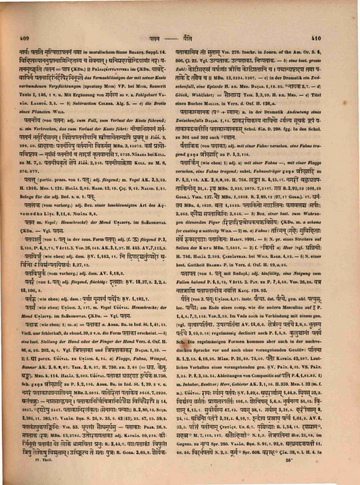
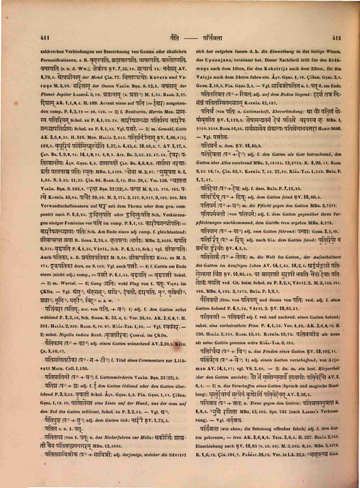
páti (von 3. pat) UṆĀDIS. 4,57. instr. pátyā, dat. pátye, gen. abl. patyus, loc. patyau; am Ende eines comp. wie die andern Masculina auf i P. 1,4,8. P. 7,3,118. VOP. 3,53. Im Veda auch in Verbindung mit einem gen. (vgl. vā̱caspatìnā, u̱ṣaspatìnā AV. 16,6,6. kṣetràsya̱ patàye AV. 2,8,5. bhū̱tasya̱ patàye AV. 3,10,9. AV. 3,10,10) regelmässig declinirt nach P. 1,4,9. kuluñcānāṃ pataye Sch. Die regelmässigen Formen kommen aber auch in der nachvedischen Sprache vor und auch ohne vorangehenden Genitiv: patinā R. 1,2,15. R. 4,16,35. MĀRK. P. 21,68. MĀRK. P. 74,40. patau KATHĀS. 42,207. Lautliches Verhalten eines vorangehenden gen. ṚV. PRĀT. 4,15. VS. PRĀT. 3,34. P. 8,3,53. P. 8,3,54. Ableitungen von Compositis auf pati P. 4,1,84. P. 4,1,85. 1〉 m. Inhaber, Besitzer; Herr, Gebieter AK. 3,1,10. H. 359. MED. t. 32 (m.f.n.) UJJVAL. rā̱yaḥ syā̀ma̱ patàyaḥ ṚV. 5,49,4. a̱dhva̱rāṇā̀m ṚV. 1,44,9. dhi̱yas ṚV. 1,23,3. viśvàsya̱ jagàtaḥ prāṇataspatìḥ ṚV. 1,101,5. śociṣas ṚV. 5,6,5. bhuvànasya ṚV. 5,51,12. vi̱śām ṚV. 6,15,1. su̱vīryàsya ṚV. 6,47,12. pathas ṚV. 6,58,1. gavā̀m ṚV. 3,31,4. harī̀ṇām ṚV. 8,24,14. a̱śvinau̱ patī̀ ṚV. 2,31,4. ṚV. 4,16,7. indrā̀ya pra̱tnāya̱ patyè ṚV. 1,61,2. AV. 6,33,3. patiṃ patīnām ŚVETĀŚV. UP. 6,7. pṛthivyāḥ R. 1,54,11. daśagrāma˚, sahasra˚ M. 7,115. M. 7,117. akṣauhiṇī˚ N. 1,3. kṣetrapatinā HIT. 21,10. im Gegens. zu bhṛtya Spr. 280. VARĀH. BṚH. S. 91,1. VARĀH. BṚH. S. 92,9. andhramadrakapatī VARĀH. BṚH. S. 11. VARĀH. BṚH. S. 60. VARĀH. BṚH. S. 55. vidarbhapataye N. 2,5. kūrma˚ Spr. 608. varāha˚ ŚĀK. 39, v. l. H. 4. In zahlreichen Verbindungen zur Bezeichnung von Genien oder ähnlichen Personificationen, z. B. bṛhaspati, brahmaṇaspati, vācaspati, vāstoṣpati, vanaspati (s. u. d. Ww.), kṣetràsya ṚV. 7,35,10. sa̱tyasyà 12. nabhàsas AV. 6,79,1. oṣadhīnām der Mond ŚĀK. 77. vittāppatyoḥ Kuvera und Varuṇa M. 5,96. saritām der Ocean VARĀH. BṚH. S. 12,5. vacasām der Planet Jupiter LAGHUJ. 5,10. prajānām (s. prajā˚) M. 1,34. RAGH. 3,27. diśām AK. 1,1,2,4. H. 169. Accent eines auf pati (= īśvara) ausgehenden comp. P. 6,2,18—P. 6,2,20. P. 6,2,140. — 2〉 f. Besitzerin, Herrin MED. grāmasya patiriyam Schol. zu P. 4,1,33. P. 4,1,34. kārīṣagandhyā patiryasya kārīṣagandhyāpatirgrāmaḥ Schol. zu P. 6,1,13. Vgl. patnī. — 3〉 m. Gemahl, Gatte AK. 2,6,1,35. H. 516. MED. HALĀY. 2,342. pati̱rjanī̀nām ṚV. 1,66,8 (4). ṚV. 1,119,5. va̱dhūri̱yaṃ patìmi̱cchantyòti ṚV. 5,37,3. ṚV. 4,43,6. ṚV. 10,10,3. ṚV. 10,10,7. AV. 5,17,8. ŚAT. BR. 1,9,2,14. ŚAT. BR. 14,1,2,11. ŚAT. BR. 14,4,2,5. AIT. BR. 3,22. AIT. BR. 3,23. AIT. BR. 3,47. AIT. BR. 3,48. devaraḥ patisthānīyaḥ ĀŚV. GṚHY. 4,2. jāyāpatī ŚAT. BR. 4,6,7,9. bhāryāyā bharaṇādbhartā pālanācca patiḥ smṛtaḥ MBH. 1,4199. ˚sevā M. 2,67. ˚śuśrūṣaṇa R. 1,1,88. N. 3,23. N. 11,35. ŚĀK. 84. RAGH. 3,12. HIT. 28,4. VID. 156. ˚vallabhā VARĀH. BṚH. S. 103,8. ˚ratā BṚH. 23 (22), 5. patyā M. 9,13. M. 9,175. M. 9,195. patye KATHĀS. 43,84. patyau KATHĀS. 29,89. M. 3,174. M. 5,157. M. 8,317. M. 9,195. M. 9,200. Mit Verwandtschaftsnamen auf ar mit dem Thema oder dem gen. componirt nach P. 6,3,24. duhitṛpati oder duhituḥpati Sch. Verkürzungen einiger Feminina vor pati im comp. P. 6,1,13. kārīṣagandhīpatiḥ = kārīṣagandhyāyāḥ patiḥ Sch. Am Ende eines adj. comp. f. gleichlautend: jīvatpatyā tvayā R. GORR. 2,24,8. hatapatyaḥ (bhāryāḥ) MBH. 2,2639. apati MBH. 8,314. vṛddhapati P. 4,1,34, Vārtt., Sch. P. 4,2,13, Sch.; vgl. jīvatpati. Auch patikā, z. B. pramītapatikā M. 9,68. jīvatpatikā KULL._zu_M. 3,174. ekapatikā ders. zu M. 9,183. Vgl. auch patnī. — 4〉 f. Gattin am Ende eines (nicht adj.) comp., = patnī P. 4,1,34. vṛddhapati = vṛddhapatnī Schol. — 5〉 m. Wurzel. — 6〉 Gang (gati; wohl Flug von 1. pat) VIŚVA_im_ŚKDR. — Vgl. aṃśu˚, aṃhasas˚, adhi˚, daṃpatī, dvārapati, nṛ˚, pṛthivī˚, prajā˚, bhūmi˚, mahī˚, viṭ˚ u. s. w.
Original text · German · Word type unspecified
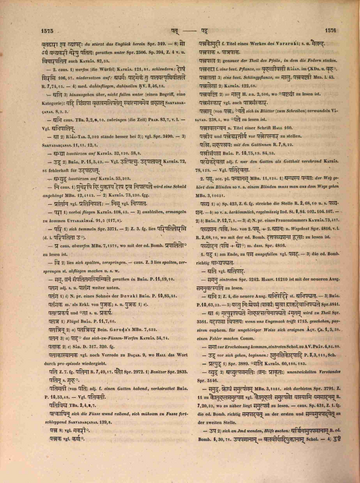
pati Z. 7. fg. patinā R. 7,49,17. patau Spr. 2972. 1〉 Besitzer Spr. 2835.
Böhtlingk 1879 substantive feminine · substantive masculine · Word type unspecified
Original text · German · substantive feminine · substantive masculine
1. páti — 1〉 m. — a〉 Inhaber, Besitzer, Herr, Gebieter. — b〉 Gemahl, Gatte. — c〉 *Wurzel. — 2〉 *f. — a〉 [Page4-016-a] Besitzerin, Herrin. — b〉 Gattin.
Original text · German · Word type unspecified
2. *pati = gati.
Apte 1890 substantive masculine
Original text · English · substantive masculine
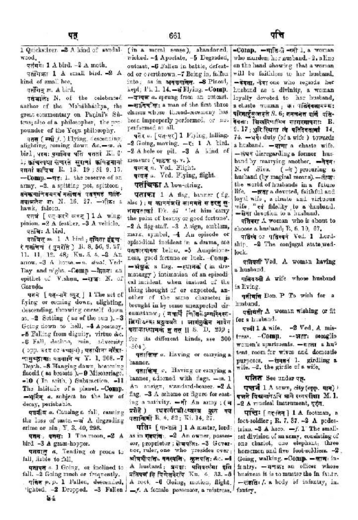
patiḥ [pā-ḍati] 1 A master, lord; as in gṛhapatiḥ. 2 An owner, possessor, proprietor; kṣetrapatiḥ. 3 Governor, ruler, one who presides over; oṣadhīpatiḥ, vanaspatiḥ, kulapatiḥ &c. 4 A husband; pramadāḥ pativartmagā iti pratipannaṃ hi vicetanairapi Ku. 4. 33. 5 A root. 6 Going, motion, flight. — f. A female possessor, a mistress. ([Page 0661-c]) Comp. — ghatinī -ghnī 1 a woman who murders her husband. 2 a line on the hand showing that a woman will be faithless to her husband. — devatā, -devā one who regards her husband as a divinity, a woman loyally devoted to her husband, a chaste woman; kaḥ patidevatāmanyaḥ parimārṣṭumutsahate Ś. 6; tamalabhaṃta patiṃ patidevatāḥ śikhariṇāmiva sāgaramāpagāḥ R. 9. 17; dhuri sthitā tvaṃ patidevatāmāṃ R. 14. 74. — dharmaḥ duty (of a wife) towards a husband. — prāṇā a chaste wife. — laṃghanaṃ disregarding a former husband by marrying another. — vedanaḥ N. of Śiva. — (naṃ) procuring a husband (by magical means). — lokaḥ the world of husbands in a future life. — vratā a devoted, faithful and loyal wife, a chaste and virtuous wife; ˚tvaṃ fidelity to a husband. — sevā devotion to a husband.
Burnouf 1866 substantive feminine · substantive masculine
Original text · French · substantive feminine
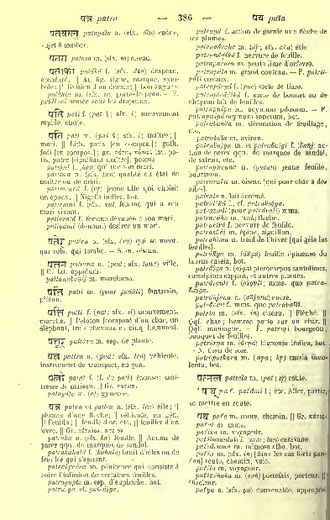
pati pati f. (pat 1; sfx. i) mouvement rapide, chute.
Original text · French · substantive masculine
pati pati m. (pat 4; sfx. i) maître; mari. Lith. patis [en compos.]; goth. fadi [en compos.] gr. πότις, πόσις; lat. potis, pater [signifiant maître], potens. patighnī f. (han) qui tue son mari. patitva n. (sfx. tva) qualité ou état de maître ou de mari. patimvarā f. (vṛ) jeune fille qui choisit un époux. Nigella indica, bot. palivatnī f. (sfx. vat) femme qui a son mari vivant. pativratā f. femme dévouée à son mari. patiyāmi (dénom.) désirer un mari.
Occurrences in source texts (10)
HP 1 occurrence
SiSa 2 occurrences
SS 1 occurrence
SVU 6 occurrences
SVU 6.7–6.13: Lord of All Lords 3 occurrences
Direct occurrences
Continue with AYI Free
Image source: AYI archive.