

saṃjñā संज्ञा – designation; concept; state of consciousness
verbal root · substantive feminine
Dictionary sources
AYI dictionary substantive feminine
designation; concept; state of consciousness
Derived from
Cappeller 1891 substantive feminine
Original text · English · substantive feminine
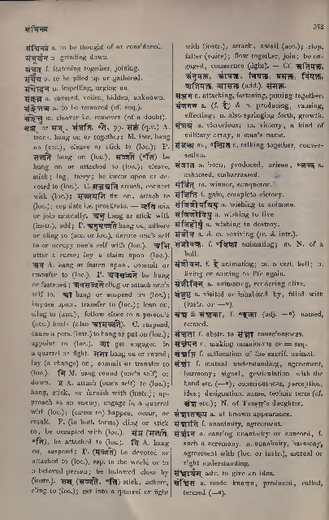
saṃjñā́ ·f. mutual understanding, agreement, harmony; signal, gesticulation with the hand etc. (--°); consciousness, perception, idea; designation, name, technic term (cf. saṃjña etc.); N. of Tvaṣṭṛ's daughter.
Petersburger 1855 substantive feminine
Original text · German · substantive feminine
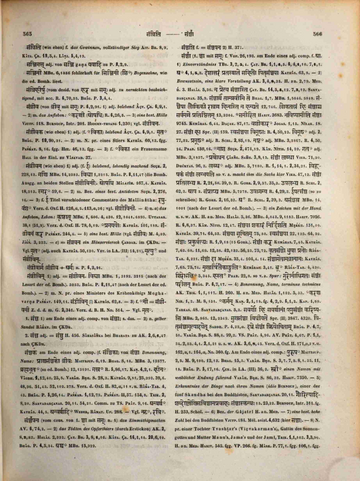
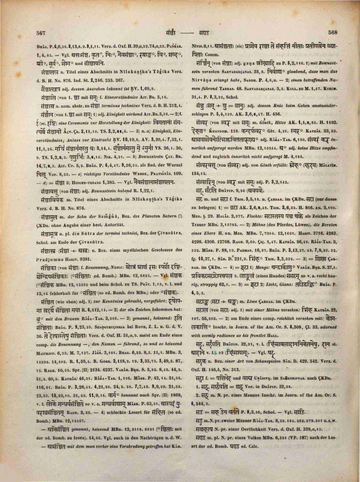
saṃjñā́ (1. jñā mit sam) f. VOP. 26,193. am Ende eines adj. comp. f. ā. 1〉 Einverständniss TBR. 3,2,5,4. ŚAT. BR. 1,1,4,5. ŚAT. BR. 6,4,1,10. ŚAT. BR. 6,7,1,1. a˚ ŚAT. BR. 4,1,5,3. deśāntaraṃ pratasthāte sahitau pitṛsaṃjñayā KATHĀS. 63,8. — 2〉 Bewusstsein, eine klare Vorstellung AK. 3,4,8,35. H. an. 2,79. MED. ñ. 3. HALĀY. 5,36. na pretya saṃjñāsti ŚAT. BR. 14,5,4,12. ŚAT. BR. 14,7,3,13. SARVADARŚANAS. 35,9. saṃjñārthaṃ tānbravīmi te BHAG. 1,7. MBH. 1,5846. MBH. 1,5848. saṃjñaiṣā laukikī rājanna hinasti na hanyate MBH. 12,746. lokatantraṃ hi saṃjñāśca sarvamanne pratiṣṭhitam MBH. 13,3204. ˚samīrita HARIV. 3683. bhaviṣyāmīti saṃjñā HARIV. 9745. KUMĀRAS. 6,44. DAŚAK. 87,17. vaśīkāra˚ YOGAS. 1,15. NĪLAK. 18. NĪLAK. 27. saṃjñāṃ hā Spr. (II) 159. svasaṃjñayā vimūḍhāḥ R. 4,50,23. vimūḍha˚ adj. R. 2,77,32. pramūḍha˚ adj. R. SCHL. 2,85,19. naṣṭa˚ adj. MBH. 3,2867. R. 4,50,24. PRAB. 150,16. ˚nāśa SUŚR. 2,474,19. KĀM. NĪTIS. 14,59. gata˚ adj. MBH. 3,1837. ˚prabodhana ŚĀRṄG. SAṂH. 3,8,15. saṃjñāṃ labdhvā VIKR. 71,20. DHŪRTAS. 96,3. labdha˚ adj. MBH. 5,7180. R. 1,14,1. R. 2,34,21. vidūṣakaṃ saṃjñāṃ lambhayati so v. a. macht ihm die Sache klar VIKR. 47,12. saṃjñāṃ pratilabhya R. 2,21,50. R. 2,39,9. R. GORR. 2,9,37. R. GORR. 2,35,2. upalabhya R. SCHL. 2,62,3. āpa 2. saṃprāpya MBH. 5,7278. upāgamya R. 4,29,3. īṣatsaṃjña (so zu schreiben) R. GORR. 2,16,33. a˚ R. SCHL. 2,39,3. asaṃjñatva MBH. 14,1001 (nach der Lesart der ed. Bomb.). — 3〉 ein Zeichen mit der Hand u. s. w. AK. H. an. MED. HALĀY. 5,36. MBH. 4,843. MBH. 9,1183. HARIV. 7056. R. 6,8,37. KĀM. NĪTIS. 12,47. saṃjñayā śakāraṃ nirdiśati MṚCCH. 151,10. KATHĀS. 39,71. KATHĀS. 64,53. saṃjñayā sūcitam KATHĀS. 75,80. svasaṃjñayā KATHĀS. 22,125. KATHĀS. 64,52. saṃjñāḥ prakurvantyaḥ R. 1,9,18 (R. 1,9,15 GORR.). saṃjñāṃ kar KUMĀRAS. 7,45. KATHĀS. 7,63. KATHĀS. 7,68. KATHĀS. 11,69. KATHĀS. 12,58. KATHĀS. 42,132. KATHĀS. 56,23. KATHĀS. 75,72. kṛtasaṃjño bhruvā prabhoḥ RĀJA-TAR. 4,221. saṃjñāṃ dā MṚCCH. 35,4. MṚCCH. 104,4. MṚCCH. 104,14. saṃjñāmetāmajānānaḥ KATHĀS. 7,65. KATHĀS. 75,74. mukhārpitaikāṅguli˚ KUMĀRAS. 3,41. bhrū˚ RĀJA-TAR. 4,430. śiro'kṣi˚ RĀJA-TAR. 5,345. hasta˚ PRAB. 22,8. so v. a. Spur: gurornādhigataḥ saṃjñāṃ parīkṣan BHĀG. P. 6,7,17. — 4〉 Benennung, Name, terminus technicus AK. TRIK. 1,1,117. H. 260. H. an. MED. HALĀY. 1,152. HALĀY. 5,33. ˚karaṇa NIR. 1,2. M. 8,131. ˚karman KAṆ. 2,1,18. fg. KAṆ. 4,2,9. fg. KAṆ. 6,1,2. KAP. 1,69. TARKAS. 48. SARVADARŚANAS. 5,2. savarṇo hi savarṇānāṃ paśusaṃjñāṃ kariṣyasi MBH. 2,865. MBH. 12,2349. sukhasaṃjñā vidhīyate Spr. (II) 3847. Spr. (II) 4320. pitṛsaṃjñāmutpādayet SADDH. P. 4,22,a. dadhre saṃjñāṃ kriyocitām BHĀG. P. 4,7,51. VARĀH. BṚH. S. 88,8. VARĀH. BṚH. S. 99,2. VS. PRĀT. 4,96. AV. PRĀT. 4,67. P. 1,1,34. P. 1,2,53. P. 1,4,1. P. 2,1,21 u. s. w. AK. 3,6,8,45. Verz. d. Oxf. H. 171,a,2 v. u. 162,a,1. Verz. d. Oxf. H. 171,a,164,a, No. 360. fg. Am Ende eines adj. comp.: puruṣa˚ MAITRYUP. 2,5. M. 9,100. M. 12,13. BHAG. 15,5. VARĀH. BṚH. S. 3,7. VARĀH. BṚH. S. 7,9. VARĀH. BṚH. S. 8,1. VARĀH. BṚH. S. 8,35. VARĀH. BṚH. S. 11,18. BHĀG. P. 5,17,16. ŚUK. in LA. (III) 36,3. strī˚ einen Namen mit weiblicher Endung führend VARĀH. BṚH. S. 86,38. HARIV. 7350. — 5〉 Erkenntniss der Dinge nach ihren Namen (idée BURNOUF), einer der fünf Skandha bei den Buddhisten, SARVADARŚANAS. 20,11. gaurityādiśabdollekhisavijñānapravāhaḥ saṃjñāskandhaḥ SARVADARŚANAS. 20,15. SARVADARŚANAS. 23,22. BURNOUF, Intr. 511. fg. H. 233, Schol. — 6〉 Bez. der Gāyatrī H. an. MED. — 7〉 eine best. hohe Zahl bei den Buddhisten VYUTP. 184. Mél. asiat. 4,632 (hier sajñā). — 8〉 N. pr. einer Tochter Tvaṣṭarʼs (Viśvakarmanʼs), Gattin des Sonnengottes und Mutter Manuʼs, Yamaʼs und der Yamī, TRIK. 1,1,103. TRIK. 3,3,90. H. an. MED. HARIV. 545. fgg. VP. 266. fg. MĀRK. P. 77,1. fgg. MĀRK. P. 106,1. fgg. BHĀG. P. 6,6,38. BHĀG. P. 8,13,8. BHĀG. P. 8,13,9. BHĀG. P. 9,1,11. Verz. d. Oxf. H. 39,a,22. Verz. d. Oxf. H. 74,a,23. PAÑCAR. 1,4,85. — Vgl. antaḥsaṃjña, kṛta˚, niḥ˚, naivasaṃjñā˚, rathāṅga˚, vi˚, śabda˚, śrī˚, sūrya˚, soma˚ und sāṃjñāyani.
Böhtlingk 1879 substantive feminine
Original text · German · substantive feminine
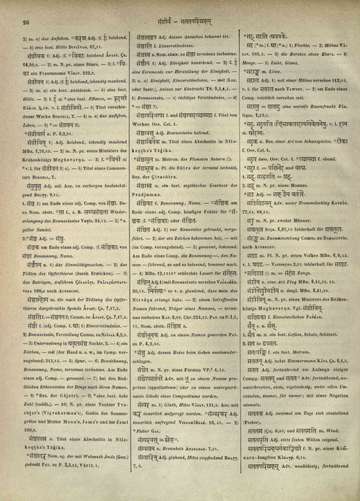
saṃjñā́ f. (adj. Comp. f. ā) — 1〉 Einverständniss. — 2〉 Bewusstsein, Vorstellung Comm. zu NYĀYAS. 4,2,3. — 3〉 Unterweisung in akṛtasaṃjña Nachtr. 2. — 4〉 ein Zeichen, — mit (der Hand u. s. w., im Comp. vorangehend) Chr. 313,13. — 5〉 Spur. — 6〉 Bezeichnung, Benennung, Name, terminus technicus. Am Ende eines adj. Comp. — genannt. — 7〉 bei den Buddhisten Erkenntniss der Dinge nach ihren Namen. — 8〉 *Bez. der Gāyatrī. — 9〉 *eine best. hohe Zahl (buddh.). — 10〉 N. pr. einer Tochter Tvaṣṭarʼs (Viśvakarmanʼs), Gattin des Sonnengottes und Mutter Manuʼs, Yamaʼs und der Yamī Chr. 100,6.
Apte 1890 verbal root · substantive feminine
Original text · English · verbal root
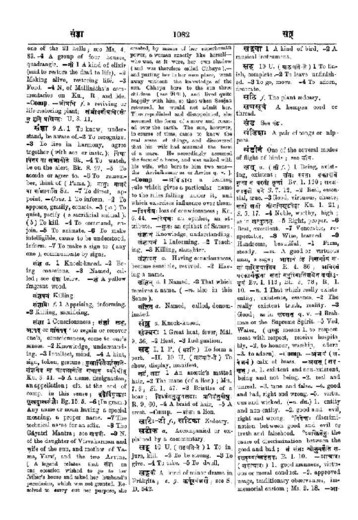
saṃjñā 9 A. 1 To know, understand, be aware of. 2 To recognize. 3 To live in harmony, agree together (with acc or instr.); pitrā pitaraṃ vā saṃjānīte Sk. 4 To watch, be on the alert; Bk. 8. 27. 5 To accede or agree to. 6 To remember, think of (Paras.); mātuḥ mātaraṃ vā saṃjānāti Sk. 7 To direct, appoint. — Caus. 1 To inform. 2 To appease, gratify, console. 3 (a) To quiet, pacify (a sacrificial animal). (b) To kill. 4 To command, enjoin. 5 To animate. 6 To make intelligible, cause to be understood, inform. 7 To make a sign to (any one), communicate by signs.
Original text · English · substantive feminine
saṃjñā 1 Consciousness; saṃjñāṃ labh, āpad or pratipad ‘to regain or recover one's, consciousness, come to one's senses. 2 Knowledge, understanding. 3 Intellect, mind. 4 A hint, sign, token, gesture; mukhārpitaikāṃgulisaṃjñayaiva mā cāpalāyeti gaṇān vyataiṣīt Ku. 3. 41. 5 A name, designation, an appellation; oft. at the end of comp. in this sense; dvaṃdvairvimuktāḥ sukhaduḥkhasaṃjñaiḥ Bg. 15. 5. 6 (In gram.) Any name or noun having a special meaning, a proper name. 7 The technical name for an affix. 8 The Gāyatrī Mantra; see gāyatrī. 9 N. of the daughter of Viśvakarman and wife of the sun, and mother of Yama, Yamī, and the two Aśvins. [A legend relates that saṃjñā on one occasion wished to go to her father's house and asked her husband's permission, which was not granted. Resolved to carry out her purpose, she ([Page 1082-b]) created, by means of her superhuman power, a woman exactly like herselfwho was, as it were, her own shadow (and was therefore called Chāyā), -and putting her in her own place, went away without the knowledge of the sun. Chāyā bore to the sun three children (see chāyā), and lived quite happily with him, so that when Saṃjñā returned, he would not admit her. Thus repudiated and disappointed, she assumed the form of a mare and roamed over the earth. The sun, however, in course of time, came to know the real state of things, and discovered that his wife had assumed the form of a mare. He accordingly assumed the form of a horse, and was united with his wife, who bore to him two sonsthe Aśvinīkumāras or Aśvins q. v.]. Comp. — adhikāraḥ a leading rule which gives a particular name to the rules falling under it, and which exercises influence over them. — viparyayaḥ loss of consciousness; Ku. 6. 44. — viṣayaḥ an epithet, an attribute. — sutaḥ an epithet of Saturn.
Cappeller 1887 substantive feminine
Original text · German · substantive feminine
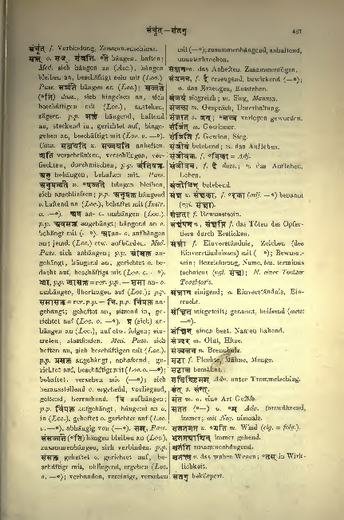
saṃjñā́ f. Einverstädniss, Zeichen (des Einverstädnisses) mit (—˚); Bewusstsein; Bezeichnung, Name, bes. terminus technicus (vgl. saṃjña); N. einer Tochter Tvaṣṭar's.
Occurrences in source texts (3)
PYS 1 occurrence
Continue with AYI Free
Image source: AYI archive.