

vaiśvānara वैश्वानर – Vaiśvānara; the one common to all people
adjective · substantive masculine · substantive neuter · Word type unspecified
Dictionary sources
AYI dictionary substantive masculine
Vaiśvānara; the one common to all people
Derived from
- viśvānara विश्वानर substantive masculine — Viśvānara; the one encompassing all people
Cappeller 1891 adjective · Word type unspecified
Original text · English · Word type unspecified
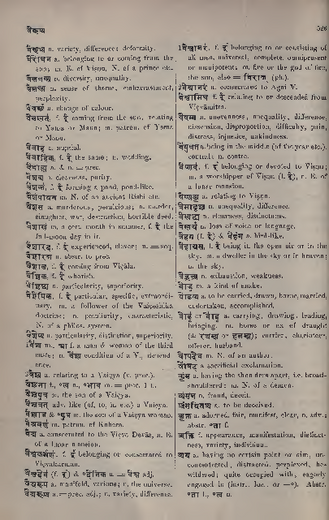
vaiśvānará ·f. ī́1 belonging to or consisting of all men, universal, complete, omnipresent or omnipotent; m. fire or the god of fire, the sun, also = virā́j (ph.).
Original text · English · adjective
vaiśvānará2 ·a. consecrated to Agni V.
Monier-Williams 1872 adjective
Original text · English · adjective
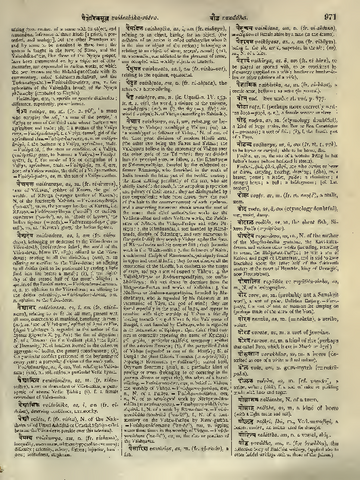
vaiśvānara vaiśvānara, as, ī, am (fr. viśvā- nara), relating to or fit for all men, present with all men, common to all mankind, benefiting all men; (as), m. ‘son of Viśvā-nara,’ epithet of Agni or Fire, (Agni Vaiśvānara is regarded as the author of the hymns Ṛg-veda X. 79, 80); the fire of digestion; N. of a Dānava; (in the Vedānta phil.) ‘the Spirit of Humanity,’ N. of Intellect located in the collective aggregate of bodies, the general consciousness; (ī), f. a particular sacrifice performed at the beginning of every year; a particular division of the sun's path.
Petersburger 1855 adjective · substantive masculine · substantive neuter
Original text · German · adjective · substantive masculine · substantive neuter
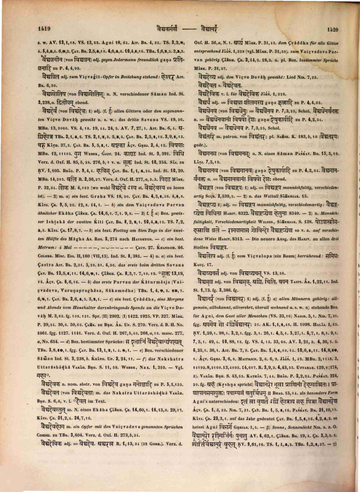
vaiśvānará (von viśvānara) 1〉 adj. (f. ī) a〉 allen Männern gehörig: allgemein, allbekannt, allverehrt, überall wohnend u. s. w. α〉 stehende Bez. für Agni, dem Gast aller Menschen ?(VS. 33,16) NAIGH. 5,1. NIR. 7,21. fgg. ayameva so 'gnirvaiśvānaraḥ ? NIR. 7,31. AK. 1,1,1,48. H. 1098. HALĀY. 1,62. ṚV. 1,59,1. fgg. ṚV. 1,98,1. ṚV. 3,2,1. fgg. ṚV. 3,3,1. ṚV. 3,26,1. fgg. ṚV. 4,5,1. ṚV. 5,27,1. fgg. ṚV. 6,7,1. ṚV. 6,8,1. fgg. ṚV. 6,9,1. ṚV. 7,5,1. fgg. ṚV. 7,49,4. fgg. ṚV. 10,88,12. fg. VS. 4,15. VS. 33,60. AV. 3,21,3. AV. 4,36,1. AV. 4,36,2. AV. 6,35,1. AV. 6,36,1. AIT. BR. 7,9. ŚAT. BR. 1,4,1,10. ŚAT. BR. 1,4,1,14. ŚAT. BR. 10,6,1,11. ŚAT. BR. 14,8,10,1. ĀŚV. GṚHY. 3,6,8. MAITRYUP. 2,6. MAITRYUP. 6,9. YĀJÑ. 1,49. MBH. 2,1148. MBH. 3,14192. MBH. 8,2160. MBH. 13,4093. MBH. 14,617. R. 3,9,3. R. 4,43,55. UTTARAR. 129,8 (174,3). VARĀH. BṚH. S. 43,52. KATHĀS. 7,44. BHĀG. P. 2,2,24. PAÑCAT. 224,20. fg. ahaṃ (Kṛṣṇa spricht) vaiśvānaro bhūtvā prāṇināṃ dehamāśritaḥ . prāṇāpānasamāyuktaḥ pacāmyannaṃ caturvidham .. BHĀG. 15,14. als besondere Form Agniʼs unterschieden: etaṃ tvā vṛṇate 'gniṃ hotrāya saha pitrā vaiśvānareṇa ĀŚV. ŚR. 1,3,23. NIR. 7,31. ŚAT. BR. 1,5,1,16. PAÑCAV. BR. 21,10,11. KĀTY. ŚR. 23,3,1. auf das Jahr gedeutet ŚAT. BR. 1,5,1,16. ŚAT. BR. 4,2,4,3. so heisst Agni visarge GṚHYAS. 1,5. — β〉 Sonne, Sonnenlicht NIR. a. a. O. vai̱śvā̱na̱ro ra̱śmibhìrnaḥ punātu AV. 6,62,1. ŚĀṄKH. BR. 19,4. ŚR. 3,3,2. ŚR. 3,3,5. jyotìrvaiśvāna̱raṃ bṛ̱hat ṚV. 9,61,16. TS. 1,1,4,2. TBR. 1,2,1,27. — γ〉 prāṇa PRAŚNOP. 1,7. ātman CHĀND. UP. 5,11,2. der erste Pāda des Ātman MĀṆḌ. UP. 3. NṚS. TĀP. UP._in_Ind. St. 9,125. Ind. St. 9,133. WEBER, RĀMAT. UP. 338. WEBER, RĀMAT. UP. 342. = caitanya, virāj VEDĀNTAS. (Allah.) No. 72. VEDĀNTAS. (Allah.) No. 74. — δ〉 iṣṭi M. 11,27. YĀJÑ. 1,126. YĀJÑ. 3,250. vājino 'śvamedhaḥ HARIV. 14227. — ε〉 bhūmi MBH. 13,3140 nach der Lesart der ed. Bomb. (vaiśyānarī ed. Calc.). — b〉 aus allen Männern bestehend, vollzählig, allgemein: ye dèvāsa i̱ha sthana̱ viśvè vaiśvāna̱rā u̱ta ṚV. 8,30,4. VS. 11,58. TS. 3,2,8,5. ŚĀṄKH. ŚR. 4,10,3. vai̱śvā̱na̱rīṃ (vaiśvadevīṃ VS.) sū̱nṛtā̱mā ràbhadhvam AV. 6,62,2. havirasi vaiśvānaram allgemein d. h. allen Göttern gehörig LĀṬY. 5,6,6. — c〉 allgebietend: Varuṇa AV. 1,10,4. — d〉 Agni Vaiśvānara geweiht u. s. w.: Verz. TS. 5,2,4,2. puroḍāśa in zwölf Schalen ŚAT. BR. 2,2,5,6. ŚAT. BR. 5,2,5,13. ŚAT. BR. 6,2,1,34. ŚAT. BR. 9,3,1,1. ŚAT. BR. 9,3,1,13. KĀTY. ŚR. 25,8,16. Somagraha ŚAT. BR. 4,2,4,1. Atirātra ŚĀṄKH. ŚR. 16,23,22. ŚĀṄKH. ŚR. 16,25,3. ŚĀṄKH. ŚR. 16,26,3. saurya˚ NIR. 7,23. — e〉 von Viśvānara oder Vaiśvānara verfasst: dharmāḥ Verz. d. Oxf. H. 266,b,17. — 2〉 m. vaiśvānara a〉 vaí˚ patron. gaṇa vidādi zu P. 4,1,104. pl. N. pr. eines Ṛṣi-Geschlechts MBH. 12,6143. — b〉 N. pr. eines Daitya HARIV. 200. HARIV. 208. VP. 148. BHĀG. P. 6,6,32. fg. — c〉 N. pr. verschiedener Männer KATHĀS. 7,44. KATHĀS. 21,131. KATHĀS. 34,116. — 3〉 f. ī (sc. vīthī) umfasst die beiden Bhadrapadā und Revatī VP. 226, N. 21; vgl. ˚mārga. — 4〉 n. a〉 Gesammtheit der Männer TBR. 1,5,1,5. — b〉 N. eines Sāman Ind. St. 3,238,b; vgl. mahāvaiśvānaravrata.
Böhtlingk 1879 adjective · substantive masculine · substantive neuter
Original text · German · adjective · substantive masculine · substantive neuter
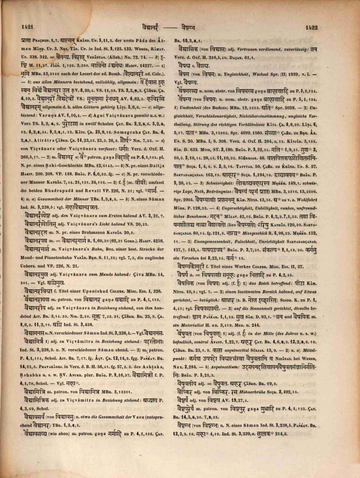
vaiśvānará — 1〉 Adj. (f. ī́) — a〉 allen Männern gehörig: allgemein, allbekannt, allverehrt, überall wohnend u. s. w. agní, jyótis, prāṇa, ātman der erste Pāda des Ātman iṣṭi (VASIṢṬHA 22,10), aśvamedha, bhūmi (MBH. 13,62,38). — b〉 aus allen Männern bestehend, vollzählig, allgemein. — c〉 allen Göttern gehörig. — d〉 allgebietend. — e〉 Agni Vaiśvānara geweiht u. s. w. — f〉 von Viśvānara oder Vaiśvānara verfasst. — 2〉 m. — a〉 Feuer. — b〉 ein best. Agni ĀRṢ. BR. — c〉 Sonne, Sonnenlicht. — d〉 im Vedānta der durch das Gesammtding bedingte Intellect Chr. 268,28. Chr. 269,12. — e〉 Patron. N. pr. — α〉 Pl. eines Geschlechts. — β〉 eines Daitya. — γ〉 verschiedener Männer. — 3〉 f. ī Bez. einer best. Strecke der Mondbahn (die beiden Bhadrapadā und Revatī umfassend). — 4〉 n. — a〉 die Gesammtheit der Männer. — b〉 Name eines Sāman.
Apte 1890 adjective · substantive masculine
Original text · English · adjective · substantive masculine
vaiśvānara a. (rī f.) Relating or common to all mankind, fit for all men. — raḥ 1 An epithet of fire; tvattaḥ khāṃḍavaraṃgatāṃḍavanaṭo dūre'stu vaiśvānaraḥ Bv. 1. 57. 2 The fire of digestion (in the stomach); ahaṃ vaiśvānaro bhūtvā prāṇināṃ dehamāśritaḥ . prāṇāpānasamāyuktaḥ pacāmyannaṃ caturbidhaṃ Bg. 15. 14. 3 General consciousness (in Vedānta phil.). 4 The Supreme Being. 5 The Chitraka tree.
Cappeller 1887 Word type unspecified
Original text · German · Word type unspecified
vaiśvānará, f. ī́ allen Männern o. Menschen gehörig; all gemein, allverehrt, allbeliebt. m. Agni o. das Feuer, Sonne; der durch das Gesamtding bedingte In- tellekt (ph.).

Burnouf 1866 adjective
Original text · French · adjective
vaiśvānara vaiśvānara a. issu de Viśvānara, c-à-d. du feu; igné, de nature ignée. — S. m. Agni.
Occurrences in source texts (4)
MandUp 2 occurrences
Continue with AYI Free
Image source: AYI archive.