

videha विदेह – disembodied
adjective · substantive masculine · Word type unspecified
Dictionary sources
AYI dictionary adjective · substantive masculine
adjective
disembodied
Derived from
substantive masculine
disembodied one; disembodied being
Derived from
Cappeller 1891 adjective · substantive masculine
Original text · English · substantive masculine
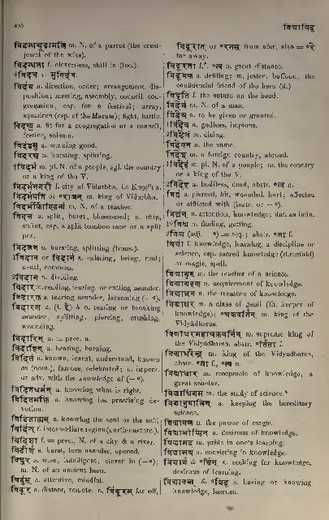
videhá1 ·m. pl. N. of a people; m. the country or a king of the V.
Original text · English · adjective
videha2 ·a. bodiless, dead, abstr. °tva n.
Monier-Williams 1872 adjective
Original text · English · adjective
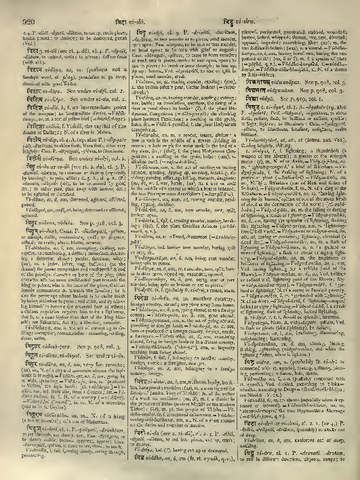
videha vi-deha, as, ā, am, without body, bodi- less, incorporeal; trunkless; (as), m. a sovereign of the family of Janaka, king of Mithilā; N. of the author of a work on medicine; (as, ā), m. f. a district in the province of Behar (ancient Mithilā or the modern Tirhut); (ās), m. pl. the people of Videha.
Petersburger 1855 adjective · substantive masculine
Original text · German · adjective
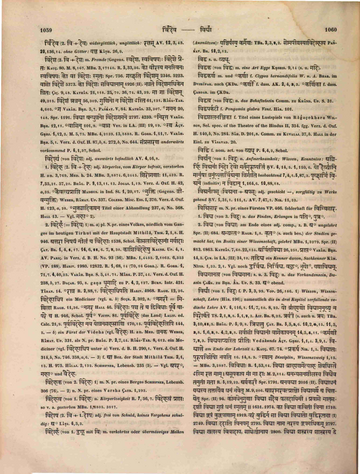
1. videha (2. vi + deha) adj. körperlos, vom Körper befreit, verstorben H. an. 3,769. MED. h. 24. MBH. 3,8874. MBH. 6,3445. śirogaṇāḥ MBH. 11,432. R. 7,55,21. R. 7,57,20. BHĀG. P. 9,13,11. BHĀG. P. 9,13,13. YOGAS. 1,19. Verz. d. Oxf. H. 42,a,35. ˚kaivalyaprāpti MADHUS._in_Ind. St. 1,20,17. ˚mukti (Gegens. jīvanmukti) WEBER, RĀMAT. UP. 337. COLEBR. Misc. Ess. I, 370. Verz. d. Oxf. H. 123,a,28. ˚muktyādikathana Titel einer Abhandlung Verz. d. Oxf. H. 237,a, No. 568. HALL 13. — Vgl. mahā˚ 2〉.
Original text · German · substantive masculine
2. videhá (= videgha) 1〉 m. a〉 pl. N. pr. eines Volkes, nördlich vom Ganges im heutigen Tirhut mit der Hauptstadt Mithilā, TRIK. 2,1,8. H. 946. antarā niṣadhaṃ nīlaṃ ca videhāḥ H. 1538, Schol. kosalavidehānāṃ maryādāḥ ŚAT. BR. 1,4,1,17. ŚAT. BR. 14,6,11,6. ŚAT. BR. 14,7,2,30. kāśivideheṣu KAUṢ. UP. 4,1. AV. PARIŚ._in_Verz. d. B. H. No. 93 (56). MBH. 1,4452. MBH. 2,1062. MBH. 6,353 (VP. 188). HARIV. 1980. HARIV. 12832. R. 1,68,14 (R. 1,70,16 GORR.). R. GORR. 1,71,7. R. GORR. 4,40,25. VARĀH. BṚH. S. 5,41. VARĀH. BṚH. S. 5,71. MĀRK. P. 57,44. Verz. d. Oxf. H. 258,b,27. DAŚAK. 95,8. gaṇa dhūmādi zu P. 4,2,127. BURN. Intr. 421. TĀRAN. 14. ˚rāja R. 2,88,7. videhādhipati HARIV. 4968. RAGH. 12,26. videhādhipa ein Mediciner (vgl. u. b) SUŚR. 2,302,8. ˚nagarī = mithilā RAGH. 11,36. ˚nagara HALL 46. videhāḥ pañca te ca dvividhāḥ pūrve cāpare ca H. 946, Schol. pūrva˚ VYUTP. 81. pūrvavidehe (das Land) LALIT. ed. Calc. 21,9. pūrvavideho nava yojanasahasrāṇi LALIT. ed. Calc. 170,15. pūrvavidehalipi LALIT. ed. Calc. 144,5. — b〉 ein Fürst der Videha (vgl. vaideha) H. an. MED. janaka WEBER, RĀMAT. UP. 331. als N. pr. BHĀG. P. 2,7,44. RĀJA-TAR. 8,612. ein Mediciner (vgl. videhādhipa unter a) Verz. d. B. H. 290,1. Verz. d. Oxf. H. 314,b, No. 746. Verz. d. Oxf. H. 358,a,6. — 3〉 f. ā Bez. der Stadt Mithilā TRIK. 2,1,15. H. 975. HALĀY. 2,132. SCHIEFNER, Lebensb. 235 (5). — Vgl. apara˚, mahā˚ und vaideha.
Böhtlingk 1879 adjective · substantive masculine
Original text · German · adjective
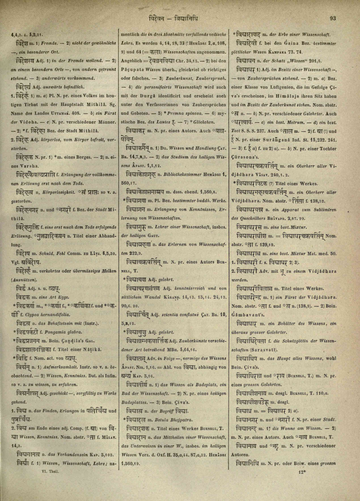
2. videha Adj. körperlos, vom Körper befreit, verstorben.
Original text · German · substantive masculine
1. videhá — 1〉 m. — a〉 Pl. N. pr. eines Volkes im heutigen Tirhut mit der Hauptstadt Mithilā. Sg. Name des Landes UTTAMAC. 408. — b〉 ein Fürst der Videha. — c〉 N. pr. verschiedener Männer. — 2〉 *f. videhā Bez. der Stadt Mithilā.
Apte 1890 adjective · substantive masculine · Word type unspecified
Original text · English · adjective · substantive masculine
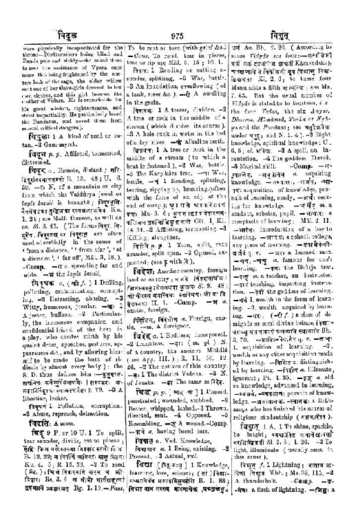
videha a. 1 Bodiless; incorporeal. 2 Trunkless. — hāḥ (m. pl.) 1 N. of a country, the ancient Mithilā (see App. III.); R. 11. 36, R. 12. 26. 2 The natives of this country. — haḥ 1 The district Videha. 2 N. of Janaka. — hā The same as videha.
Original text · English · Word type unspecified
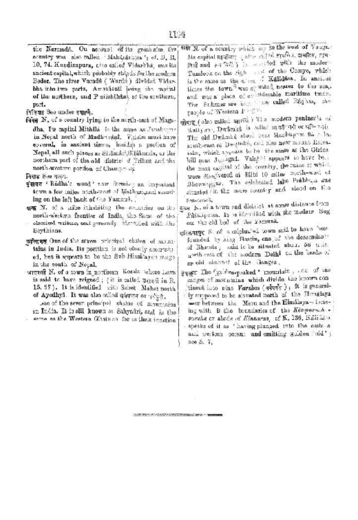
videha N. of a country lying to the northeast of Magadha. Its capital Mithilā is the same as Janakapur in Nepal north of Madhuvāṇī. Videha must have covered, in ancient times, besides a portion of Nepal, all such places as Sītāmāri, Sītākuṇḍa, or the northern part of the old district of Trihut and the north-western portion of Champaran.
Cappeller 1887 substantive masculine · Word type unspecified
Original text · German · substantive masculine
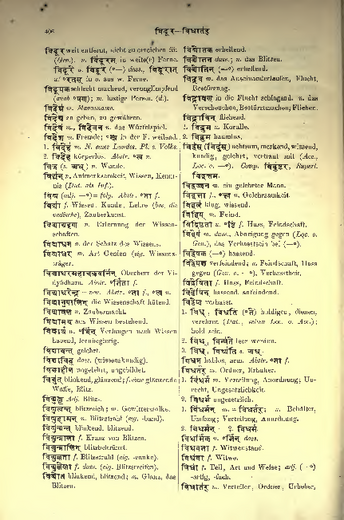
1. videhá m. N. eines Landes, Pl. e. volks.
Original text · German · Word type unspecified
2. videha körperlos. Abstr. ˚tva n.
Burnouf 1866 adjective
Original text · French · adjective
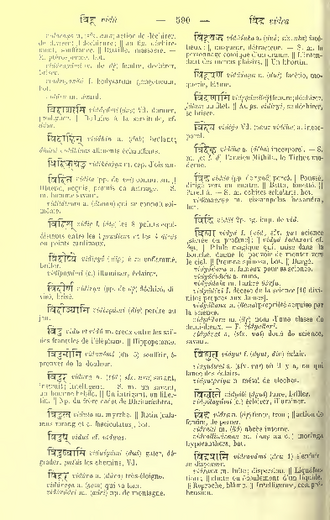
videha videha a. (deha) incorporel. — S. m. [et f. ā] l'ancien Mithila, le Tirhut moderne.
Occurrences in source texts (2)
Continue with AYI Free
Image source: AYI archive.