

vi वि – apart
adverb · particle · previx · verbal root · substantive feminine · substantive masculine · substantive neuter · Word type unspecified
Dictionary sources
AYI dictionary particle · previx
Cappeller 1891 adverb · substantive masculine
Original text · English · substantive masculine
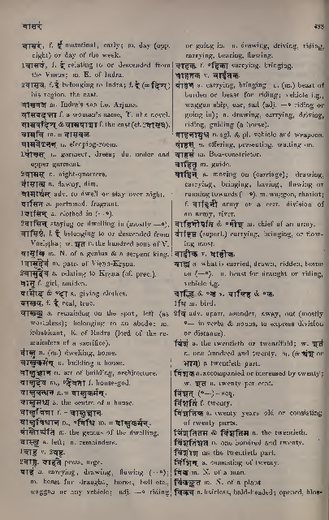
ví1 ·m. bird.
Original text · English · adverb
ví2 ·adv. apart, asunder, away, out (mostly °-- in verbs & nouns, to express division or distance).
Monier-Williams 1872 particle · substantive feminine · substantive masculine
Original text · English · particle
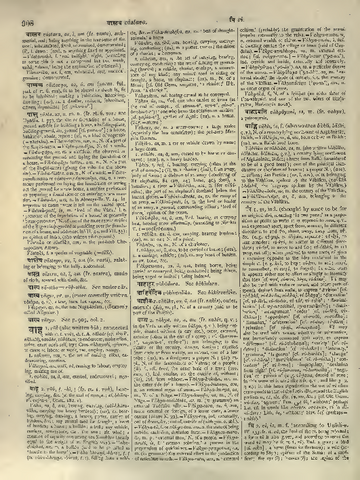
vi 1 . vi, ind. (thought by some to be for an original dvi, meaning ‘in two parts;’ as a prepo- sition or prefix to verbs it is opposed to sam, q. v., and expresses) apart, apart from, asunder, in different directions, to and fro, about, away, away from, off, &c. (e. g. vi-yuj, to disjoin, separate; vi-dṝ, to tear asunder; vi-kṝ, to scatter in different direc- tions; vi-cal, to move to and fro; vi-cchid, to cut away, cut off); when prefixed to some roots, vi gives a meaning opposite to the idea contained in the simple rt. (e. g. krī, to buy; vi-krī, to sell; smṛ, to remember; vi-smṛ, to forget); in other cases it appears either not to affect or simply to intensify that idea [cf. naś, vi-naś, hiṃs, vi-hiṃs]. Vi may also be used with verbs or nouns, and other parts of speech derived from verbs, to express ‘division’ [cf. vi-bhid, vi-bheda, vi-bhaj, vi-bhāga]; ‘distinction’ [cf. vi-śiṣ, vi-śeṣa, vi-vic, vi-veka]; ‘discrimi- nation’ [cf. vy-avacchid, vy-avaccheda]; ‘distri- bution,’ ‘arrangement,’ ‘order’ [cf. vi-dhā, vi- dhāna]; ‘opposition’ [cf. vi-rudh, vi-rodha]; ‘discussion,’ ‘deliberation’ [cf. vi-car, vi-cāra]; ‘privation’ [cf. vi-nī, vi-nayana]. Vi may also be used with nouns, adjective or substantive, not immediately connected with verbs, to express ‘difference’ [cf. vi-lakṣaṇa]; ‘variety’ [cf. vi- citra]; ‘distinction’ [cf. vi-śeṣa]; ‘intensity,’ ‘greatness,’ ‘largeness’ [cf. vi-karāla]; ‘change’ [cf. vi-kāra]; ‘manifoldness’ [cf. vi-vidha]; ‘con- trariety’ [cf. vi-loma]; ‘impropriety,’ ‘deviation from right’ [cf. vi-janman, vi-karmika]; ‘nega- tion’ or ‘privation’ (e. g. vi-jana, devoid of men; in this sense vi is used like nis, q. v., and like 3. a, q. v.); in this latter signification the use of vi often corresponds to that of the Latin dis, se, and the English prefixes a, ex, de, dis, in, un, &c.; [cf. Old Germ. wi-dar, ‘against;’ Pers. بى bī, ‘without;’ perhaps Lat. vê, in words like ve-cors, ve-sanus, vi in di- vi-dere; Lith. be, ‘without;’ Slav. beζ (perhaps = vahis).]
Original text · English · substantive feminine · substantive masculine
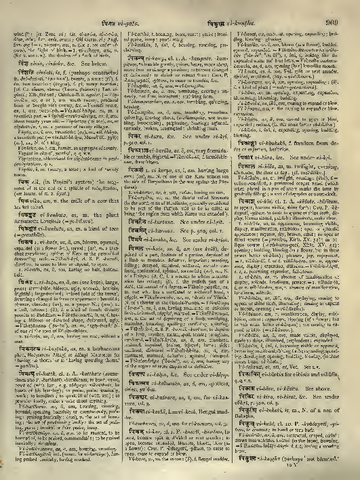
vi 2 . vi, is, m. f. (according to Uṇādi-s. IV. 133. fr. rt. vā, the final of the rt. being rejected; a form vī is also given, and according to some the word vi may be fr. rt. 1. vī), Ved. a goer; a bird [cf. vīka]; a horse (from its fleetness); a rein (ac- cording to Sāy.); epithet of the Soma; of a sacri- ficer; the eye (?); heaven (?); the region of the wind (?); [cf. Zend vi; Gr. οἰ-ωνό-ς, αἰ-ε-τό-ς, ὤϊον, ὠόν; Lat. avis, ovum; Old Germ. ei; Angl. Sax. œg.] — 1. vi-gata, am, n. (for 2. see under vi- gam), the flight of birds.
Petersburger 1855 substantive masculine · substantive neuter · Word type unspecified
Original text · German · substantive masculine
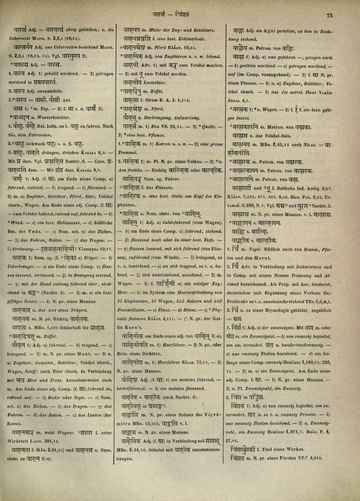
1. vi m. UṆĀDIS. 4,133. nom. sg. vis und ves (ṚV. 6,3,5. ṚV. 1,173,1. ṚV. 3,54,6. ṚV. 9,72,5. ṚV. 10,33,2), acc. vim, gen. abl. ves; nom. und acc. pl. váyas (ṚV. 1,104,1), víbhis, víbhyas, vīnā́m. Vogel NIR. 2,6. AK. 2,5,33. H. 1316. HALĀY. 2,83. mā mādhì pu̱tre vimìva grabhīṣṭa ṚV. 2,29,5. ṚV. 2,38,7. utte̱ vayàścidvasa̱teràpaptan ṚV. 6,64,6. yadvā̱ṃ ratho̱ vibhi̱ṣpatā̀t der Aśvin ṚV. 1,46,3. ṚV. 8,29,8. vayo 'śvā̀ḥ fliegende Rosse ṚV. 1,104,1. ṚV. 1,117,14. ṚV. 6,63,7. vī̱nāṃ pa̱dam ṚV. 1,25,7. pa̱daṃ veḥ ṚV. 164,7. ṚV. 3,5,5. ṚV. 1,6. ṚV. 7,7. ṚV. 4,5,8. ṚV. 10,5,1. mā̱tā pu̱trairadìti̱rdhāyàse̱ veḥ ṚV. 1,72,9. ṚV. 6,48,17. pra su ṣa vibhyo̱ viràstu ṚV. 4,26,4. parṇin ṚV. 8,5,32. druṣad ṚV. 9,72,5. PAÑCAV. BR. 5,6,15. vayàḥ puruṣādàḥ die Pfeile ṚV. 10,27,22. anù tvā̱ patnī̀rhṛṣi̱taṃ vayàśca̱ viśvè de̱vāsò amada̱nnanù tvā nach dem Comm. die fliegenden Marut ṚV. 1,103,7. ṚV. 5,53,3. VS. 2,16. catuṣpādvau VOP. 23,6. nadebhyā 'pi hradebhyo 'pi pivantyanye vayaḥ payaḥ Spr. 1398. vīn BHAṬṬ. 9,24. bhūtavigrahāḥ Spr. 3154. bahuvi jayati vanam UJJVAL._zu_UṆĀDIS. 4,133. — Vgl. rājavi und 1. vayas.

Original text · German · substantive neuter
4. vi n. zu einer Etymologie gebildet, angeblich so v. a. anna ŚAT. BR. 14,8,13,3.
Original text · German · Word type unspecified
2. vi praep. gaṇa prādi zu P. 1,4,58. Vārtt. zu P. 1,4,84. VOP. 1,8. euphonischer Einfluss auf ein folgendes sa VS. PRĀT. 3,65. bezeichnet Trennung und Abstand; mit acc. elliptisch hindurch: yo vi duràḥ paṇī̱nām der durch die Pforten der P. (ging) ṚV. 7,9,2. ma̱thnā rajā̀ṃsyaśvinā̱ vi ghoṣaìḥ ṚV. 1,181,5. (asṛgram) vi vāra̱mavyàmā̱śavàḥ durch den Sieb ṚV. 9,13,6. katì svi̱ttā vi yojànā wie viele Rasten auch dazwischen sind ṚV. 10,86,20. zufällige Schreibung: manùṣo̱ nàhuṣo̱ vi jā̱tāḥ (d. i. vijātāḥ) ṚV. 10,80,6. Die einheimischen Gelehrten geben dem Worte folgende Bedeutungen: prātilomya NIR. 1,3. vi śreṣṭhe 'tīte nānārthe H. an. 7,15. vi nigrahe niyoge ca tathaiva padapūraṇe .. niścaye sahane hetāvavyāptiviniyogayoḥ . īṣadarthe paribhave śuddhāvalambane 'pi ca .. vijñāne MED. avy. 75. fgg. viśeṣe gatau ālambhe und pālane ŚABDAR. nach ŚKDR. viśeṣavairūpyanañrthagatidāneṣu DURGĀD. nach ŚKDR.
Original text · German · Word type unspecified
3. vi Verbalwurzel s. vī.
Böhtlingk 1879 adverb · substantive masculine · substantive neuter
Original text · German · adverb
2. ví Adv. in Verbindung mit Zeitwörtern und in Comp. mit einem Nomen Trennung und Abstand bezeichnend. Als Präp. mit Acc. hindurch, dazwischen (mit Ergänzung eines Verbum fin.). Prädicativ so v. a. auseinanderstehend TBR. 1,6,4,3.
Original text · German · substantive masculine
1. ví m. Vogel. Bildlich auch von Rossen, Pfeilen und den Marut.
Original text · German · substantive neuter
3. ví n. zu einer Etymologie gebildet, angeblich = anna.
Whitney Roots 1885 verbal root
Original text · English · verbal root
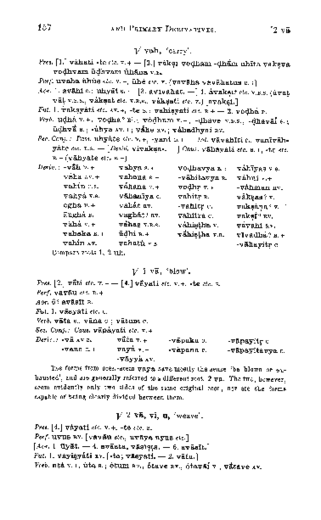
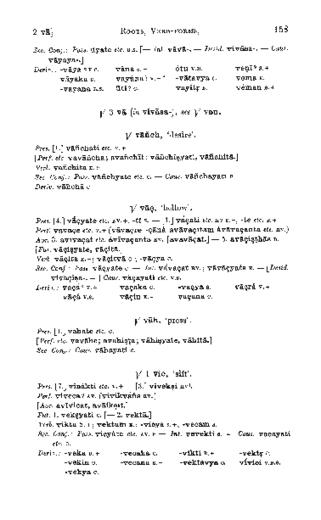
vā [2], vi, u — weave
Apte 1890 particle · substantive feminine · substantive masculine
Original text · English · particle
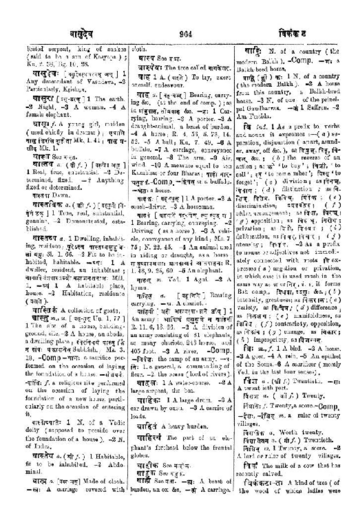
vi ind. 1 As a prefix to verbs and nouns it expresses:-(a) separation, disjunction (apart, asunder, away, off &c.), as viyuj, vihṛ, vical &c.; (b) the reverse of an action; as krī ‘to buy’; vikrī, ‘to sell’; smṛ ‘to remember’; vismṛ ‘to forget’; (c) division; as vibhaj, vibhāga; (d) distinction; as viśiṣ, viśeṣa, vivic, viveka; (e) discrimination; vyavaccheda; (f) order, arrangement; as vidhā, virac; (g) opposition; as virudh, virodha; privation; as vitī, vinayata; (i) deliberation, as vicara, vicāra; (j) intensity; vidhvaṃsa. 2 As a prefix to nouns or adjectives not immediately connected with roots vi expresses (a) negation or privation, in which case it is used much in the same way as a or nir, i. e. it forms Bah. comp., vidhavā, vyasuḥ &c.; (b) intensity, greatness; as vikarāla; (c) variety, as vicitra; (d) difference; as vilakṣaṇa; (e) manifoldness, as vividha; (f) contrariety, opposition, as viloma; (g) change, as vikāra; (h) impropriety, as vijanman.
Original text · English · substantive feminine · substantive masculine
viḥ m., f. 1 A bird. 2 A horse. 3 A goer. 4 A rein. 5 An epithet of the Soma. 6 A sacrificer (mostly Ved. in the last four senses).
Cappeller 1887 substantive masculine · Word type unspecified
Original text · German · substantive masculine
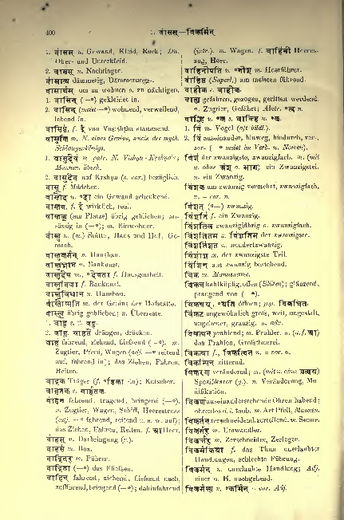
1. ví m. Vogel (oft bildl.).
Original text · German · Word type unspecified
ví auseinander, hinweg, hindurch, ver-, zer- (—˚ meist im Verb. u. Nomen).
Burnouf 1866 previx · substantive masculine
Original text · French · previx
vi vi pfx. inséparable, signifiant: éloignement, séparation, privation; différence; détérioration ou mauvais état de la chose; division.
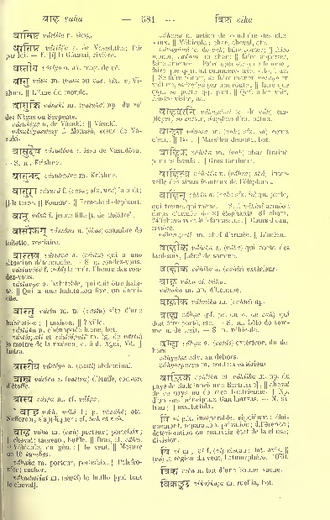
Original text · French · substantive masculine
vi vi m., vī f. (vī) oiseau; lat. avis. (vā) la région du vent, l'atmosphère. Œil.
Derived words
More direct derivatives (30)
Further derivatives (14)
Occurrences in source texts (386)
DYS 27 occurrences
DYS 34–38: Padmāsana 2 occurrences
Direct occurrences
-
DYS 36 Segment 3
Occurrences through derived words
-
DYS 38 Segment 6
DYS 43–49: False Yogis 3 occurrences
Direct occurrences
13 more source pages
DYS 103–105: Students as Obstacle 3 occurrences
Direct occurrences
DYS 146–149: Viparītakaraṇa 3 occurrences
Direct occurrences
Occurrences through derived words
-
DYS 146 Segment 5
GoS 20 occurrences
GoS 9–11: Breath and Conditioning 2 occurrences
Direct occurrences
GoS 42–49: Breath as Bellows 2 occurrences
Direct occurrences
-
GoS 43 Segment 9
Occurrences through derived words
-
GoS 49 Segment 1
HP 56 occurrences
27 more source pages
HP 1.44-1.49: Padmāsana 3 occurrences
Direct occurrences
-
HP 1.45–46 Segment 19
Occurrences through derived words
HP 1.50–54: Siṃhāsana and Bhadrāsana 2 occurrences
Direct occurrences
-
HP 1.50–52 Segment 27
Occurrences through derived words
-
HP 1.53–54 Segment 23
HP 2.34-2.36: Naulī and Kapālabhātī 2 occurrences
Direct occurrences
HP 3.33-3.48*1: Khecarī and Soma 2 occurrences
Direct occurrences
-
HP 3.33 Segment 5
Occurrences through derived words
-
HP 3.47 Segment 20
HP 3.73-3.78: Viparīta Karaṇī 3 occurrences
Direct occurrences
Occurrences through derived words
-
HP 3.74 Segment 5
HP 3.87-3.93*7: Sahajolī and Amarolī 2 occurrences
Direct occurrences
HP 3.94-3.102*1: Śakti Cālana 3 occurrences
Direct occurrences
Occurrences through derived words
-
HP 3.102 Segment 4
HP 4.0*1-4.0*14: Samādhi and Laya 2 occurrences
Direct occurrences
-
HP 4.0*7 Segment 13
Occurrences through derived words
-
HP 4.0*14 Segment 3
HP 4.5-4.8: Śāmbhavī and Khecarī 2 occurrences
Direct occurrences
HP 4.11*5-4.11*14: Khecarī in Space 2 occurrences
Direct occurrences
-
HP 4.11*13 Segment 7
-
HP 4.11*14 Segment 15
HP 4.11*15-4.11*28: Space and Laya 2 occurrences
Direct occurrences
-
HP 4.11*17 Segment 13
-
HP 4.11*24 Segment 13
HP 4.12-4.19: Path of Nāda 3 occurrences
Direct occurrences
HP 4.35*1-4.36: Signs of Samādhi 2 occurrences
Direct occurrences
HP 4.37-4.46: Listening to Nāda 2 occurrences
Direct occurrences
-
HP 4.45 Segment 16
Occurrences through derived words
-
HP 4.39 Segment 9
HP 4.47-4.55*4: Nāda Binds the Mind 3 occurrences
Direct occurrences
HTK 17 occurrences
HTK 10.11*2–14*1: Bhastrikā: Breath like a bellows 2 occurrences
Direct occurrences
HTK 10.21*2–23*1: Utkarṣa and Apakarṣa 3 occurrences
Direct occurrences
-
HTK 10.23 Segment 9
Occurrences through derived words
-
HTK 10.21*2 Segment 5
-
HTK 10.23 Segment 5
4 more source pages
HTK 10.30–33*1: Nāḍī-viśudhy-ākhyaka-kumbha and Nāḍīśuddhi 3 occurrences
Direct occurrences
HTK 10.34*2–38*1: Asvaṅgaśṛṅkhalā and Kumbhāntaraśṛṅkhalā 3 occurrences
Direct occurrences
HTK 10.47*2: Kumbhaka: Names, forms and effects 1 occurrence
Direct occurrences
-
HTK 10.47*2 Segment 3
IVU 9 occurrences
IVU 12-14: Insufficiency of Becoming 3 occurrences
Direct occurrences
-
IVU 13 Segment 15
Occurrences through derived words
MAN 3 occurrences
MandUp 4 occurrences
PJH 6 occurrences
PYS 55 occurrences
PYS 1.5–11: The Five Vṛtti 4 occurrences
Occurrences through derived words
PYS 1.12–16: Abhyāsa and Vairāgya 2 occurrences
Occurrences through derived words
PYS 1.17–18: Two Kinds of Samādhi 3 occurrences
Occurrences through derived words
PYS 1.19–22: Two Approaches 2 occurrences
Occurrences through derived words
PYS 1.23–26: Īśvara 2 occurrences
Occurrences through derived words
PYS 1.30: Nine Obstacles 2 occurrences
Occurrences through derived words
26 more source pages
PYS 1.31–32: Distraction and Its Remedy 1 occurrence
Occurrences through derived words
-
PYS 1.31 Segment 6
PYS 1.34–39: Six Supports 3 occurrences
Direct occurrences
-
PYS 1.37 Segment 1
Occurrences through derived words
PYS 1.42–43: Gross Samāpatti 3 occurrences
Occurrences through derived words
PYS 1.44–45: Subtle Samāpatti 3 occurrences
Direct occurrences
-
PYS 1.44 Segment 8
Occurrences through derived words
PYS 1.46–49: Samādhi with Seed 2 occurrences
Occurrences through derived words
PYS 2.15–17: Everything Is Suffering 2 occurrences
Occurrences through derived words
PYS 2.18–19: The Evolution of Prakṛti 2 occurrences
Occurrences through derived words
PYS 2.23–26: From Avidyā to Kaivalya 1 occurrence
Occurrences through derived words
-
PYS 2.26 Segment 1
PYS 2.27–29: Aṣṭāṅga as a Path to Liberation 1 occurrence
Occurrences through derived words
-
PYS 2.28 Segment 9
PYS 2.30–34: Vows and Counterreflection 2 occurrences
Occurrences through derived words
PYS 2.49–51: Prāṇāyāma as Breath Suspension 1 occurrence
Occurrences through derived words
-
PYS 2.49 Segment 6
PYS 3.9–12: Three Transformations of Citta 1 occurrence
Occurrences through derived words
-
PYS 3.9 Segment 1
PYS 3.17–20: Extraordinary Knowledge 1 occurrence
Occurrences through derived words
-
PYS 3.17 Segment 8
PYS 3.23–25: Powers and Distant Knowledge 2 occurrences
Occurrences through derived words
PYS 3.35–37: Knowledge of Puruṣa and Siddhis 2 occurrences
Occurrences through derived words
PYS 3.52–55: Viveka and Kaivalya 2 occurrences
Occurrences through derived words
PYS 4.25–26: Citta Flows toward Kaivalya 2 occurrences
Occurrences through derived words
SiSa 102 occurrences
SiSa 1.4-1.9: Begrenzte Wege 3 occurrences
Direct occurrences
SiSa 1.71-1.81: Avidyā und Elemente 1 occurrence
Occurrences through derived words
-
SiSa 1.76 Segment 9
SiSa 1.82-1.90: Guṇas und Gegenstände 3 occurrences
Occurrences through derived words
SiSa 2.6-2.12: Mond und Sonne 2 occurrences
Direct occurrences
43 more source pages
SiSa 2.25-2.31: Nāḍī-Netz 4 occurrences
Direct occurrences
SiSa 3.1-3.10: Herzlotus und Prāṇa 2 occurrences
Direct occurrences
SiSa 3.21-3.31: Nāḍī-Reinigung 3 occurrences
Direct occurrences
SiSa 3.61-3.67: Paricaya und Niṣpatti 3 occurrences
Direct occurrences
SiSa 3.68-3.80: Vāyusādhana 3 occurrences
Direct occurrences
Occurrences through derived words
-
SiSa 3.79 Segment 12
SiSa 3.84-3.87: Siddhāsana 3 occurrences
Direct occurrences
Occurrences through derived words
-
SiSa 3.85 Segment 25
SiSa 3.88-3.91: Padmāsana 3 occurrences
Direct occurrences
Occurrences through derived words
-
SiSa 3.88 Segment 53
SiSa 4.51-4.59: Khecarīmudrā 2 occurrences
Direct occurrences
SiSa 5.3-5.5: Bhoga-Hindernisse 2 occurrences
Direct occurrences
-
SiSa 5.3 Segment 7
Occurrences through derived words
-
SiSa 5.3 Segment 14
SiSa 5.10-5.14: Subtile Hindernisse 3 occurrences
Direct occurrences
SiSa 5.24-5.28: Adhimātratama 3 occurrences
Direct occurrences
Occurrences through derived words
-
SiSa 5.27 Segment 13
SiSa 5.38-5.47: Nāda-Laya 5 occurrences
Direct occurrences
SiSa 5.48-5.71: Innere Meditation 4 occurrences
Direct occurrences
Occurrences through derived words
-
SiSa 5.70 Segment 10
SiSa 5.94-5.101: Mūlādhāra-Siddhis 1 occurrence
Occurrences through derived words
-
SiSa 5.101 Segment 7
SiSa 5.102-5.107: Svādhiṣṭhāna 2 occurrences
Direct occurrences
-
SiSa 5.102 Segment 7
-
SiSa 5.105 Segment 12
SiSa 5.132-5.143: Innere Vārāṇasī 4 occurrences
Direct occurrences
-
SiSa 5.135 Segment 7
-
SiSa 5.135 Segment 16
-
SiSa 5.140 Segment 8
-
SiSa 5.140 Segment 17
SiSa 5.144-5.155: Ājñā und Khecarī 2 occurrences
Direct occurrences
-
SiSa 5.144 Segment 25
-
SiSa 5.154 Segment 11
SiSa 5.156-5.181: Sahasrāra 3 occurrences
Direct occurrences
-
SiSa 5.171 Segment 11
-
SiSa 5.176 Segment 10
-
SiSa 5.178 Segment 12
SiSa 5.191-5.207: Kailāsa und Mahāśūnya 6 occurrences
Direct occurrences
-
SiSa 5.192 Segment 15
-
SiSa 5.197 Segment 10
-
SiSa 5.199 Segment 7
-
SiSa 5.200 Segment 11
-
SiSa 5.207 Segment 3
Occurrences through derived words
-
SiSa 5.194 Segment 14
SiSa 5.208-5.222: Rājayoga 6 occurrences
Direct occurrences
-
SiSa 5.212 Segment 7
-
SiSa 5.214 Segment 16
-
SiSa 5.215 Segment 5
-
SiSa 5.215 Segment 13
-
SiSa 5.218 Segment 15
-
SiSa 5.219 Segment 12
SiSa 5.223-5.233: Praxis im Leben 3 occurrences
Direct occurrences
-
SiSa 5.225 Segment 14
-
SiSa 5.230 Segment 3
-
SiSa 5.230 Segment 11
SiSa 5.234-5.252: Tripurā-Mantra 3 occurrences
Direct occurrences
-
SiSa 5.234 Segment 15
-
SiSa 5.242 Segment 7
-
SiSa 5.243 Segment 13
SS 11 occurrences
SS 1.7–1.11: Turya in Three States 2 occurrences
Occurrences through derived words
SS 1.17–1.18: Self-Knowledge and Bliss 1 occurrence
Occurrences through derived words
-
SS 1.17 Segment 1
SS 2.4–2.5: Dream and Khecarī 2 occurrences
Occurrences through derived words
SS 3.16–3.19: Depth and the Powers of Sound 2 occurrences
Occurrences through derived words
SVU 21 occurrences
SVU 2.4-2.5: Praise of the One 2 occurrences
Direct occurrences
SVU 2.14-2.16: Self-Luminous and Unbound 2 occurrences
Direct occurrences
8 more source pages
SVU 4.6-4.10: Two Birds and Māyā 2 occurrences
Direct occurrences
SVU 5.1–5.6: The Lord of Cosmic Origins 2 occurrences
Direct occurrences
SVU 6.1–6.6: Lord of Cosmic Unfolding 3 occurrences
Direct occurrences
VBT 55 occurrences
VBT 7–10: Forms Relativized 2 occurrences
Direct occurrences
-
VBT 9 Segment 4
Occurrences through derived words
-
VBT 10 Segment 12
VBT 14–17: Highest Reality 2 occurrences
Direct occurrences
-
VBT 14 Segment 9
Occurrences through derived words
-
VBT 15 Segment 5
VBT 18–21: Śakti and Śiva 4 occurrences
Direct occurrences
Occurrences through derived words
VBT 22–23: Practical Access 2 occurrences
Direct occurrences
-
VBT 22 Segment 20
Occurrences through derived words
-
VBT 22 Segment 19
13 more source pages
VBT 43–48: Body as Space 5 occurrences
Direct occurrences
Occurrences through derived words
-
VBT 48 Segment 4
VBT 49–56: Heart and Dissolution 4 occurrences
Direct occurrences
Occurrences through derived words
VBT 57–64: Intervals and Equality 5 occurrences
Direct occurrences
VBT 93–100: Pain and Desire 5 occurrences
Direct occurrences
-
VBT 93 Segment 3
Occurrences through derived words
VBT 101–109: Śiva-Identity 6 occurrences
Direct occurrences
Occurrences through derived words
VBT 110–120: Everyday as Gate 5 occurrences
Direct occurrences
Occurrences through derived words
VBT 121–129: Devotion and Release 4 occurrences
Direct occurrences
Occurrences through derived words
VBT 130–138: Name and Fourfoldness 3 occurrences
Direct occurrences
-
VBT 137 Segment 13
Occurrences through derived words
Continue with AYI Free
Image source: AYI archive.