Frikative Laute und Hauchlaut
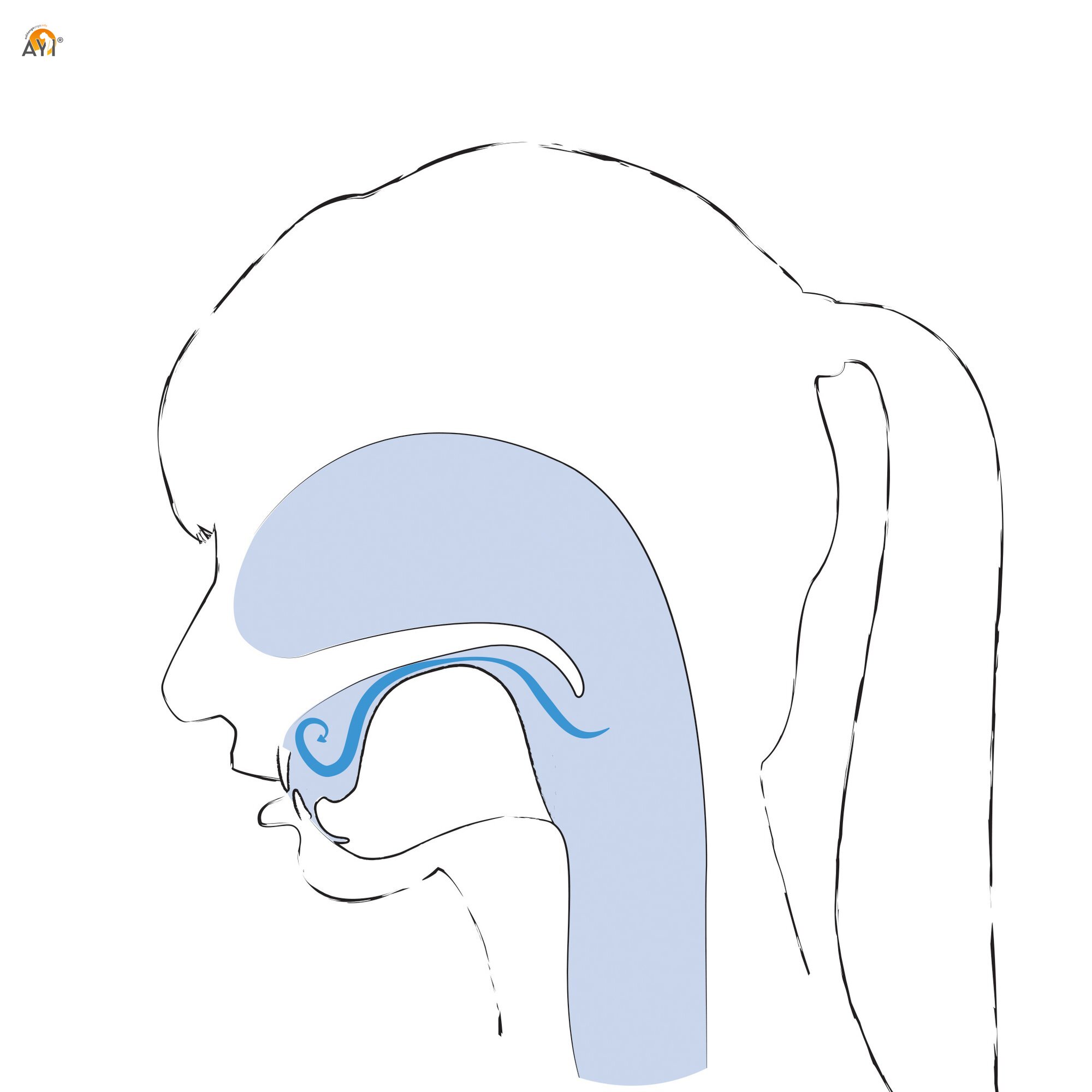
Depending on the context, the Visarga is pronounced as a fricative with different places of articulation. Therefore he is often called as a placeholder for any fricative sound.
A characteristic pronunciation can be explained as follows:
Jihvāmūlīya in front of unvoiced guttural sounds (k, kh)
When an unvoiced guttural sound (k or kh) follows, the Visarga is pronounced as an only slightly audible guttural sound, the so-called Jihvāmūlīya. The German ch comes close to this sound (example: Da-ch-Kater).
Examples:
- duḥkha (suffering) is pronounced as du-ch-kha.
Upadhmānīya in front of unvoiced labial sounds (p, ph)
When an unvoiced labial sound (p or ph) follows, the Visarga is pronounced as an only slightly audible labial aspirate, the so-called Upadhmānīya. The German fh or ph comes close to this sound (example: Dor-f-Platz).
Examples:
- vṛttayaḥ pañcatayyaḥ (five types of waves) is pronounced as vṛttaya-fh-pañcatayya-hā .
Ūṣman in front of fricatives (ś, ṣ or s)
When a fricative (ś, ṣ or s) follows, the Visarga adapts to the following fricative, a phenomenon called Ūṣman.
Examples:
- śantiḥ śantiḥ śantiḥ (peace, peace, peace) pronounced as śanti-ś-śanti-ś-śanti-hi .
- niḥ-śreyase (total wellbeing) pronounced as ni-ś-śreyase.
(with the two fricatives being merged into one long fricative)


Please log in to write a message. Go to login
No messages yet.