In Saṃskṛt, there are long and short vowels. Long vowels are pronounced approximately twice as long as short vowels.
Basic vowels
The basic vowels are articulated guturally, at the palate (palatally) or at the lips (labially):
- a, i, u: for these vowels, both a long and a short version exists.
Sonants
The sonants fill the void in the phonation space left by the basic vowels:
- r̥, l̥: these sonants also exist in a long and a short version.
Diphthongs
The umlauts are a combination of the basic vowels; in this case, an a or ā is placed in front of an i or u:
- e, ai, o, au: these diphthongs are always long because they result from the merger of at least two short vowels.
Guttural vowels
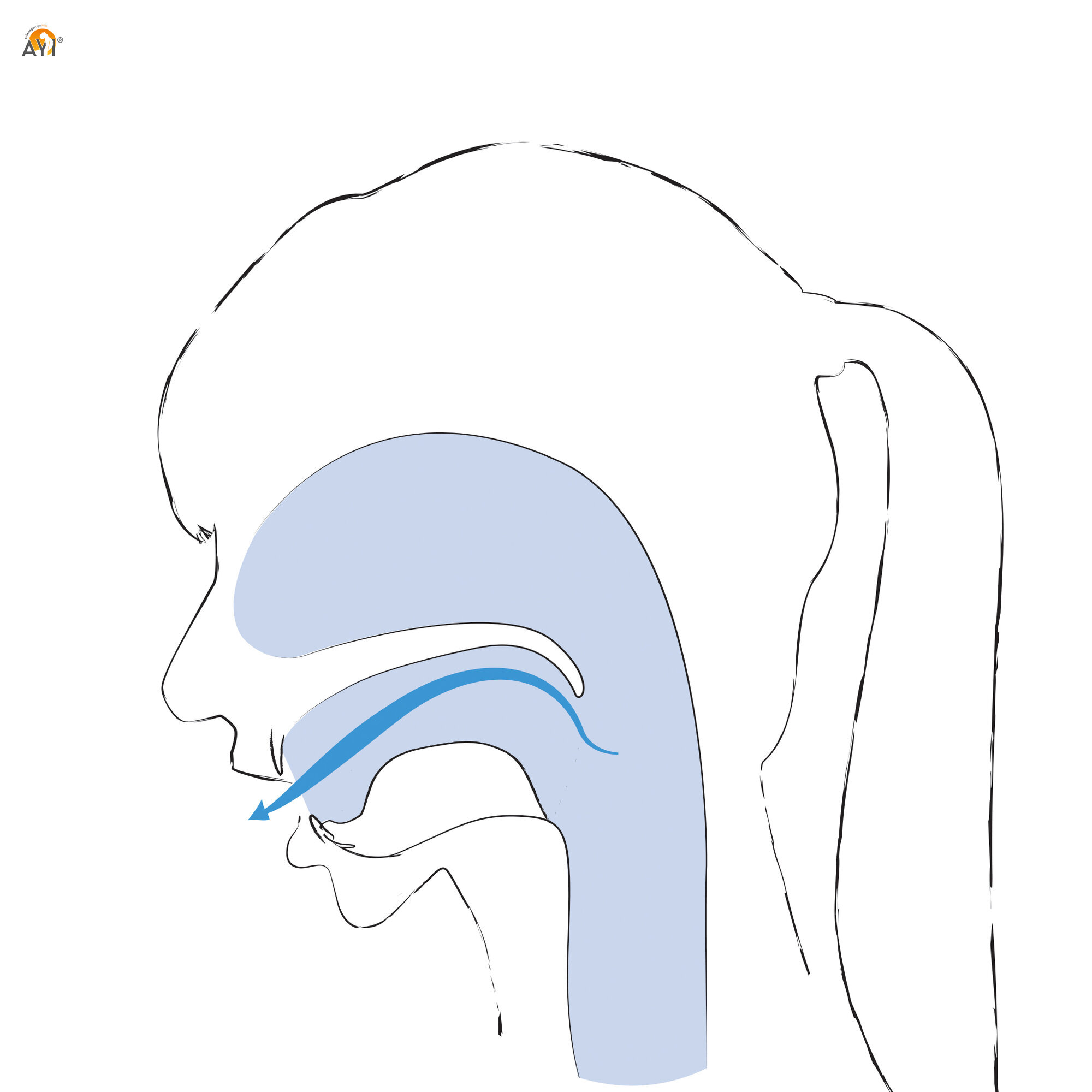
- a / ā: When articulating these vowels, half open your mouth in a relaxed way. While the short a is only briefly sounded, the long ā resounds. Both vowels cause a vibration deep down in the throat (guturally).
Examples:
- a: kann, Affe
- ā: Kahn, Vater
Palatal vowels
- i / ī: Open your mouth slightly wider. Again, the short i is sounded only briefly, whereas the long ī resounds in the phonation space. Both vowels make the palate vibrate.
Examples:
- i: Mitte, Kind
- ī: Igel, Flieder, Kies
Retroflex vowels - the "r sonant"
- r̥ / r̥̄: For this sound which is characteristic of the Saṃskṛt language, roll your tongue behind your front teeth (retroflex). The short "r̥'' almost resembles a click of the tongue. The long r̥̄ makes the tip of the tongue vibrate behind the front teeth.
Examples:
- r̥: Saṃskṛt: Kr̥ṣṇa
- r̥̄: Saṃskṛt: pitr̥̄n (very rare sound)
Dental vowels - the "l sonant"
- l̥ / l̥̄: A sound which is common in hardly any Western language. To produce it, move your tongue slightly in front of your front teeth (dental). Blow out some air for a short l̥. The long l̥̄ resounds longer. However, also in Saṃskṛt, it's hardly ever used.
Examples
- l̥: Engl.: table (rare sound)
- l̥̄: sound which basically does not exist.
Labial vowels
- u / ū: Round your mouth, almost as if for a kiss. Briefly sound the short u and let the long ū resound in the phonation space. Both vowels oscillate directly at the lips (labial).
Examples:
- u: Mutter, kurz
- ū: Mut, Kuhle
Diphthongs
Umlauts are a combination of the basic vowels with an a or an ā put in front of an i or u:


Please log in to write a message. Go to login
No messages yet.