
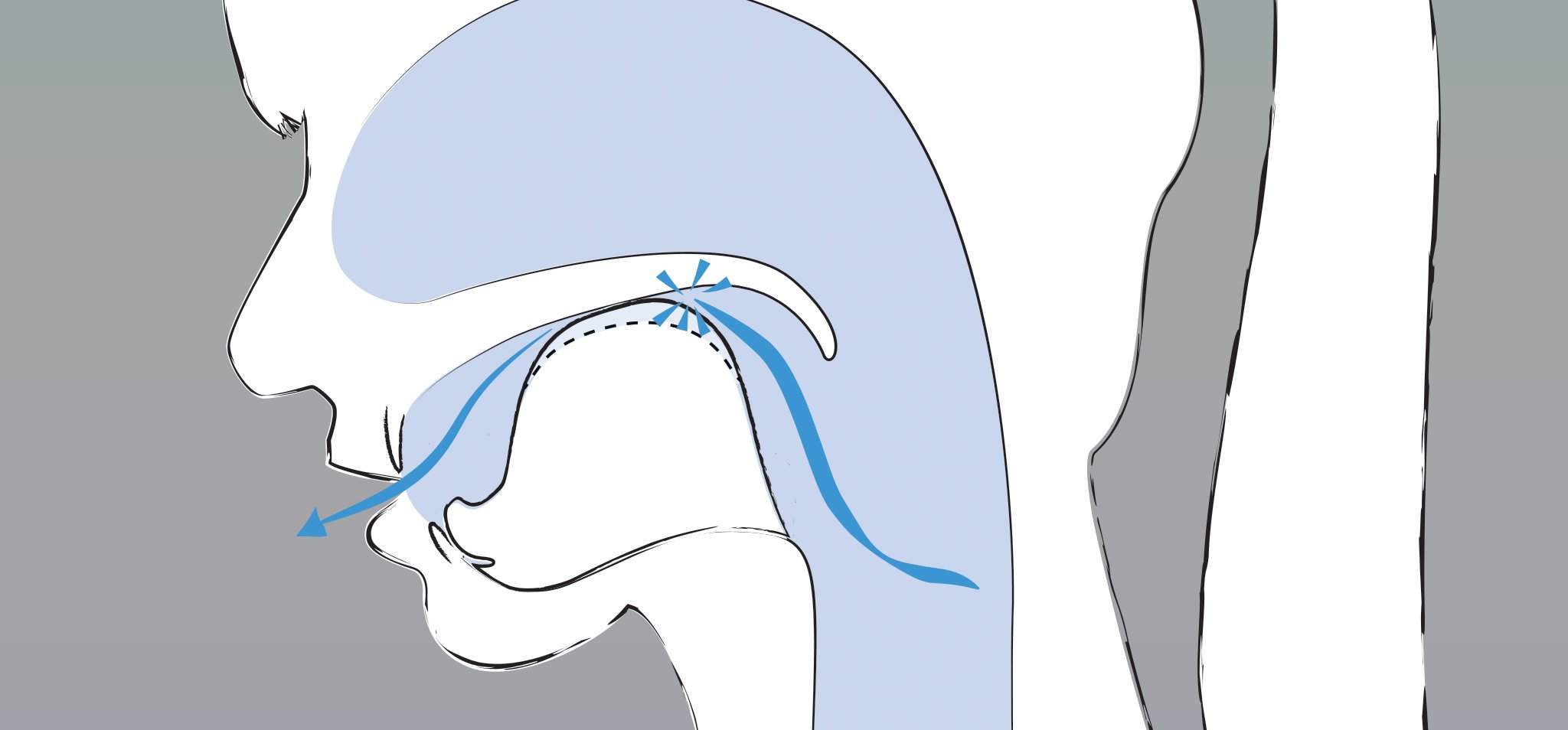
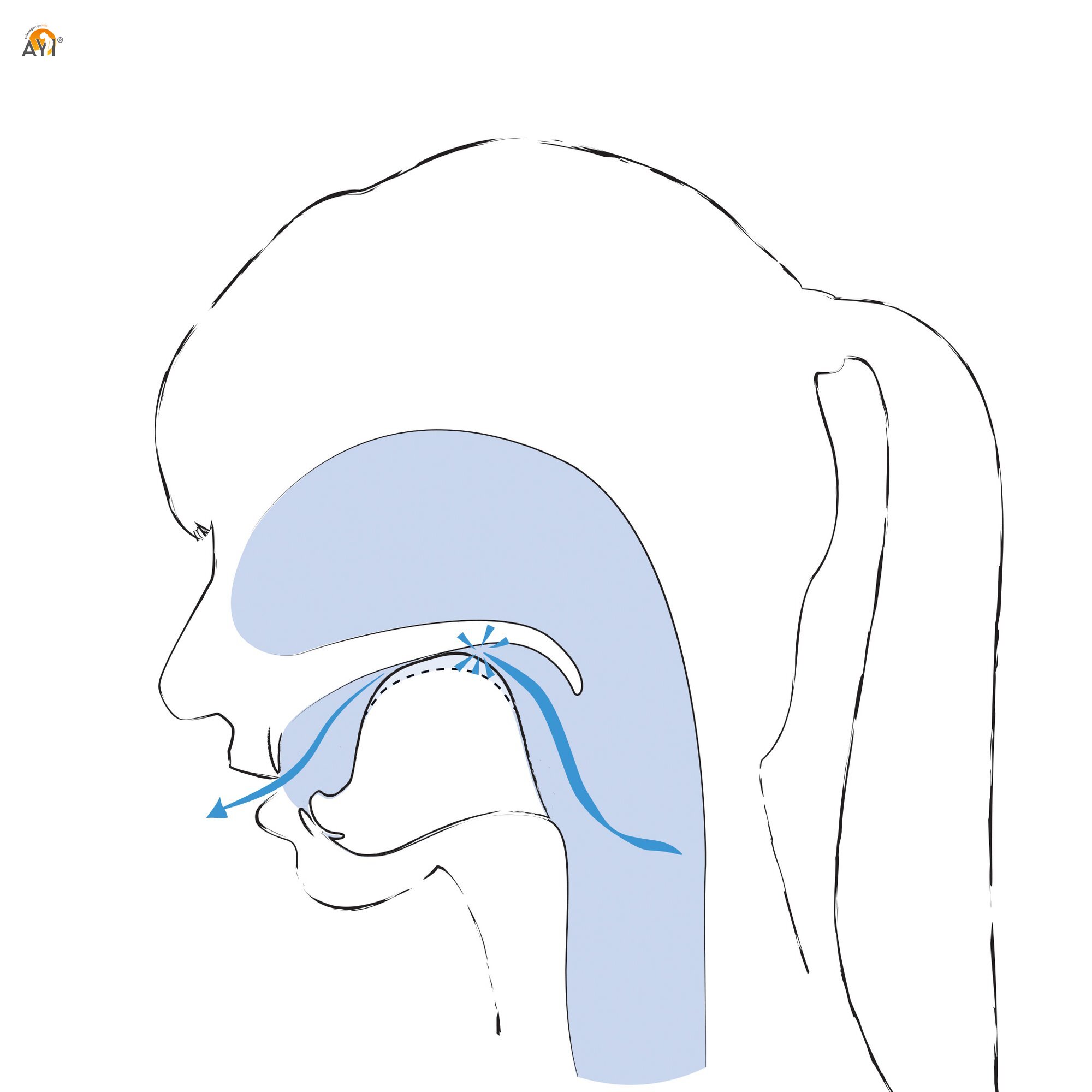
Dental plosives
- ta: The tip of the tongue is between or at the front teeth. The contact is released after slight pressure.
- tha: The analogue sound with more air.
- da: The analogue sound with vibration or voice.
- dha: The voiced sound with more air.
Examples:
Please note: For a German t or d, the tongue is right at the bridge between teeth and gums at the upper jaw (alveolar). For the dental sounds in Saṃskṛt, though, it is to be positioned slightly further down towards the tip of the front teeth. Some Saṃskṛt speakers even push their tongue slightly out in front of their front teeth. However, with a little effort, we still find German examples to illustrate the correct pronunciation:
- ta: Tasse
- tha: Thalamus
- da: Davos
- dha: Feldhase
In German, the aspirated version of the sound only exists in compound words.
Labial plosives
- pa: The lips are closed. The contact is released after slight pressure.
- pha: The analogue sound with more air.
- ba: The analogue sound with vibration or voice.
- bha: The voiced sound with more air.
Examples:
- pa: Papier
- pha: Pavillon or the German "Camp-Fahne" (where the "f" is without voice. In optimum we can try to make the aspiration at the same place we pronounce the consonant. The "f" is very close to a labial aspiration.)
- ba: Bach
- bha: Saṃskṛt: Bhagavad Gītā
Again, the aspirated version can be a challenge to German speakers.
Please log in to write a message. Go to login
No messages yet.