

āditya आदित्य – Sonne; Āditya; Sonnen-
Adjektiv · Substantiv Maskulin · Substantiv Neutrum · Worttyp nicht bestimmt
Wörterbuchquellen
AYI Wörterbuch Substantiv Maskulin
Sonne; Āditya; Sonnen-
Cappeller 1891 Adjektiv · Substantiv Maskulin
Originaltext · Englisch · Substantiv Maskulin
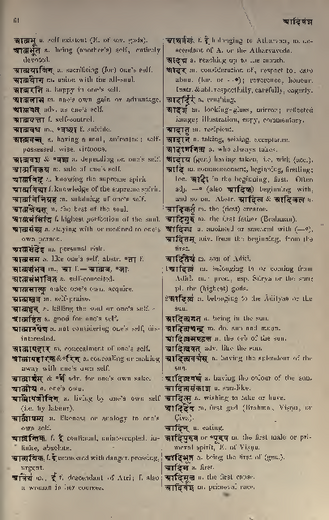
ādityá1 ·m. belonging to or coming from Aditi. m. = prec., esp. Sūrya or the sun; pl. the (highest) gods.
Originaltext · Englisch · Adjektiv
ādityá2 ·a. belonging to the Ādityas or the sun.
Monier-Williams 1872 Adjektiv
Originaltext · Englisch · Adjektiv
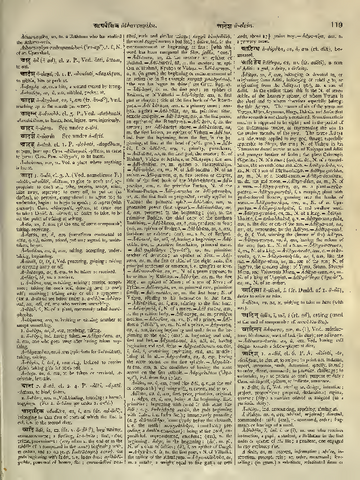
Āditya, as, ā, am, belonging or devoted to, or originating from Aditi; belonging or relating to, or originating from the Ādityas; (as), m. a son of Aditi. In the earliest times this is the N. of seven deities of the heavenly sphere, of whom Varuṇa is the chief and to whom therefore especially belongs the title Āditya. The names of six of the seven are Varuṇa, Mitra, Aryaman, Bhaga, Dakṣa, and Aṃśa; that of the seventh is not clearly ascertained. Sometimes their number is supposed to be eight; and in the period of the Brāhmaṇas twelve, as representing the sun in the twelve months of the year. The name Āditya was afterwards applied to any god, though especially applicable to Sūrya, the sun; N. of Viṣṇu in his Vāmana or dwarf avatār, as son of Kaśyapa and Aditi and younger brother of Indra; the plant Calotropis Gigantea; N. of a man; (au), m. du., N. of a constel- lation, the seventh lunar mansion.
Petersburger 1855 Adjektiv · Substantiv Maskulin · Substantiv Neutrum
Originaltext · Deutsch · Adjektiv · Substantiv Maskulin
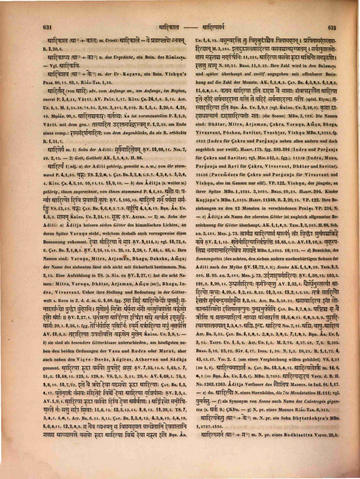
ādityá 1〉 adj. a〉 der Aditi gehörig, geweiht u. s. w.; von ihr stammend P. 4,1,85. ca̱ruḥ TS. 2,2,6,1. ŚAT. BR. 3,2,3,1. ŚAT. BR. 3,2,3,6. ŚAT. BR. 3,2,3,7. ŚAT. BR. 4,5,1,1. ŚAT. BR. 5,3,1,4. KĀTY. ŚR. 4,5,26. KĀTY. ŚR. 4,10,11. KĀTY. ŚR. 4,5,14. KĀTY. ŚR. 15,9,10. — b〉 den Āditya (s. weiter u.) gehörig, ihnen zugerechnet, von ihnen stammend P. 4,1,85. a̱sau yaḥ panthā̀ ādi̱tyo di̱vi pra̱vācyàṃ kṛ̱taḥ ṚV. 1,105,16. ā̱di̱tyaṃ garbha̱ṃ payàsā̱ samàṅghi VS. 13,41. caruḥ ŚAT. BR. 6,6,1,2. ŚAT. BR. 6,6,1,7. ŚAT. BR. 6,6,1,9. yajūṃṣi ŚAT. BR. 4,4,5,19. BṚH. ĀR. UP. 6,5,3. sāman CHĀND. UP. 2,24,11. sūkta ṚV. ANUKR. — 2〉 m. Sohn der Aditi: a〉 Āditya heissen sieben Götter des himmlischen Lichtes, an deren Spitze Varuṇa steht, welchem deshalb auch vorzugsweise diese Benennung zukommt. de̱vā ā̀di̱tyā ye sa̱pta ṚV. 9,114,3?; vgl. ṚV. 10,72,8. ṚV. 10,72,9. ŚAT. BR. 3,1,3,3. ṚV. 1,24,13. ṚV. 1,24,15. ṚV. 1,25,12. ṚV. 2,28,1. ṚV. 7,84,4. ṚV. 7,85,4. Ihre Namen sind: Varuṇa, Mitra, Aryaman, Bhaga, Dakṣa, Aṃśa; der Name des siebenten lässt sich nicht mit Sicherheit bestimmen. NIR. 2,13. Eine Aufzählung in TS.? (s. SĀY._zu_ṚV. 2,27,1) hat die acht Namen: Mitra, Varuṇa, Dhātar, Aryaman, Aṃśu (so!), Bhaga, Indra, Vivasvant. Ueber ihre Stellung und Bedeutung in der Götterwelt s. ROTH_in_Z. d. d. m. G. 6,68. fgg. i̱mā girà ādi̱tyebhyò ghṛ̱tasnū̀ḥ sa̱nādrājàbhyo ju̱hvā̀ juhomi . śṛ̱ṇotù mi̱tro àrya̱mā bhagò nastuvijā̱to varùṇo̱ dakṣo̱ aṃśàḥ .. ṚV. 2,27,1. dhṛtàvratā̱ ādìtyā̱ iṣìrā ā̱re matkàrta raha̱sūri̱vāgàḥ ṚV. 29,1. ṚV. 8,56,1. fgg. tebhìryāhi pa̱thibhìḥ sva̱rgaṃ yatrā̀di̱tyā madhù bha̱kṣayànti AV. 18,4,3. tadādityā upajīvanti varuṇena mukhena CHĀND. UP. 3,8,1. — b〉 sie sind als besondere Götterklasse unterschieden, am häufigsten neben den beiden Ordnungen der Vasu und Rudra oder Marut, aber auch neben den Viśve-Devās, Aṅgiras, Atharvan und Sādhya genannt. ā̱di̱tyā ru̱drā vasàvo juṣante̱daṃ brahma ṚV. 7,35,14. ṚV. 7,35,6. ṚV. 1,45,1. ṚV. 7,51,3. ṚV. 10,48,11. ṚV. 10,125,1. ṚV. 10,128,9. VS. 2,5. VS. 5,11. VS. 29,8. AV. 6,68,1. AV. 6,74,3. AV. 9,8,10. AV. 10,7,22. ete vai trayo devā yadvasavo rudrā ādityāḥ ŚAT. BR. 1,5,1,17. ghṛ̱tenā̱ktaṃ vàsavaḥ sīdate̱daṃ viśvè devā ādityā ya̱jñiyā̀saḥ ṚV. 2,3,4. AV. 1,9,1. ā̱di̱tyā ru̱drā vasàvo di̱vi de̱vā athàrvāṇaḥ . aṅgìraso manī̱ṣiṇa̱ste nàḥ santu̱ sadā̀ śi̱vāḥ AV. 11,6,13. AV. 12,3,43. AV. 12,3,44. AV. 8,8,12. AV. 19,39,5. TS. 7,3,4,1. TS. 7,4,6,1. AIT. BR. 6,34. AIT. BR. 8,14. ŚAT. BR. 3,5,1,13. ŚAT. BR. 4,3,5,19. ŚAT. BR. 4,4,5,19. ŚAT. BR. 6,6,1,11. ŚAT. BR. 12,2,2,9. sa naiva vyabhavat sa viśamasṛjata yānyetāni devajātāni gaṇaśa ākhyāyante vasavo rudrā ādityā viśve devā maruta iti BṚH. ĀR. UP. 1,4,12. vasūnvadanti tu pitṝnrudrāṃścaiva pitāmahān . prapitāmahāṃstathādityān M. 3,284. etadrudrāstathādityā vasavaścācaranvratam . sarvākuśalamokṣāya marutaśca maharṣibhiḥ M. 11,221. ādityā vasavo rudrā aśvinau samarudgaṇau . rakṣantu tvām N. 10,24. BHAG. 11,6. BHAG. 11,22. Ihre Zahl wird in den BRĀHMAṆA und später überhaupt auf zwölf angegeben mit offenbarer Beziehung auf die Zahl der Monate. AK. 1,1,1,5. ŚAT. BR. 4,5,7,2. ŚAT. BR. 6,1,2,8. ŚAT. BR. 11,6,3,5. ŚAT. BR. 11,6,3,8. katama ādityā iti dvādaśa vai māsāḥ saṃvatsarasyaita ādityā ete hīdaṃ sarvamādadānā yanti te yadidaṃ sarvamādadānā yanti (spiel. Etym.) tasmādādityā iti BṚH. ĀR. UP. 3,9,5 (vgl. CHĀND. UP. 3,16,5). kṛtvā dvādaśadhātmānaṃ dvādaśādityatāṃ gataḥ (die Sonne) MBH. 3,189. Die Namen sind: Dhātar, Mitra, Aryaman, Śakra, Varuṇa, Aṃśa, Bhaga, Vivasvant, Pūṣan, Savitar, Tvaṣṭar, Viṣṇu MBH. 1,2523. fg. MBH. 1,4823 (Indra für Śakra und Parjanya neben allen andern und doch angeblich nur zwölf). HARIV. 175. fgg. HARIV. 593. fgg. HARIV. 594 (Indra und Parjanya für Śakra und Savitar; vgl. MIT. 142,2. fgg.). HARIV. 11549 (Indra, Manu, Parjanya und Ravi für Śakra, Vivasvant, Dhātar und Savitar). HARIV. 12456 (Puraṃdara für Śakra und Parjanya für Vivasvant und Viṣṇu, also im Ganzen nur eilf). VP. 122. Viṣṇu, der jüngste, an ihrer Spitze MBH. 1,2524. MBH. 3,3091. BHAG. 10,21. HARIV. 594. Kinder Kaśyapaʼs MBH. 1,3135. HARIV. 11548. R. 3,20,15. VP. 122. Ihre Beziehungen zu den VP. 12 Monaten in verschiedenen PURĀṆA VP. 234, N. — c〉 Āditya als Name der obersten Götter ist zugleich allgemeine Bezeichnung für Götter überhaupt. AK. 1,1,1,3. TRIK. 3,3,305. H. 88, Sch. H. an. 3,481. MED. y. 73. tvāmàgna ādi̱tyāsà ā̱syaṃ1̱̀ tvāṃ ji̱hvāṃ śucàyaścakrire kave ṚV. 2,1,13. ṛ̱tenā̀di̱tyāstìṣṭhanti ṚV. 10,85,1. ṚV. 10,85,2. AV. 19,16,2. bṛhaspatiśca bhagavānādityeṣveva gaṇyate MBH. 1,2603. MBH. 18,215. — d〉 Bezeichn. des Sonnengottes (des achten, den sieben andern unebenbürtigen Sohnes der Aditi nach der Mythe ṚV. 10,72,8. ṚV. 10,72,9); Sonne AK. 1,1,2,29. TRIK. 3,3,305. H. 95. H. an. 3,481. MED. y. 73. udàgāda̱yamā̀dityaḥ ṚV. 1,50,13. ṚV. 1,163,3. ṚV. 1,191,9. ṚV. 8,90,11. u̱dyannā̀di̱tyaḥ kṛmī̀nhantu AV. 2,32,1. dyaurdhe̱nustasyā̀ ādi̱tyo va̱tsaḥ AV. 4,39,6. AV. 9,2,15. AV. 9,8,22. AV. 10,3,18. AV. 13,2,1. AV. 13,2,3. AV. 13,2,28. tatrà tvādi̱tyau ràkṣatāṃ sūryacandra̱masā̀vu̱bhau AV. 8,2,15. AIT. BR. 5,28. AIT. BR. 5,31. asāvāditya imāṃ lokānasaṃsthito dakṣiṇāvṛtpunaḥ punaranuparyaiti ŚAT. BR. 8,7,2,5. ṣaṣṭiśca ha vai trīṇi ca śatānyādityaṃ nāvyā abhikṣaranti ŚAT. BR. 10,5,4,14. ŚAT. BR. 10,6,2,3. ŚAT. BR. 10,5,4,6. ŚAT. BR. 10,5,4,9. purādityasyāstamayāt ŚAT. BR. 2,3,1,7. agni, indra, āditya NIR. 7,11. agni, vāyu, āditya AIT. BR. 5,32. ŚAT. BR. 6,1,2,1. ŚAT. BR. 6,2,3,2. ŚAT. BR. 6,3,2,2. ŚAT. BR. 7,1,2,5. BṚH. ĀR. UP. 1,3,14. TAITT. UP. 1,5,2. AIT. UP. 1,4. M. 3,76. M. 4,37. M. 4,48. M. 7,6. M. 9,305. BHAG. 5,16. BHAG. 15,12. SĀV. 4,17. INDR. 1,30. N. 1,2. N. 10,21. R. 1,1,77. R. 4,43,43. R. 4,43,47. VID. 2. f. (um einer Vergleichung willen gebildet) VS. 4,21 (zu VS. 1,6). ādityamaṇḍalá n. ŚAT. BR. 10,5,4,15. ādityaloká m. ŚAT. BR. 14,6,6,1 (= BṚH. ĀR. UP. 3,6,1). MBH. 3,7055. ādityahṛdaya Verz. d. B. H. No. 1262. Verz. d. B. H. No. 1263. Āditya Verfasser des jyautiṣa MADHUS._in_Ind. St. 1,17. — e〉 du. ādityau N. eines Sternbildes, die 7te Mondstation H. 111; vgl. punarvasu. — f〉 als Synonym von Sonne auch Name der Calotropis gigantea (s. arka 9.) ŚKDR. — g〉 N. pr. eines Mannes RĀJA-TAR. 6,345.
Originaltext · Deutsch · Substantiv Neutrum
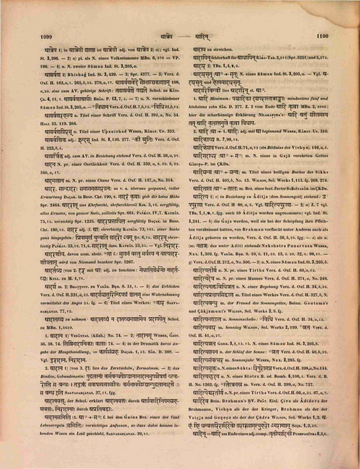
āditya 1〉c〉 in Beziehung zu Āditya (dem Sonnengott) stehend: u papurāṇa Verz. d. Oxf. H. 80,a,6. Vgl. ādityapurāṇa. — 2〉a〉 Z. 7 vgl. TBR. 1,1,9,1. fgg. auch 10 Āditya werden angenommen; vgl. Ind. St. 5,241. — b〉 die Jaya werden, weil sie bei der Schöpfung ihre Pflichten verabsäumt hatten, von Brahman verflucht unter Anderm auch als Āditya geboren zu werden, Verz. d. Oxf. H. 56,b,25. fgg. — e〉 als n. (sc. nakṣatra) das unter Aditi stehende Nakṣatra Punarvasu WEBER, Nax. 1,309. fg. VARĀH. BṚH. S. 10,6. VARĀH. BṚH. S. 11,55. VARĀH. BṚH. S. 15,5. VARĀH. BṚH. S. 15,29. VARĀH. BṚH. S. 32,8. VARĀH. BṚH. S. 98,11. — g〉 Verz. d. Oxf. H. 212,a, No. 500. — 3〉 n. N. eines Sāman Ind. St. 3,205,b.
Originaltext · Deutsch · Substantiv Neutrum
āditya 2〉e〉 n. (vgl. Nachträge) SŪRYAS. 8,19.
Böhtlingk 1879 Adjektiv · Substantiv Maskulin · Substantiv Neutrum · Worttyp nicht bestimmt
Originaltext · Deutsch · Adjektiv · Substantiv Maskulin · Substantiv Neutrum
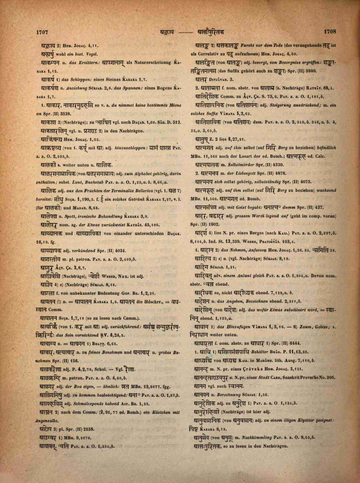
1. ādityá, āditiá — 1〉 Adj. der Aditi gehörig, geweiht u. s. w.; von ihr stammend. — 2〉 m. — a〉 Sohn der Aditi. Pl. eine besondere Götterklasse, deren Zahl mit Beziehung auf die Monate später auf zwölf angegeben wird. — b〉 Pl. die obersten Götter überh. — c〉 der Sonnengott, die Sonne. — d〉 *Du. = 4〉a〉. — e〉 *Calotropis gigantea. — f〉 N. pr. eines Mannes. — 3〉 f. ādityā́ die Sonne VS. 4,21. — 4〉 n. — a〉 das unter Aditi stehende Mondhaus Punarvasu. — b〉 Name eines Sāman.
Originaltext · Deutsch · Adjektiv
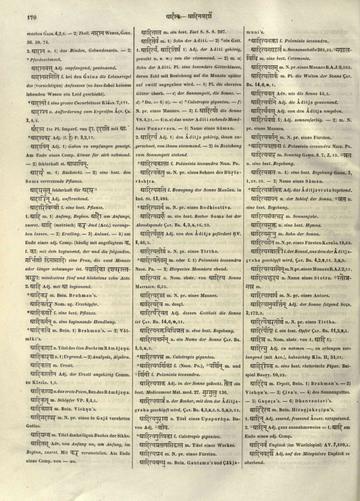
2. ādityá Adj. — 1〉 den Āditya gehörig, ihnen zugerechnet, von ihnen stammend. — 2〉 in Beziehung zum Sonnengott stehend.
Originaltext · Deutsch · Worttyp nicht bestimmt
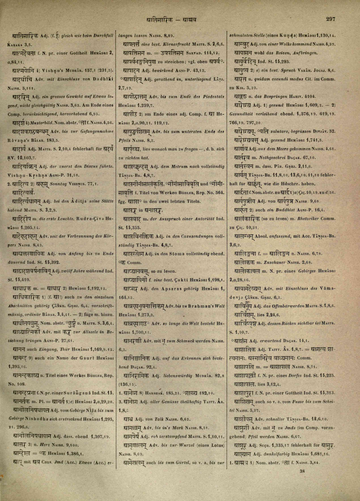
2. āditya 2〉 ahas Sonntag VIṢṆUS. 77,1. [Nachtrag, Band 1]
Originaltext · Deutsch · Worttyp nicht bestimmt
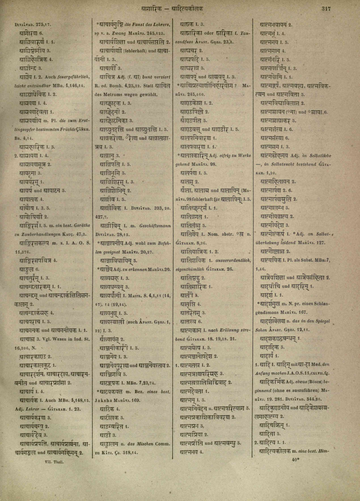
2. āditya I. 1. [Nachtrag, Band 7]
Apte 1890 Adjektiv · Substantiv Maskulin
Originaltext · Englisch · Adjektiv · Substantiv Maskulin
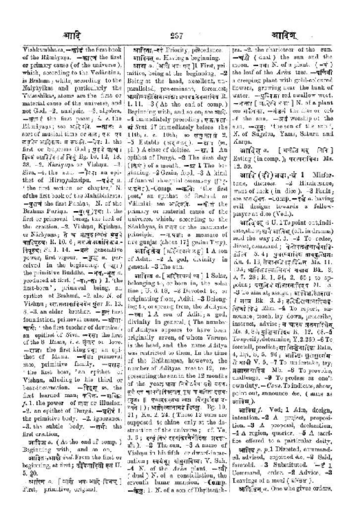
āditya a. [aditerapatyaṃ ṇya] 1 Solar, belonging to, or born in, the solar line; U. 6. 18. 2 Devoted to, or originating from, Aditi. 3 Belonging to, or sprung from, the Ādityas. — tyaḥ 1 A son of Aditi; a god, divinity in general. (The number of Ādityas appears to have been originally seven, of whom Varuṇa is the head, and the name Āditya was restricted to them. In the time of the Brāhmaṇas, however, the number of Ādityas rose to 12, representing the sun in the 12 months of the year; dhātā mitro'ryamā rudro varuṇaḥ sūrya eva cābhago vivasvān pūṣā ca savitā daśamaḥ smṛtaḥ .. ekādaśastathā tvaṣṭā viṣṇurdvādaśa ucyate .); ādityānāmahaṃ viṣṇuḥ Bg. 10. 21; Ku. 2. 24. (These 12 suns are supposed to shine only at the destruction of the universe; cf. Ve. 3. 6; dagdhuṃ viśvaṃ dahanakiraṇairnoditā dvādaśārkāḥ). 2 The sun. 3 A name of Viṣṇu in his fifth or dwarf-incarnation; svayaṃbhūḥ śaṃbhurādityaḥ V. Sah. 4 N. of the Arka plant. — tyau (dual) N. of a constellation, the seventh lunar mansion. Comp. — ketuḥ 1 N. of a son of ([Page 0237-c]) Dhṛtarāṣṭra. 2 the charioteer of the sun. — caṃdrau (dual) the sun and the moon. — patraḥ N. of a plant. — (traṃ) the leaf of the Arka tree. — parṇinī a creeping plant with gold-coloured flowers, growing near the bank of water. — puṣpikā red swallow wort. — bhaktā [āditye bhaktā] N. of a plant see arkabhaktā, — maṃḍalaṃ the disc or orb of the sun. — vrataṃ worship of the sun. — sūnuḥ ‘the son of the sun’, N. of Sugrīva, Yama, Saturn and Karṇa.
Cappeller 1887 Substantiv Maskulin · Worttyp nicht bestimmt
Originaltext · Deutsch · Substantiv Maskulin
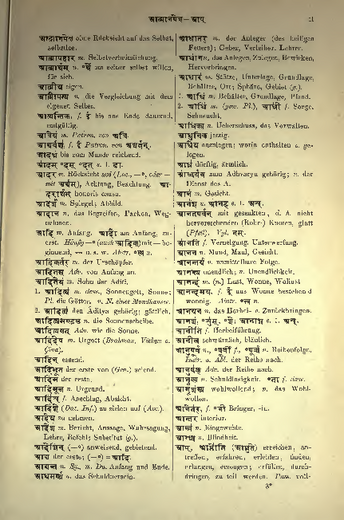
1. ādityá m. dass., Sonnengott, Sonne; Pl. die Götter. n. N. eines Mondhauses.
Originaltext · Deutsch · Worttyp nicht bestimmt
2. ādityá den Āditya gehörig; göttlich.
Burnouf 1866 Substantiv Maskulin
Originaltext · Französisch · Substantiv Maskulin
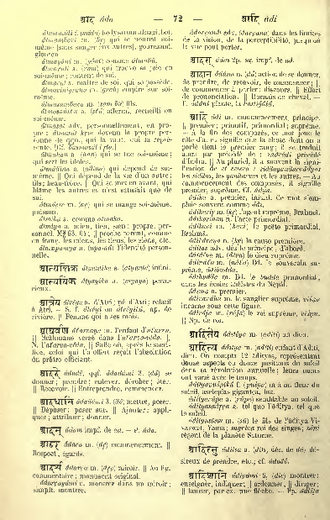
āditya āditya m. (aditi) enfant d'Aditi, dieu. On compta 12 ādityas, représentant douze aspects ou douze positions du soleil dans sa révolution annuelle; leurs noms ont varié avec le temps. ādityapuṣpikā f. (puṣpa) m à m. fleur du soleil, asclepias gigantea, bot. ādityarūpa a. (rūpa) semblable au soleil. ādityasadṛśa a. tel que l'āditya, tel que le soleil. ādityasūnu m. (sū) le fils de l'āditya Vivasvat, Yama; sugrīva roi des singes; sāni régent de la planète Saturne.
Quelltextfundstellen (2)
Mit AYI Free weitermachen
Bildquelle: AYI Archiv.