

dvīpa द्वीप – Insel
Substantiv Maskulin · Substantiv Neutrum · Worttyp nicht bestimmt
Wörterbuchquellen
AYI Wörterbuch Substantiv Maskulin
Insel
Cappeller 1891 Substantiv Maskulin · Substantiv Neutrum
Originaltext · Englisch · Substantiv Maskulin · Substantiv Neutrum
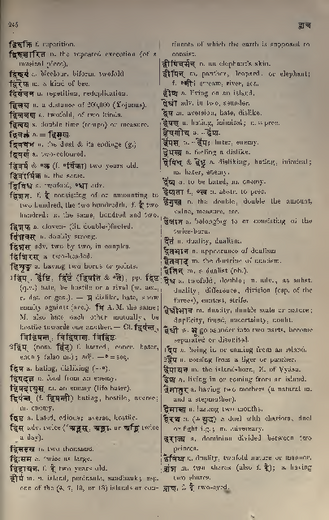
dvīpá ·m. n. island, peninsula, sandbank; esp. one of the (4, 7, 13, or 18) islands or continents of which the earth is supposed to consist.
Monier-Williams 1872 Substantiv Maskulin · Substantiv Neutrum · Worttyp nicht bestimmt
Originaltext · Englisch · Substantiv Maskulin · Substantiv Neutrum
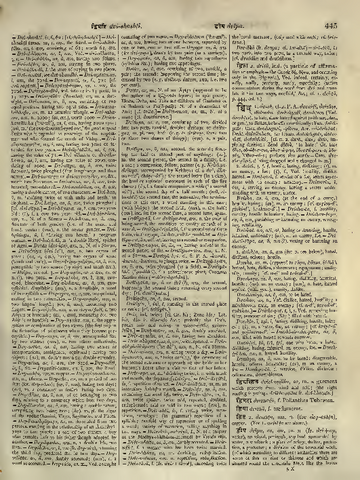
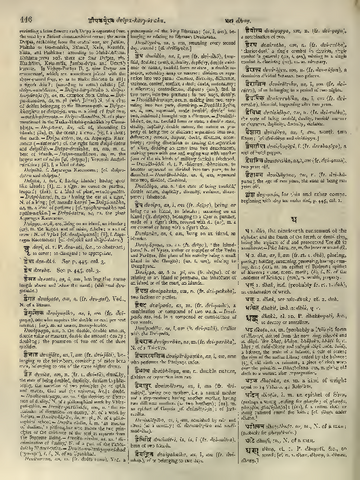
dvīpa dvīpa, as, am, m. n. (fr. dvi + ap, water), an island, peninsula, any land surrounded by water, a sandbank; a place of refuge, shelter, protec- tion, a protector; a division of the terrestrial world (of which according to different authorities there are seven or four or nine or thirteen and which are situated round the mountain Meru like the leaves encircling a lotus flower; each Dvīpa is separated from the next by a distinct circumambient ocean: the seven Dvīpas, reckoning from the central one, are Jambu, Plaksha or Go-medaka, Śālmalī, Kuśa, Krauñca, Śāka, and Puṣkara: according to Mahā-bhārata, Bhīṣma-parva 208, there are four Dvīpas, viz. Bhadrāśva, Ketu-māla, Jambu-dvīpa, and Uttarāḥ kuravas. In Viṣṇu-Purāṇa II. 3. nine Dvīpas are enumerated, which are sometimes joined with the above-named four, so as to make thirteen in all); a tiger's skin?; (according to some) cubebs; [cf. dvīpa-sambhava.]
Originaltext · Englisch · Worttyp nicht bestimmt
—Dvīpa, see col. 3.
Petersburger 1855 Substantiv Maskulin · Substantiv Neutrum · Worttyp nicht bestimmt
Originaltext · Deutsch · Substantiv Maskulin · Substantiv Neutrum
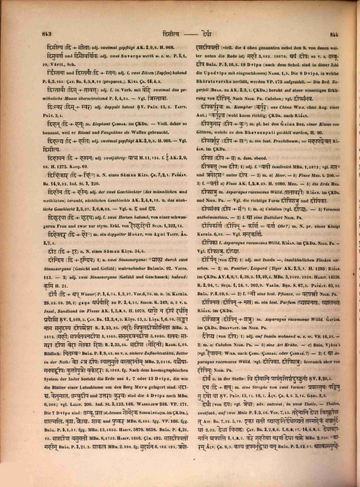
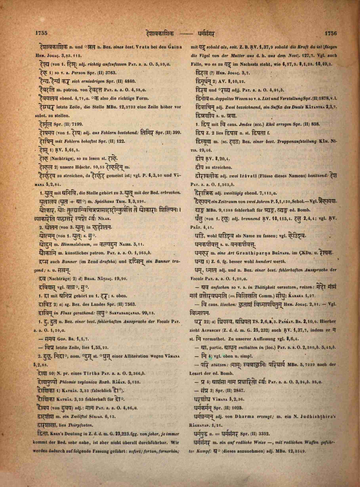
dvīpá (dvi + ap Wasser) P. 5,4,74. P. 6,3,97. VOP. 6,70. m.n. (n. KATHĀS. 25,33. KATHĀS. 25,59. KATHĀS. 26,3) gaṇa ardharcādi zu P. 2,4,31. SIDDH. K. 249,a,5 v. u. Insel, Sandbank im Flusse AK. 1,2,3,8. H. 1078. āpo̱ na dvī̱paṃ dadhàti̱ prayā̀ṃsi ṚV. 1,169,3. ŚAT. BR. 12,2,1,3. KĀṬH. 13,2. LĀṬY. 1,6,10. laṅkā nāma samudrasya dvīpaśreṣṭhā R. 3,53,35. (nadī) vipuladvīpaśobhitā MBH. 3,2512. (mahī) saparvatavanadvīpā MBH. 1,1165. sasamudravanadvīpā MBH. 3,8865. ṛtavaḥ sāgarā dvīpā vedā lokā diśaḥ R. 2,25,34. sadvīpā (medinī) RAGH. 1,65. Bildlich: nitamba˚ BHĀG. P. 8,8,45. so v. a. sichere Zufluchtsstätte, Retter in der Noth: ko 'tra dvīpaḥ syāttumule vastadānīm MBH. 2,2118. yaścaiṣāmabhavaddvīpaḥ kuntīputro vṛkodaraḥ MBH. 5,1988. fg. Nach dem kosmographischen System der Inder besteht die Erde aus 4, 7 oder 13 Dvīpa, die wie die Blätter einer Lotusblume um den Berg Meru gelagert sind. bhadrāśva, ketumāla, jambudvīpa und uttarāḥ kuravaḥ sind die MBH. 5,4 Dvīpa nach MBH. 6,208; vgl. LALIT. 200. Ind. St. 3,123. Ind. St. 3,148. WASSILJEW 248. VP. 171. Die 7 Dvīpa sind: jambū, plakṣa (st. dessen gomedaka SIDDHĀNTAŚIR._im_ŚKDR.), śālmali, kuśa, krauñca, śāka und puṣkara MBH. 6,404. fgg. VP. 166. fgg. BHĀG. P. 5,1,31. fgg. MBH. 13,4623. HARIV. 5870. HARIV. 8658. BHĀG. P. 4,21,12. saptadvīpā vasumatī MBH. 8,4735. HARIV. 1616. ŚĀK. 192. saptadvīpavatīṃ mahīm BHĀG. P. 3,21,2. śākala MBH. 2,998. fg. sudarśana MBH. 6,188. MBH. 6,191. trayodaśadvīpavatī (viell. die 4 oben genannten nebst den 9, von denen weiter unten die Rede ist) mahī MBH. 3,182. MBH. 3,10670. ayaṃ dvīpaḥ so v. a. jambūdvīpa BHĀG. P. 5,16,5. BHĀG. P. 5,16,18 Dvīpa (nach dem Schol. sind in dieser Zahl die Upadvīpa mit eingeschlossen) NAIṢ. 1,5. Die 9 Dvīpa, in welche Bhāratavarṣa zerfällt, werden VP. 175 aufgezählt. — Die Bed. Tigerfell (BHAR._zu_AK. 2,5,1. ŚKDR.) beruht auf einer einseitigen Erklärung von dvīpin. Nach NIGH. PR. Cubeben; vgl. dvīpasaṃbhava.
Originaltext · Deutsch · Worttyp nicht bestimmt
dvīpa ṚV. 8,20,4.
Böhtlingk 1879 Substantiv Maskulin · Substantiv Neutrum
Originaltext · Deutsch · Substantiv Maskulin · Substantiv Neutrum
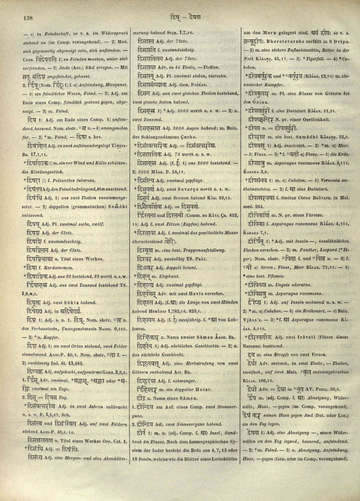
dvīpá — 1〉 m. n. (adj. Comp. f. ā) Insel, Sandbank im Flusse. Nach dem kosmographischen System der Inder besteht die Erde aus 4,7,13 oder 18 Inseln, welche wie die Blätter einer Lotusblüthe [Page3-138-c] um den Meru gelagert sind. ayaṃ dvīpaḥ so v. a. jambūdvīpaḥ. Bharatavarṣa zerfällt in 9 Dvīpa. — 2〉 m. eine sichere Zufluchtsstätte, Retter in der Noth KĀRAṆḌ. 45,17. — 3〉 *Tigerfell. — 4〉 *Cubeben.
Apte 1890 Substantiv Maskulin · Substantiv Neutrum
Originaltext · Englisch · Substantiv Maskulin · Substantiv Neutrum
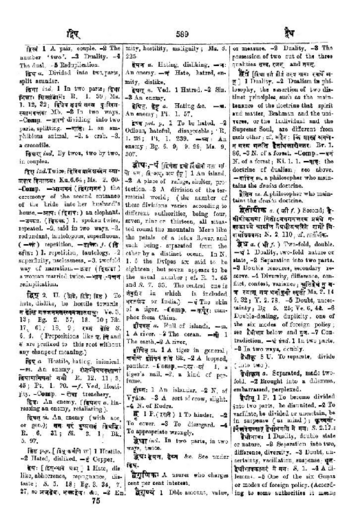
dvīpaḥ, -paṃ [dvirgatā dvayo rdiśorvā gatā āpo yatra; dvi-ap, apa īp] 1 An island. 2 A place of refuge, shelter, protection. 3 A division of the terrestrial world; (the number of these divisions varies according to different authorities, being four, seven, nine or thirteen, all situated round the mountain Meru like the petals of a lotus flower, and each being separated from the other by a distinct ocean. In N. 1. 5 the Dvīpas are said to be eighteen; but seven appears to be the usual number; cf. R. 1. 65 and Ś. 7. 33. The central one is jaṃbudvīpa in which is included bharatakhaṃḍa or India.) — paṃ The skin of a tiger. Comp. — karpūraḥ camphor from China.
Originaltext · Englisch · Substantiv Neutrum
dvīpaḥ, -paṃ [dvirgatā dvayo rdiśorvā gatā āpo yatra; dvi-ap, apa īp] 1 An island. 2 A place of refuge, shelter, protection. 3 A division of the terrestrial world; (the number of these divisions varies according to different authorities, being four, seven, nine or thirteen, all situated round the mountain Meru like the petals of a lotus flower, and each being separated from the other by a distinct ocean. In N. 1. 5 the Dvīpas are said to be eighteen; but seven appears to be the usual number; cf. R. 1. 65 and Ś. 7. 33. The central one is jaṃbudvīpa in which is included bharatakhaṃḍa or India.) — paṃ The skin of a tiger. Comp. — karpūraḥ camphor from China.
Cappeller 1887 Substantiv Maskulin · Substantiv Neutrum
Originaltext · Deutsch · Substantiv Maskulin · Substantiv Neutrum
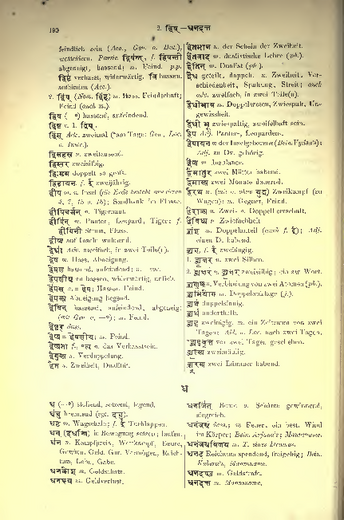
dvīpá m. n. Insel (die Erde besteht aus deren 4, 7, 13 o. 18); Sandbank im Flusse.
Burnouf 1866 Substantiv Maskulin · Substantiv Neutrum
Originaltext · Französisch · Substantiv Maskulin · Substantiv Neutrum
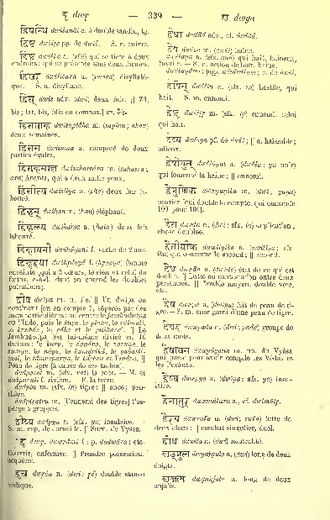
dvīpa dvīpa m. n. île. Un dvīpa ou continent [on en compte 7, séparés par des mers particulières: au centre le jambudvīpa ou l'Inde, puis le kuśa, le plakṣa, le śālmalī, le krauñca, le śāka et le puṣkara]. Le Jambudvīpa est lui-même divisé en 10 dvīpas: le kuru, le candra, le varuṇa. le saumya, le nāga, le kumārikā, le gabhastimat, le tāmraparṇa, le kaśeru et l'indra. Peau de tigre [à cause de ses taches]. dvīpavat m. (sfx. vat) la mer. — M. et dvīpavatī f. rivière. — F. la terre. dvīpin m. (sfx. in) tigre; once; panthère. dvīpiśatru m. [l'ennemi des tigres] l'asperge à grappes.
Quelltextfundstellen (2)
HP 1 Fundstelle
SiSa 1 Fundstelle
Mit AYI Free weitermachen
Bildquelle: AYI Archiv.