

gavya गव्य – von der Kuh stammend; Kuh-
Adjektiv · Substantiv Maskulin · Substantiv Neutrum · Worttyp nicht bestimmt
Wörterbuchquellen
AYI Wörterbuch Adjektiv
von der Kuh stammend; Kuh-
Cappeller 1891 Adjektiv
Originaltext · Englisch · Adjektiv
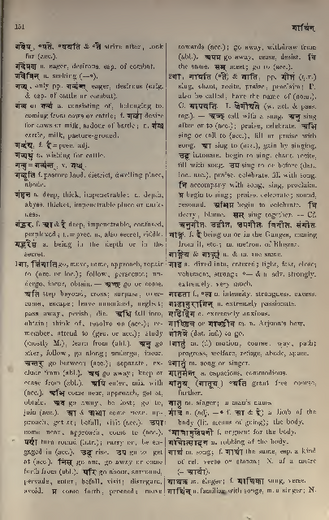
gávya ·a. consisting of, belonging to, coming from cows or cattle; f. gavyā́ desire for cows or milk, ardour of battle; n. gávya cattle, milk, pasture-ground.
Originaltext · Englisch · Adjektiv
gavyá ·a. consisting of, belonging to, coming from cows or cattle; f. gavyā́ desire for cows or milk, ardour of battle; n. gávya cattle, milk, pasture-ground.
Monier-Williams 1872 Adjektiv · Worttyp nicht bestimmt
Originaltext · Englisch · Adjektiv
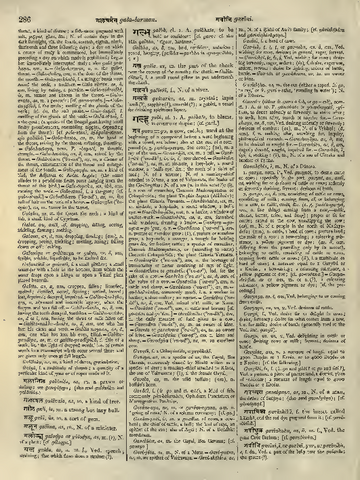
2. gavya, as, ā, am, consisting of cattle or cows, consisting of milk; coming from, of, or belonging to a cow, as milk, curds, &c. (e. g. pañca-gavya, am, n. five things coming from a cow, — milk, cheese, butter, urine, and dung); proper or fit for cattle; sacred to the cow, worshipping the cow; (as), m., N. of a people in the north of Madhya- deśa; (am), n. cattle, a herd of cows; pasture land; the milk of a cow; a bow-string; a colouring sub- stance, a yellow pigment or dye; (as, ā, am, differing from the preceding only by its accent), belonging to cattle, consisting of cattle or cows, coming from cattle or cows; (ā), f. a multitude or herd of cows; a measure equal to 1 Gavyūti or 2 Krośas; a bow-string; a colouring substance, a yellow pigment or dye; [cf. go-rocanā.]
Originaltext · Englisch · Worttyp nicht bestimmt
1. gavya, nom. P., Ved. gavyati, to desire cattle or cows; especially in the part. gavyat, an, antī, at, wishing for or desirous of cattle or cows; ardently or fervently desiring, fervent; desirous of battle.
Petersburger 1855 Adjektiv · Substantiv Maskulin · Substantiv Neutrum
Originaltext · Deutsch · Adjektiv · Substantiv Maskulin · Substantiv Neutrum
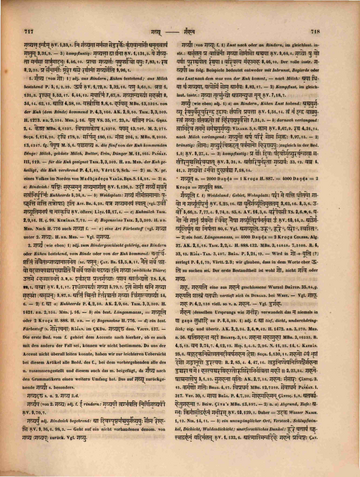
1. gávya (von go) 1〉 adj. aus Rindern, Kühen bestehend; aus Milch bestehend P. 5,1,2. P. 5,1,39. ūrva ṚV. 1,72,8. ṚV. 3,32,16. paśu ṚV. 5,61,5. vraja ṚV. 1,131,3. rādhas ṚV. 5,52,17. ṚV. 6,44,12. ma̱ghānì ṚV. 7,67,9. gavyā̱nyaśvyā̀ sa̱hasrā̀ ṚV. 8,34,14. ṚV. 8,62,15. āji ṚV. 4,58,10. vastrā̀ṇi ṚV. 9,8,6. havis MBH. 13,3321. von der Kuh (dem Rinde) kommend P. 4,3,160. AK. 2,9,50. TRIK. 3,3,309. H. 1273. H. an. 2,354. MED. y. 16. ghṛta VS. 35,17. VS. 23,8. ajina PĀR. GṚHY. 2,4. kośa MBH. 4,1337. viṣāṇakoṣa MBH. 1,5370. payas MBH. 13,707. M. 3,271. SUŚR. 1,174,20. dadhi SUŚR. 178,3. sarpis SUŚR. 180,15. māṃsa SUŚR. 204,2. MBH. 8,2050. MBH. 13,4247. fg. peyūṣa M. 5,6. pañcagavya n. die fünf von der Kuh kommenden Dinge; Milch, gekäste Milch, Butter, Urin, Dünger M. 11,165. PAÑCAT. III, 119. — für die Kuh geeignet TRIK. 3,3,309. H. an. MED. der Kuh geheiligt, die Kuh verehrend P. 4,1,85, Vārtt. 9, Sch. — 2〉 m. N. pr. eines Volkes im Norden von Madhyadeśa VARĀH. BṚH. S. 14,28. — 3〉 n. a〉 Rindvieh: ṣa̱ṣṭiḥ sa̱hasra̱manu̱ gavya̱māgā̀t ṚV. 1,126,3. udī̱ṃ gavyàṃ sṛjate̱ satvàbhi̱rdhunìḥ Kuhheerde ṚV. 5,34,8. — b〉 Weideplatz: gavyaṃ mīmāṃsamānāḥ pṛcchanti santi tatroṣā3 iti AIT. BR. 4,28. yatra gavyamabhayaṃ syāt (vgl. urvīṃ gavyūtimabhayaṃ ca naskṛdhi ṚV. öfters) LĀṬY. 10,17,4. — c〉 Kuhmilch TRIK. 2,9,16. H. ś. 98. KUMĀRAS. 7,72. — d〉 Bogensehne TRIK. 3,3,309. H. an. MED. Nach H. 776 auch gavyā f. — c〉 eine Art Färbestoff (vgl. gavyā unter 2. gavya). H. an. MED. — Vgl. sugavya.
Originaltext · Deutsch · Adjektiv
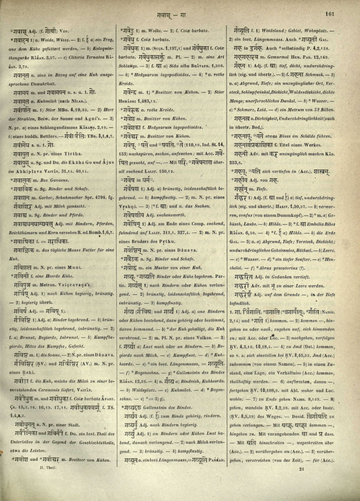
2. gavyá (wie eben) 1〉 adj. zum Rindergeschlecht gehörig, aus Rindern oder Kühen bestehend, vom Rinde oder von der Kuh kommend: caturviṃśatiṃ tvevaitāngavyānālabheta (sc. paśūn) ŚAT. BR. 13,5,3,11. naite sarve paśavo yadajāvayaścāraṇyāścaite vai sarve paśavo yadgavyā iti gavyā (weibliche Thiere) uttame 'hannālabhate ŚAT. BR. 13,3,2,3. ekā̀daśa prā̱targa̱vyāḥ pa̱śava̱ ālàbhyante TS. 5,6,22,1. vastrā ṚV. 8,1,17. rādhā̱ṃsyaśvyā̀ ga̱vyā ṚV. 5,79,7. e̱te somā̀ a̱bhi ga̱vyā sa̱hasrā̀ (asṛgran) ṚV. 9,87,5. atì śri̱tī tìra̱ścatā̀ ga̱vyā jìgā̱tyaṇvyā̀ ṚV. 9,14,6. — 2〉 f. ā a〉 Kuhheerde P. 4,2,50. AK. 2,9,60. TRIK. 3,3,309. H. 1421. H. an. 2,354. MED. y. 16. — b〉 ein best. Längenmaass, = gavyūti oder 2 Krośa H. 888. H. an. — c〉 Bogensehne H. 776. — d〉 ein best. Färbestoff (s. gorocanā) RĀJAN._im_ŚKDR. gavyadṛḍha dass. VYUTP. 137. — Die erste Bed. vom f. gehört dem Accente nach hierher, ob es auch mit den andern der Fall sei, können wir nicht bestimmen. Da uns der Accent nicht überall leiten konnte, haben wir zur leichteren Uebersicht bei diesem Artikel alle Bedd. des f., bei dem vorhergehenden alle des n. zusammengestellt und diesem auch das m. beigefügt, da gávya nach den Grammatikern einen weitern Umfang hat. Das auf gavy zurückgehende gavyā́ s. besonders.
Böhtlingk 1879 Adjektiv · Substantiv Maskulin · Substantiv Neutrum
Originaltext · Deutsch · Adjektiv · Substantiv Maskulin · Substantiv Neutrum
gávya (gávia) und gavyá — 1〉 Adj. — a〉 aus Rindern oder Kühen bestehend, dazu gehörig oder bestimmt, davon kommend. — b〉 *der Kuh geheiligt, die Kuh verehrend. — 2〉 m. Pl. N. pr. eines Volkes. — 3〉 f. gavyā́ — a〉 Lust nach oder an Rindern. — b〉 Begierde nach Milch. — c〉 Kampflust. — d〉 *Kuhheerde. — e〉 *ein best. Längenmaass, = gavyūti. — f〉 *Bogensehne. — g〉 *Gallenstein des Rindes RĀJAN. 12,59. — 4〉 n. gávya — a〉 Rindvieh, Kuhheerde. — b〉 Weideplatz. — c〉 Kuhmilch. — d〉 *Bogensehne. — e〉 *= 3〉g〉.
Originaltext · Deutsch · Adjektiv · Substantiv Maskulin · Substantiv Neutrum
gávya (gávia) und gavyá — 1〉 Adj. — a〉 aus Rindern oder Kühen bestehend, dazu gehörig oder bestimmt, davon kommend. — b〉 *der Kuh geheiligt, die Kuh verehrend. — 2〉 m. Pl. N. pr. eines Volkes. — 3〉 f. gavyā́ — a〉 Lust nach oder an Rindern. — b〉 Begierde nach Milch. — c〉 Kampflust. — d〉 *Kuhheerde. — e〉 *ein best. Längenmaass, = gavyūti. — f〉 *Bogensehne. — g〉 *Gallenstein des Rindes RĀJAN. 12,59. — 4〉 n. gávya — a〉 Rindvieh, Kuhheerde. — b〉 Weideplatz. — c〉 Kuhmilch. — d〉 *Bogensehne. — e〉 *= 3〉g〉.
Apte 1890 Adjektiv · Substantiv Neutrum
Originaltext · Englisch · Adjektiv · Substantiv Neutrum
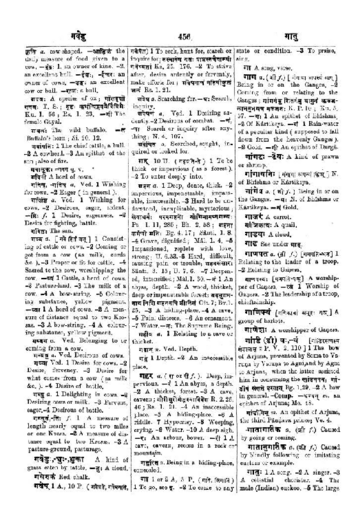
gavya a. [gave hitaṃ yat] 1 Consisting of cattle or cows. 2 Coming or got from a cow (as milk, curds &c.). 3 Proper or fit for cattle. 4 Sacred to the cow, worshipping the cow. — vyaṃ 1 Cattle, a herd of cows. 2 Pasture-land. 3 The milk of a cow. 4 A bow-string. 5 Colouring substance, yellow pigment. — vyā 1 A herd of cows. 2 A measure of distance equal to two Krośas. 3 A bow-string. 4 A colouring substance, yellow pigment.
Cappeller 1887 Worttyp nicht bestimmt
Originaltext · Deutsch · Worttyp nicht bestimmt
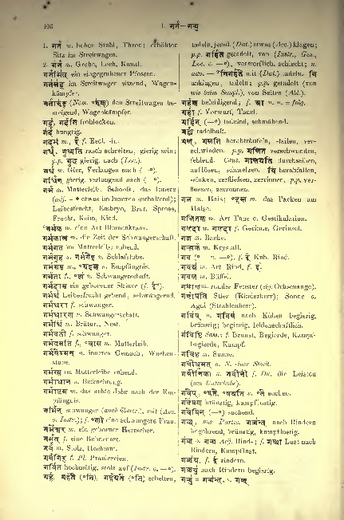
gávya o. gavyá Adj. Rind-; f. gavyā́ Lust nach Rindern, Kampflust.
Burnouf 1866 Adjektiv
Originaltext · Französisch · Adjektiv
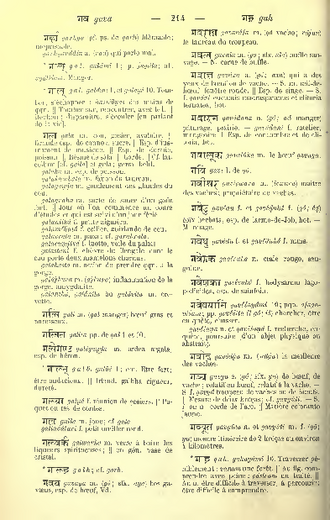
gavya gavya a. (go; sfx. ya) de bœuf, de vache; relatif au bœuf, relatif à la vache. — S. f. gavyā troupeau de vaches ou de bœufs. Mesure de deux krośas; cf. gavyūli. — S. f. ou n. corde de l'arc. Matière colorante jaune.
Quelltextfundstellen (2)
HP 1 Fundstelle
SiSa 1 Fundstelle
Mit AYI Free weitermachen
Bildquelle: AYI Archiv.