

indu इन्दु – Mond
Substantiv Maskulin · Worttyp nicht bestimmt
Wörterbuchquellen
AYI Wörterbuch Substantiv Maskulin
Mond
Cappeller 1891 Substantiv Maskulin
Originaltext · Englisch · Substantiv Maskulin
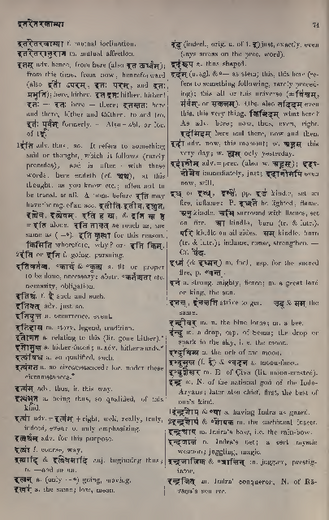
índu ·m. a drop, esp. of Soma; the drop or spark in the sky, i.e. the moon.
Monier-Williams 1872 Substantiv Maskulin
Originaltext · Englisch · Substantiv Maskulin
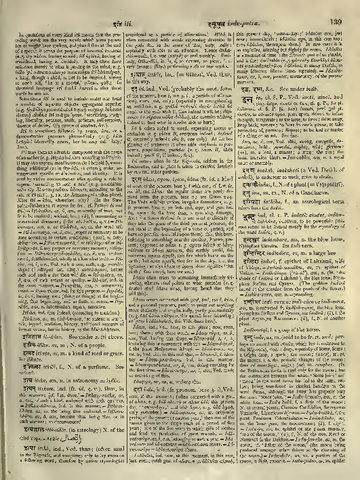
indu indu, us, m. (said to be fr. rt. und; per- haps connected with vindu, which last is unknown in the Ṛg-veda), Ved. a drop, especially of Soma, Soma; a bright drop, a spark; the moon; (avas), m. pl. the moons, i. e. the periodic changes of the moon; time of moonlight, night; (us), m. camphor. (In the Brāhmaṇas indu is used only for the moon; but the connection between the senses ‘Soma juice’ and ‘moon’ in the word indu has led to the same two ideas being transferred in classical Sanskrit to the word Soma, although the latter has properly only the sense ‘Soma juice.’)
Petersburger 1855 Substantiv Maskulin · Worttyp nicht bestimmt
Originaltext · Deutsch · Substantiv Maskulin
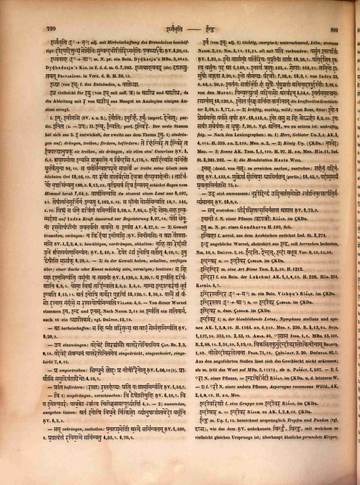
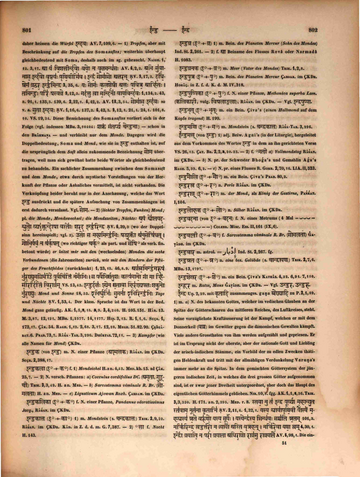
índu m. Uṇ. 1,12. bezeichnet ursprünglich Tropfen und Funken (vgl. drapsa), wie das dem ṚV. unbekannte bindú, vindu, mit welchem es vielleicht gleiches Ursprungs ist; überhaupt ähnliche gerundete Körper, daher heissen die Würfel indavaḥ AV. 7,109,6. — 1〉 Tropfen, aber mit Beschränkung auf die Tropfen des Soma saftes; weiterhin überhaupt gleichbedeutend mit Soma, deshalb auch im sg. gebraucht. NAIGH. 1,12. NAIGH. 3,17. ā yaṃ vi̱śantīndàvo̱ vayo̱ na vṛ̱kṣamandhàsaḥ AV. 6,2,2. a̱bhi sùvā̱nāsa̱ indàvo vṛ̱ṣṭayàḥ pṛthi̱vīmìva . indra̱ṃ somā̀so akṣaran ṚV. 9,17,2. da̱dhi̱ṣvemaṃ ja̱ṭhara̱ indùmindra ṚV. 3,35,6. yaḥ somàḥ ka̱laśe̱ṣvām̐ a̱ntaḥ pa̱vitra̱ āhìtaḥ . tamindu̱ḥ parì ṣasvaje ṚV. 9,12,5. madàntu tvā ma̱ndinò vāya̱vindàvaḥ ṚV. 1,134,2. ṚV. 1,43,8. ṚV. 1,91,1. ṚV. 1,135,5. ṚV. 1,139,6. ṚV. 2,22,1. ṚV. 6,42,2. AV. 18,3,54. somā̀sa̱ indàvaḥ so v. a. sutā indavaḥ ṚV. 1,16,6. ṚV. 1,137,2. ṚV. 6,42,3. ṚV. 9,12,1. ṚV. 9,21,1. ṚV. 9,24,1. ṚV. 9,101,8. ṚV. 9,12,10. VS. 19,34. Diese Bezeichnung des Soma saftes verliert sich in der Folge (vgl. indessen MBH. 3,10404: śakraṃ saṃtarpya cendunā) — schon in den BRĀHMAṆA — und verbleibt nur dem Monde. Dagegen wird die Doppelbedeutung, Soma und Mond, wie sie in indu enthalten ist, auf die ursprünglich dem Saft allein zukommende Bezeichnung soma übertragen, weil man sich gewöhnt hatte beide Wörter als gleichbedeutend zu behandeln. Ein sachlicher Zusammenhang zwischen dem Soma saft und dem Monde, etwa durch mystische Vorstellungen von der Herkunft der Pflanze oder Aehnliches vermittelt, ist nicht vorhanden. Die Verknüpfung beider beruht nur in der Anschauung, welche das Wort indu ausdrückt und die spätere Aufsuchung von Zusammenhängen ist erst dadurch veranlasst. Vgl. soma. — 2〉 (lichter Tropfen, Funken) Mond; pl. die Monde, Mondswechsel; die Mondszeiten, Nächte: a̱yaṃ dyòtayada̱dyuto̱ vya1̱̀ktūndo̱ṣā vastòḥ śa̱rada̱ indùrindra ṚV. 6,39,3 (wo der Doppelsinn hereinspielt; vgl. 2). u̱to sa mahya̱mindùbhi̱ḥ ṣaḍyu̱ktām̐ ànu̱seṣìdhat . gobhi̱ryava̱ṃ na càrkṛṣat (wo richtiger carkṛ˚ als part. und seṣi˚ als verb. fin. betont würde) er leitet mir mit den (wechselnden) Monden die sechs Verbundenen (die Jahreszeiten) zurück, wie mit den Rindern der Pflüger des Fruchtfeldes (zurücklenkt) ṚV. 1,23,15. ṚV. 1,46,8. ṚV. 1,23,9. ajàsra̱mindùmaru̱ṣaṃ bhùra̱ṇyuma̱gnimī̀ḍe pū̱rvacìttiṃ namòbhiḥ . sa parvàbhirṛtu̱śaḥ kalpàmāno̱ gāṃ mā hìṃsī̱radìtiṃ vi̱rājàm VS. 13,43. indu̱rdakṣàḥ śye̱na ṛ̱tāvā̱ hiràṇyapakṣaḥ śaku̱no bhùra̱ṇyuḥ Mond und Sonne VS. 18,53. e̱bhirdyubhìḥ su̱manā̀ e̱bhirindùbhiḥ Tage und Nächte ṚV. 1,53,4. Der klass. Sprache ist das Wort in der Bed. Mond ganz geläufig. AK. 1,1,2,15. AK. 1,1,3,9. AK. 1,3,4,240. H. 105. H. 151. HĀR. 13. M. 3,87. M. 12,121. MBH. 1,2577. MBH. 14,1177. HIḌ. 3,13. R. 1,1,6. SUŚR. 1,172,17. ŚĀK. 54. RAGH. 1,12. RAGH. 2,68. RAGH. 3,17. RAGH. 12,28. MEGH. 51. MEGH. 82. MEGH. 90. ŚṚṄGĀRAT. 6. PRAB. 73,7. RĀJA-TAR. 3,296. DHŪRTAS. 72,11. — 3〉 Kampfer (wie alle Namen für Mond) ŚKDR.
Originaltext · Deutsch · Worttyp nicht bestimmt
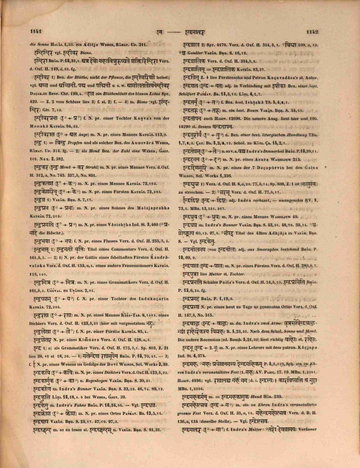
indu 1〉 = bindu Tropfen und als solcher Bez. des Anusvāra WEBER, RĀMAT. UP. 314. fg. — 2〉 als Mond Bez. der Zahl eins WEBER, JYOT. 101. Nax. 2,382.
Originaltext · Deutsch · Worttyp nicht bestimmt
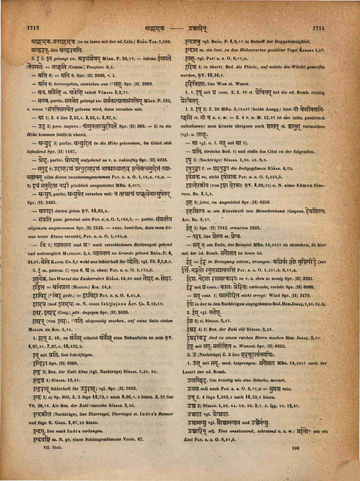
indu 2〉 Bez. der Zahl Eins (vgl. Nachträge) SŪRYAS. 1,31. SŪRYAS. 1,34.
Böhtlingk 1879 Substantiv Maskulin
Originaltext · Deutsch · Substantiv Maskulin
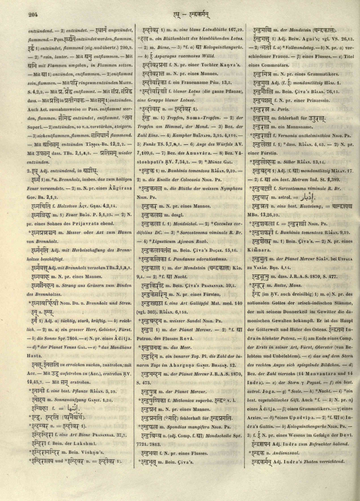
índu m. — 1〉 Tropfen, Soma-Tropfen. — 2〉 der Tropfen am Himmel, der Mond. — 3〉 Bez. der Zahl Eins. — 4〉 Kampher BHĀVAPR. 3,95. 4,110. — 5〉 Funke TS. 5,7,8,1. — 6〉 Auge des Würfels AV. 7,109,6. — 7〉 Bez. des Anusvāra. — 8〉 Bez. Vāstoṣpatiʼs ṚV. 7,54,2. — 9〉 *Münze GAL.
Cappeller 1887 Substantiv Maskulin · Worttyp nicht bestimmt
Originaltext · Deutsch · Substantiv Maskulin
índu m.; ˚bimba n. — iyám auch die Erde.
Originaltext · Deutsch · Worttyp nicht bestimmt
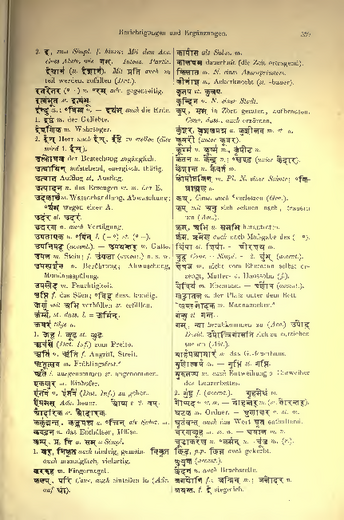
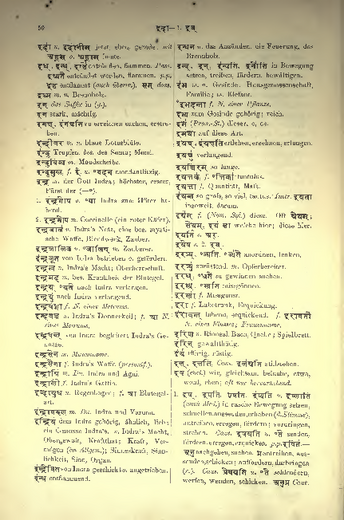
índu Tropfen, bes. des Soma; Mond.
Burnouf 1866 Substantiv Maskulin
Originaltext · Französisch · Substantiv Maskulin
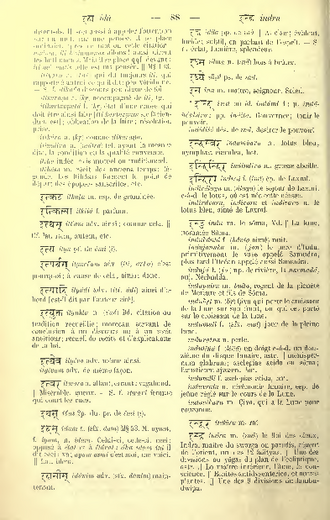
indu indu m. le soma, Vd. La lune, nommée Soma. indukāntā f. (kānta aimé) nuit. indujanaka m. (jan) le père d'Indu, primitivement le vase appelé Samudra, plus tard l'Océan appelé aussi Samudra. indujā f. (jā) np. de rivière, la narmadā, auj. Nerbudda. induputra m. budha, régent de la planète de Mercure et fils de Soma. indubhṛt m. (bhṛ) Śiva qui porte le croissant de la lune sur son front, ou qui est porté sur le croissant de la lune. indumati f. (sfx. mal) jour de la pleine lune. induratna n. perle. indulekhā f. (lekhā) un doigt c-à-d. un douzième du disque lunaire, astr. menispernum glabrum; asclepias acida ou soma; ligusticum ajwaen, bot. induvallī f. asclepias acida, bot. induvrata n. cérémonie lunaire, esp. de jeûne réglé sur le cours de la Lune. induśekara m. Śiva, qui a la Lune pour couronne.
Quelltextfundstellen (5)
GoS 1 Fundstelle
HTK 2 Fundstellen
SiSa 1 Fundstelle
VBT 1 Fundstelle
Mit AYI Free weitermachen
Bildquelle: AYI Archiv.