

paśu पशु – Paśu; gebundenes Wesen
Partikel · Substantiv Maskulin · Substantiv Neutrum · Worttyp nicht bestimmt
Wörterbuchquellen
AYI Wörterbuch Substantiv Maskulin
Paśu; gebundenes Wesen
Cappeller 1891 Substantiv Maskulin
Originaltext · Englisch · Substantiv Maskulin
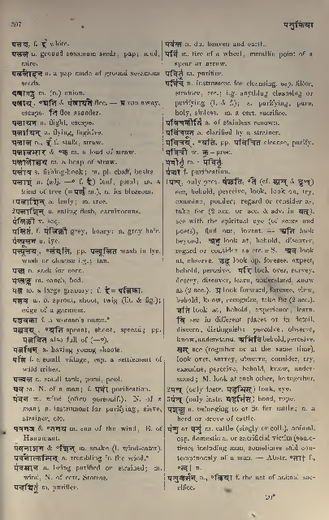
páśu ·m. cattle (singly or coll.), animal. esp. domestic a. or sacrificial victim (sometimes including man, sometimes said contemptuously of a man. -- Abstr. °tāÅ f., °tvaÅ n.
Originaltext · Englisch · Substantiv Maskulin
paśú ·m. cattle (singly or coll.), animal. esp. domestic a. or sacrificial victim (sometimes including man, sometimes said contemptuously of a man. -- Abstr. °tāÅ f., °tvaÅ n.
Monier-Williams 1872 Partikel · Substantiv Maskulin
Originaltext · Englisch · Partikel
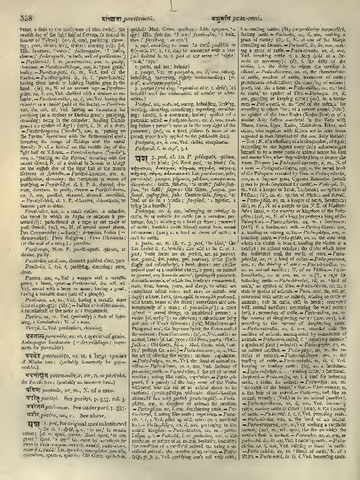
1. paśu, ind. see! behold!
Originaltext · Englisch · Substantiv Maskulin
2. paśu, us, m. (fr. rt. 3. paś, ‘to bind,’ like Lat. bestia fr. rt. bandh; also said to be fr. rt. 1. paś; Vedic forms are du. paśvā, acc. pl. paśvas, inst. paśvā, dat. paśve, gen. paśvas), cattle (both singly and collectively), a herd, drove; any smaller animal used as a sacrificial victim, a goat; an animal in general, any domestic animal, (grāmyāḥ paśavaḥ, domestic animals, of which five kinds are enumerated, men, kine, horses, goats, and sheep, to which are sometimes added mules and asses or camels and dogs); a brute, beast, (āraṇyāḥ or vanyāḥ paśavaḥ, wild beasts, beasts of the forest; sometimes said con- temptuously of a man; cf. puruṣa-p˚); a mere animal in sacred things, an uninitiated person; a victim [cf. nṛ-p˚]; an oblation; a subordinate deity and one of Śiva's followers; (with Māheśvaras and Pāśupatas) soul, the Supreme Spirit, the divine soul of the universe; Ficus Glomerata; (u), n., Ved. cattle; an animal, beast; [cf. Lat. pecu; Old Pruss. pecku; Goth. faih-u; Old Germ. fih-u; Mod. Germ. vieh, ‘cat- tle;’ perhaps Gr. πῶῑ.]
Petersburger 1855 Partikel · Substantiv Maskulin · Substantiv Neutrum · Worttyp nicht bestimmt
Originaltext · Deutsch · Partikel
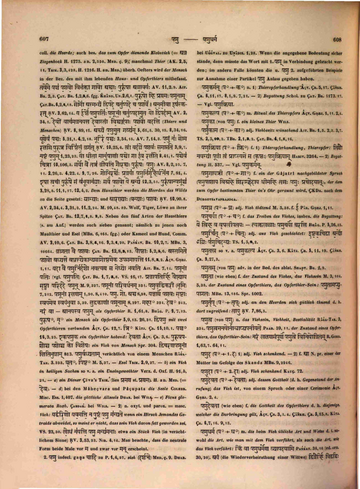
2. paśu indecl. gaṇa cādi zu P. 1,4,57. sieh (darśane) MED. ś. 9. DHAR. bei UJJVAL._zu_UṆĀDIS. 1,28. Wenn die angegebene Bedeutung sicher stände, dann müsste das Wort mit 1. paś in Verbindung gebracht werden; im andern Falle könnten die u. paśu 2. aufgeführten Beispiele zur Annahme einer Partikel paśu Anlass gegeben haben.
Originaltext · Deutsch · Substantiv Maskulin · Substantiv Neutrum
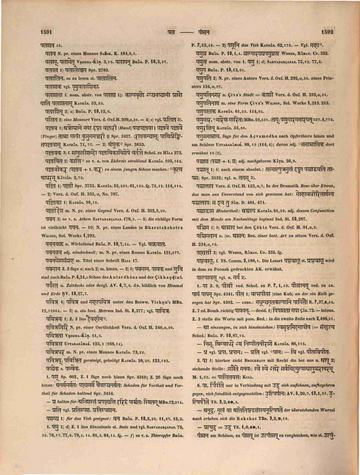
1. paśu 1〉 oxyt. UṆĀDIS. 1,28. m. a〉 gen. paśvás, später paśos, dat. páśve (ṚV. 1,43,2. ṚV. 8,5,20. ṚV. 10,35,12 ?; vgl. P. 7,3,109, Vārtt., Sch.) und paśáve ?(ṚV. 3,62,14 und in der ganzen späteren Literatur); instr. paśvā́, später paśunā, acc. pl. paśvás und paśū́n (nur dieses in der späteren Sprache); du. ved. paśvā́. Vieh, pecus, sowohl das einzelne Stück als coll. die Heerde; auch bes. das zum Opfer dienende Kleinvieh (= aja Ziegenbock H. 1275. H. an. 2,550. MED. ś. 9), manchmal Thier (AK. 2,5,11. TRIK. 3,3,428. H. 1216. H. an. MED.) überh. Oefters wird der Mensch in der Bez. des mit ihm lebenden Haus — und Opferthiers mitbefasst. tave̱me pañcà pa̱śavo̱ vibhàktā̱ gāvo̱ aśvā̱ḥ purùṣā ajā̱vayàḥ AV. 11,2,9. AIT. BR. 2,3. ŚAT. BR. 1,2,3,6. fgg. CHĀND. UP. 2,6,1. puruṣo hi prathamaḥ paśūnām ŚAT. BR. 6,2,1,18. somò a̱smabhyàṃ dvi̱pade̱ catùṣpade ca pa̱śavè . a̱na̱mī̱vā iṣàskarat ṚV. 3,62,14. ya īśè paśu̱patìḥ pa̱śūnā̱ṃ catùṣpadāmu̱ta yo dvi̱padā̀m AV. 2,34,1. de̱vīṃ vācàmajanayanta de̱vāstāṃ vi̱śvarū̀pāḥ pa̱śavò vadanti (Thiere und Menschen) ṚV. 8,89,11. aśvyàṃ pa̱śumu̱ta gavyàm ṚV. 5,61,5. ṚV. 5,30,15. ṚV. 8,34,16. yū̱thevà pa̱śvaḥ ṚV. 5,31,1. ṚV. 4,2,18. bhūrì pa̱śvaḥ ṚV. 3,54,15. AV. 7,14,3. pa̱śuṃ nàḥ soma rakṣasi puru̱tra viṣṭhìta̱ṃ jagàt ṚV. 10,25,6. tvāṃ yadàgne pa̱śavàḥ sa̱māsàte ṚV. 3,9,7. naṣṭaṃ pa̱śum ṚV. 1,23,23. yo dhī̱tā mānùpāṇāṃ pa̱śvo gā ìva̱ rakṣàti ṚV. 8,41,1. pa̱śvevà ci̱trā ṚV. 10,106,3. sarvo̱ vai tatrà jīvati̱ gauraśvaḥ purùṣaḥ pa̱śuḥ AV. 8,2,25. AV. 8,7,11. AV. 2,26,3. AV. 4,22,4. AV. 9,7,26. gobhiraśvaìḥ pra̱jayā̀ pa̱śubhìrgṛ̱hairdhanèna AV. 7,81,4. e̱ṣā tva̱cāṃ purùṣe̱ saṃ bàbhū̱vānàgnā̱ḥ sarvè pa̱śavo̱ ye a̱nye AV. 12,3,51. purùṣānpa̱śūṃścà AV. 3,28,5. AV. 11,1,17. AV. 12,4,2. Dem Hausthier werden die Heerden des Wilds an die Seite gesetzt: grāmyāḥ und āraṇyāḥ (vanyāḥ) paśavaḥ ṚV. 10,90,8. AV. 2,34,4. AV. 3,31,3. AV. 11,2,24. M. 10,48. M. 10,89. Wolf, Tiger, Löwe an ihrer Spitze ŚAT. BR. 12,7,1,8. ŚAT. BR. 12,7,2,8. Neben den fünf Arten der Hausthiere (s. am. Anf.) werden auch sieben genannt; nämlich zu jenen noch Maulthier und Esel (MBH. 6,165. fgg.) oder Kameel und Hund, Comm. AV. 3,10,6. ŚAT. BR. 3,8,4,16. ŚAT. BR. 9,3,1,20. PAÑCAV. BR. 10,2,7. MBH. 3,10664. jāgatā vai paśavaḥ ŚAT. BR. 12,8,3,13. pauṣṇāḥ ŚAT. BR. 5,2,5,6. astamite paśavo badhyante badhnantyekānyathāgoṣṭhameka upasamāyanti ŚAT. BR. 11,8,3,2. ĀŚV. GṚHY. 1,11. yadā vai paśurnirdaśo bhavatyatha sa medhyo bhavati AIT. BR. 7,14. paśūnāṃ patiḥ (vgl. paśupati) ŚAT. BR. 1,7,3,8. VS. 16,17. prajāpatirhi vaiśyāya sṛṣṭvā paridade paśūn M. 9,327. paśūnāṃ parivardhanam M. 331. paśuvṛddhikarī (bhūmi) M. 7,212. paśūnāṃ rakṣaṇam M. 1,90. M. 8,410. paśu, go, aśva M. 8,98. yajñārthaṃ paśavaḥ sṛṣṭāḥ svayameva svayaṃbhuvā M. 5,39. kṣudrakāṇāṃ paśūnām M. 8,297. mahā˚ M. 324. deva˚ M. 242. naraṃ vā — ānayasva paśum als Opferthier R. 1,61,8. BHĀG. P. 9,7,19. puruṣa˚, nṛ˚ ein Mensch als Opferthier BHĀG. P. 5,9,13. BHĀG. P. 5,26,31. dvipaśu mit zwei Opferthieren verbunden ĀŚV. ŚR. 12,7. tri˚ KĀTY. ŚR. 15,10,1. pañca˚ KĀTY. ŚR. 16,3,25. ekapaśuka ein Opferthier habend: devatā ĀŚV. ŚR. 3,6. puruṣapaśośca paśośca ko viśeṣaḥ ein Vieh von Mensch Spr. 304. dvicaraṇapaśūnāṃ kṣitibhujām Spr. 813. paśurbadhyatām verächtlich von einem Menschen RĀJA-TAR. 3,333. ghṛta˚, piṣṭa˚ M. 5,37. — Esel TRIK. 2,9,27. — b〉 ein Vieh in heiligen Sachen so v. a. ein Uneingeweihter Verz. d. Oxf. H. 91,b,21. — c〉 ein Diener Śivaʼs TRIK. (lies pramatha st. prathama). H. an. MED. (= deva). — d〉 bei den Māheśvara und Pāśupata die Seele COLEBR. Misc. Ess. I, 407. die göttliche Allseele DHAR._bei_WILS. — e〉 Ficus glomerata Roxb. ŚABDAC._bei_WILS. — 2〉 n. oxyt. und parox. = masc. Vieh: yaddhàri̱ṇo yava̱matti̱ na pu̱ṣṭaṃ pa̱śu mànyate wenn ein Hirsch Jemandes Getraide abweidet, so meint er nicht, dass sein Vieh davon fett geworden sei, VS. 23,30. lo̱dhaṃ nàyanti̱ paśu̱ manyàmanāḥ etwa ein Stück Vieh (in verächtlichem Sinne) ṚV. 3,53,23. NIR. 4,14. Man beachte, dass die neutrale Form beide Male vor ma und zwar vor man erscheint.
Originaltext · Deutsch · Worttyp nicht bestimmt
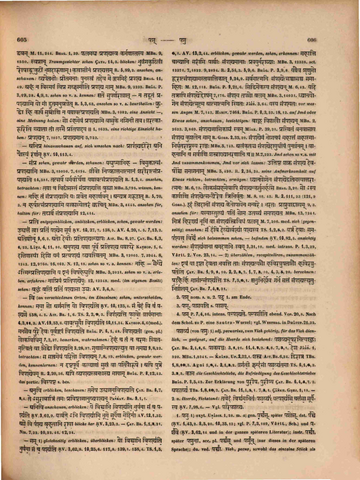
1. paśu 1〉d〉 Z. 1 lies Einzelseele st. Seele und vgl. SARVADARŚANAS. 75,22. SARVADARŚANAS. 76,17. SARVADARŚANAS. 77,6. SARVADARŚANAS. 79,2. SARVADARŚANAS. 79,14. SARVADARŚANAS. 81,2. SARVADARŚANAS. 84,14. fg. — f〉 so v. a. Thieropfer BHĀG. P. 7,15,48. — 2〉 paśūni das Vieh KATHĀS. 62,175. — Vgl. mahā˚.
Originaltext · Deutsch · Worttyp nicht bestimmt
1. paśu auch Fleisch ṚV. 1,166,6.
Böhtlingk 1879 Partikel · Substantiv Maskulin · Substantiv Neutrum · Worttyp nicht bestimmt
Originaltext · Deutsch · Partikel
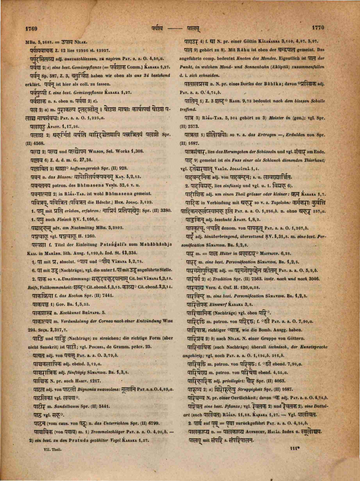
2. *paśu Indecl. sich !
Originaltext · Deutsch · Substantiv Maskulin · Substantiv Neutrum
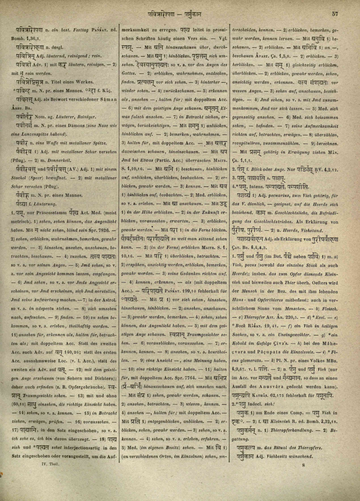
1. paśú und páśu (im Dat. páśve neben paśáve) — 1〉 m. — a〉 Vieh, pecus (sowohl das einzelne Stück als auch Heerde); insbes. das zum Opfer dienende Kleinvieh und bisweilen auch Thier überh. Oefters wird der Mensch in der Bez. des mit ihm lebenden Haus- und Opferthieres mitbefasst; auch in verächtlichem Sinne vom Menschen. — b〉 Fleisch. — c〉 Thieropfer AIT. ĀR. 220,5. — d〉 *Esel. — e〉 *Bock RĀJAN. 19,41. — f〉 ein Vieh in heiligen Sachen, so v. a. ein Uneingeweihter. — g〉 *ein Kobold im Gefolge Śivaʼs. — h〉 bei den Māheśvara und Pāśupata die Einzelseele. — i〉 *Ficus glomerata. — k〉 Pl. N. pr. eines Volkes MBH. 6,9,67. v. l. patti — 2〉 n. páśu und paśú Vieh (nur im Acc. vor manyate und mányamāna. so dass an einen Ausfall des Anusvāra gedacht werden kann). paśūnyapi KATHĀS. 62,175. Fehlerhaft für paśunapi.
Originaltext · Deutsch · Worttyp nicht bestimmt
1. paśu IV. 2〉 ˚paśūni R. ed. Bomb. 4,35,13. [Nachtrag, Band 7]
Apte 1890 Substantiv Maskulin
Originaltext · Englisch · Substantiv Maskulin
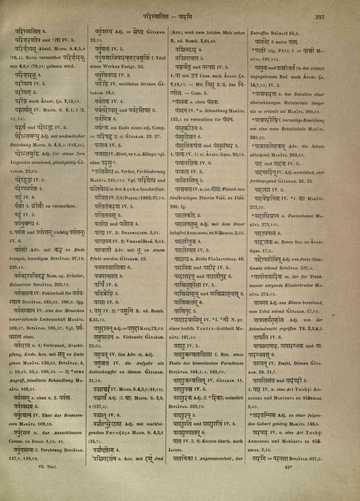
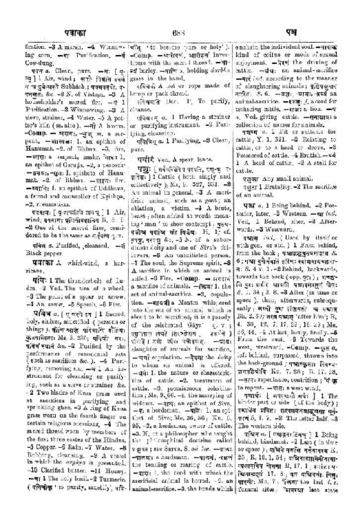
paśuḥ [sarvamaviśeṣeṇa paśyati, dṛś-ku paśādeśaḥ] 1 Cattle (both singly and collectively); Ms. 9. 327, Ms. 9. 331. 2 An animal in general. 3 A sacrificial animal, such as a goat; an oblation, a victim. 4 A brute, beast; often added to words meaning ‘man’ to show contempt; puruṣapaśośca paśośca ko viśeṣaḥ H. 1; cf. nṛpaśu, narapaśu &c. 5 N. of a subordinate deity and one of Śiva's followers. 6 An uninitiated person. 7 The soul, the Supreme spirit. 8 A sacrifice in which an animal is killed. 9 Fire. Comp. — avadānaṃ a sacrifice of animals. — kriyā 1 the act of animal sacrifice. 2 copulation. — gāyatrī a Mantra whispered into the ear of an animal which is about to be sacrificed; it is a parody of the celebrated Gāyatrī q. v.; paśupāśāya vidmahe śiraśchedāya (viśvakarmaṇe) vīmahi . tanno jīvaḥ pracodayāt. — ghātaḥ slaughter of animals for sacrifice. — caryā copulation. — devatā the deity to whom an animal is offered. — dharmaḥ 1 the nature or characteristics of cattle. 2 treatment of cattle. 3 promiscuous cohabitation; Ms. 9. 66. 4 the marrying of widows. — nāthaḥ an epithet of Śiva. — paḥ a herdsman. — patiḥ 1 an epithet of Śiva; Me. 36, Me. 56; Ku. 6. 95. 2 a herdsman, owner of cattle. 3 N. of a philosopher who taught the philosophical doctrine called pāśupata; see Sarva. S. ad loc. — pālaḥ, — pālakaḥ a herdsman. — pālanaṃ, -rakṣaṇaṃ the tending or rearing of cattle. — pāśaḥ 1 the cord with which the sacrificial animal is bound. 2 an animal-sacrifice. 3 the bonds which ([Page 0688-c]) enchain the individual soul. — pāśaka kind of coitus or mode of sexual enjoyment. — preraṇaṃ the driving of cattle. — baṃdhaḥ an animal-sacrifice — māraṃ ind. according to the manner of slaughtering animals; iṣṭipaśumāra māritaḥ Ś. 6. — yajñaḥ, -yāgaḥ, -dravyaṃ an animal-sacrifice. — rajjuḥ f. a cord for tethering cattle. — rājaḥ a lion. — ṣa a. Ved. giving cattle. — samāmnāyaḥ a collection of names for animals.
Cappeller 1887 Substantiv Maskulin
Originaltext · Deutsch · Substantiv Maskulin
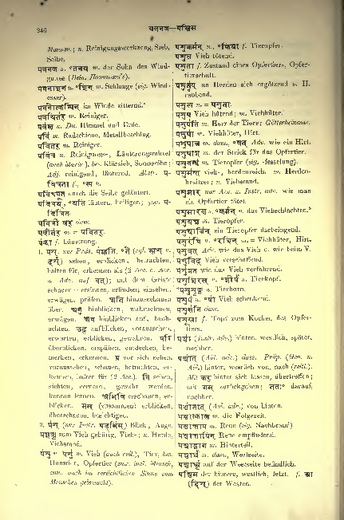
páśu u. paśú m. Vieh auch coll.), Tier, bes. Haustier, Opfertier (zuw. incl. Mensch. zuw. auch im verächtlichen Sinne vom Menschen gebraucht).
Burnouf 1866 Substantiv Maskulin
Originaltext · Französisch · Substantiv Maskulin
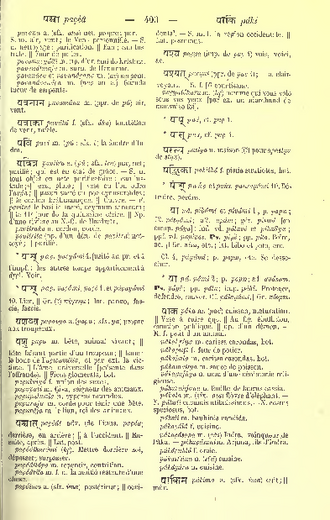
paśu paśu m. bête, animal vivant; bête faisant partie d'un troupeau; bouc; le bouc de l'aśvamedha, et par ext. la victime. L'âme universelle [présente dans l'offrande). Ficus glomerata, bot. paśukriyā f. union des sexes. paśupati m. Śiva, seigneur des animaux. paśupalvala n. cyperus rotundus. paśurajju m. corde pour tenir une bête. paśurāja m. le lion, roi des animaux.
Quelltextfundstellen (2)
Mit AYI Free weitermachen
Bildquelle: AYI Archiv.